

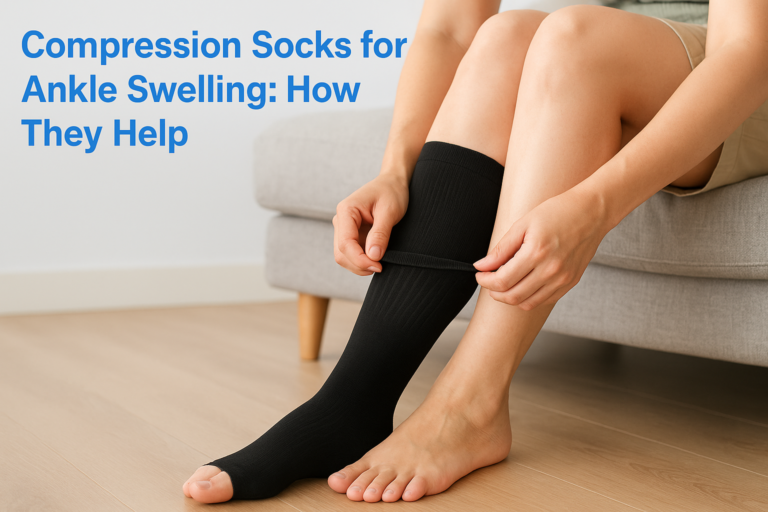
Swollen ankles at the end of the day are common, whether you have been on your feet all shift at work, sitting on a long flight, or dealing with a lower limb injury. Reaching for compression socks for ankle swelling is often the first thing people try, but many people buy a pair online without knowing if it was the right pressure grade or fit for their situation. That guesswork is where things usually go wrong.
Compression socks work by applying graduated pressure to your lower leg, tightest at the ankle and gradually looser towards the knee. This helps push fluid back up towards the heart instead of letting it pool around your ankles, which is the same reason compression is used to support leg circulation. Used correctly, they can ease swelling from long periods of standing, travel, pregnancy, mild venous issues, or recovery after certain injuries.
A quick note: ModPod Podiatry does not sell or stock compression socks, sleeves or stockings, and our podiatrists do not measure patients for them. They’re sold through pharmacies, medical suppliers, sports retailers and online stores.
In this guide, we will walk through how compression socks actually reduce swelling, when they help and when they will not fix the underlying problem, and what to look for when choosing a pair. We will also cover who to see if your swelling keeps coming back, and when a podiatrist can help with the foot and ankle side of the problem.
Why compression socks help with ankle swelling
Ankle swelling happens when fluid collects in the tissue around your ankle instead of draining back through your veins and lymphatic system. Gravity keeps pulling that fluid downward, and if your calf muscles are not pumping enough (from sitting, standing still, or reduced mobility), the fluid settles and stays put. Compression socks for ankle swelling work against this by applying steady, graduated pressure that supports the vein walls and helps push fluid upward, back towards the heart.
How graduated compression actually works
The pressure in a proper compression sock is not uniform. It is strongest at the ankle and eases off gradually as it moves up the calf. This graduated pressure pattern mimics what your calf muscles do naturally when you walk, squeezing the veins to move blood and lymph fluid upward against gravity, and the science behind how compression socks work explains this in more detail. When that natural pump is weak or inactive, the sock does the job for you.
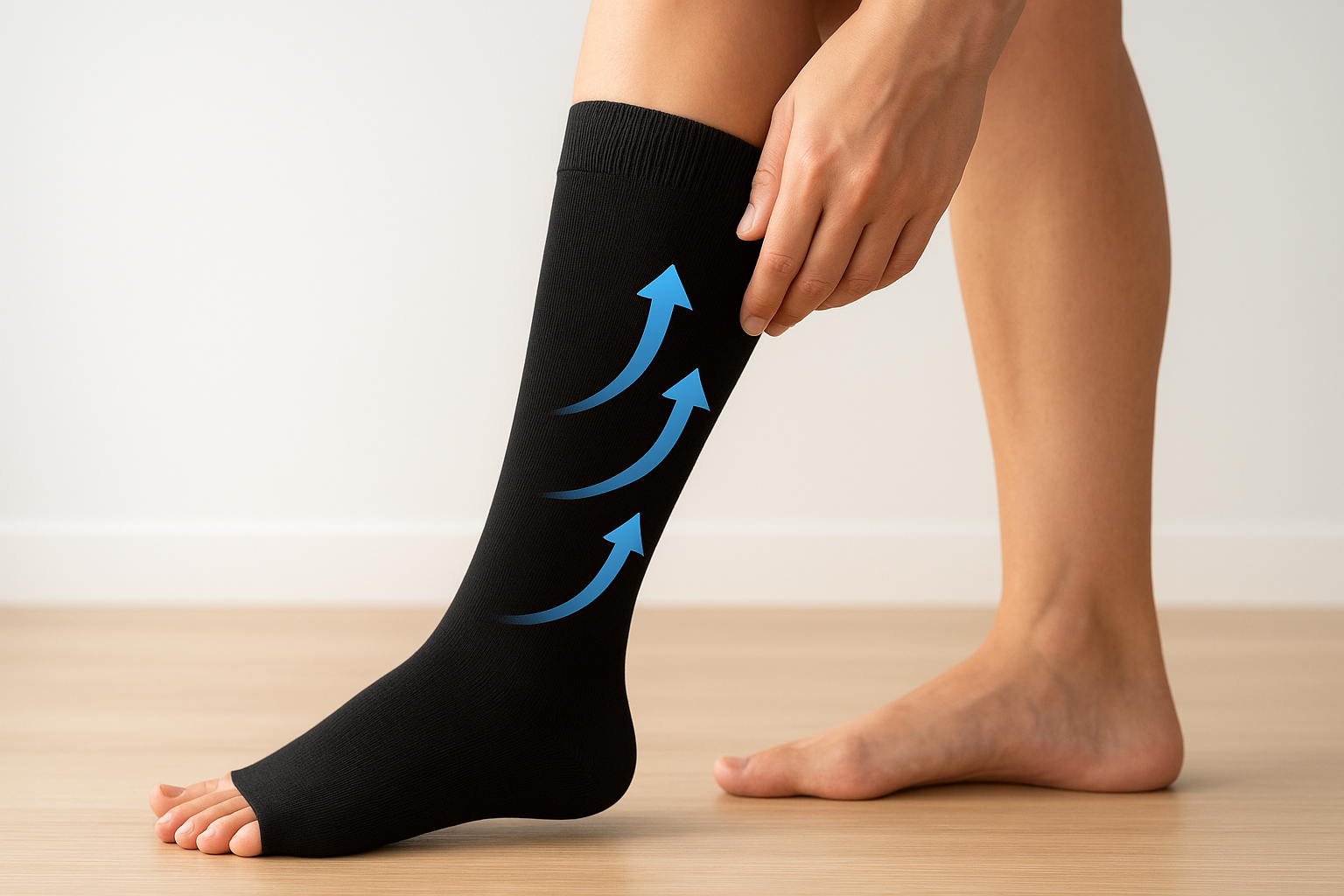
Compression socks do not remove fluid from your leg; they help stop it from pooling in the first place.
This is why timing matters. Putting socks on first thing in the morning, before swelling has had a chance to build up, is far more effective than putting them on in the afternoon once your ankles are already puffy.
What causes the swelling you are trying to treat
Not all ankle swelling has the same cause, and compression socks are more useful for some causes than others. Common triggers include:
- Prolonged standing or sitting, such as retail or office jobs, long-haul flights that leave your ankles swollen, or car trips
- Pregnancy, where hormonal changes and increased blood volume affect circulation and often bring on foot and ankle pain during pregnancy
- Mild venous insufficiency, where the one-way valves in leg veins do not close properly
- Post-injury swelling, such as after a sprain you are trying to recover from quickly or minor foot surgery, once acute inflammation has settled
- Warm weather, which naturally causes blood vessels to dilate and fluid to shift into tissue
For most of these everyday situations, graduated compression socks genuinely help by supporting circulation and easing the day-to-day puffiness that builds up.
Where compression socks stop being enough
Socks are a management tool, not a cure. If your swelling is caused by an undiagnosed injury, a biomechanical problem in how you walk, poor footwear choices, or a circulation issue that needs medical review, compression alone will only mask the symptom. It will not fix a misaligned foot posture that is straining your ankle joint, and it will not address a vein condition that is getting progressively worse.
It’s common for people to wear compression socks for months, feeling only partial relief, without ever having had a proper assessment to work out why the swelling keeps returning. Your GP can check for circulation and vein causes, and a podiatrist can assess the foot and ankle mechanics side. Understanding this distinction early saves you from months of guessing with a product that was never going to fully solve your particular cause of swelling.
How to choose the right compression socks
Picking the right pair matters more than most people realise. Compression stockings for swollen ankles come in different pressure grades, lengths and materials, and the wrong combination can leave you with socks that roll down, cut off circulation, or simply do nothing for your swelling, so it helps to start by comparing compression sock brands sold in Australia.
Understanding compression grades
Compression is measured in millimetres of mercury (mmHg), and higher numbers mean firmer pressure. Mild swelling from a day of standing all day at work needs far less pressure than swelling linked to venous insufficiency or post-surgical recovery.
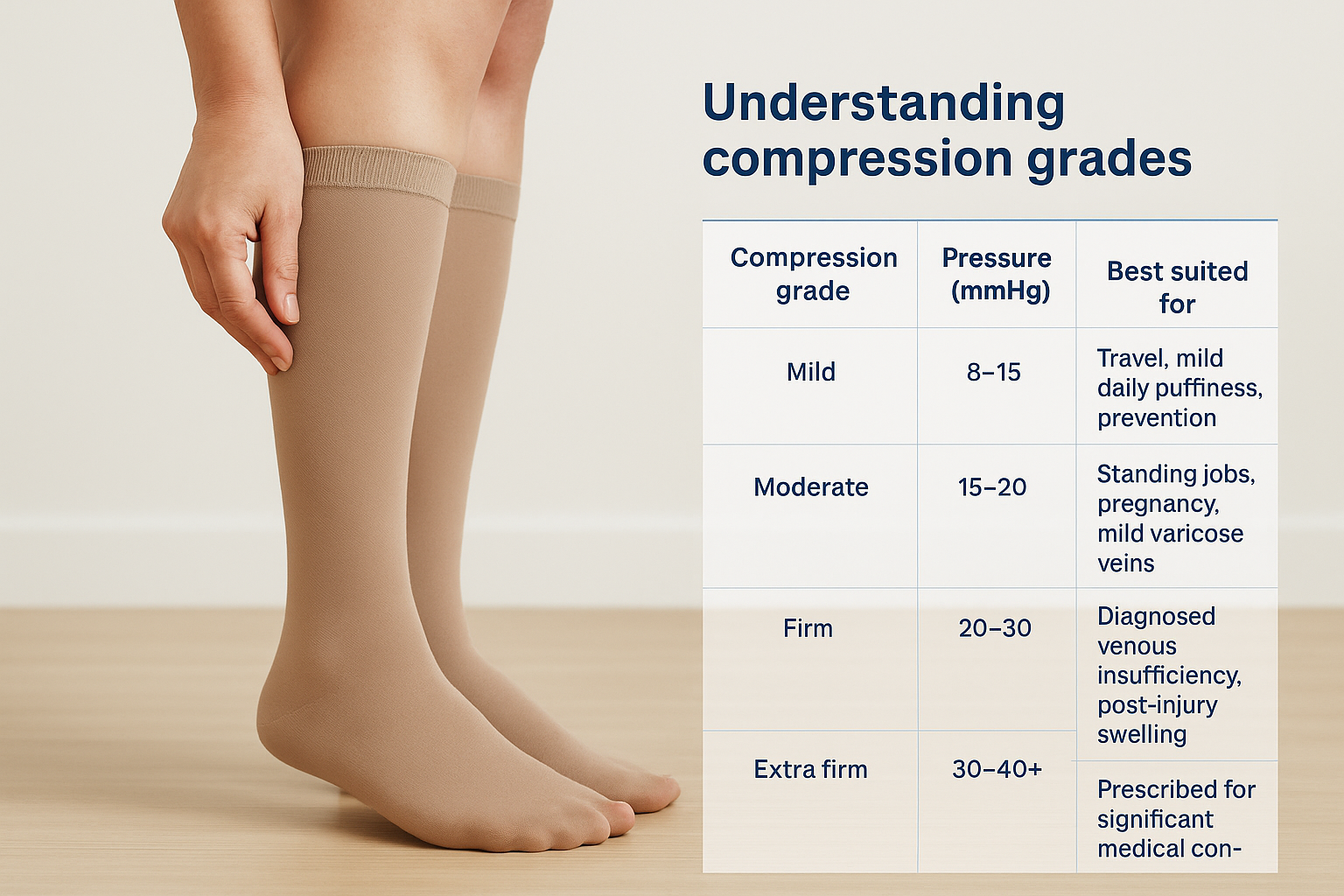
| Compression grade | Pressure (mmHg) | Best suited for |
|---|---|---|
| Mild | 8-15 | Travel, mild daily puffiness, prevention |
| Moderate | 15-20 | Standing jobs, pregnancy, mild varicose veins |
| Firm | 20-30 | Diagnosed venous insufficiency, post-injury swelling |
| Extra firm | 30-40+ | Prescribed for significant medical conditions |
Firmer is not always better; the wrong grade can restrict circulation instead of improving it.
Generally, anything above 20-30 mmHg should be discussed with your GP first, since it can cause problems if you have underlying arterial disease.
Getting the size and fit right
Length matters just as much as pressure. Knee-high socks suit most everyday ankle swelling, while thigh-high or full compression tights are reserved for more significant venous issues higher up the leg. Sizing should always be based on actual leg measurements, not shoe size, since a sock that is too small at the calf will dig in and one that is too loose will simply slide down and stop working.
Before buying, measure:
- Ankle circumference at its narrowest point
- Calf circumference at its widest point
- Length from floor to knee crease
If you are unsure of your measurements, a pharmacy, medical supplier or accredited fitter can measure you.
Material and everyday practicality
Most people care about comfort as much as function, and that is fair. Look for breathable, moisture-wicking fabric if you are wearing socks all day in an office or warm climate, and check the toe seam if you have sensitive skin or diabetic feet. If you are unsure which grade or size suits your situation, ask your GP, and have a fitter measure you, rather than guessing.
How to wear and care for compression socks properly
Getting compression socks on correctly changes how well they work, and most people are doing it wrong without realising. Pull them on before you get out of bed, working the fabric evenly up your leg rather than yanking from the top, which bunches material and creates a tight band that restricts blood flow instead of guiding it. Proper application means smoothing out every wrinkle, since a rolled-down cuff or bunched heel can dig into skin and actually worsen localised swelling.
Putting them on at the right time
Daily habits matter more than the socks themselves. Wearing graduated compression socks first thing in the morning, before fluid has settled into your ankle overnight, gives you far better results than putting them on after lunch once puffiness has already built up. Keep a pair by your bed if mornings are rushed, and take them off at night unless your doctor has specifically told you otherwise, since how many hours a day you should wear compression socks depends on your situation.
The best compression sock is the one you actually put on before your ankles start swelling, not after.
Washing and replacing them
Elastic fibres lose their grip over time, so caring for your socks properly extends how long they stay effective. Follow a simple routine:
- Hand wash or use a gentle machine cycle in cool water
- Avoid fabric softener, which breaks down elastic fibres
- Air dry flat rather than tumble drying
- Replace every three to six months with daily wear, since stretched-out compression stops working properly
Watching for warning signs
Numbness, tingling, discolouration, or pain around your toes after putting socks on is not normal and means the fit or pressure grade is wrong. Removing them straight away and reassessing the size is the right call, rather than pushing through discomfort hoping it settles. If this keeps happening despite trying different sizes, see your GP, and if foot or ankle pain is part of it, have a podiatrist check what is driving your ankle swelling in the first place.
When ankle swelling needs medical attention
Most day-to-day ankle puffiness settles with compression, rest and elevation, but not every case is that simple. Swelling that doesn’t improve after a few days of proper sock use, or that keeps returning as soon as you take them off, is telling you something the socks cannot fix on their own. Treating that pattern as normal is one of the most common mistakes people make.
Signs you shouldn’t ignore
Certain symptoms mean it’s time to see a doctor rather than trying another pair of socks. Watch for:
- Swelling in only one ankle, especially if it appeared suddenly
- Skin that’s warm, red, or tender to touch
- Swelling paired with calf pain, particularly after a long flight or surgery
- Ankle swelling that doesn’t reduce overnight with your leg elevated
- Recurring swelling despite consistent compression sock use
One-sided swelling and other red flags
One-sided or sudden swelling deserves urgent attention because it can point to a blood clot, infection, or an acute ankle injury needing treatment rather than simple fluid pooling. These situations shouldn’t wait for a routine appointment: see your GP promptly, or go to an emergency department if you also have calf pain, chest pain or shortness of breath.
If only one ankle is swollen, that’s a signal to get checked promptly, not a reason to reach for firmer compression.
Persistent swelling that keeps coming back over weeks or months, even without these acute red flags, still warrants a proper look. It can mean an underlying biomechanical issue, poor footwear, or a circulation problem is driving the fluid buildup, and no amount of compression will resolve that on its own.
Where a podiatrist can help
If your swelling is linked to foot or ankle mechanics, a podiatry assessment goes beyond the ankle itself. A podiatrist can check your gait, foot posture and footwear to see whether they are contributing to the problem, and recommend treatment that matches the actual cause. Circulation and vein causes are a job for your GP or a vascular specialist, who can refer you on. To be clear, ModPod Podiatry does not sell, stock or measure for compression socks.
Getting back on your feet
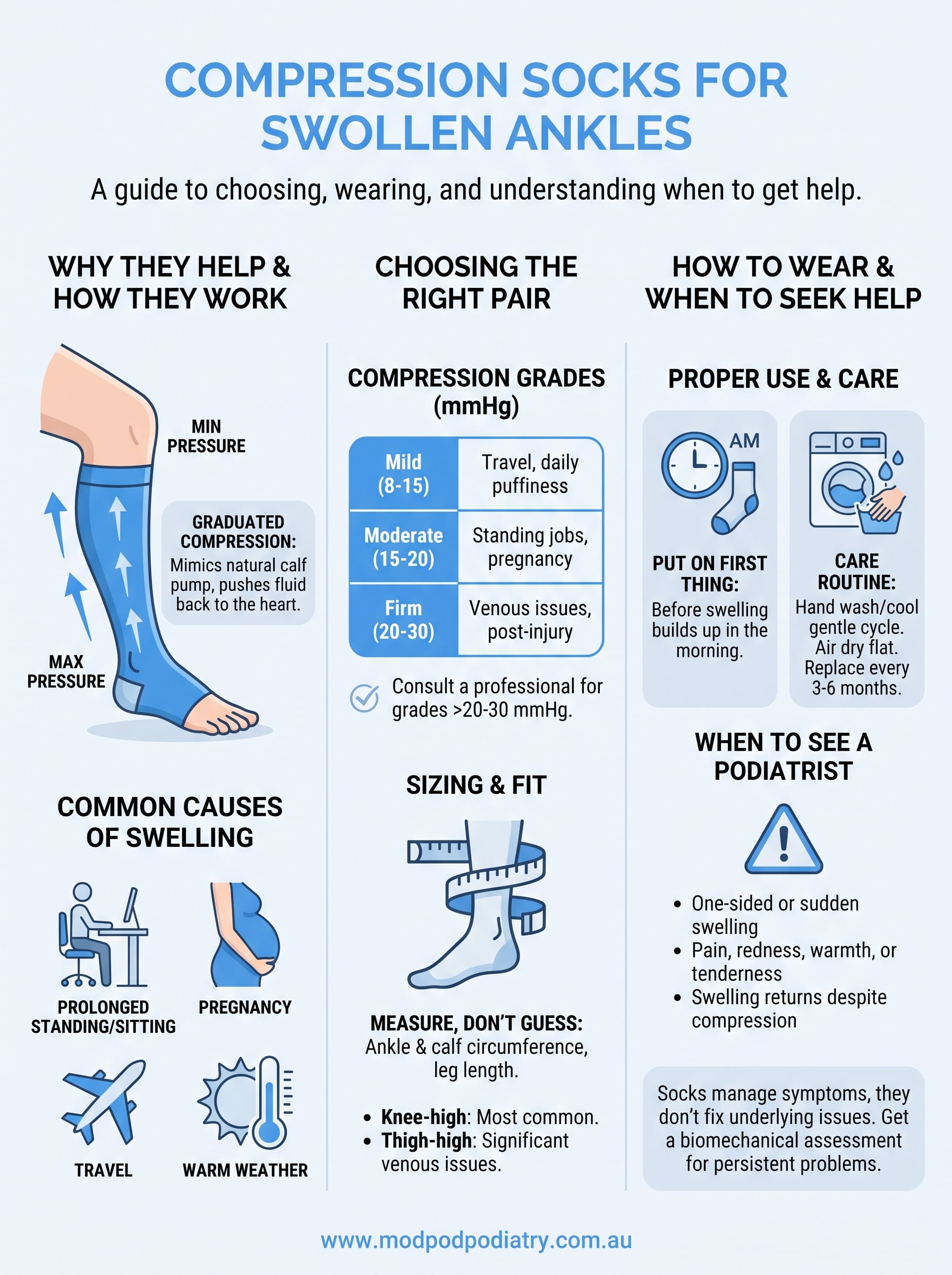
Compression socks genuinely help with everyday ankle swelling, but only when you get the pressure grade, fit and timing right. They’re a management tool that supports circulation, not a fix for whatever is actually causing fluid to pool in the first place. If you’ve been guessing your way through different pairs with little improvement, or your swelling keeps returning despite doing everything right, that’s your cue to stop guessing.
Start with your GP for swelling, and have a pharmacy or accredited fitter measure you for the right pair. If foot or ankle pain, or how you walk, may be part of the picture, book a foot and ankle assessment at one of our Sydney clinics.

