
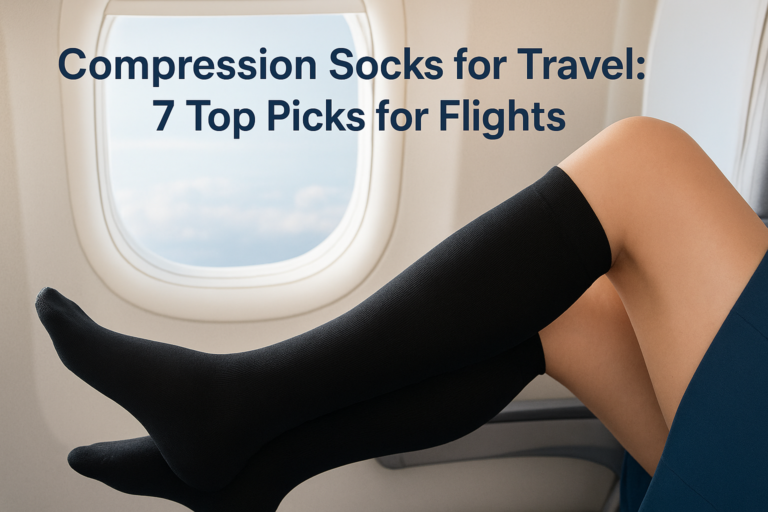
Long-haul flights are hard on your legs. Sitting still for eight, ten, or fourteen hours reduces circulation through your calves, and by the time you land your ankles feel puffy and your feet feel like they’ve swapped shoe sizes. If you’re searching for compression socks for travel, you already know the discomfort, and you may already have wondered what causes ankle swelling on a plane and looked for something that actually helps rather than just squeezing your leg for the sake of it.
The short answer is yes, a properly fitted pair of graduated compression socks can reduce swelling, support circulation, and lower your risk of deep vein thrombosis on long flights. The key word is graduated: the compression needs to be tighter at the ankle and looser as it moves up the calf, and the sizing has to match your leg, not just your shoe size.
In this guide we’ve pulled together seven solid options worth packing for your next trip, based on what we see working for patients in clinic who fly regularly for work or holidays, and you can also compare our wider list of travel compression sock brands sold in Australia. We’ll also cover how compression levels are measured, how a compression sock actually moves blood up the leg, what to look for before you buy, and when it’s worth having a podiatrist check your fit properly.
1. 2XU flight compression socks
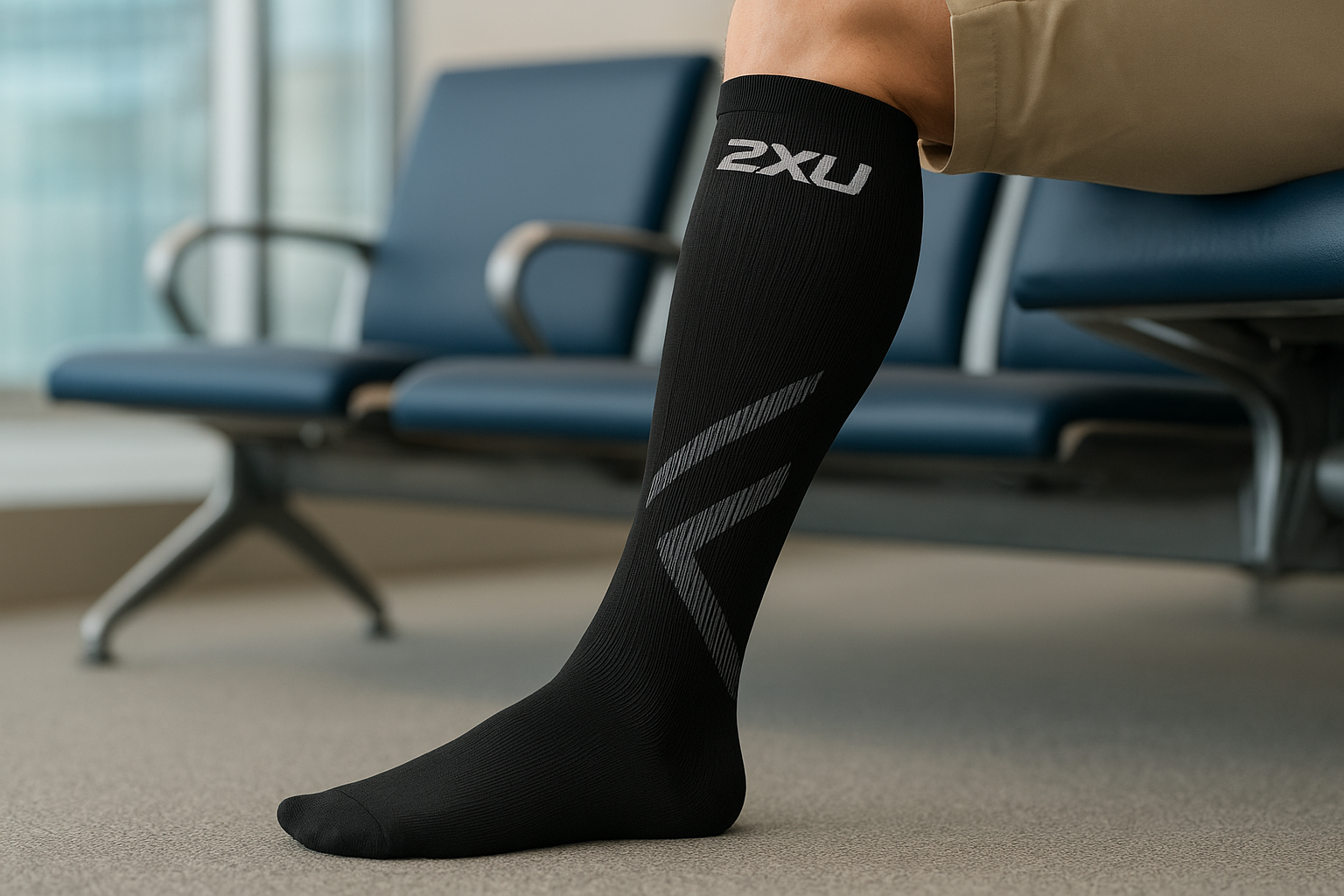
2XU is an Australian brand built on compression technology, and its flight socks are one of the most recognisable options in Sydney airport departure lounges. Physiotherapist-designed graduated compression is the main selling point here, and it shows in how the sock is engineered from heel to knee rather than just knitted as a tight tube.
Compression level and fit
The 2XU flight sock sits at roughly 15-20mmHg, which lands in the moderate compression band suited to healthy adults flying long-haul. Graduated compression is strongest at the ankle and eases as it travels up the calf, which is exactly the mechanical pattern that helps push blood back toward the heart instead of letting it pool. The fit runs true to size across a reasonable range of calf circumferences, and the sizing chart (based on shoe size and calf measurement) is more reliable than most off-the-shelf brands we see in clinic.
A compression sock only works if the graduation matches your leg shape, not just your shoe size.
Best for
These suit a specific type of traveller well:
- Frequent flyers who want one reliable pair for repeated long-haul trips
- Runners and gym-goers who want a sock that doubles as recovery wear for training
- People with average to slightly muscular calves, since the fit is snugger through the calf than some bamboo or cotton-blend alternatives
- Business travellers who want a sock that looks neat under trousers or a skirt
They’re less ideal for anyone with a significantly larger calf circumference relative to ankle size, where a wider range of compression stockings rather than socks (like the JOBST or Bauerfeind options further down this list) will sit more comfortably.
Price
Expect to pay somewhere in the $50 to $65 AUD range for a pair, depending on where you buy and whether you catch a sale through the 2XU website or a sports retailer. That’s mid-range for compression socks for travel, sitting above supermarket brands but below medical-grade European stockings.
Podiatrist’s take
In clinic, we recommend 2XU to patients who already exercise regularly and want a sock that pulls double duty for flights and workouts. The synthetic knit breathes reasonably well on a long flight, though it runs warmer than bamboo blends, which matters if you tend to overheat in cabin conditions. One thing we always check is calf circumference before recommending this brand, because the snugger structured fit can feel restrictive rather than supportive if the sizing is off. If you’ve had swelling issues before, or you’re not sure which size to grab, it’s worth a quick chat with a podiatrist rather than guessing off the size chart alone.
2. Wagner active compression socks
Wagner is a name most pharmacists in Australia will recognise before you even ask, since the brand has supplied medical-grade compression stockings to hospitals and chemists for decades. Its active travel range takes that clinical background and packages it into a sock built specifically for flights rather than post-surgical recovery, which makes it a step up in credibility from many fashion-first compression brands on the market.
Compression level and fit
Wagner’s active socks sit at 18-21mmHg, a touch firmer than the 2XU pair and closer to what you’d expect from a pharmacy-grade product. The graduated compression is consistent and well-engineered, tapering smoothly from ankle to calf, and the knit itself is firmer and less stretchy than sports-branded alternatives. Sizing is based on calf and ankle measurements rather than shoe size, which we find gives a more accurate fit for patients with thinner or wider calves.
Firmer compression only helps if the sock actually stays put through a ten-hour flight.
Best for
- Travellers who want a pharmacy-grade sock without a prescription
- People with a history of mild swelling or varicose veins who want firmer support
- Anyone who finds sports-brand socks too loose through the calf
Price
Expect to pay around $40 to $55 AUD through pharmacies, the Wagner website, or one of the Sydney stockists we rate for compression socks, making it one of the more affordable options with genuine medical-grade construction behind it.
Podiatrist’s take
We often suggest Wagner to patients who’ve mentioned ankle swelling on past flights but don’t need a full prescription-strength stocking. It’s a sensible middle ground, firm enough to matter, comfortable enough to keep on for a full long-haul sector. If your calves are notably larger than your ankles, get measured properly rather than guessing the size band.
3. Kmart travel compression socks
Kmart’s travel compression socks sell for the price of a coffee and a muffin, and that’s precisely why they turn up in so many carry-on bags at Sydney Airport. They’re not medical-grade, and Kmart doesn’t pretend otherwise, but for an occasional short-haul flyer who just wants some basic graduated compression without a big outlay, they do a passable job.
Compression level and fit
Kmart doesn’t publish an exact mmHg rating on most of its range, which is the first thing we flag to patients who ask about them. Based on how they feel and perform in clinic comparisons, they sit somewhere below 15mmHg, closer to a firm everyday sock than true medical compression. Sizing runs generic (small/medium or one-size-fits-most), so the graduated compression taper is far less precise than purpose-built brands, and the fit can loosen noticeably after a few washes.
Cheap compression socks can still help with mild puffiness, but managing genuine ankle swelling takes a properly measured pair, and don’t expect them to manage a real DVT risk.
Best for
- Occasional flyers on short domestic hops
- Budget-conscious travellers who want general leg comfort, not medical support
- Backup pairs to keep in a carry-on for unexpected long delays
Price
Expect to pay around $8 to $15 AUD for a pair, sometimes less in a multi-pack. It’s the cheapest entry point on this list by a wide margin.
Podiatrist’s take
Questions come up often about whether supermarket compression socks are "good enough," and the honest answer depends on your risk profile. For a healthy adult on a three-hour flight with no history of clotting or swelling, they’re a reasonable low-cost option. For anyone flying long-haul, pregnant, recovering from surgery, or with a family history of DVT, we’d steer you toward a properly graduated, measured pair instead.
4. Dr Woof bamboo compression socks
Dr Woof built its reputation on bamboo fabric rather than clinical branding, and that’s exactly why it’s popular with travellers who overheat in synthetic knits. Bamboo compression socks breathe better than most sports or medical fabrics, which matters on a long-haul flight where cabin air is already dry and your feet are trapped in shoes for hours.
Compression level and fit
Most of the Dr Woof range sits around 15-20mmHg, similar to 2XU, though the softer bamboo-cotton blend has more give through the calf. Fit runs generous rather than snug, so the graduated taper feels gentler on the leg, which suits people who find firmer medical socks uncomfortable. Sizing is based on shoe size bands rather than precise calf measurements, so it’s less exact than pharmacy brands, but still workable for most average leg shapes.
Softer compression can still work, as long as the graduation is real and the fit isn’t loose.
Best for
- Travellers who run warm and overheat in synthetic compression socks
- People with sensitive skin who react to tighter synthetic fabrics
- Those wanting a comfortable everyday sock that also works for flights
Price
Expect to pay around $25 to $35 AUD for a pair, sitting comfortably between the Kmart budget end and the pharmacy-grade brands further up this list.
Podiatrist’s take
Patients often mention Dr Woof when they’ve given up on firmer brands because of heat or irritation, and a softer sock still delivers most of what compression does for your legs. It’s a fair compromise, genuine graduated compression in a fabric that’s kinder to sensitive skin, though the looser fit means it won’t suit anyone needing firmer support for existing swelling or vein issues. If that’s you, one of the medical-grade options below is a better match.
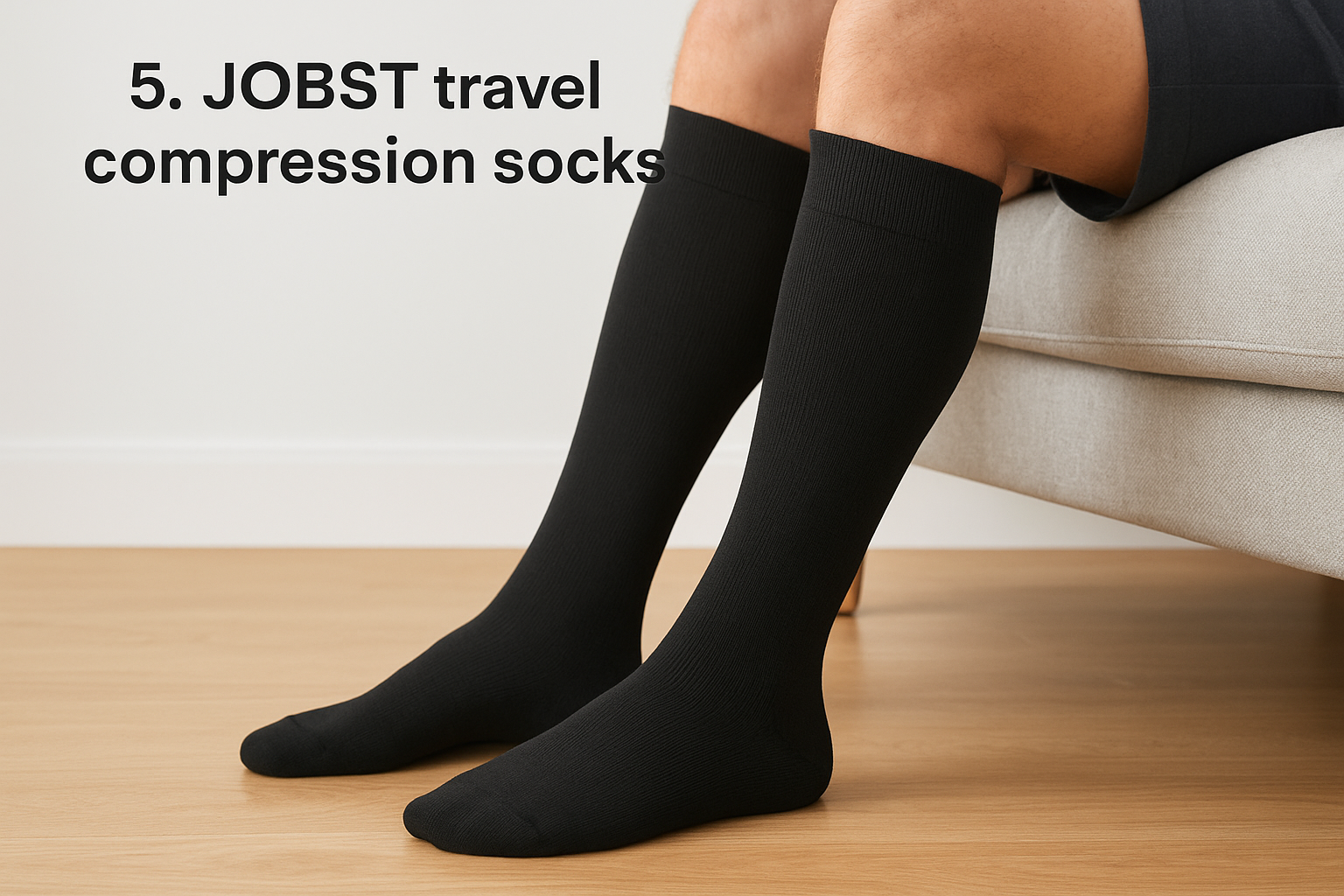
5. JOBST travel compression socks
JOBST is the brand most Australian doctors and pharmacists reach for when a patient needs genuine medical-grade compression rather than a lifestyle sock with a compression claim stapled on. Made by BSN Medical (now part of Essity), JOBST has decades of clinical use behind it in hospitals, vascular clinics, and post-surgical recovery, and its travel-specific range brings that same rigour to a sock built for long-haul sitting rather than bed rest.
Compression level and fit
JOBST Travel Sox come in two compression classes, roughly 15-20mmHg and 20-30mmHg, so you can match the sock to your actual risk level rather than settling for one generic tightness. Fit is where JOBST separates itself from most of this list: sizing is based on ankle circumference, calf circumference, and leg length together, not shoe size, which gives a far more accurate graduated compression taper for unusual leg shapes. The knit is firm and closed-toe, designed to stay put through a full long-haul sector without rolling or bunching behind the knee.
The tighter the compression class, the more precise the fit needs to be, guesswork isn’t an option at 20-30mmHg.
Best for
- Travellers with a history of DVT, varicose veins, or diagnosed venous insufficiency
- Pregnant flyers wanting a brand their obstetrician or GP would recognise
- Anyone flying long-haul who’s been told by a doctor to wear proper medical compression
- People needing a closed-toe sock that holds its shape over many wears and washes
Price
Expect to pay $45 to $75 AUD a pair depending on compression class, with the 20-30mmHg range sitting at the top end. Some private health funds will rebate part of the cost under extras cover if the sock is fitted and supplied through a clinic rather than bought over the counter.
Podiatrist’s take
We reach for JOBST first when a patient’s medical history genuinely warrants firmer compression, not just travel comfort. Getting the measurements right matters more here than with any sock further up this list, since an ill-fitting 20-30mmHg stocking can restrict circulation rather than support it. If you fall into that higher-risk group, book a proper fitting before you fly.
6. Bauerfeind VenoTrain business stockings
Bauerfeind is a German brand better known in podiatry circles for orthopaedic bracing than for travel socks, and the VenoTrain business range brings that same engineering precision to a stocking built to look sharp under work attire while still delivering genuine medical compression. It’s a premium option, and the price tag reflects the German manufacturing and knit quality behind it.
Compression level and fit
VenoTrain business stockings sit in the 18-21mmHg range, similar to Wagner, but the knit construction is where Bauerfeind pulls ahead. The fabric uses a flat-knit technology that holds its shape without rolling or digging in behind the knee, something we see fail in cheaper socks after a few hours of sitting. Custom sizing is available through fitted suppliers, measuring ankle, calf, and leg length individually, which makes it one of the most precise fits on this list short of a fully bespoke medical stocking.
A stocking that stays put for ten hours matters more than one that starts out feeling tight.
Best for
- Business travellers who need compression that looks like an ordinary sheer sock or stocking
- People with prior circulation issues who want a European medical-grade brand
- Anyone who has struggled with socks rolling down or bunching on long flights
Price
Expect to pay $70 to $110 AUD a pair, depending on whether you buy off the shelf or through a fitted supplier. It’s the most expensive option on this list, positioned closer to prescription-grade compression stockings than everyday travel socks.
Podiatrist’s take
Quality shows in the knit here, and patients who’ve tried cheaper socks that slipped or rolled generally notice the difference immediately. We’d point this brand toward travellers who fly often for work and want something that performs and looks the part in a business setting, rather than the occasional holidaymaker.
7. CEP flight compression socks
CEP is a German sports compression brand with a strong following among marathon runners, and its flight sock range applies the same medical-grade knit technology to long-haul travel. Endurance sport engineering is the standout feature here, built for athletes who need reliable circulation support over hours of movement, then adapted for hours of stillness on a plane instead.
Compression level and fit
CEP flight socks sit at 20-30mmHg, firmer than most of the socks on this list bar JOBST, and squarely in the therapeutic compression band rather than casual comfort wear. The graduated compression taper is precise and consistent, with a targeted calf zone that compresses more than a standard tube sock would. Fit runs true to a detailed size chart based on calf circumference and shoe size together, though the firmness means an inaccurate size feels restrictive fast rather than just loose.
Firm compression rewards an accurate fit and punishes a rushed one.
Best for
- Athletes and endurance runners already familiar with firm compression gear
- Travellers wanting genuine 20-30mmHg support without a prescription
- People with muscular calves who find lighter socks too loose
- Long-haul flyers who also want the sock for recovery after landing
Price
Expect to pay $60 to $80 AUD a pair, placing CEP among the pricier options alongside Wagner and Bauerfeind, reflecting the firmer compression class and sports-grade knit.
Podiatrist’s take
Patients who already train with compression gear tend to adapt to CEP fastest, since the firmness feels familiar rather than foreign. Newcomers to 20-30mmHg sometimes find it intense for a first long flight, so we’ll often suggest starting with a lighter class if you haven’t worn medical-grade compression before. Get measured properly if your calves are on the larger side, because a snug fit at this compression level makes a real difference to comfort over ten hours.
Finding the right pair for your next flight
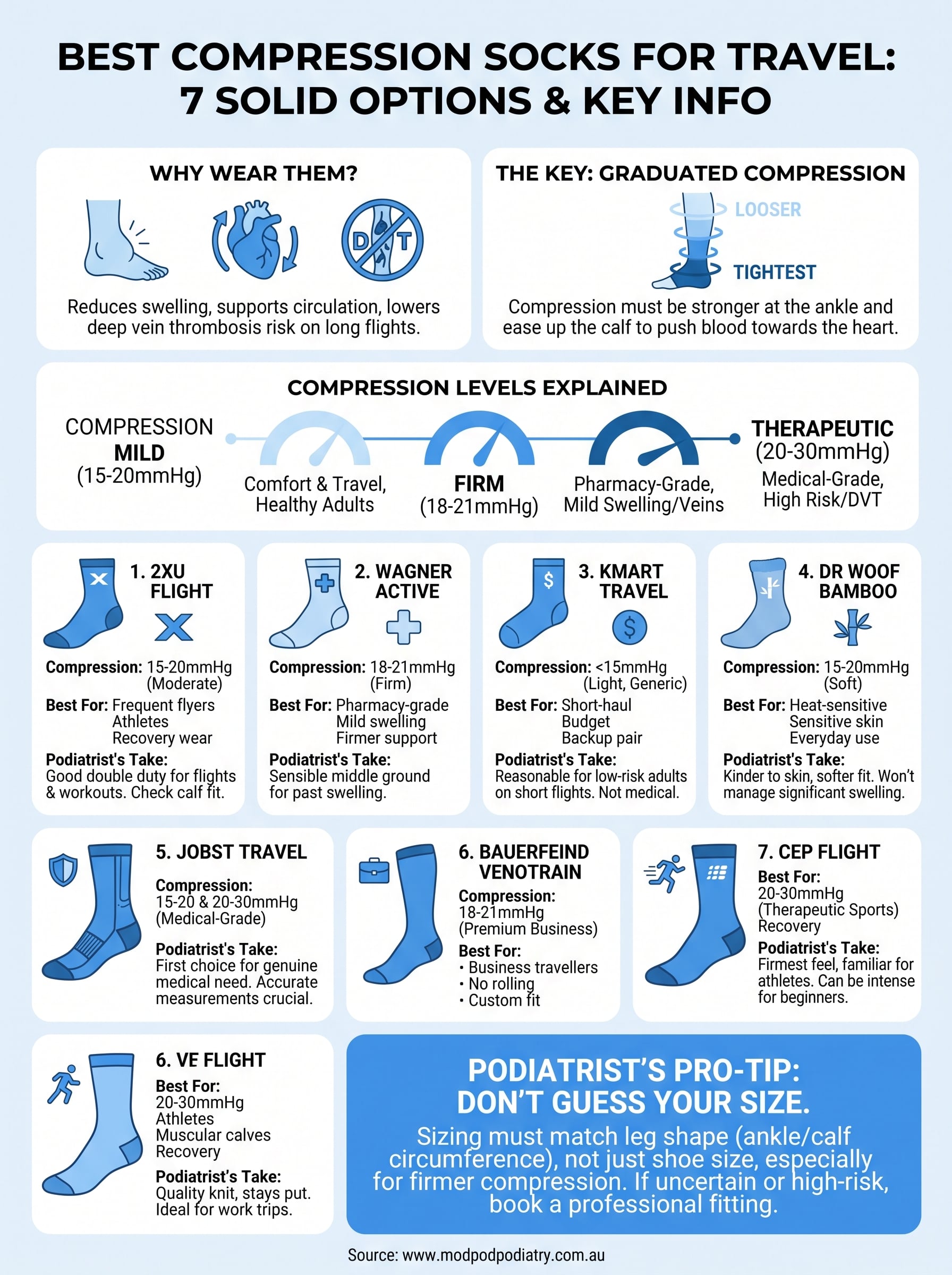
There’s no single best pair of compression socks for travel, only the pair that matches your leg shape, your compression needs, and how long you’ll actually be sitting still. A healthy adult on a short domestic hop can get away with a budget pair from Kmart, while anyone with a history of swelling, varicose veins, or DVT risk needs a properly measured medical-grade stocking like JOBST or Bauerfeind. Somewhere in between sit solid all-rounders like 2XU, Wagner, Dr Woof, and CEP, each suited to a slightly different traveller, and each covered again in our brand-by-brand comparison of compression socks sold here.
Uncertainty about sizing or compression class is common, and it’s not something worth guessing on before a long-haul flight. A quick fitting takes the guesswork out of it and means you’re wearing the right mmHg for your actual leg, not just the size chart average. If you’d rather have a podiatrist check your fit and flag anything else worth knowing before you fly, book a travel compression sock fitting with our Sydney podiatrists.