
Standing at the pharmacy counter, staring at a wall of compression wear, most people have no idea whether they need socks or stockings, let alone what length or pressure rating suits their situation. The terms get used interchangeably online, which only adds to the confusion when you’re trying to manage swelling, varicose veins, or recovery after a long-haul flight.
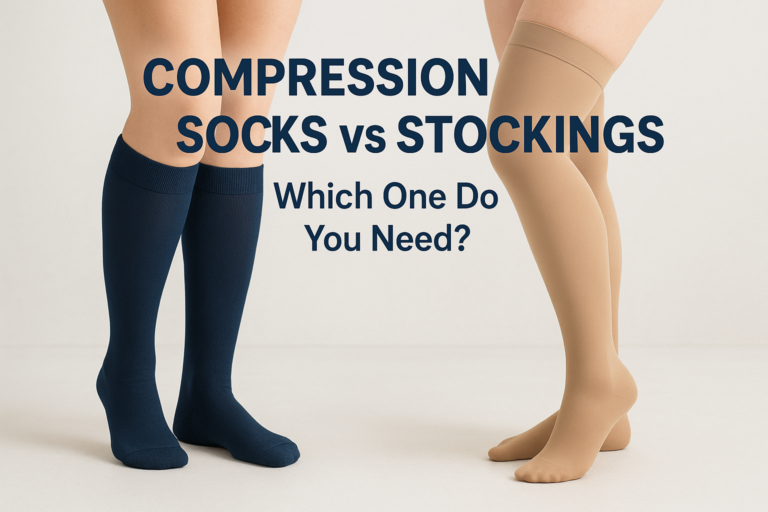
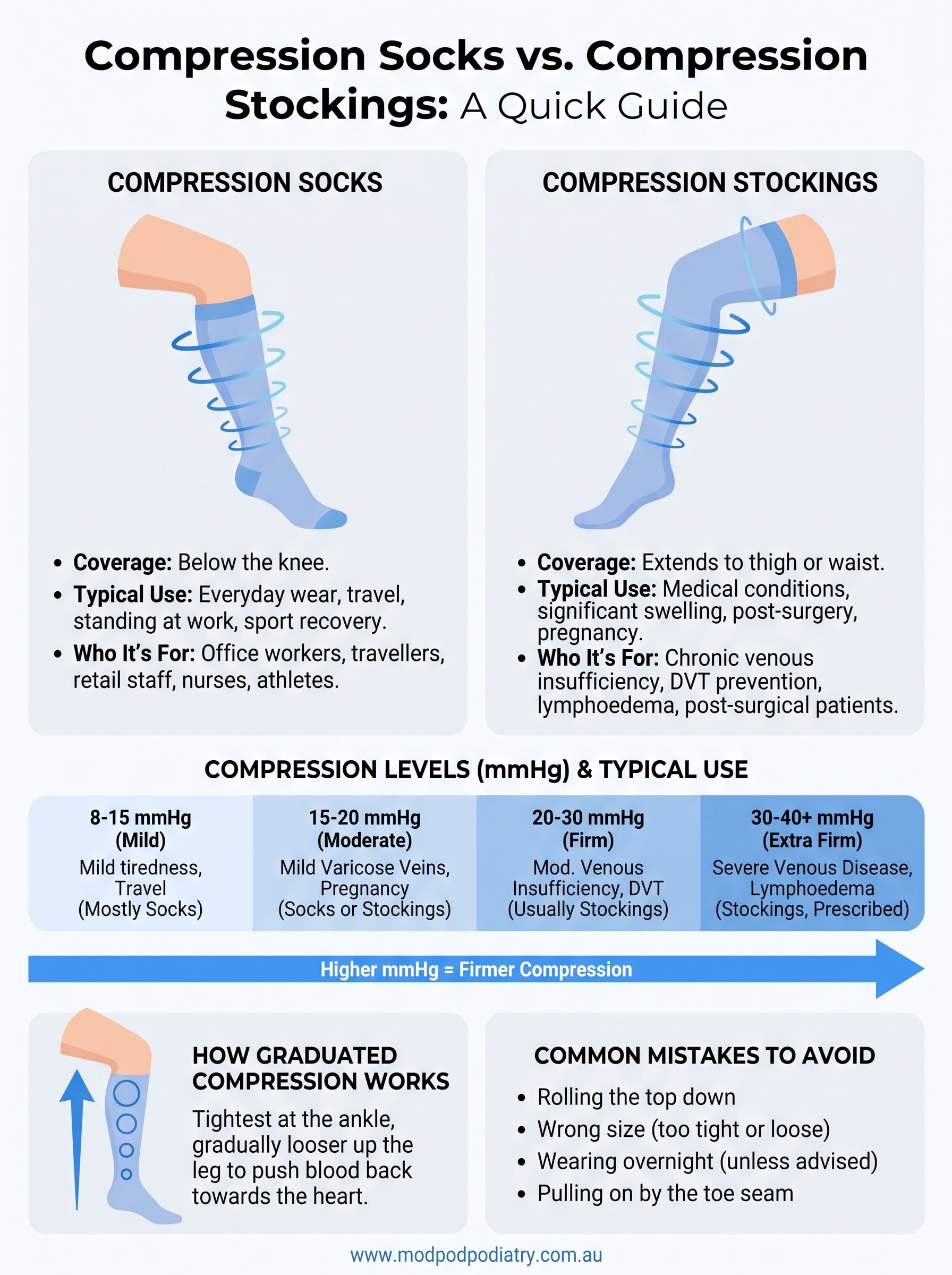
The short answer to compression socks vs compression stockings is that it comes down to coverage and purpose. Socks typically stop below the knee and suit everyday use like travel, sport, or standing shifts at work. Stockings extend higher, often to the thigh or waist, and are usually prescribed for medical conditions such as deep vein thrombosis or significant circulation issues. Pressure ratings, sizing, and how they’re fitted also differ between the two.
In this article, we’ll walk through exactly how socks and stockings differ, when each one is the right call, and how to work out the correct compression level for your feet and legs. If you’re dealing with swelling, aching legs and sore feet, or a lower limb condition our podiatrists see regularly across our Sydney clinics, this guide will help you choose with confidence before you buy.
Why the difference matters for your legs
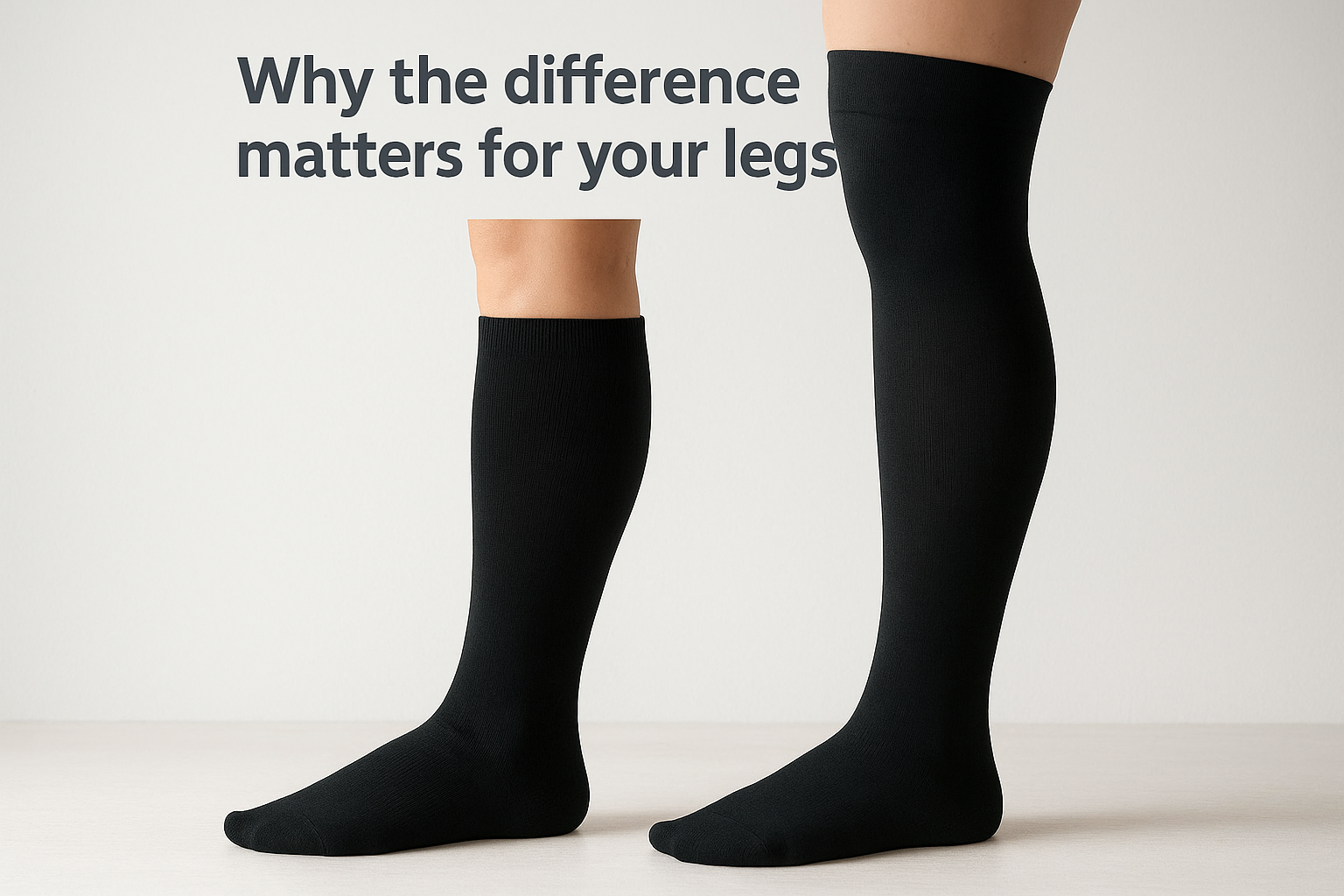
Getting this choice wrong isn’t just a comfort issue. Compression garments work by squeezing your leg tissue in a specific pattern, tightest at the ankle and gradually looser as they climb, to push blood back up toward your heart. This is called graduated compression, and the way compression moves blood back up the leg only works properly if the garment covers the right amount of leg for your particular problem. Wear a short sock when your swelling sits above the knee, and you’ve done almost nothing for the area that actually needs help. Wear a full-length stocking for a mild ache after a gym session, and you’ve bought more garment (and more hassle) than the job requires.
Where your swelling and pain actually sit
Legs swell and ache for different reasons, and the location of the problem should drive the decision. Ankle and calf swelling from long shifts on your feet, travel, or mild venous insufficiency usually responds well to below-knee compression socks for ankle swelling. Swelling that extends into the thigh, or conditions like more advanced varicose veins, chronic venous insufficiency, or post-surgical lymphoedema, typically need the longer reach of compression stockings to keep the pressure gradient consistent all the way up. Buying based on habit or whatever’s on the shelf, rather than where your symptoms actually are, is one of the most common reasons people say compression wear
How to choose between socks and stockings
Deciding between the two starts with a simple question: what are you actually trying to fix? If you’re after everyday support for tired legs, travel, or standing at work, a below-knee sock usually does the job without fuss. If a doctor or podiatrist has flagged venous insufficiency, lymphoedema, or a clotting risk, you’re in stocking territory, and the decision stops being about preference and starts being about medical need. Matching the garment to the actual problem, rather than picking whatever looks convenient, is the single biggest factor in whether compression therapy works at all.
The right compression garment is the one that matches your diagnosis, not the one that’s easiest to pull on.
Questions worth asking before you buy
Running through a short checklist before you buy saves you money and disappointment later:
- Where does the swelling or ache sit? Below the knee suggests socks; above the knee suggests stockings.
- Has a doctor recommended a specific mmHg rating? If so, buy to that number, not a general "medical grade" label.
- Will you be wearing it daily for a chronic condition, or occasionally for travel and sport? Daily medical use justifies the extra cost of proper stockings.
- Do you need to get in and out of it easily? Higher compression stockings are harder to apply and may need a fitting aid.
- Is pregnancy, surgery recovery, or a clotting risk involved? These situations usually call for stockings, sometimes with a prescription.
Matching the garment to your situation
Once you’ve answered those questions, the choice usually becomes obvious. Someone managing mild ankle puffiness after a nine-hour shift on a hard floor rarely needs anything beyond an off-the-shelf sock our podiatrists rate. Someone recovering from varicose vein surgery, or managing lymphoedema that reaches the thigh, needs a properly fitted stocking, often measured and prescribed rather than bought generically. Travellers sit somewhere in between: knee-high socks at a moderate pressure cover most needs for ankles that swell on long flights, unless there’s an existing circulation condition that changes the calculus.
Sizing matters as much as the sock-versus-stocking decision itself. A garment that’s too tight at the calf or too loose at the ankle can undo the graduated pressure pattern entirely, regardless of whether you picked the right length. This is exactly where a proper fitting, rather than guessing from a size chart, earns its keep.
Compression levels explained: what the mmHg means
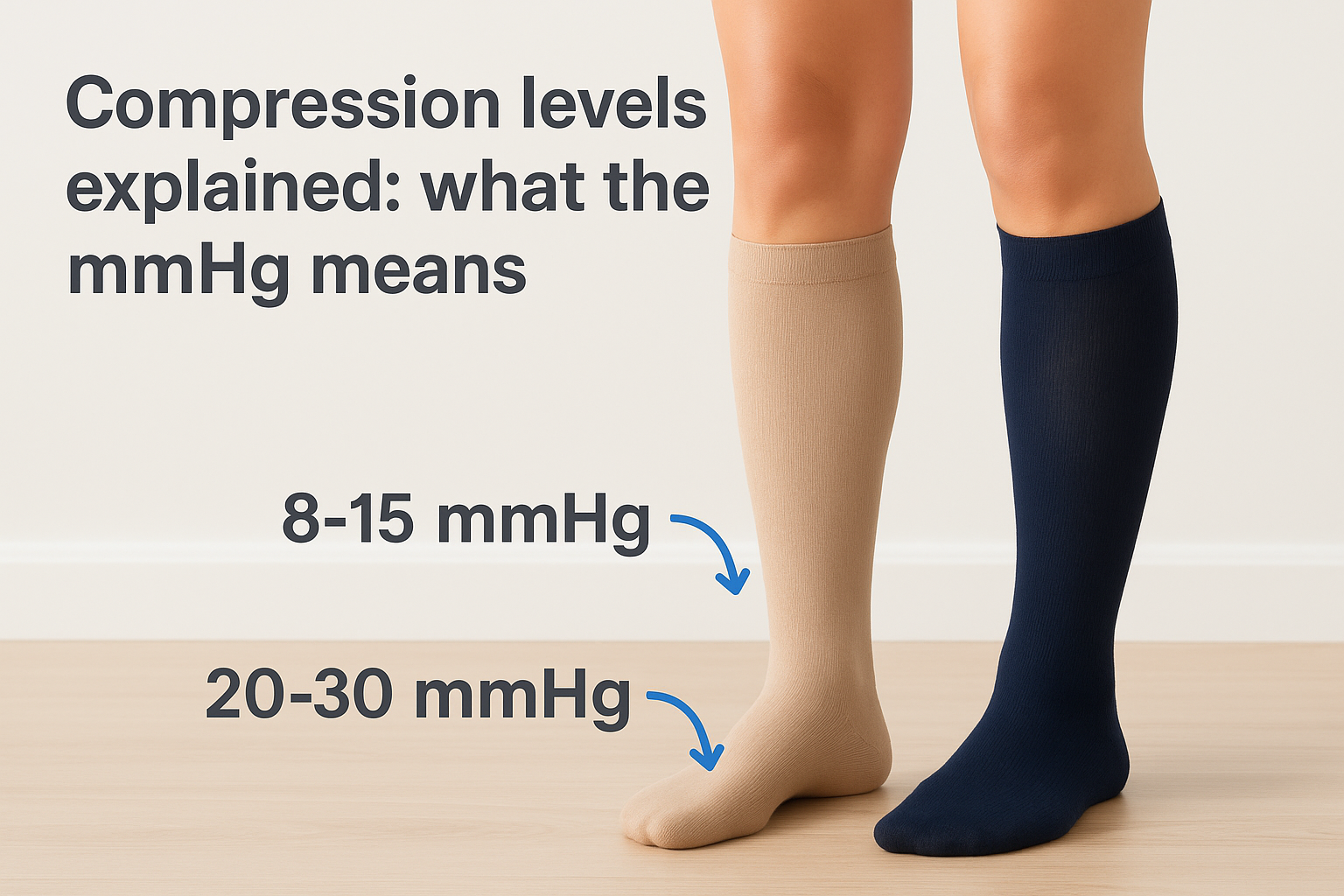
Every compression garment carries a number followed by "mmHg", which stands for millimetres of mercury, the same unit doctors use to measure blood pressure. That number tells you how much squeeze the garment applies at the ankle, the point of highest pressure in a graduated design. Higher mmHg means firmer compression, and firmer isn’t automatically better. The right number depends on what your legs actually need, not on grabbing the strongest pair on the shelf because it sounds more effective.
A higher mmHg number isn’t a better result, it’s a different tool for a different problem.
The standard mmHg ranges
Manufacturers and clinicians generally group compression into four bands, and both socks and stockings are made across most of these ranges:
| mmHg range | Typical use | Sock or stocking? |
|---|---|---|
| 8-15 mmHg | Mild tiredness, travel, everyday wear | Mostly socks |
| 15-20 mmHg | Mild varicose veins, pregnancy, long shifts on your feet | Socks or knee-high stockings |
| 20-30 mmHg | Moderate venous insufficiency, post-sclerotherapy, DVT prevention | Usually stockings |
| 30-40 mmHg+ | Severe venous disease, lymphoedema, post-surgical management | Stockings, often prescribed |
Anything above 20 mmHg is generally considered medical-grade compression, and it’s worth checking with a health professional before buying, since applying too much pressure to a leg with poor arterial blood flow can cause harm rather than relief.
Why the number should match the diagnosis
Guessing at mmHg is one of the more common mistakes people make with compression wear. Someone with mild end-of-day ankle swelling doesn’t need 30-40 mmHg stockings, and forcing that much pressure onto a leg that doesn’t require it is uncomfortable and can restrict circulation rather than help it. On the flip side, someone with diagnosed chronic venous insufficiency wearing a light 8-15 mmHg travel sock is unlikely to see any real improvement, because the pressure simply isn’t strong enough to shift the fluid causing the swelling. Talking to a podiatrist or GP about your specific compression levels before buying means you’re not left choosing a number based on a hunch, and it also flags whether socks or stockings are the more appropriate length for the pressure you actually need.
Who benefits most from each option
Matching the garment to the person, not just the symptom, makes the biggest difference in whether compression therapy actually gets used. Some people need daily medical-grade support, while others only need a light boost for a flight or a long day standing. Working out which camp you fall into changes everything from the length you buy to how much you should expect to spend.
The best compression garment is the one that fits your lifestyle as well as your legs.
Everyday and occasional wearers
Office workers, travellers, and anyone standing all day at work generally do well with compression socks. They’re easier to pull on, cheaper to replace, and cover the exact area where tired-leg swelling tends to settle, around the ankle and calf. Retail and hospitality staff standing on hard floors for eight-hour shifts, much like nurses working long clinical shifts, along with anyone flying more than a few hours, fall squarely into this group. Runners and gym-goers recovering from training also lean towards socks, since below-knee compression supports calf muscles without restricting knee movement during warm-ups or cool-downs.
People managing a diagnosed condition
Anyone with a confirmed vascular or lymphatic issue usually needs the longer reach of compression stockings. Pregnant women dealing with swelling and foot pain that extends up the thigh, patients recovering from varicose vein procedures, and people managing chronic venous insufficiency or lymphoedema all need pressure applied consistently past the knee, sometimes to the waist. Older adults with a history of deep vein thrombosis often fall into this category too, particularly if a GP or vascular specialist has already prescribed a specific mmHg range.
A quick comparison by group
| Group | Typical need | Usual choice |
|---|---|---|
| Office workers, retail staff | Ankle and calf tiredness | Below-knee socks |
| Long-haul travellers | DVT prevention, mild swelling | Knee-high socks |
| Runners and gym-goers | Muscle support, recovery | Compression socks |
| Pregnant women (thigh swelling) | Venous return support | Thigh-high stockings |
| Post-surgical patients | Clot prevention, healing | Prescribed stockings |
| Chronic venous insufficiency | Long-term symptom management | Medical-grade stockings |
Once you know which row you sit in, buying becomes far less guesswork and far more about getting the fit and pressure right.
Common mistakes to avoid when wearing compression
Even the right pair of compression socks or stockings stops working if you wear them incorrectly, and this is where most of the disappointment with compression therapy comes from. People buy the correct mmHg, get the length right, and still see little benefit because of a handful of habits that quietly undo the graduated pressure design.
Wearing the wrong garment badly does more harm than wearing the right garment slightly imperfectly.
Fit and application errors
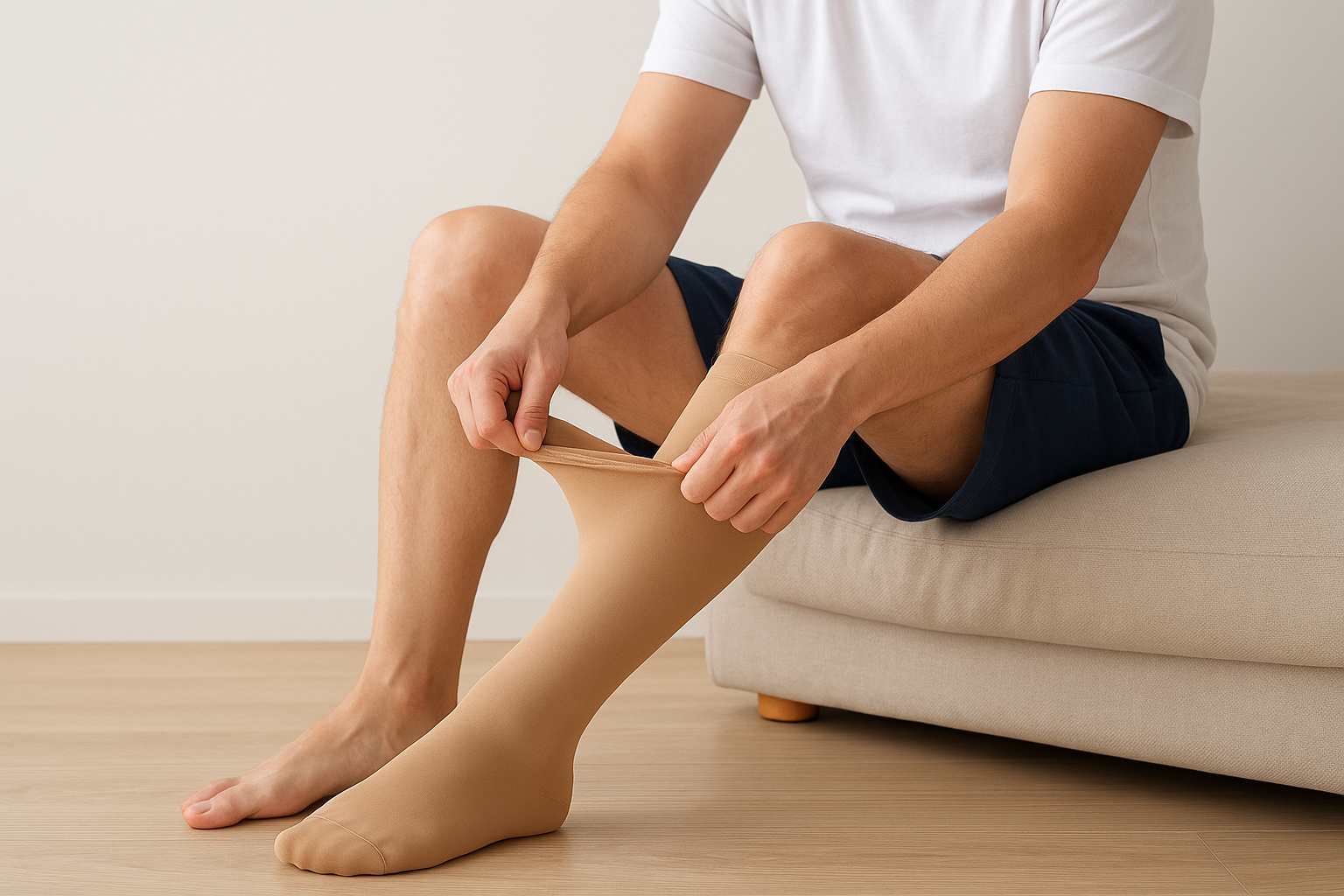
A garment that’s rolled, bunched, or sized wrong at the calf creates a tourniquet effect instead of a gentle gradient, and that’s the opposite of what you want.
- Rolling the top down to make it easier to remove, which creates a tight band that restricts rather than assists blood flow
- Buying by shoe size alone instead of measuring ankle and calf circumference, leading to a garment that’s too loose or painfully tight
- Wearing them overnight without medical advice, since most daytime compression isn’t designed for sleeping hours, so it pays to check how long a pair should stay on each day
- Pulling stockings on by the toe seam rather than turning them inside out first, which stretches the fabric unevenly and shortens their lifespan
- Ignoring skin checks, especially for older adults or people following a diabetic foot care routine, where reduced sensation can hide pressure damage before it’s noticed
Assuming stronger is always better
Grabbing the highest mmHg on the shelf because it seems more serious about the job is a common misstep, and it’s one worth correcting early. Higher pressure isn’t a shortcut to faster results, and applying 30-40 mmHg to a leg that only needs 15-20 mmHg can cause discomfort, skin irritation, or restricted circulation rather than relief. Similarly, some people wear compression socks vs stockings interchangeably without checking whether their swelling has moved higher up the leg over time, which means the garment that worked six months ago might no longer cover the area that actually needs support.
Skipping replacement schedules
Hardly anyone thinks about fabric elasticity, but compression garments lose their squeeze long before they look worn out. Most medical-grade stockings need replacing every three to six months with regular daily wear, since the elastic fibres stretch and stop delivering the pressure printed on the packaging. Continuing to wear a stretched-out garment gives you the false confidence of compression without the actual benefit, which is often why symptoms creep back despite doing everything else right.
When to see a podiatrist for expert advice
Deciding between compression socks vs compression stockings gets a lot easier once someone with clinical training looks at your legs rather than a size chart. Self-selecting a garment works fine for mild, temporary swelling, but persistent symptoms, unexplained pain, or foot problems you shouldn’t ignore deserve a proper assessment before you spend money on the wrong product. A podiatrist can measure your ankle and calf accurately, check your circulation, and match the mmHg rating to what’s actually happening in your leg rather than what the packaging suggests.
Guessing your compression needs might cost you comfort, but guessing your diagnosis can cost you your health.
Signs you shouldn’t self-diagnose
Certain symptoms are a clear signal to book an appointment rather than reach for whatever’s on the pharmacy shelf:
- Swelling that’s only on one leg, which can point to a clot or localised injury rather than general fluid retention
- Skin discolouration, warmth, or a hardened patch, all of which need medical review before compression is applied
- Pain that doesn’t ease with rest, especially calf pain that worsens when you flex your foot
- Diabetes or reduced sensation in your feet, since compression garments carry a higher risk of unnoticed pressure damage
- Swelling that keeps climbing higher up the leg, suggesting your current sock or stocking length no longer covers the problem
What a podiatry assessment adds
Booking in with a podiatrist gives you more than a tape measure and a size recommendation. A thorough assessment checks your circulation, screens for underlying vascular or lymphatic issues, and looks at how your gait and footwear might be contributing to the swelling in the first place. That context matters, because a garment fitted around the wrong diagnosis rarely delivers lasting relief, no matter how correctly you follow the sizing chart. Our podiatrists across ModPod Podiatry’s Sydney clinics run this kind of assessment regularly, checking whether socks or stockings suit your situation, confirming the right compression level, and ruling out anything more serious before you commit to daily wear. If you’ve been guessing at compression for months without much change, book a consultation with our team and get a proper answer instead of another shelf pick.
Finding the right fit for your legs
Sorting out compression socks vs compression stockings really comes down to two things: where your swelling sits and how severe it is. Below-knee socks handle everyday tiredness, travel, and light training recovery. Full-length stockings step in when a diagnosed condition needs consistent pressure past the knee. Getting the mmHg rating and the length right matters more than brand or price, and neither works if the fit is wrong.
Guessing your way through a pharmacy aisle isn’t the same as having someone check your legs properly. If your swelling keeps shifting, your current garment isn’t helping, or you’ve never actually been measured, that’s worth sorting out with a professional rather than another online order. Book a compression fitting with our Sydney podiatrists and get a recommendation based on your legs, not a size chart.