

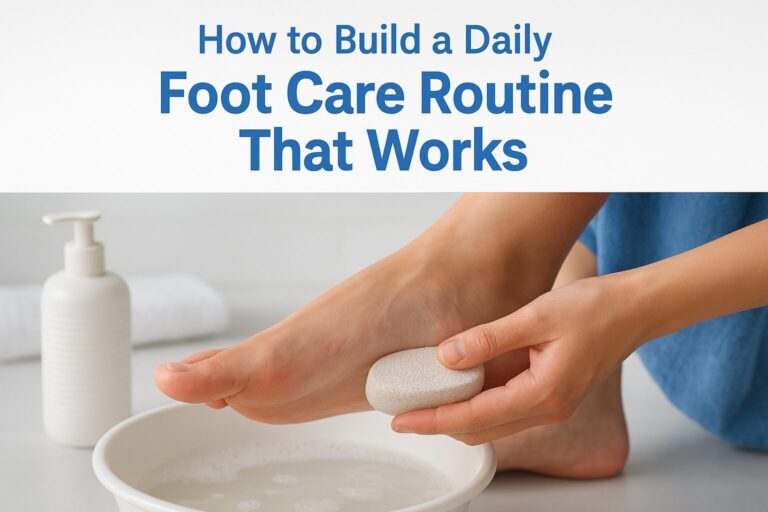
Most people brush their teeth twice a day without thinking, but feet rarely get the same attention until something hurts. A proper daily foot care routine takes less than five minutes and catches small problems, like a cracked heel or a discoloured nail, before they turn into appointments. If you’ve ever wondered whether you’re actually doing enough for your feet, the answer is probably no, and that’s fixable.
This guide gives you a straightforward, step-by-step routine you can start tonight: washing properly, drying between the toes, moisturising without overdoing it, and a quick daily check for cuts, colour changes or swelling. No fancy products required, just consistency.
We see the results of skipped foot care every week at our Sydney clinics, from fungal infections to heel pain that started as something minor. This article walks through exactly what to do, in what order, and why each step matters, so you can build a routine that actually sticks and keeps you off our treatment table for the wrong reasons.
Why a daily foot care routine matters
Your feet absorb roughly 1.5 times your body weight with every step, and most Australians rack up thousands of steps a day without giving them a second thought. That constant pressure, combined with sweat, tight shoes, and the odd stubbed toe, makes feet one of the most neglected parts of the body. Skin breakdown, fungal growth, and nail damage all start small and quiet, which is exactly why they’re so easy to ignore until they’re not.
The hidden cost of neglect
We’ve treated patients across our Sydney clinics who came in with advanced plantar fasciitis or a fungal infection that had spread under three toenails, all of which started as something they noticed months earlier and put off checking. A cracked heel left untreated can deepen and become a painful fissure that’s prone to infection. A slightly discoloured toenail can turn out to be a fungal infection that takes six to twelve months of treatment to clear once established, according to the Australian government’s Healthdirect service. Skipping the basics doesn’t just risk discomfort, it risks turning a two-minute fix into a months-long treatment plan.
A daily foot check takes less time than tying your shoelaces, but it can save you months of treatment down the track.
Who needs to be extra vigilant
Some people carry higher stakes than others when it comes to foot neglect. If you fall into any of these groups, treat your daily routine as non-negotiable rather than optional:
- People with diabetes, who face reduced sensation and slower healing, making small cuts far more dangerous
- Older adults, who often have thinner skin, poorer circulation, and reduced mobility to inspect their own feet
- Athletes and active people, whose feet sit in sweaty shoes for hours and take repeated impact
- Anyone with a history of fungal infections, since reinfection is common without ongoing hygiene habits
- People with poor circulation, where even minor wounds can take significantly longer to heal
Building the habit matters more than getting every step perfect. Consistency beats intensity here, five minutes every evening will do more for your feet than an occasional deep clean or a rushed pedicure before summer. The steps below break the routine down into a sequence you can follow without overthinking it, starting with something as basic as how you wash your feet in the shower.
Step 1. Wash your feet properly
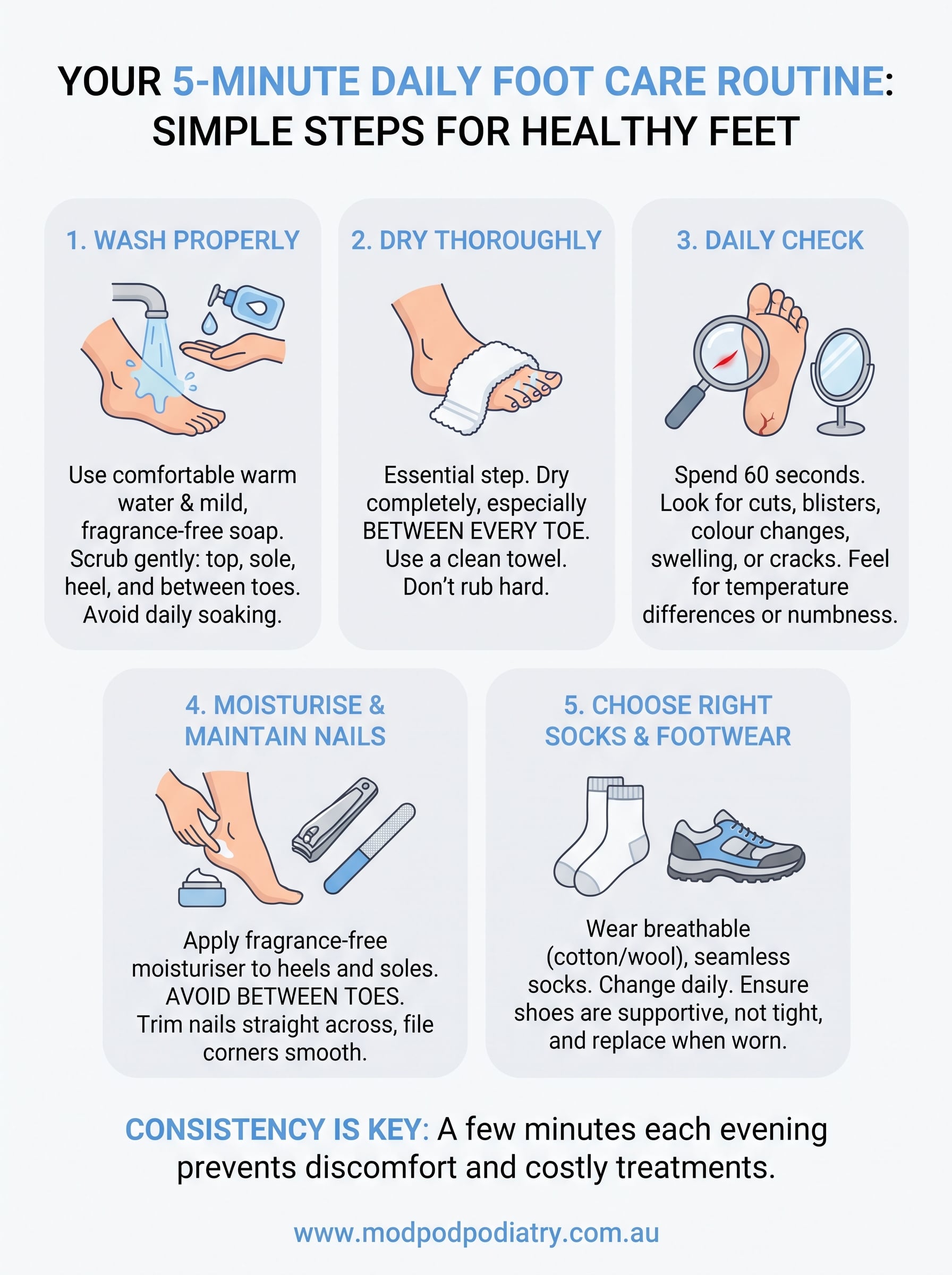
Washing your feet sounds obvious, but most people just let shower water run over them and call it done. That’s not enough. Warm water and mild soap applied with your hands, not just a splash, lifts away the sweat, bacteria and dead skin that build up in shoes all day. Aim for water that’s comfortably warm rather than hot, since hot water strips natural oils and can leave skin drier than before you started.
What proper washing actually looks like
Get into the habit of treating this as a deliberate two-minute step rather than an afterthought at the end of your shower. Work through it in this order:
- Wet your feet fully with warm water.
- Apply a mild, fragrance-free soap directly to your hands or a soft cloth.
- Scrub gently across the top, sole, heel and between each toe.
- Pay extra attention to the sole and heel, where dead skin builds up fastest.
- Rinse thoroughly until no soap residue remains.
Feet need the same hands-on wash as your face, not just a rinse in passing water.
Skip the soaking, most nights
Long soaks feel relaxing, but daily soaking can actually soften and weaken the skin’s protective barrier, making it more vulnerable to cracking and infection according to guidance from Australia’s Healthdirect service. Save a proper soak for occasional use, such as before trimming thickened nails, and stick to a quick wash the rest of the time. Choosing a fragrance-free, pH-balanced soap also matters if you have sensitive skin or a history of fungal infections, since heavily perfumed products can irritate skin that’s already under strain.
Step 2. Dry thoroughly, especially between the toes
Damp skin is where fungal infections start. Tinea pedis, better known as athlete’s foot, thrives in the warm, moist environment between your toes, and it doesn’t take much moisture to get it going. Drying thoroughly after every wash is arguably the single most skipped step in a proper daily foot care routine, mostly because people assume air-drying in the bathroom or a quick towel swipe is enough. It isn’t.
The right way to dry your feet
Use a clean towel and work through each foot methodically rather than rubbing quickly and moving on. Follow this order every time:
- Pat the top and sole of each foot dry first.
- Work the towel between every toe individually, not just across the front of the foot.
- Press rather than rub if your skin is sensitive or already cracked.
- Check the towel for any dampness left behind and repeat if needed.
- Let your feet sit exposed to air for a minute or two before putting on socks.
Fungal infections don’t need much moisture to take hold, so the gap between your toes deserves more attention than the rest of your foot combined.
Why this step gets skipped, and why it shouldn’t
Most people dry their feet in seconds because they’re in a hurry to get dressed, but that rush is exactly what leaves the interdigital spaces damp for hours inside socks and shoes. If you’re prone to sweaty feet, consider keeping a separate small towel just for this step, since a towel that’s already used on your body can transfer bacteria back onto freshly washed skin. Dedicated drying takes an extra thirty seconds and does more to prevent fungal infections than any cream or spray applied afterwards.
Step 3. Check your feet for problems
Once your feet are clean and dry, spend sixty seconds actually looking at them before socks go on. This visual and physical check is the part of a daily foot care routine that catches trouble early, yet it’s the step most people skip entirely because nothing hurts yet. A cut, a colour change or a patch of dry skin rarely announces itself with pain in the first few days, which is exactly why waiting for discomfort is the wrong strategy.
What to look and feel for
Sit somewhere with good light, use a mirror for the soles if you can’t twist your foot round comfortably, and run through this checklist on both feet:
- Cuts, blisters or grazes, especially around the heel and toes where friction is highest
- Colour changes in the skin or nails, including redness, unusual paleness or dark patches
- Swelling around the ankle or across the top of the foot
- Cracks or dryness on the heels and soles
- Changes in temperature, where one foot feels noticeably warmer or cooler than the other
- Numbness or tingling, which can signal a circulation or nerve issue worth mentioning to your GP
A cut you catch tonight heals in days; the same cut ignored for a fortnight can turn into an infection.
Make it automatic, not optional
Pair this check with something you already do every night, like brushing your teeth, so it becomes automatic rather than another task competing for attention. If you spot anything unusual that doesn’t improve within a few days, particularly with diabetes or poor circulation, get it looked at rather than waiting to see what happens.
Step 4. Moisturise and maintain your nails
Once your feet are dry and checked, moisturising locks in that work and stops the cracking that leads to fissures on heels and soles. Fragrance-free moisturiser applied to the tops, soles and heels keeps skin supple, but the timing matters as much as the product. Apply it straight after drying, while skin is still slightly receptive, rather than hours later when it’s already tightened up.
Where to moisturise, and where to avoid
Go heavy on the heels and soles, where thick, dry skin builds up fastest, but keep cream away from between your toes. That gap needs to stay dry, not damp, so adding moisturiser there undoes the drying work from Step 2 and creates the exact conditions fungal infections love.
Moisturise everywhere except between your toes, that one exception matters more than the cream you choose.
Trimming and maintaining nails
Nails deserve the same regular attention as skin, since thickened or ingrown nails often start with poor trimming habits repeated for months. Work through this whenever nails need it, roughly every one to two weeks:
- Trim after a wash, when nails are softer and easier to cut cleanly.
- Cut straight across rather than rounding the corners.
- Leave a small white edge rather than cutting flush with the skin.
- File any sharp corners smooth to stop them catching on socks.
- Check for thickening, discolouration or lifting nails while you’re at it.
Getting this right consistently, alongside washing and drying, is what turns a daily foot care routine into genuine prevention rather than a list of good intentions.
Step 5. Choose the right socks and footwear
Even a perfect washing, drying and moisturising routine gets undone by the wrong socks or shoes. Breathable materials matter more than most people realise, since synthetic fibres trap sweat against skin that you’ve just spent five minutes drying properly. Footwear that’s too tight or too worn also creates the friction and pressure points behind blisters, corns and thickened calluses.
What to look for in socks
Opt for natural or moisture-wicking fibres over cheap synthetic blends, and change socks daily without exception, twice if you’re active or prone to sweating. Seamless socks reduce friction across toes for anyone who’s had blisters or ingrown nails before.
| Sock feature | Why it matters |
|---|---|
| Cotton or merino wool | Breathes and absorbs moisture better than synthetic blends |
| Seamless toe construction | Reduces friction and pressure points |
| Snug, non-restrictive fit | Prevents bunching that causes blisters |
| Daily change | Stops bacteria and fungus building up |
Clean, breathable socks do half the work that moisturiser and drying can’t finish alone.
Footwear that supports your routine
Replace shoes once the tread wears unevenly or the midsole feels flat, since worn-out support forces your feet to compensate with every step. Rotate between two pairs where possible so shoes fully dry out between wears, and choose footwear with enough room in the toe box that toes aren’t squashed together for hours. If you’re on your feet all day for work, proper supportive footwear matters as much as the routine itself, and it’s worth getting your gait assessed if shoes wear unevenly despite good habits.
Keeping your feet on track
Five steps, five minutes, done properly every evening: wash, dry, check, moisturise, and dress your feet in socks and shoes that actually help rather than hinder. None of this requires special equipment or a weekend routine overhaul, just the same consistent habit you’d apply to brushing your teeth. The payoff is real: fewer cracked heels, fewer fungal infections, and fewer small problems that quietly turn into appointments you could have avoided.
If your daily check turns up something that doesn’t settle within a few days, whether that’s a stubborn ingrown nail, a suspicious nail change, or heel pain that won’t shift, don’t wait it out. Our podiatrists across Sydney see these issues every week and can sort them before they become bigger problems. When you’re ready for a proper assessment or ongoing treatment, you can book an appointment online with same-week availability at your nearest clinic.

