

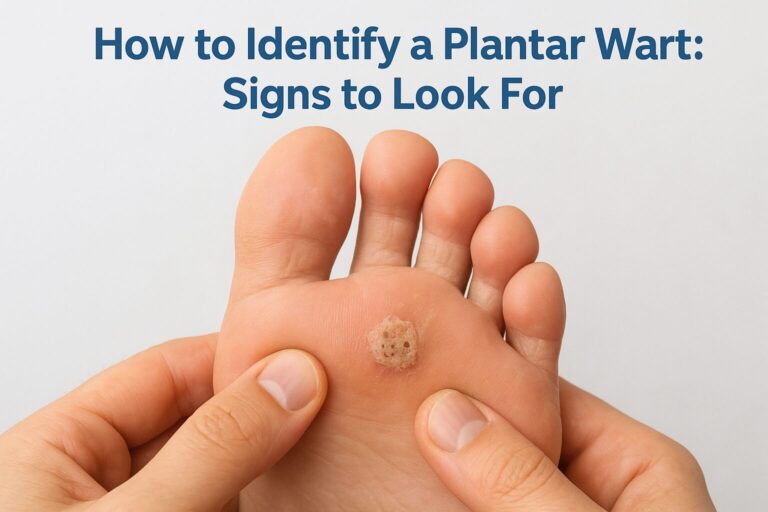
That hard, painful lump on the bottom of your foot could be a callus from your shoes, or it could be something else entirely. Knowing how to identify a plantar wart matters because treating it the wrong way, like filing down a corn when it’s actually a viral wart, can make it spread to other parts of your foot or to family members at home.
A plantar wart has a few tell-tale signs that set it apart from calluses and corns. Look for tiny black dots in the centre (these are clotted blood vessels, not dirt), a rough or cauliflower-like surface, and pain when you pinch it from the sides rather than press it directly. Calluses, by contrast, hurt more with direct pressure and have a smooth, uniform texture with visible skin lines running through them.
In this guide, we’ll walk through the specific visual and physical markers of plantar warts, how they differ from corns, calluses and other foot lesions, and when it’s worth booking a proper assessment. Our podiatrists across Sydney see this mix-up constantly, so we’ve built this article around the real cases we treat every week.
Why correctly identifying a plantar wart matters
Misidentifying a plantar wart isn’t just a minor inconvenience, it changes how you should treat it entirely. A plantar wart is caused by the human papillomavirus (HPV), the same family of viruses responsible for warts elsewhere on the body, and it lives in the skin rather than being a build-up of dead cells like a callus. Treating it as though it were simple hardened skin, by filing, cutting, or applying pumice, can spread the virus to healthy skin nearby or to other members of your household through shared towels, bathmats, or bare feet on the bathroom floor.
The contagious nature of the virus
Because plantar warts spread through direct contact with broken or damp skin, communal areas like swimming pools, gym showers, and shared bathrooms are common transmission points. Once the virus takes hold, scratching or picking at the wart can create satellite warts nearby, sometimes described as a mosaic pattern when several cluster together. This is one of the main reasons an accurate diagnosis early matters more than reaching for a generic over-the-counter treatment.
A plantar wart is a virus living in your skin, not dead skin building up, so treating it like a callus can make it spread rather than disappear.
Wrong treatment can delay real recovery
Corn and callus treatments target dead, thickened tissue. Filing down a wart doesn’t remove the virus, it just clears the surface layer temporarily while the wart regrows from underneath, often deeper and more painful than before. Weeks or months can pass with no real progress, giving the wart more time to multiply or push into weight-bearing areas like the ball of the foot or heel, where daily pressure drives it inward.
It can signal something else entirely
Occasionally, what looks like a stubborn wart turns out to be something needing medical attention beyond home care, such as an infected verruca or, rarely, a skin lesion that mimics a wart’s appearance without being one. Podiatrists are trained to spot these differences and rule out anything more serious, something that’s genuinely hard to judge accurately by eye alone at home. Healthdirect Australia notes that warts can persist for months or years without proper management, which is exactly why getting the diagnosis right from the start saves you unnecessary discomfort and wasted treatment attempts down the track.
How to spot the signs of a plantar wart
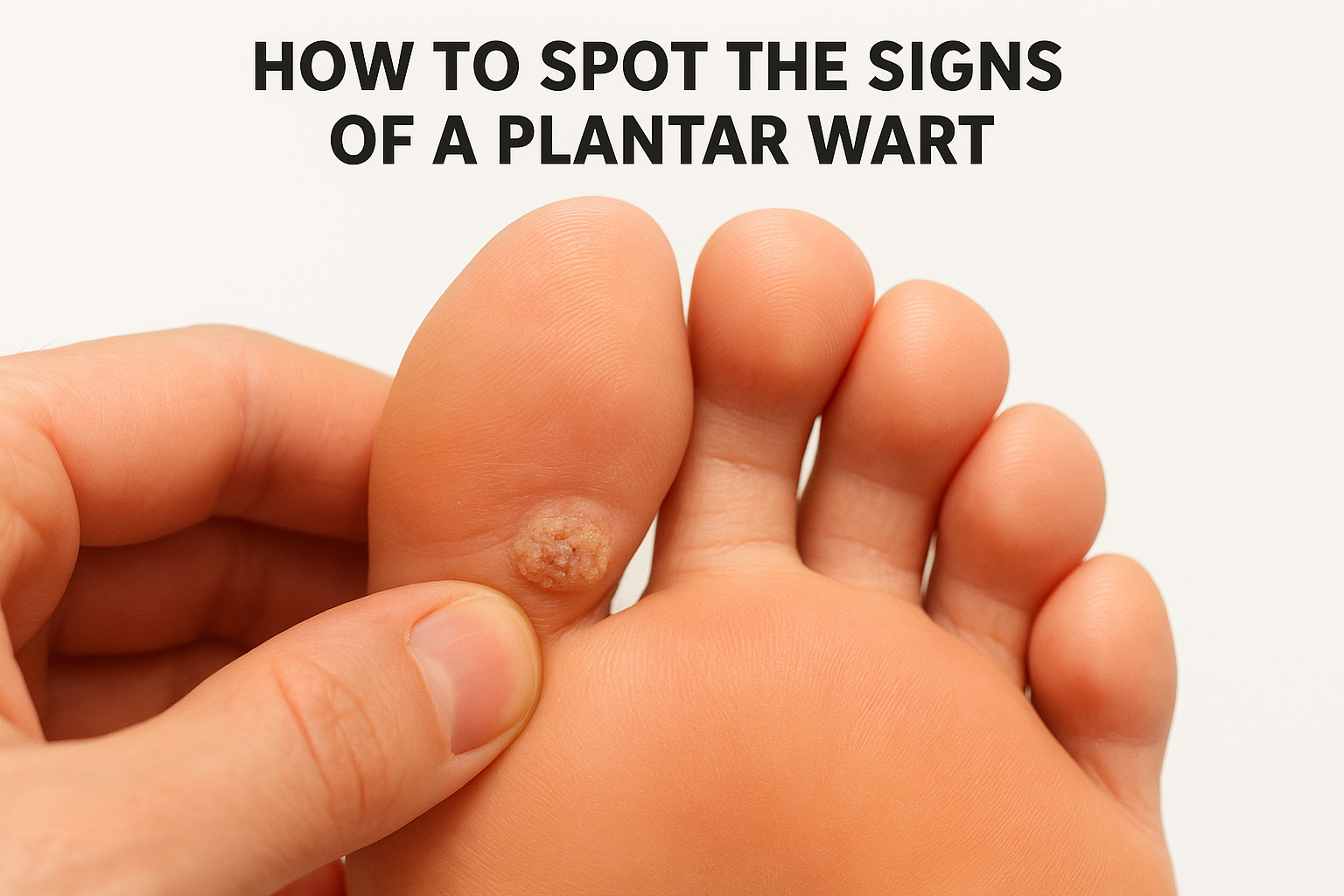
Spotting a plantar wart starts with a close look at the skin’s surface, not just how it feels underfoot. Grab good lighting and check the lesion carefully before you decide it’s just a rough patch of skin. Most plantar warts share a recognisable set of features, and once you know what to look for, the distinction becomes far easier to make at home.
Visual clues to check first
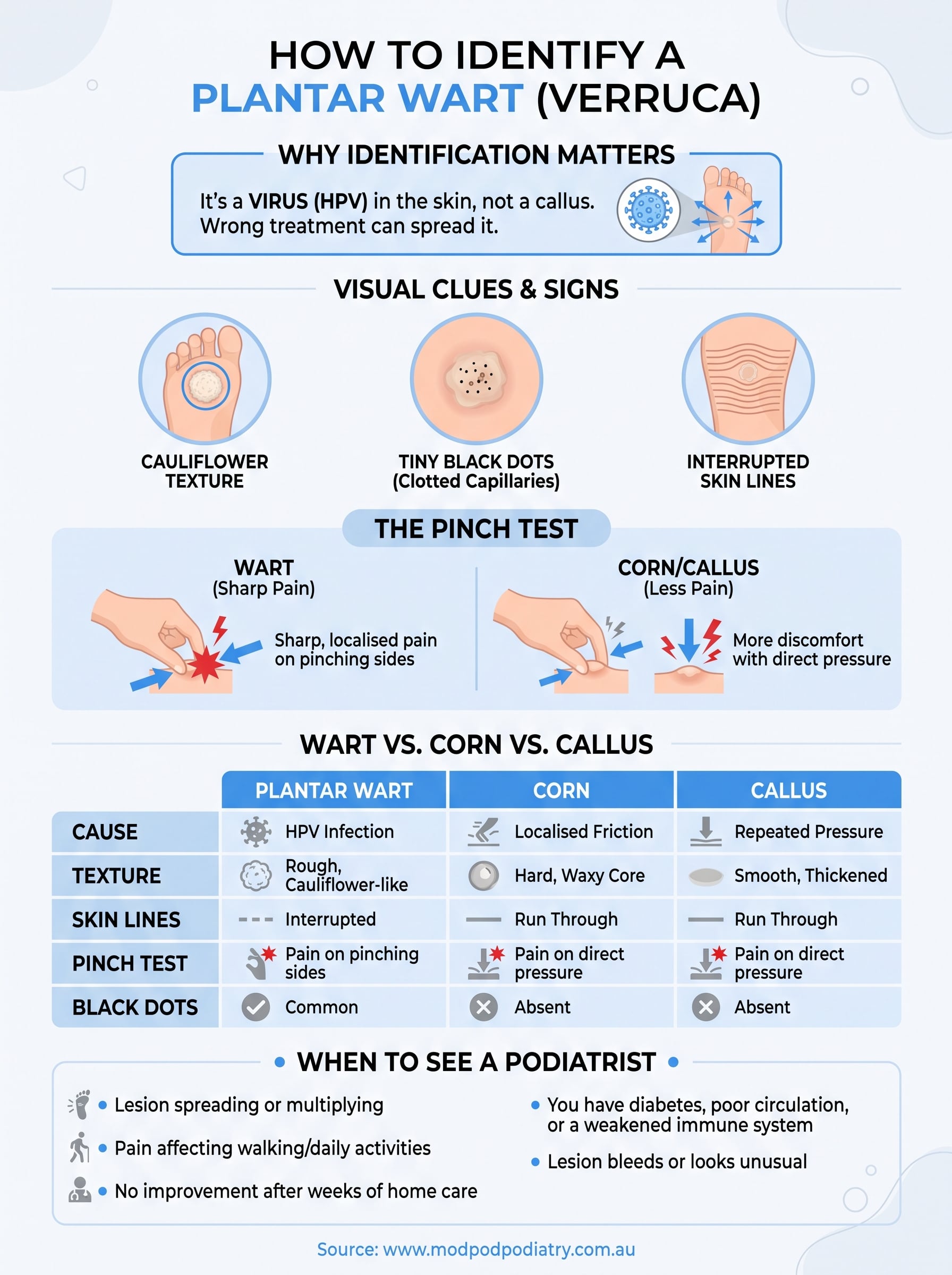
Look for a roughly circular lesion with a cauliflower-like texture rather than smooth, even skin. The centre often shows small black or brown pinpoints, which are tiny clotted capillaries, not ground-in dirt as many people assume. Skin lines that normally run across your foot will typically stop or curve around the wart instead of continuing straight through it, which is one of the clearest visual giveaways.
Physical sensations that give it away
Pain on lateral pressure is a strong indicator of a wart. Pinch the lesion gently from either side rather than pressing straight down, and if that produces a sharp, localised pain, you’re likely dealing with a wart rather than a callus.
If pinching the sides hurts more than pressing straight down, you’re likely looking at a wart, not a callus.
A quick checklist to run through:
- Rough, raised surface with a defined border
- Tiny black or dark red dots visible in the centre
- Skin lines interrupted rather than running through the lesion
- Pain when pinched from the sides
- Located over weight-bearing areas like the heel or ball of the foot
- Sometimes surrounded by smaller satellite warts
If several of these signs line up, treat it as a wart until a professional tells you otherwise. Guessing wrong at this stage costs you time, and possibly spreads the virus further across your foot.
Plantar wart, corn or callus: how to tell them apart
Side by side, plantar warts, corns and calluses can look confusingly similar, especially once they’ve thickened over weeks of walking on them. The quickest way to separate them is to compare their cause, location and texture rather than relying on a single glance. Corns and calluses form from repeated friction or pressure, usually from footwear rubbing against a bony area, while a wart is a viral growth that can appear anywhere on the sole, including spots with no obvious pressure source.
A side-by-side comparison
| Feature | Plantar wart | Corn | Callus |
|---|---|---|---|
| Cause | HPV infection | Localised friction/pressure | Repeated friction over wider area |
| Surface texture | Rough, cauliflower-like | Hard, waxy core | Smooth, thickened, even |
| Skin lines | Interrupted or absent | Run through normally | Run through normally |
| Pain trigger | Pinching from sides | Direct pressure | Direct pressure |
| Black dots | Common (clotted capillaries) | Absent | Absent |
| Typical location | Anywhere on sole, often weight-bearing | Toes, between toes, pressure points | Ball of foot, heel |
Why the pinch test is so reliable
The pinch test remains one of the most useful home checks because corns and calluses, being dead skin build-up, don’t have the nerve involvement that a wart does. Press straight down on a corn or callus and you’ll feel discomfort proportional to the pressure. Pinch a wart from the sides, however, and you’ll often get a sharper, more localised pain that catches you off guard.
If it hurts more to squeeze from the sides than to press straight down, you’re dealing with a wart, not thickened skin.
Borders matter too. Calluses spread gradually with blurred edges, while warts tend to have a clearly defined boundary, sometimes with smaller satellite lesions forming nearby as the virus spreads under the skin.
When to see a podiatrist about a suspected wart
Home checks give you a good starting point, but they won’t replace a proper assessment when the signs are unclear or the lesion isn’t responding to basic care. Booking an appointment makes sense well before you’ve spent weeks trying different pharmacy treatments with no result, especially since delaying treatment usually means the wart has more time to grow or spread to other areas of your foot.
Signs that warrant a professional look
Certain warning signs should push you towards a podiatrist rather than another attempt at home treatment. Watch for these in particular:
- The lesion keeps growing, multiplying, or spreading to new spots on the foot
- Pain is affecting your walking, running, or daily activities
- You’ve tried over-the-counter treatments for several weeks with no improvement
- You have diabetes, poor circulation, or a compromised immune system
- The lesion looks unusual, changes colour, or bleeds without an obvious cause
- A child in the household has a suspected wart, since kids often struggle to leave them alone
If a suspected wart hasn’t budged after a few weeks of home care, it’s time to get it looked at properly.
What a podiatry assessment actually involves
A podiatrist will examine the lesion closely, often using magnification and pressure testing to confirm whether it’s a wart, corn, callus, or something else altogether. From there, treatment options extend well beyond what’s available at the pharmacy, including cryotherapy, needling, and targeted topical applications that address the virus rather than just the surface skin. At ModPod Podiatry, our clinics across Sydney see this exact scenario weekly, and same-week appointments mean you’re not stuck waiting months while a minor issue turns into a bigger one.
If you’re diabetic or have reduced sensation in your feet, don’t attempt any home treatment on a suspected wart. According to Healthdirect Australia, people with these conditions face a higher risk of complications from untreated skin lesions, so professional care isn’t optional, it’s necessary.
Getting clarity on your foot health
By now you should feel confident checking for the tell-tale signs: the cauliflower texture, the tiny black dots, the pain when you pinch rather than press. These small details are what separate a plantar wart from an ordinary corn or callus, and getting the distinction right from the start saves you weeks of guesswork and stops the virus spreading further across your foot or household.
Still, a visual check at home only gets you so far, especially if the lesion isn’t budging or you’re unsure what you’re looking at. A proper assessment removes the guesswork entirely and puts you on the right treatment path straight away, rather than leaving you cycling through pharmacy products that were never going to work on a viral wart. Our podiatrists across Sydney deal with exactly this mix-up every week, so if something on your foot doesn’t add up, book an appointment online and get it checked properly.

