

Sore, thickened skin on the sole of your foot rarely goes away on its own. You can file it down in the shower every week, but the callus keeps coming back, thicker each time, until walking itself starts to hurt. That is usually the point people start searching for foot callus treatment near me, wanting a professional who can actually sort it out rather than another home remedy that buys a few days of relief.
At a podiatry clinic, treatment means more than a quick scrape with a blade. A podiatrist checks why the callus formed, looking at your gait, footwear and foot structure, then removes the hard skin safely with sterile instruments before addressing the cause. This is different to a home pedicure because it targets pressure points that keep rebuilding the callus, so the problem is less likely to return.
This article walks you through exactly what happens when you book in with ModPod Podiatry, from the initial assessment to the tools used and the aftercare advice you’ll get. We’ll also cover what a session typically costs, how Medicare and private health rebates apply, and when callus treatment might point to a bigger biomechanical issue worth investigating across one of our five Sydney clinics.
Why professional treatment beats DIY callus removal
Reaching for a pumice stone or a pharmacy callus blade feels like the obvious fix, and for mild, occasional hard skin it can help. The trouble starts when people use these tools on thick, long-standing calluses, especially with a bathroom razor or a metal foot file that isn’t sterile. Home callus removal rarely addresses the actual cause of the pressure, so the skin thickens back up within weeks, and each round of cutting or filing takes off a bit more skin than the last time, edging closer to the live tissue underneath.
The real risks of cutting it yourself
Blades and graters sold for home use aren’t designed with the same precision as clinical instruments, and one slip can turn a callus into an open wound. This matters more than people expect, because a small cut on the foot can take far longer to heal than one anywhere else on the body, particularly if circulation to the feet is already reduced.
- Infection risk: unsterile blades and shared pedicure tools can introduce bacteria into broken skin.
- Over-thinning: cutting too deep removes the callus’s protective function, leaving the area tender and exposed.
- Missed underlying cause: filing the surface does nothing about the biomechanical pressure rebuilding the callus.
- Delayed diagnosis: what looks like a simple callus can sometimes be a plantar wart or a corn with a deep core, which needs different treatment entirely.
- Danger for at-risk feet: anyone with diabetes, poor circulation or nerve damage faces a genuinely higher chance of complications from a small nick turning into an ulcer.
A callus you cut yourself often grows back thicker, because the pressure causing it was never actually addressed.
What a podiatrist does that a blade at home can’t
A registered podiatrist works with sterile, single-use or fully autoclaved instruments and has the training to judge exactly how much skin to remove without damaging healthy tissue underneath. More importantly, they’re looking past the callus itself. Gait patterns, worn-down shoes, high arches, bunions and even the way you distribute weight when standing all feed into where hard skin builds up, and a podiatrist is trained to spot those patterns during the same visit. That’s the difference between a treatment that lasts a few days and one that actually reduces how often the callus returns.
DIY versus professional treatment at a glance
| Factor | DIY removal | Professional podiatry treatment |
|---|---|---|
| Tools used | Pumice stones, drugstore blades, graters | Sterile scalpels and clinical debridement tools |
| Addresses root cause | No, treats the surface only | Yes, includes gait and pressure assessment |
| Infection risk | Higher, especially with shared or unclean tools | Minimal, with sterile single-use equipment |
| Suitable for diabetic or at-risk feet | Not recommended | Yes, with appropriate precautions |
| Longevity of results | Days to a couple of weeks | Weeks to months, often longer with offloading advice |
If you’ve got diabetes, peripheral neuropathy or circulation problems, the Australian Diabetes Society and most GPs will tell you outright to avoid home callus removal altogether. In these cases, even a minor skin break can progress to an ulcer far more quickly than most people realise, and professional podiatry care becomes less about comfort and more about protecting the foot itself.
What to expect during your callus treatment appointment
Walking into a ModPod clinic for callus treatment feels less like a pedicure and more like a proper medical consultation. The initial assessment takes up the first part of your visit, where the podiatrist examines the callus, checks your footwear, watches how you stand and walk, and asks about any pain, diabetes or circulation issues before touching anything. This step matters because two calluses that look identical can have completely different causes, and treating them the same way rarely works long term.
The assessment and diagnosis
Before any hard skin comes off, your podiatrist will typically:
- Inspect the callus location, size and depth
- Check for an embedded core, which points to a corn rather than a simple callus
- Review your footwear for pressure points or poor fit
- Assess your gait and weight distribution while standing and walking
- Ask about medical history, particularly diabetes, circulation or nerve conditions
Treating the callus without understanding why it formed is like mopping a floor while the tap keeps running.
The debridement procedure
Once the assessment is done, the podiatrist uses a sterile scalpel to carefully pare back the thickened, dead skin layer by layer. It’s painless in almost all cases, since the callus itself has no nerve endings once you get past the surface layer, and most patients describe it as a pressure or scraping sensation rather than discomfort. The whole debridement usually takes between ten and twenty minutes depending on how thick and widespread the callus is, and you’ll see the difference immediately, with smoother, softer skin left behind.
Padding, offloading and next steps
Afterwards, your podiatrist may apply temporary padding or offloading devices to shift pressure away from the treated area while it settles, and they’ll talk you through what caused the callus in the first place. This is also when a custom orthotic gets discussed if your gait or foot structure is contributing to the problem, since padding alone only buys short-term relief. Expect the whole appointment, from check-in to walking back out, to run somewhere between thirty and forty-five minutes, and you’ll leave with a clear plan rather than just cleaner feet.
How to stop calluses from coming back
Stopping a callus for good means changing whatever caused it, not just repeating the removal every few weeks. Once your podiatrist has pared back the hard skin, the real work is reducing the friction or pressure that built it up in the first place. Ongoing prevention is what separates a one-off treatment from a lasting fix, and it usually involves a mix of footwear changes, offloading and a simple home routine.
Footwear is usually the first thing to fix
Tight, narrow or worn-out shoes are behind a huge share of the calluses ModPod podiatrists see, especially on the ball of the foot and along the outer edges of the toes. Swapping to shoes with a wider toe box and proper cushioning often reduces callus recurrence on its own, without any further treatment needed. Runners should also check tread wear patterns, since an uneven wear pattern usually points to a gait issue worth assessing separately.
Orthotics and padding for redistributing pressure
When footwear changes alone don’t cut it, custom orthotics redistribute weight away from the pressure point causing the callus. These are built from a 3D scan or pressure plate reading taken during your assessment, so they’re shaped to your foot rather than a generic insert bought off a shelf.
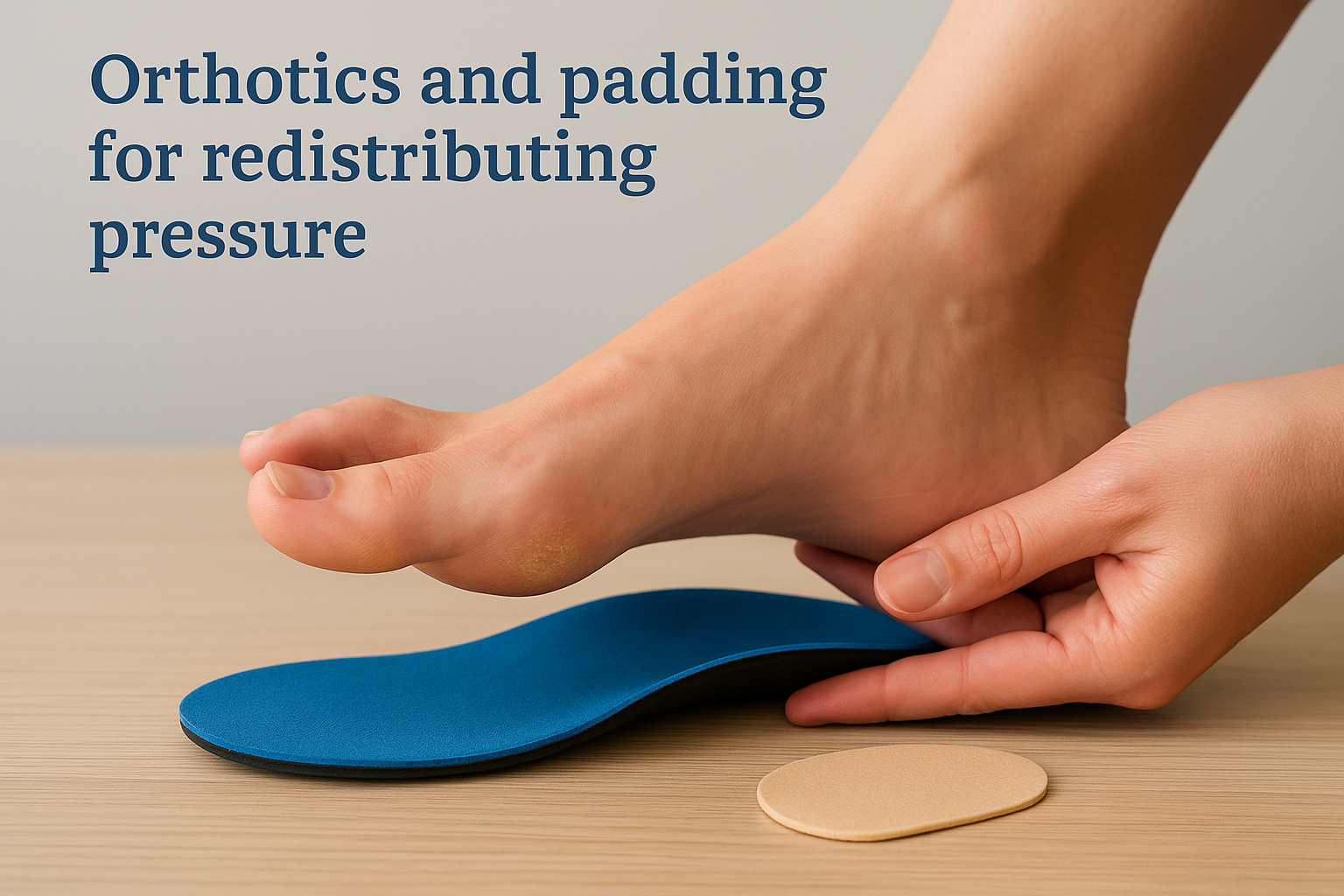
A callus keeps a promise to return unless the pressure driving it is redistributed somewhere else.
A simple home routine between visits
Between podiatry visits, a short daily routine keeps hard skin from building back up as quickly:
- Moisturise the soles nightly with a urea-based cream to keep skin pliable
- Use a pumice stone gently on soft, damp skin, never on dry or cracked areas
- Check your feet weekly for new hard patches, especially if you have diabetes
- Rotate footwear rather than wearing the same pair daily
- Book a follow-up if the same callus site starts thickening again within a few weeks
Following this routine, most patients find their calluses shrink in frequency and severity over a few months, needing only occasional maintenance visits rather than repeat treatments every few weeks.
Choosing the right podiatry clinic near you
Searching "foot callus treatment near me" throws up everything from beauty salons to full podiatry clinics, and the difference between them matters more than the price tag suggests. A registered podiatrist has completed a university degree and holds APodA registration, which means they’re trained to spot the difference between a harmless callus and something that needs medical attention, like a plantar wart or an early diabetic foot complication. A beautician offering a foot spa simply isn’t qualified to make that call, no matter how good the pedicure looks afterwards.
What to check before booking
Before you commit to an appointment, run through a quick checklist so you know you’re walking into a clinic rather than a spa treatment room:
- Confirm the practitioner is APodA-registered, not just "foot care trained"
- Ask whether they use sterile, single-use or autoclaved instruments
- Check if gait or biomechanical assessment is included, not just skin removal
- Look for Medicare EPC acceptance if you have a chronic condition and a referral
- Confirm HICAPS on-site claiming if you want an instant private health rebate
A qualified podiatrist treats the cause of your callus, not just the skin on top of it.
Location, availability and continuity of care
Proximity matters more than people expect, because callus treatment usually isn’t a one-off. You’ll get better results from a clinic you can actually get back to for follow-up padding checks or orthotic adjustments, rather than one that’s a forty-minute drive across town. ModPod Podiatry runs five clinics across Sydney, in the CBD, Mosman, Dee Why, Rose Bay and North Ryde, so most patients across the northern beaches, north shore, eastern suburbs and inner city have a genuinely convenient option nearby.
Same practitioner, ongoing continuity
Seeing the same podiatrist across multiple visits also helps, since they’ll already know your foot structure, footwear habits and treatment history without you repeating the same story each time. That continuity is what turns a single callus removal into a proper long-term management plan, rather than a repeat booking every few weeks with a different practitioner starting from scratch.
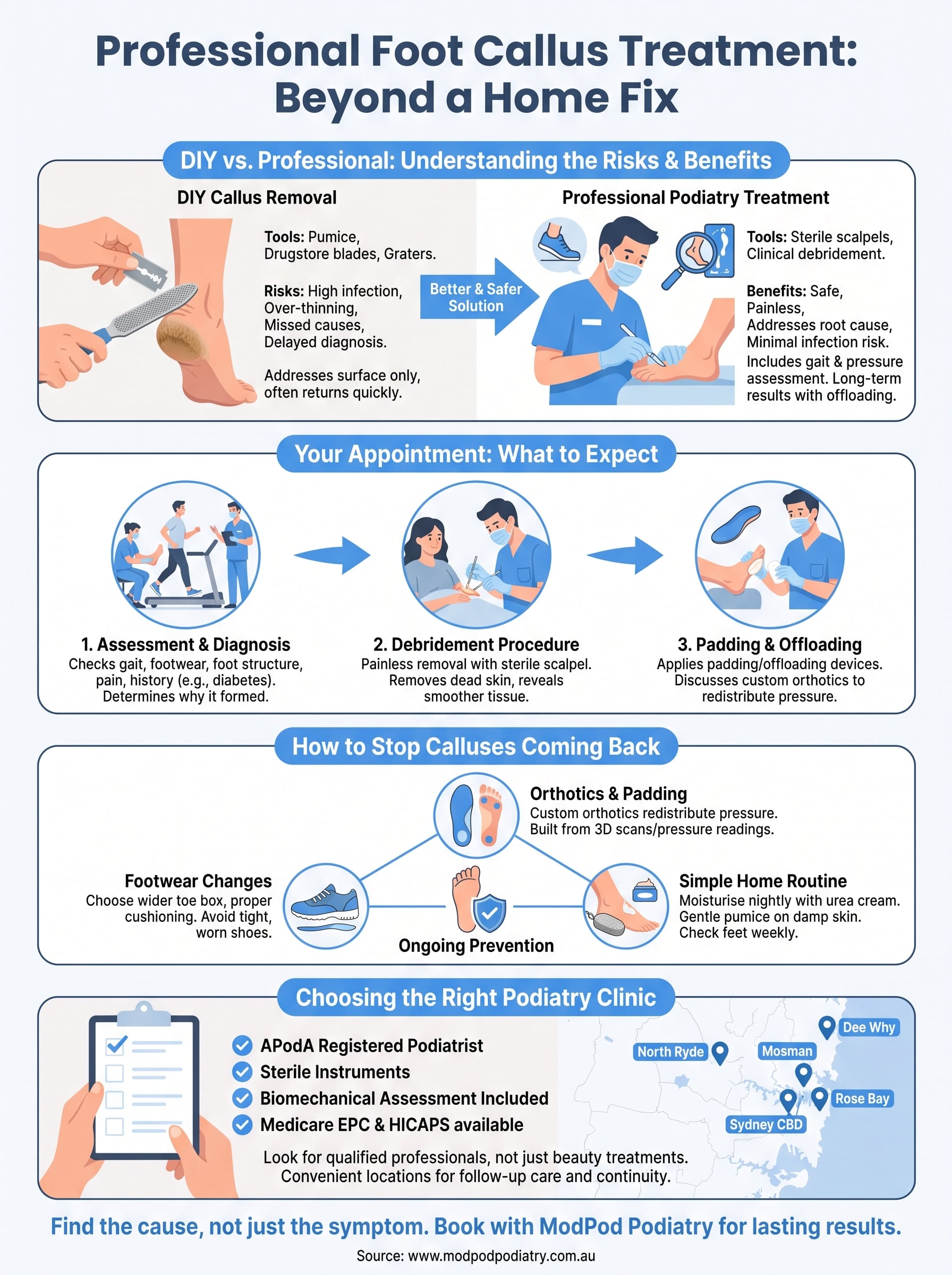
Putting your best foot forward
A callus that keeps returning is your foot telling you something about how you stand, walk or what you’re wearing on your feet. Professional treatment clears the hard skin safely, but the real value comes from finding out why it formed and fixing that instead of repeating the same cycle every few weeks. Whether that means new footwear, a padding routine, or a proper biomechanical assessment leading to custom orthotics, the goal is fewer visits over time, not more.
If sore, thickened skin has been bothering you longer than it should, don’t wait for it to get worse before booking in. ModPod Podiatry runs five clinics across Sydney with same-week availability, on-site HICAPS claiming and Medicare EPC acceptance for eligible patients. Book your appointment online and get a proper plan for your feet, not just a quick scrape and a hope it doesn’t come back.

