
Sore feet by the third trimester feel almost inevitable, but that doesn’t mean you have to put up with them. Foot pain during pregnancy affects most women at some point, and it usually has a clear physical explanation rather than being something you simply have to endure. Understanding why it happens makes it easier to know what’s normal and what needs a closer look.
The short answer is that hormonal changes loosen the ligaments in your feet while extra weight and fluid retention change how pressure moves through them. This combination often starts in the second trimester and can worsen as your due date approaches, sometimes even changing your shoe size permanently. Knowing the typical timeline helps you separate ordinary discomfort from symptoms worth flagging with your GP or podiatrist.
This article walks through the main causes behind pregnancy-related foot pain, when you can expect it to start and ease, and the practical relief options that actually help, from footwear choices to supportive orthotics. Our podiatrists across Sydney see this regularly and can offer tailored assessment if home remedies aren’t cutting it.
Why pregnancy causes foot pain
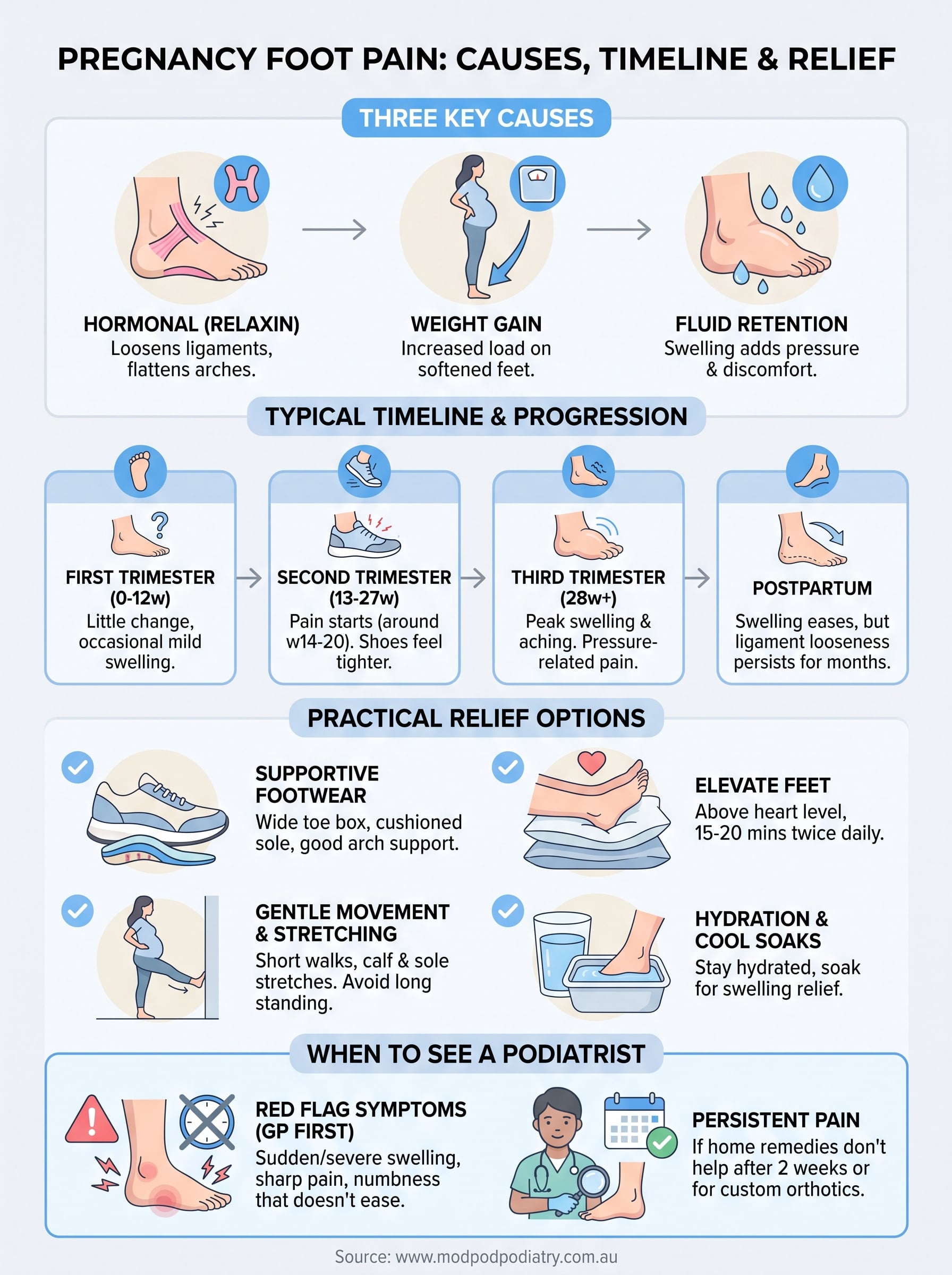
Three separate physical changes combine to put pressure on your feet during pregnancy, and most women experience at least two of them at once. Hormonal shifts, weight gain, and fluid retention each affect your feet differently, but together they explain why so many women reach for wider shoes by the third trimester. Understanding each mechanism helps you recognise which symptoms are just uncomfortable and which ones deserve professional attention.
The hormone relaxin loosens your ligaments
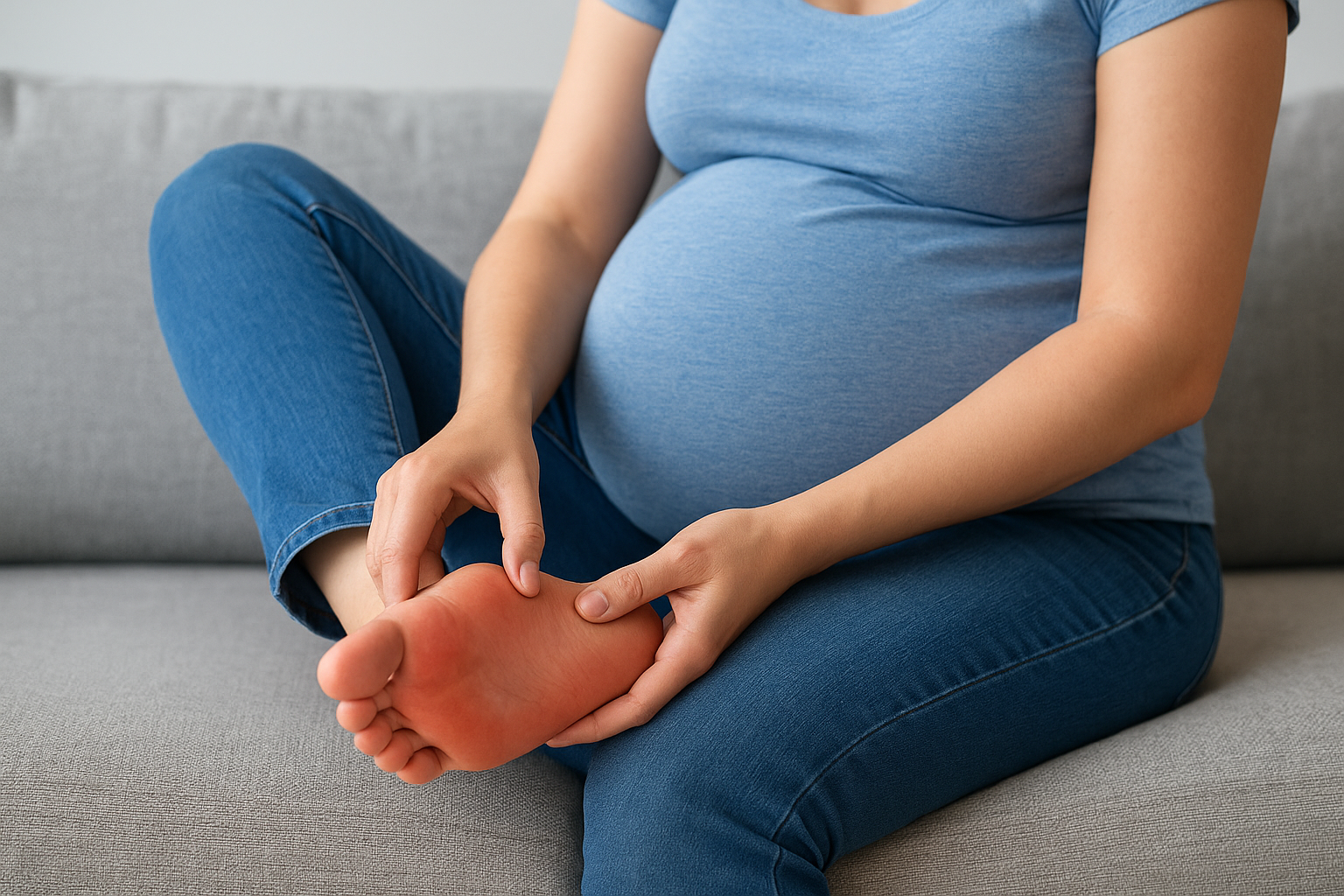
Your body produces a hormone called relaxin throughout pregnancy to soften the ligaments around your pelvis in preparation for birth. Unfortunately, relaxin doesn’t limit itself to the pelvis. It loosens the ligaments in your feet too, which can cause your arches to flatten and your feet to spread wider than usual.
Softer ligaments mean your feet lose some of their natural shock absorption right when you need it most.
This is also why many women find their pre-pregnancy shoes no longer fit properly, sometimes permanently, after their arches settle into a new shape.
Extra weight changes your arch and pressure points
Carrying additional weight, often 10 to 15 kilograms by full term, shifts how load travels through your feet with every step. Your arches, already softened by relaxin, now bear more pressure than they’re designed for. This combination commonly leads to:
- Plantar fasciitis and heel pain (how plantar fasciitis is treated)
- Overpronation explained (rolling inward)
- Aching arches by the end of the day
- Increased callus formation under the ball of the foot
Many of our patients find that orthotics prescribed for pregnancy help redistribute this pressure and support the arch through these changes.
Swelling and fluid retention add to the strain
Fluid retention, particularly in the third trimester, causes swelling in the feet and ankles that adds another layer of discomfort. Swollen tissue compresses nerves and blood vessels, which can leave your feet feeling tight, heavy, or numb by evening. Standing or sitting for long periods tends to make this worse, so gentle movement and elevation often bring some relief.
When foot pain typically starts in pregnancy
Most women notice the first twinges around week 14 to 20, once relaxin levels have built up enough to soften the ligaments in the feet. Symptoms are usually mild at this stage, more of a dull ache after a long day than anything that stops you in your tracks. Early pregnancy foot pain is less common, though some women with pre-existing arch issues feel changes sooner than others.
Foot pain rarely announces itself all at once; it builds gradually as your body changes shape.
Progression tends to follow a fairly predictable pattern, even though the intensity varies from person to person.
| Stage | Typical foot changes |
|---|---|
| First trimester | Little to no change; occasional mild swelling |
| Second trimester | Arches begin to flatten; shoes start feeling tighter |
| Third trimester | Peak swelling, aching, and pressure-related pain |
| Postpartum | Swelling eases, but ligament looseness can persist for months |
Severity depends on factors like your pre-pregnancy foot shape, how much weight you gain, activity levels, and whether this is your first pregnancy. Ligaments that have already stretched during a previous pregnancy tend to loosen faster the second time around, so foot pain in later pregnancies often starts earlier and feels more pronounced. Weight-bearing work, long shifts on your feet, and hot weather can all bring symptoms forward too. If your pain arrives unusually early or feels sharp rather than achy, it’s worth mentioning to your podiatrist rather than assuming it will simply pass with time.
How to relieve foot pain during pregnancy
Most cases of foot pain during pregnancy respond well to simple, low-cost changes rather than medical intervention. The goal is to reduce pressure on your arches, control swelling, and give your ligaments the support they’ve lost. Start with the basics before assuming you need a specialist.
Choose supportive footwear
Swap tight, unsupportive shoes for ones with a wide toe box, cushioned sole, and adjustable fastening that accommodates swelling throughout the day. Avoid flat sandals and thongs, since they offer no arch support at exactly the point your ligaments need it most.
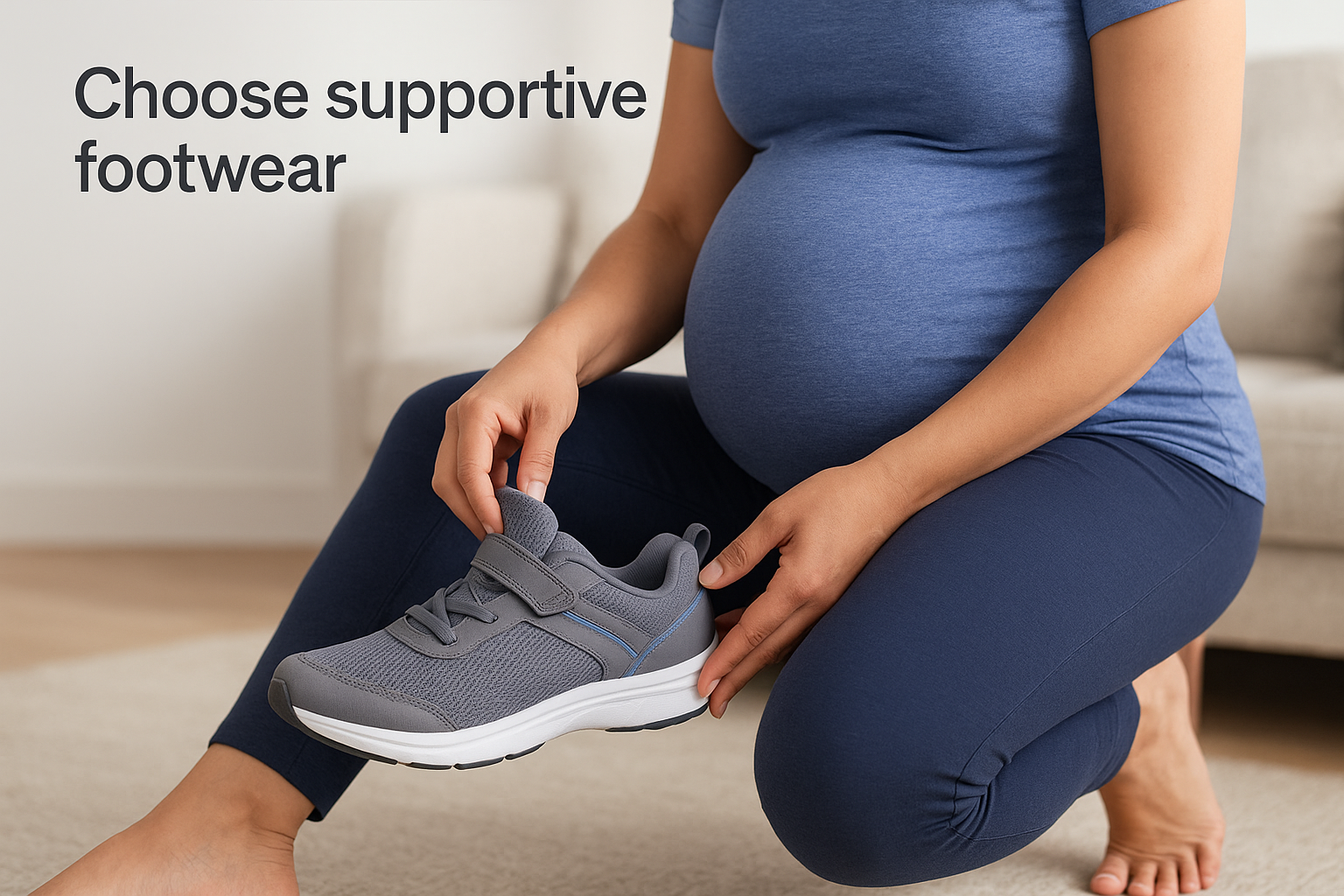
A good shoe won’t stop pregnancy foot pain entirely, but it can stop it getting worse.
Many women also find relief with over-the-counter arch supports (our guide to arch support inserts explains the options), though custom orthotics designed for your specific foot shape tend to last longer and target problem areas more precisely.
Manage swelling with daily habits
Small, consistent habits often make more difference than any single product. Try building these into your routine:
- Elevate your feet above heart level for 15 to 20 minutes, twice a day
- Go for short, gentle walks to keep circulation moving, and consider compression socks for swelling
- Soak feet in cool water if swelling feels tight or hot
- Stretch your calves and the soles of your feet each evening
- Stay hydrated, since dehydration can worsen fluid retention
Combined, these steps address both the mechanical and circulatory sides of pregnancy-related foot pain, which is usually enough to keep symptoms manageable until delivery.
When to see a podiatrist about your feet
Given how common mild aching feels during pregnancy, it’s easy to dismiss symptoms that actually need attention, so it helps to know the signs it’s time to see a podiatrist. Red flag symptoms include sudden or severe swelling, one foot swelling far more than the other, sharp shooting pain, numbness that doesn’t ease with rest, or any sign of infection around the toenails. These can occasionally point to conditions like preeclampsia or deep vein thrombosis, so they warrant a same-day call to your GP rather than a wait-and-see approach.
Outside of those urgent cases, persistent pregnancy foot pain that doesn’t respond to footwear changes, elevation, or stretching over a couple of weeks is worth booking in for. A podiatrist can assess whether your arches need extra support, check your gait for changes in how you’re walking, and rule out conditions like plantar fasciitis that benefit from early treatment rather than being left until after birth.
If home remedies haven’t helped after two weeks, that’s your cue to get feet properly assessed rather than pushing through.
Signs worth flagging to a professional include:
- Pain that wakes you at night or worsens with rest
- Swelling that doesn’t improve overnight
- Numbness or tingling that spreads up the leg
- Visible changes to toenails or skin colour
- Pain severe enough to change how you walk
Our podiatrists across Sydney regularly assess pregnant patients and can arrange a same-week appointment if you’d rather have it checked than guess.
Looking after your feet as your pregnancy progresses
Foot pain during pregnancy is common, but common doesn’t mean you should just grit your teeth through it. Relaxin, weight gain, and fluid retention each play a part, and knowing the pattern lets you tell ordinary aching from something that needs a closer look. Supportive shoes, elevation, and gentle stretching handle most mild cases, especially when you start early rather than waiting until the third trimester makes everything harder to manage.
Getting proper support now also protects your feet well beyond the birth, since loosened ligaments can take months to tighten back up. If your symptoms aren’t easing, or you’d simply rather have an expert check things than guess, our podiatrists across Sydney see this every week and know how to help. You can book your podiatry appointment online at a time that suits you, no GP referral needed.