
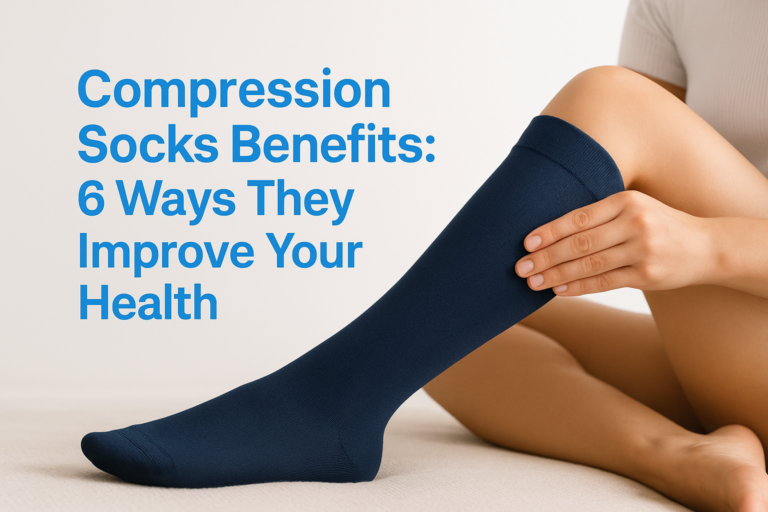
If your feet ache after a long shift, or your ankles puff up on flights, someone has probably told you to try compression socks. It sounds like generic advice, but there’s real physiology behind it. Understanding compression socks benefits helps you decide whether they’re worth adding to your daily routine or your recovery kit after a hard training block.
In short, the graduated pressure in these socks pushes blood back up towards your heart instead of letting it pool in your lower legs. That single mechanism drives improved circulation, less swelling by the end of the day, and a lower risk of blood clots on long trips or after surgery. Runners and people who stand all day notice the difference within a week or two of consistent wear.
We see the effects of poor circulation and swelling in our Sydney clinics constantly, from tired legs to genuine vascular concerns, so we know which claims about compression wear hold up. Below, we break down six specific ways these socks support your health, who benefits most, and how to choose the right compression level for your situation.
Why compression socks are good for your health
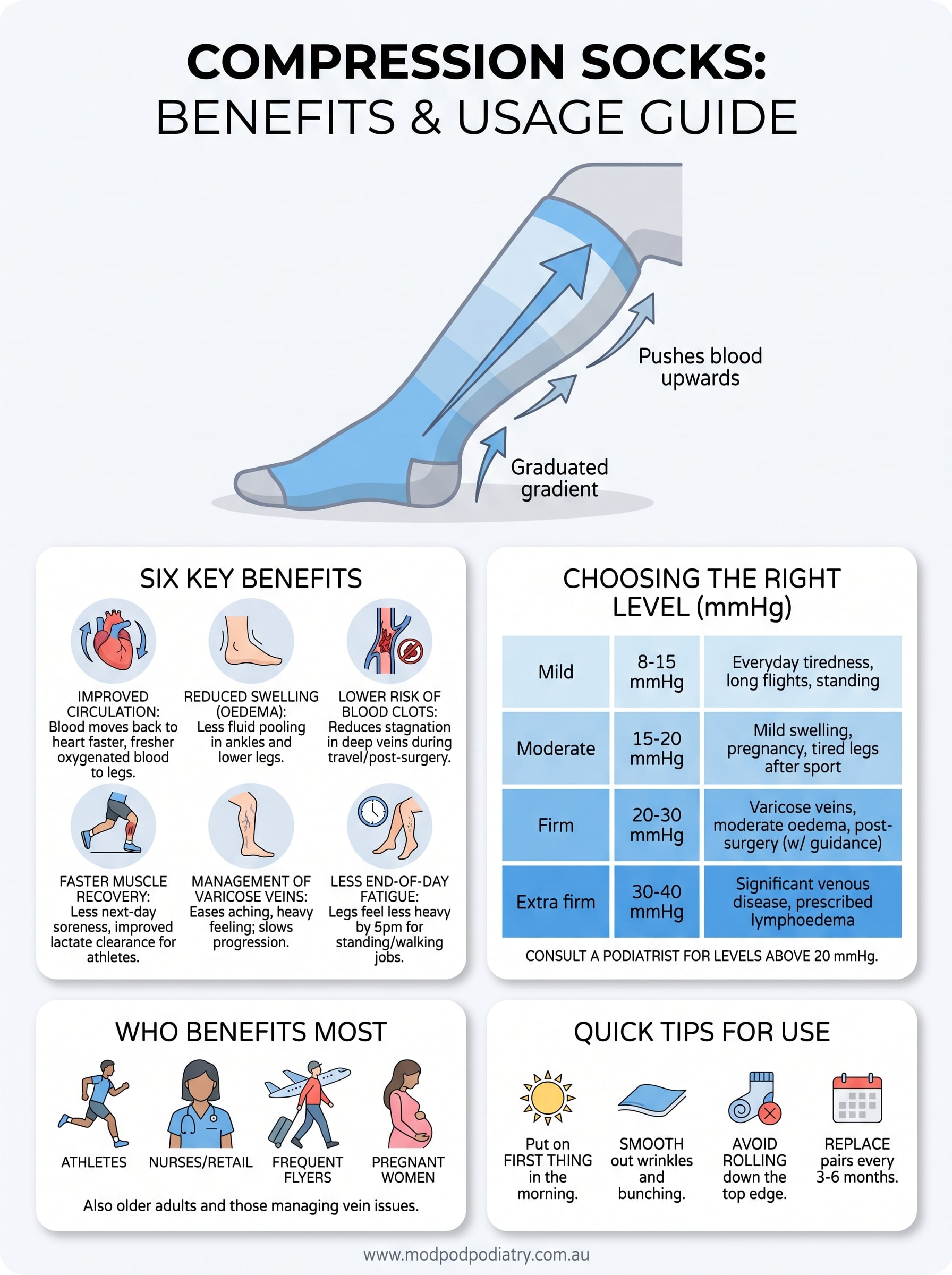
Compression socks work through a simple physics trick called graduated compression. The socks squeeze tightest at the ankle and gradually loosen as they move up the calf, forcing blood to flow upward against gravity instead of pooling around your ankles. This mechanical assist takes pressure off the small valves in your leg veins, which is exactly what happens naturally when you walk, but compression keeps that pump working even when you’re sitting still for hours.
Graduated compression does the job your calf muscles would normally do when you’re too still to do it yourself.
Once that basic mechanism clicks, the list of downstream benefits gets long. Here are the six effects we see reported most consistently, both in clinical research and by our own patients across Sydney.
Six specific benefits worth knowing
- Improved circulation: blood moves back to the heart faster, so your legs get fresher oxygenated blood sooner, particularly useful during long-haul flights or desk-bound workdays.
- Reduced swelling (oedema): less fluid pools in the ankles and lower legs, which is why compression is standard advice for swelling in your ankles after a flight, pregnancy, or a day on your feet.
- Lower risk of blood clots: graduated pressure reduces blood stagnation in the deep veins, a factor the Australian Government Department of Health flags as relevant for post-surgical and long-travel patients.
- Faster muscle recovery: athletes wearing compression socks after hard sessions report less next-day soreness, likely from reduced micro-swelling and improved lactate clearance.
- Management of varicose veins: consistent wear can ease the aching, heavy-leg feeling that comes with visible varicose or spider veins, though it won’t remove them.
- Less end-of-day fatigue: many wearers simply say their legs feel less heavy by 5pm, a subjective but very real quality-of-life benefit for anyone standing or walking for work.
Notice that these benefits split into two camps: immediate comfort (less heaviness, less swelling) and longer-term protection (clot prevention, vein health). Both matter, but they call for slightly different approaches to compression level and wear time, which we’ll cover next.
Someone recovering from ankle surgery has different needs than a nurse on a twelve-hour shift, even though both are chasing the same underlying benefit of compression socks for circulation. If you’re already dealing with heel pain or another lower-limb issue alongside circulation concerns, it’s worth having a podiatrist assess the whole picture rather than treating compression socks as a standalone fix. Our team regularly builds compression advice into broader sports podiatry treatment plans when a patient’s recovery or performance depends on it.
How to choose and wear compression socks correctly
Getting the right compression level matters more than picking a brand you recognise from a pharmacy shelf, though our podiatrist-tested compression sock picks for Australia are a sensible starting point. Compression is measured in millimetres of mercury (mmHg), and the strength you need depends on what you’re treating rather than what feels comfortable straight out of the packet.
| Compression level | mmHg range | Typical use |
|---|---|---|
| Mild | 8-15 mmHg | Everyday tiredness, long flights, standing all day |
| Moderate | 15-20 mmHg | Mild swelling, pregnancy, tired legs after sport |
| Firm | 20-30 mmHg | Varicose veins, moderate oedema, post-surgery (with guidance) |
| Extra firm | 30-40 mmHg | Significant venous disease, prescribed lymphoedema management |
Anything above 20 mmHg is worth discussing with a podiatrist or GP first, since ill-fitting firm compression can restrict circulation rather than help it.
The right compression level treats the problem you actually have, not the one you assume you have.
Sizing is where most people go wrong. Measure your ankle and calf circumference before buying, because a sock that’s the right length but too tight around the calf will dig in and cause discomfort within an hour. Most reputable brands publish a sizing chart based on these two measurements rather than shoe size alone.
Wearing them correctly is just as important as choosing them. A few habits make a real difference:
- Put them on first thing in the morning, before swelling has a chance to set in.
- Smooth out wrinkles and bunching as you pull them up, since folds create pressure points.
- Avoid rolling the top edge down, which turns graduated compression into a tourniquet effect.
- Remove them before bed unless a health professional has specifically prescribed overnight wear.
- Replace pairs every three to six months, as elastic loses its grip well before the fabric looks worn.
Once fitted properly, most people forget they’re even wearing them by mid-morning, which is exactly the point.
Who benefits most from compression socks
Certain groups get more out of compression socks than others, and knowing where you fit helps decide whether basic over-the-counter compression is enough or whether you need a proper fitting. Athletes and active people chasing faster recovery, office and healthcare workers on their feet or seated for hours, and pregnant women dealing with fluid retention all report consistent, measurable improvement from daily wear.
Groups who see the biggest benefit
- Runners, cyclists and team-sport athletes: post-session recovery improves, and many wear compression during long events to delay leg fatigue.
- Nurses, retail staff, hairdressers and tradespeople: standing shifts of eight hours or more are exactly what graduated compression was designed for.
- Frequent flyers: long-haul travel raises clot risk, and compression socks remain one of the few interventions with solid backing from the Australian Government Department of Health.
- Pregnant women: hormonal changes and extra blood volume make swollen ankles common, and support socks for circulation ease that discomfort safely.
- People managing varicose veins or early venous disease: daily wear slows symptom progression even if it doesn’t reverse existing veins.
- Older adults with reduced mobility: less walking means less natural calf-pump action, so compression helps fill that gap.
If your job or lifestyle keeps you still for long stretches, compression socks are doing work your muscles aren’t.
Diabetics and anyone with peripheral arterial disease and other causes of lower leg pain at night need a different conversation entirely, because compression can restrict already-compromised blood flow rather than help it. Speaking with a podiatrist before buying firm compression is the safer route if you fall into either category, particularly if you’re already managing another lower-limb issue alongside circulation concerns through our sports podiatry clinics.
Tips for getting used to compression socks
Most first-time wearers find the tightness a bit alarming, especially around the ankle where the pressure is strongest. That sensation is normal and usually settles within a few days as your legs adjust to the constant gentle squeeze. Pushing through that adjustment period is worth it, because the compression socks benefits only show up with consistent daily wear, not the occasional pair pulled out before a flight.
Ease in gradually
Giving your legs time to adapt makes the whole experience far less annoying. Start with two to three hours a day for the first week rather than jumping straight to all-day wear, and build up as your skin and circulation get used to the pressure. Trying a lighter compression level first, even if you eventually need something firmer, helps you build the habit without the discomfort that puts people off after one bad experience.
Consistency beats intensity when you’re building a compression habit, so start light and stay with it.
Solve common frustrations
A handful of practical fixes solve most of the complaints we hear from patients trying compression for the first time:
- Struggling to pull them on: use rubber gloves for grip, or try a compression sock donner (a simple frame that holds the sock open while you slide your foot in).
- Sweaty or itchy legs: choose moisture-wicking fabric blends rather than plain cotton, especially in Sydney’s warmer months.
- Rolling down at the knee: size down slightly in length, or switch to a knee-high style with a wider silicone grip band.
- Digging in behind the knee: you’ve likely gone up too far, socks should sit just below the knee crease, not over it.
Applying moisturiser the night before, rather than right before dressing, also stops the fabric from sticking and bunching as you pull it up.
When to seek professional advice
Compression socks solve a lot of everyday circulation problems, but they’re not a substitute for a proper diagnosis. See a podiatrist if swelling persists despite daily wear, if one leg swells more than the other, or if you notice skin discolouration, warmth, or pain in the calf, these can point to something beyond simple fluid pooling. Diabetics and anyone with reduced sensation in their feet should always get fitted rather than guessing a compression level off the shelf, since the wrong pressure can cause real harm when you can’t feel it happening, as our guide to diabetic foot care for Australians explains.
The six compression socks benefits we’ve covered only hold up when the product matches your actual condition, not just your symptoms. If you’re unsure where you sit, or you’re already managing heel pain, varicose veins, or a sports injury alongside circulation concerns, get it checked properly rather than guessing. Book a podiatry appointment with our Sydney team and we’ll sort out the right approach together.