
If you search for gait analysis running near me in Sydney, you will find podiatrists, physios, sports labs and running shoe stores. They all use the same phrase, but what you get varies a lot. Some film you for two minutes on a treadmill and sell you a shoe. Others measure how your foot loads the ground and treat the cause of your pain.
The short answer is that the best running gait analysis depends on your goal. If you are injured or have recurring niggles, choose a clinic that assesses and treats, such as a podiatry or physio practice. If you only need shoes, a specialty store can be enough. Look for video or pressure plate data and a written plan you can keep.
Below, we compare seven places across Sydney. For each one, you will see what the assessment includes, who it suits, and what it typically costs. We run gait analysis at ModPod Podiatry, so we have included our own clinics, but we list the other options on their merits so you can book with confidence.
1. ModPod Podiatry
What the assessment includes
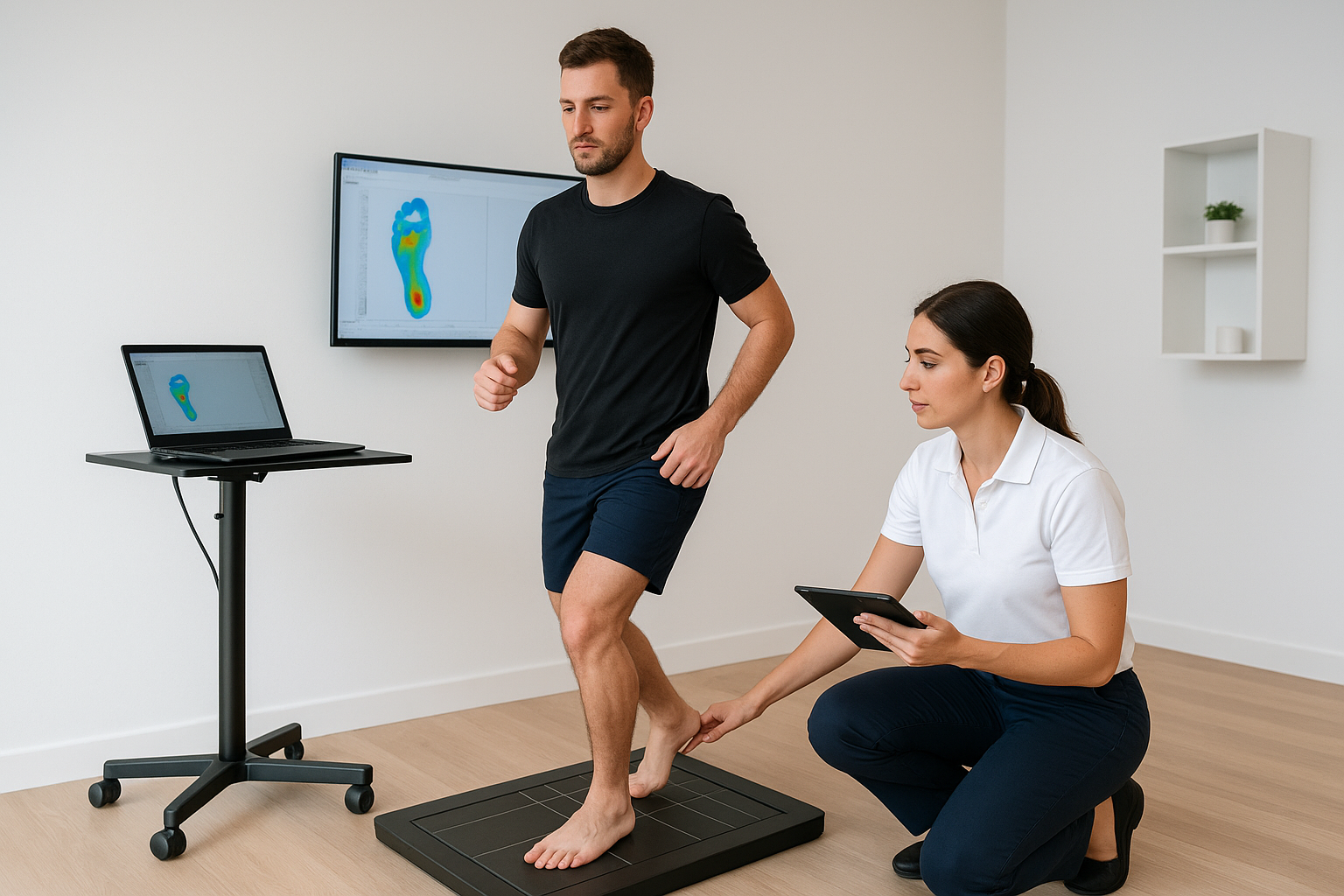
Our running gait analysis is a clinical assessment, not a shoe-sales pitch. A podiatrist takes your history first, then looks at how your foot, ankle, knee and hip work together when you walk and run. You leave knowing what is driving your pain and what to do about it.
- Injury and training history, including weekly distance and current shoes
- Strength, flexibility and joint range checks
- Pressure plate analysis showing how load moves through each foot
- Gait and biomechanical assessment, with findings explained in plain language
- 3D scanning for custom orthotics if they are the right fix
- A written plan covering exercises, footwear and treatment
A gait analysis only helps if it ends with a plan that treats the cause, not just a shoe recommendation.
Treatment can start in the same visit. For stubborn heel pain, that may include shockwave therapy alongside strapping and a loading program.
Who it suits
Runners who are hurting get the most from us. Heel pain, plantar fasciitis, shin splints and recurring niggles are our everyday work, and our podiatrists have treated thousands of Sydney patients over 20+ years. If you have tried new shoes and the pain keeps coming back, book a clinical assessment.
Parents also use us for children who toe-walk, trip often or complain of sore feet after sport. Healthy runners are welcome too, especially if you are stepping up to a first half marathon and want to find weak links before they become injuries. If you only want a quick shoe fit and have no pain, a specialty store (option 2) may be enough.
Location, cost and rebates
We have five clinics, so it is easy to find running gait analysis locations near your home or office. Appointments are often available the same week, and you can book online without a GP referral.
| Detail | What to expect |
|---|---|
| Clinics | Sydney CBD, Mosman, Dee Why, Rose Bay, North Ryde |
| Consultation fee | Typically $110 to $140 |
| Private health | Rebates claimed on the spot through HICAPS, subject to your extras cover |
| Medicare | EPC plan rebates for eligible patients |
| Referral | Not needed |
Check your extras cover for podiatry limits before you come, and ask us if you might qualify for an EPC plan through your GP. You can see all five ModPod Podiatry clinics and book online.
2. Sydney running shoe specialist stores with video analysis
What the assessment includes
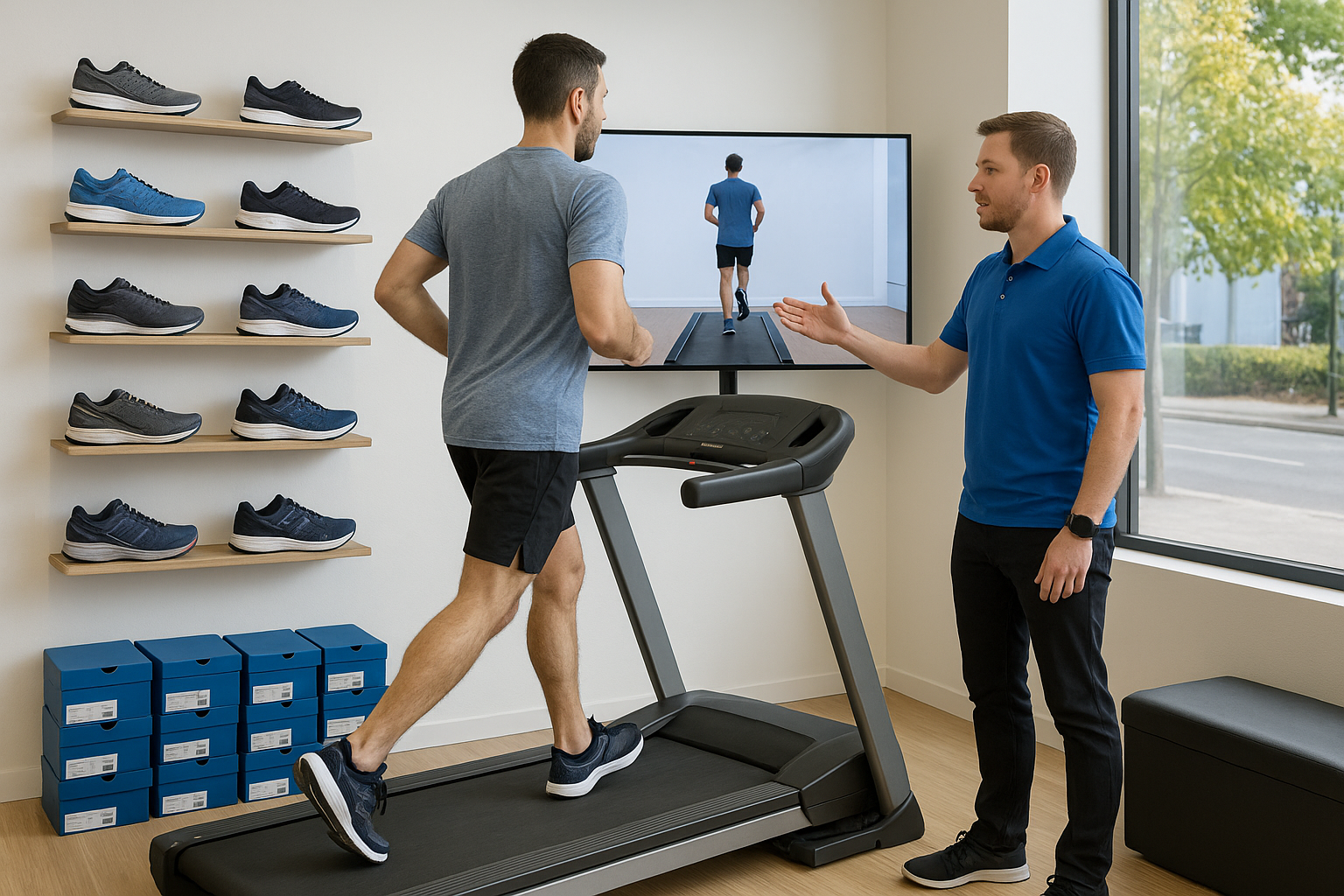
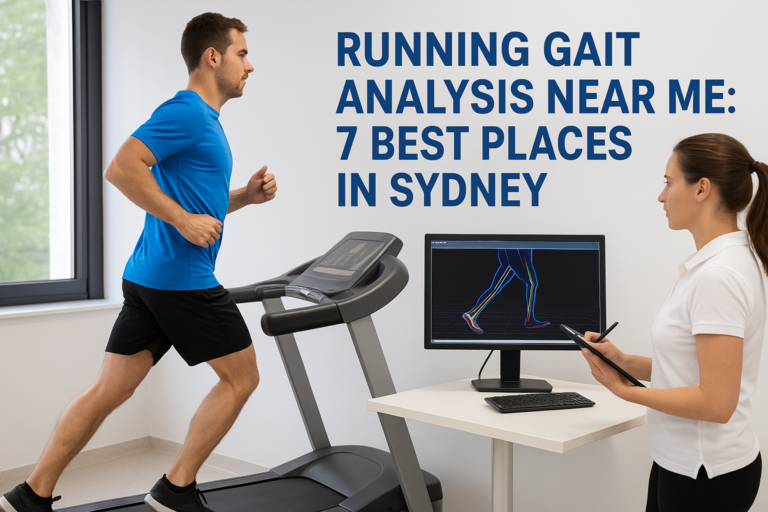
Most specialist running stores film you on a treadmill for a minute or two, then play the footage back in slow motion. The staff member looks at foot strike and pronation, then picks shoes from the current range. It is a footwear fitting, not a diagnosis.
- A short treadmill run, filmed from behind and sometimes from the side
- Slow-motion playback of heel, ankle and knee alignment
- A few questions about distance, surfaces and your past shoes
- Three or four shoes to try on and jog in
Who it suits
Starting here makes sense if you are healthy and just need shoes, or if you are new to running and want a sensible first pair. If you are wondering where to get running gait analysis near me and have no pain, a store is the quickest answer. Staff are retail trained, not clinicians, so they cannot diagnose an injury or prescribe orthotics.
A shoe store can match you to a shoe, but it cannot tell you why your shin hurts.
If something already hurts, skip to a clinic (options 3 and 4, or our own assessment above). New shoes will not fix a loading problem that nobody has measured.
Location, cost and rebates
Specialist stores are scattered across the CBD, the inner west, the North Shore and the Northern Beaches, so one is rarely far away. Many include the video assessment free with a shoe purchase, though some charge a small fee. Ask before you book. Running shoes typically cost $150 to $250.
Because this is retail, private health rebates and Medicare do not apply. Treat the visit as a shoe fitting and you will not be disappointed.
3. Sports physiotherapy clinics with running assessments
What the assessment includes
Sports physios treat running as a whole-body movement problem. They film you on a treadmill, then test the strength and control behind what the video shows. Expect a longer session than a store visit, usually 45 to 60 minutes.
- Injury and training load review
- Treadmill video from behind and the side, with cadence checks
- Single-leg strength, calf capacity and hop tests
- Hip, knee and ankle mobility screening
- Hands-on treatment and a rehab program
Video shows what you do, but strength testing shows why you do it.
Who it suits
Physios suit runners with knee, hip, hamstring or lower back pain. They are also a good fit if you are returning from injury and need a staged return-to-run plan. Weakness and poor load management are their specialty.
If your pain sits in the heel, arch or forefoot, a podiatrist is often the better first stop, because they can prescribe orthotics and footwear changes. Plenty of runners end up seeing both. When you compare options for the best gait analysis near me, check that the physio runs people regularly, not just treats desk workers.
Location, cost and rebates
Sports physio clinics are common across the CBD, the North Shore, the Eastern Suburbs and the inner west. A running assessment typically costs $120 to $200, depending on session length and whether treatment is included. Ask whether the video review is part of a standard consultation or a separate booking.
Private health extras usually cover physiotherapy, so check your annual limit before you book. Eligible patients with a GP-managed plan may also claim Medicare rebates for allied health visits. No GP referral is needed to book.
4. Sports podiatry practices with treadmill video analysis
What the assessment includes
Sports podiatrists pair treadmill video analysis with a hands-on lower limb exam. The video shows how your foot lands and rolls through. The exam explains why. Expect a session of 45 to 60 minutes, longer than a store fitting.
- Injury and training history, plus a check of your current shoes
- Treadmill filming from behind and the side, replayed in slow motion
- Foot posture, ankle and big toe joint range, and calf strength tests
- Footwear advice matched to your foot type and running style
- Orthotic prescription if the findings call for it
Video shows how your foot behaves, and the clinical exam shows what to change.
Who it suits
Runners with foot, heel, Achilles or shin pain get the most from this option. It also suits anyone who was fitted for shoes at a store and still hurts. A podiatrist looks closely at where your foot meets the shoe and the ground, which is often where the problem starts.
When you search for running gait analysis near me and see "sports podiatry", ask what sits behind the label. Some practices only film you and eyeball the result. Pressure plate data adds a measurement of how load moves through each foot, which video alone cannot show. We include it at ModPod Podiatry (option 1).
Location, cost and rebates
Practices are spread across the CBD, the North Shore, the Northern Beaches and the Eastern Suburbs. A running assessment typically costs $110 to $180, depending on session length and whether the treadmill video is bundled in or booked as an add-on.
Podiatry is usually covered by private health extras, so check your annual limit before you go. Eligible patients with a GP-managed plan may claim Medicare EPC rebates. You do not need a referral, but do ask whether the podiatrist treats runners every week.
5. Biomechanics labs offering 3D running analysis
What the assessment includes
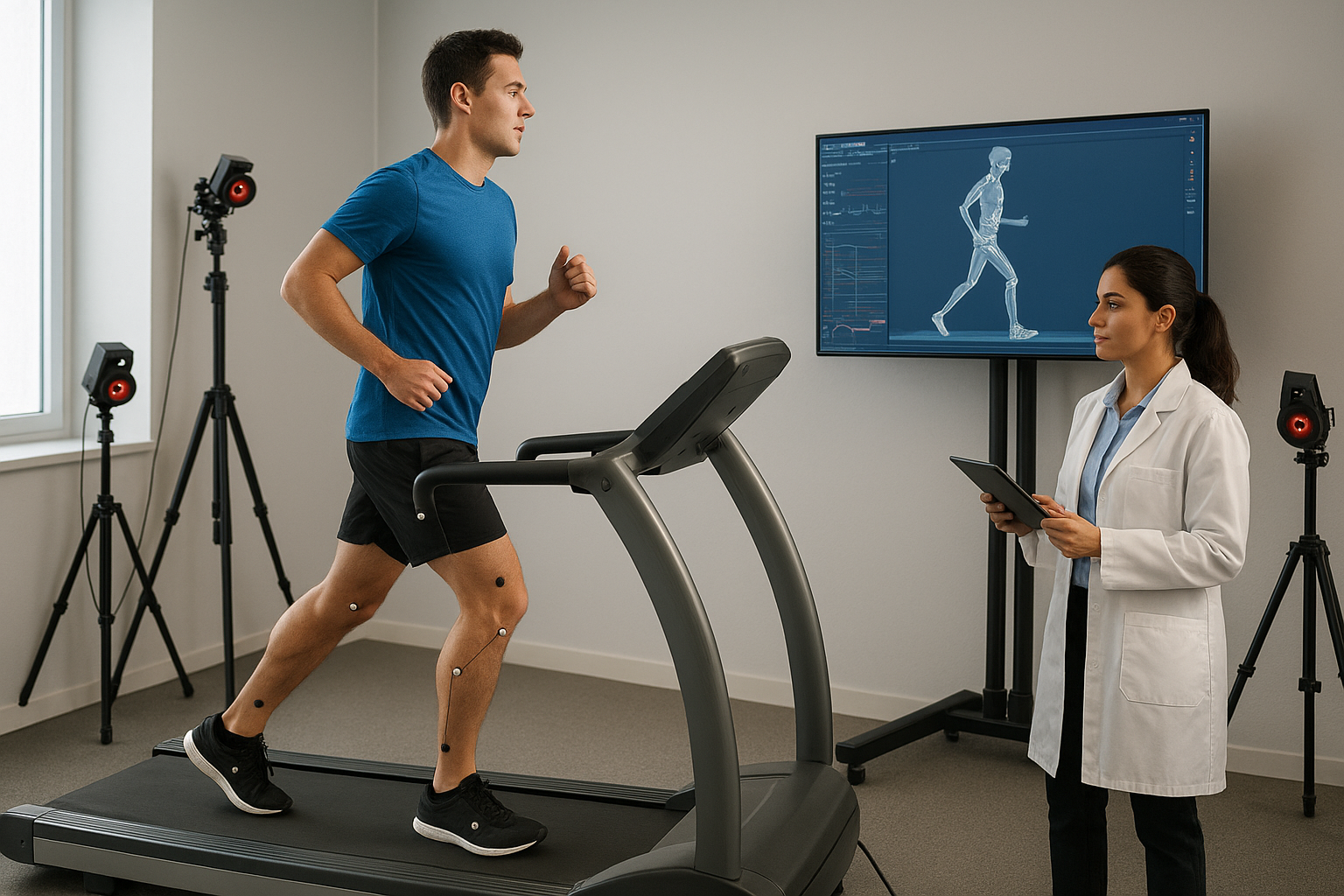
Biomechanics labs use motion capture cameras and reflective markers to build a 3D model of your body while you run on a treadmill. Software then measures joint angles, stride timing and how forces move through your legs. It is the most detailed data you can get, but it is a measurement, not a treatment.
- Markers placed on your pelvis, knees, ankles and feet
- Multi-camera capture on a treadmill, sometimes a force-instrumented one
- Reports on joint angles, cadence and ground contact time
- A written summary, often with a short debrief
3D data is only as useful as the person who interprets it and turns it into a plan.
Who it suits
Think of this option for competitive and elite runners, or for anyone with a stubborn injury that simpler assessments have not explained. University-linked labs also run research studies that take on recreational runners. Most healthy runners do not need this level of detail.
If you are searching for running gait analysis near me and wondering whether 3D is worth it, ask whether a clinic could answer your question first. Often it can, and a clinician can treat the problem on the day, which a lab usually cannot.
Location, cost and rebates
Labs are few and mostly tied to universities or high-performance sports centres, so expect to travel across Sydney. Sessions typically cost $250 to $450, depending on the equipment and the report.
Private health and Medicare rebates usually do not apply unless a registered clinician runs the session. Ask before you book whether the fee includes a follow-up with someone who can act on the results.
6. Exercise physiology and running coaching studios
What the assessment includes
Exercise physiologists and run coaches treat running as a training and capacity problem. They film you, then test how strong, fit and efficient you are. Sessions usually take 45 to 60 minutes and end with a plan you can follow.
- Treadmill video with cadence and stride length checks
- Strength and power tests for calves, hips and glutes
- Running economy or fitness testing at some studios
- A training plan or strength program
A coach can make you a better runner, but only a clinician can diagnose why you are hurting.
Who it suits
Runners chasing a faster time or a first marathon get the most from this option. Coaches fix pacing, cadence and weekly load, and poor load management causes many overuse injuries. A search for gait running analysis near me often surfaces these studios, and they are a good second step once you are pain free.
Pain changes the answer. Accredited exercise physiologists can manage some conditions, but coaches without clinical training cannot diagnose an injury. If something hurts, see a podiatrist or physio first (options 1, 3 and 4), then take the findings to your coach.
Location, cost and rebates
Studios cluster around the CBD, the inner west, the Eastern Suburbs and the Northern Beaches. A single assessment typically costs $100 to $200, while ongoing coaching packages cost more. Ask whether the video review is included or sold separately.
Rebates depend on who runs the session. Some private extras policies cover accredited exercise physiologists, and eligible patients with a GP-managed plan may claim Medicare allied health rebates. Coaching alone is rarely covered, so confirm the practitioner’s credentials and your limit before you book.
7. Multidisciplinary sports medicine centres
What the assessment includes
These centres put sports doctors, physios and podiatrists under one roof, sometimes with a dietitian too. Your running assessment usually starts with one clinician, who brings in the others as needed. Imaging and specialist referrals are close at hand.
- Medical and injury history, including training load and bone health
- Treadmill video and strength testing, usually run by a physio
- Foot and lower limb assessment by a podiatrist
- Imaging such as ultrasound or MRI, if the findings call for it
- One shared plan across the team
When several things are going wrong at once, one coordinated team beats three separate appointments.
Who it suits
Complex cases get the most from this option. If you have a suspected stress fracture, an injury that keeps returning, or pain that has not settled after treatment elsewhere, a team approach saves time. It also helps when the problem crosses regions, such as hip pain with a stiff big toe.
If you are asking where can I get my running gait analysis near me for a simple niggle, you probably do not need this level of care. A focused clinic (options 1, 3 and 4) is quicker and cheaper, and a good one will refer you on if your case needs more.
Location, cost and rebates
Centres cluster in the CBD, the North Shore and the Eastern Suburbs, and some are linked to hospitals or sporting bodies. An initial running assessment typically costs $150 to $300, with imaging billed separately. Waits for the doctors can run longer than for allied health.
Physio and podiatry visits are usually covered by private health extras, subject to your limit. Sports physicians are specialists, so Medicare rebates generally need a GP referral. Confirm who you are seeing and what is bulk billed before you book.
How to choose the right running gait analysis
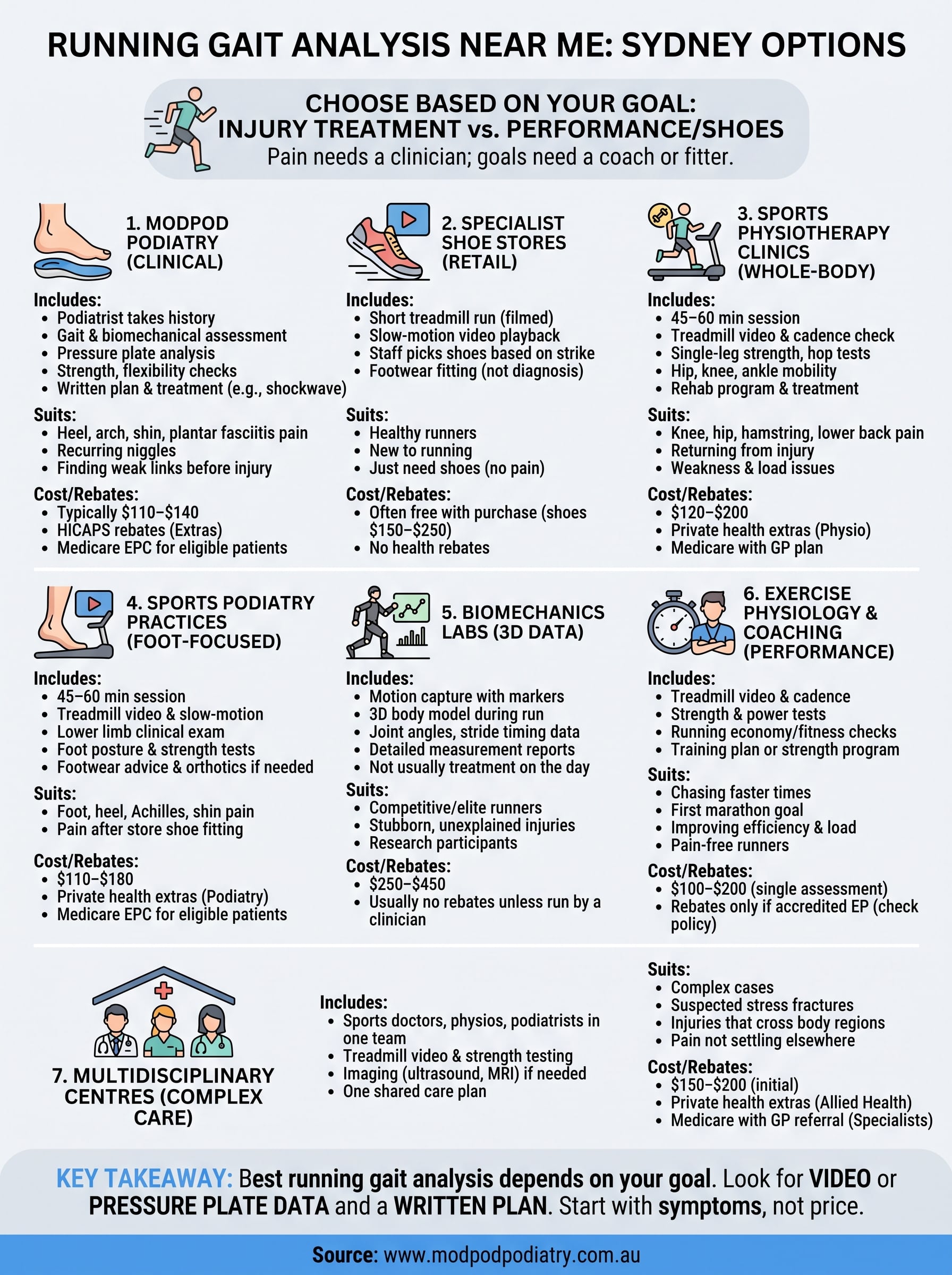
Choosing comes down to one question: are you in pain, or chasing a result? Start with your symptoms, not the price. The cheapest session is wasted if it cannot treat the cause of your problem.
Pain needs a clinician, and performance goals need a coach or a fitter.
Match the option to your goal
| Your situation | Best starting point |
|---|---|
| Heel, arch, shin or Achilles pain | Podiatry (options 1 and 4) |
| Knee, hip or lower back pain | Sports physio (option 3) |
| Healthy and need shoes | Specialist store (option 2) |
| Faster times or a first marathon | Coach or exercise physiologist (option 6) |
| Stubborn or complex injury | Sports medicine centre (option 7) or 3D lab (option 5) |
Most runners fit one row. If you fit two, pick the row with pain first, then bring the findings to your coach or fitter. A clinic assessment also gives you a written record that any later provider can use.
Questions to ask before you book
- Who runs the assessment, and are they a registered clinician?
- Is it video only, or does it include pressure plate or strength testing?
- Will I leave with a written plan?
- Can treatment start in the same visit?
- Can I claim through HICAPS or Medicare?
Compare the answers from two or three providers when you search for running gait analysis near me. A good practice answers these questions without hesitation. If the reply is vague, or the assessment is only a sales route to a shoe, keep looking.
Choosing where to book
Every option here has a job. Stores fit shoes, coaches build speed, labs measure detail, and clinics find and treat the cause of pain. If you are hurting, book a clinician first, then use their written findings to guide any shoe purchase or training change.
A search for gait analysis running near me will return plenty of results, but the best one matches the service to your goal, not the nearest address. Ask who runs the session, what gets measured and whether you leave with a plan. Pressure plate data and a written plan separate a proper assessment from a quick video.
If you want a podiatrist to look at how you run, book a running gait analysis online at any of our five Sydney clinics. Same-week appointments are often available, and no referral is needed.