

That stabbing pain under your heel with the first steps out of bed isn’t just bad luck. It’s usually plantar fasciitis, and if you’ve been told custom orthotics are the fix, you’re probably wondering if that’s true or just an easy way to sell you a $600 pair of insoles.
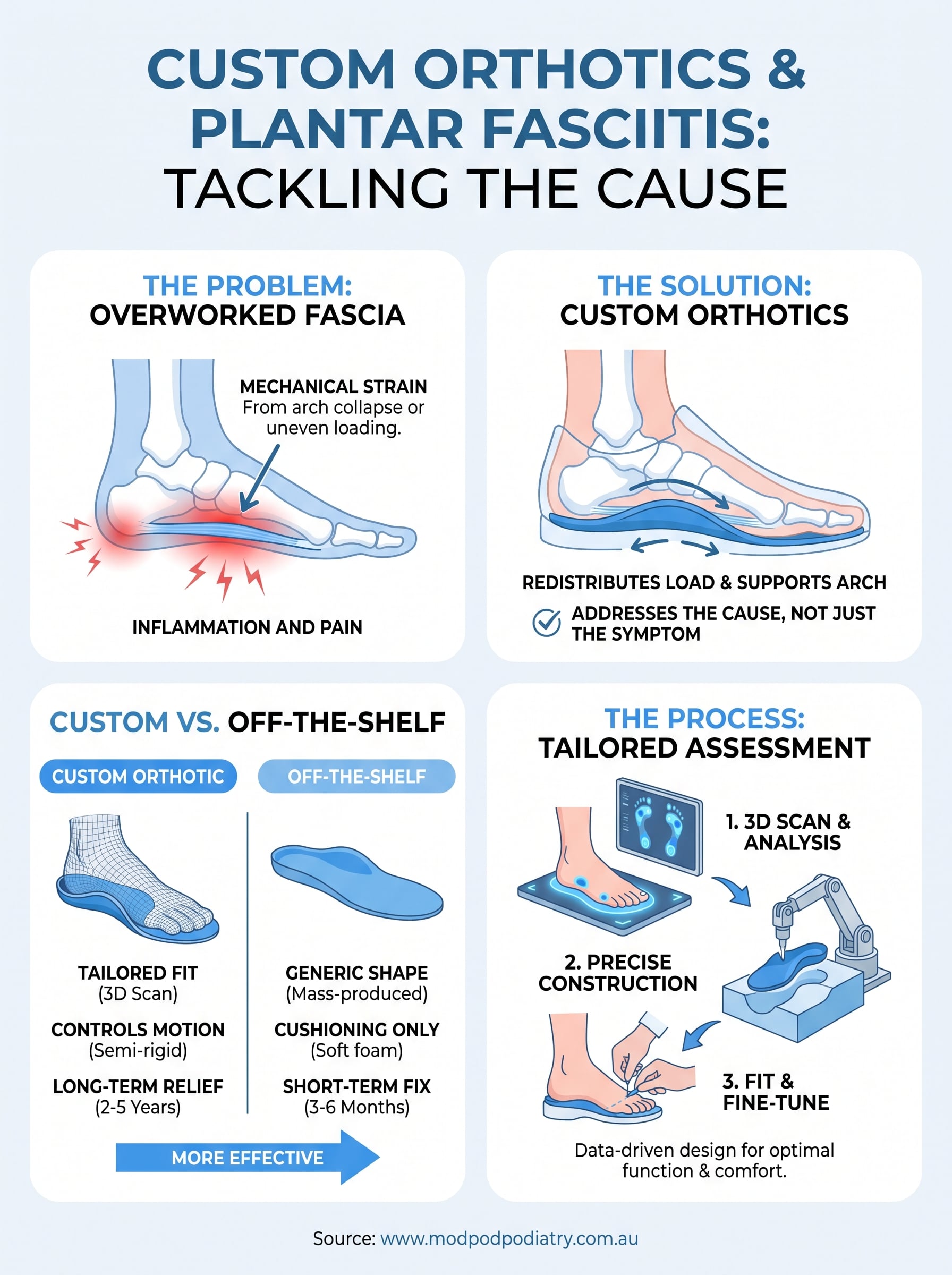
The honest answer is that plantar fasciitis and custom orthotics do work together, but only when the orthotic is built for your specific foot mechanics rather than pulled off a shelf. The plantar fascia takes the brunt of every step, and when your arch collapses or your gait loads the heel unevenly, that band of tissue gets overworked and inflamed. A well-designed orthotic redistributes that load, which is why custom orthotics for plantar fasciitis feature so heavily in podiatrist treatment plans across Sydney.
In this article, we’ll walk through how orthotics actually reduce heel pain, what the research says about their effectiveness, how they compare to the full range of plantar fasciitis treatments like stretching, night splints and cortisone injections, and how our podiatrists at ModPod use 3D scanning and pressure plate analysis to decide whether they’re right for your feet.
Why custom orthotics ease plantar fasciitis pain
The plantar fascia is a thick band of connective tissue running from your heel to the base of your toes, and it acts like a bowstring holding up your arch. Every time your foot strikes the ground, that band stretches and absorbs load. When your foot mechanics are off, whether from flat feet, high arches, or a rolling gait, the fascia gets pulled at an angle it wasn’t designed for. Repeat that thousands of times a day and you get micro-tears, inflammation, and the sharp morning heel pain that brings most patients into our clinics.
How orthotics change the load
Custom orthotics work by controlling the position of your foot through the entire step, not just cushioning the heel. A properly contoured device supports the arch so the fascia doesn’t have to stretch as far, reduces excessive pronation, and shifts pressure away from the heel and toward the rest of the foot. This is the core reason custom orthotics and plantar fasciitis treatment plans go hand in hand in clinical practice: the device addresses the mechanical cause, not just the symptom.
Orthotics don’t mask the pain, they change how your foot moves so the fascia stops getting overloaded in the first place.
What the research says
Studies published through bodies like the Australian Institute of Health and Welfare and international podiatric research consistently show that foot orthoses reduce heel pain scores within eight to twelve weeks, particularly when combined with calf stretching. They’re not an instant cure. Most patients notice gradual improvement rather than overnight relief, and orthotics work best as part of a broader plan that includes stretching, footwear changes, and sometimes taping in the early weeks.
Benefits patients typically report include:
- Less first-step pain in the morning
- Reduced ache after standing or walking long distances
- Better tolerance for exercise and sport
- Slower recurrence of symptoms once the acute phase settles
Understanding this mechanical link matters before you spend money on any device, custom or otherwise, and it’s worth knowing what custom orthotics cost in Sydney before you commit.
How custom orthotics are made and fitted for your feet
Getting a device that actually works starts with accurate data, not guesswork. At ModPod, we use 3D orthotic scanning and pressure plate analysis to map exactly how your foot loads through each phase of gait, rather than relying on a plaster mould alone. This data shows where pressure spikes under the heel and forefoot, which tells your podiatrist how much correction the fascia actually needs.
From scan to finished device
Once the scan is complete, the file goes to a lab where the orthotic shell is built to match your specific arch height, heel angle and pressure pattern. The process generally looks like this:
- Digital scan or cast taken during your consultation
- Gait and pressure data reviewed alongside your symptoms
- Shell material and density chosen based on your weight, activity level and shoe type
- Device manufactured and posted back to the clinic, usually within two to three weeks
- Fitting appointment to check alignment and comfort
Orthotics for plantar fasciitis are typically made from a semi-rigid polypropylene shell, firm enough to control motion but flexible enough for daily wear.
Fine-tuning the fit
Fitting isn’t a one-off event. Your podiatrist checks your gait with the device in, adjusts the top cover if there’s rubbing, and often asks you to break them in gradually over one to two weeks. Small adjustments at this stage make the difference between an orthotic you actually wear and one that ends up in a drawer.
Custom orthotics versus off-the-shelf insoles
Walk into any pharmacy and you’ll find shelves of insoles promising heel pain relief for under $50. They’re not useless, but they’re built to a generic arch shape, not your foot. Off-the-shelf insoles for plantar fasciitis can take the edge off mild discomfort for a few weeks, yet they rarely correct the underlying mechanics driving heel pain, which means the pain often creeps back once you’re on your feet all day.
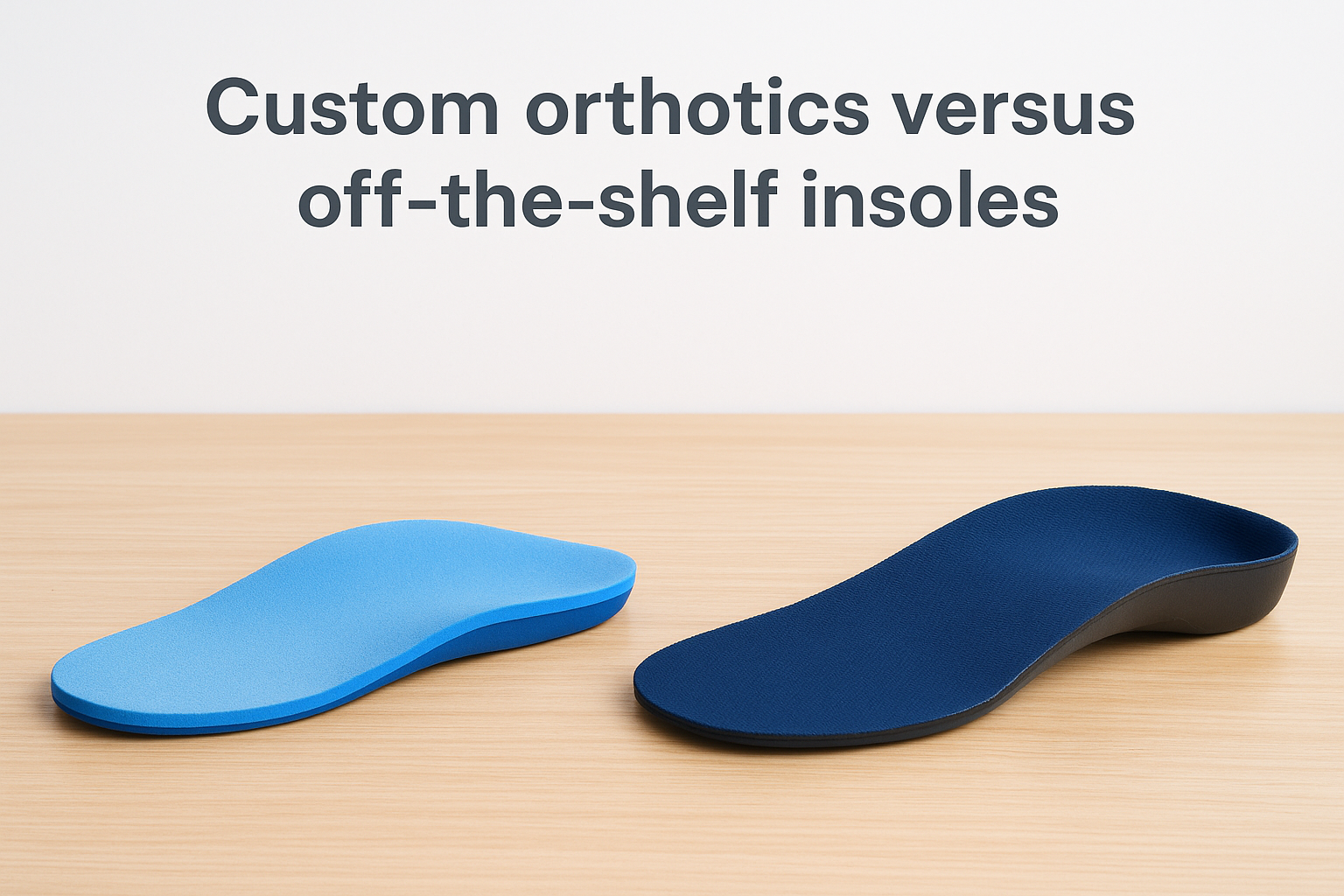
A cheap insole cushions the symptom, a custom orthotic corrects the cause.
Quality matters more than price alone. Rigid materials, precise arch contouring and a shape matched to your actual gait data are what separate a therapeutic device from a comfort layer.
| Feature | Off-the-shelf insoles | Custom orthotics |
|---|---|---|
| Fit | Generic arch shape | Matched to your 3D scan |
| Material | Soft foam, wears out fast | Semi-rigid polypropylene shell |
| Correction | Cushioning only | Controls pronation and load |
| Lifespan | 3 to 6 months | 2 to 5 years |
| Cost | $30 to $80 | $400 to $600 |
Severity of your condition should guide the decision. If you’ve had heel pain for more than six weeks, or it’s affecting your training or work, a generic insole is unlikely to cut it. Custom orthotics and plantar fasciitis cases that involve structural issues like flat feet or high arches almost always need the tailored approach, because no mass-produced insole can replicate your specific pressure pattern. For milder, short-term discomfort, a decent chemist-bought insole alongside stretching might be enough to get you through.
What happens during a podiatry orthotic assessment
Booking a podiatry assessment for heel pain isn’t just about walking in and getting measured for insoles. Your podiatrist starts by taking a full history: how long you’ve had the pain, when it’s worst, what shoes you wear, and what activities trigger it. This context matters because plantar fasciitis can look identical to other causes of heel pain, and treating the wrong condition wastes months.
Physical examination and gait check
Next comes a hands-on check of your foot structure, calf tightness, and range of motion at the ankle. Your podiatrist watches you walk and, often, jog on the pressure plate, since gait analysis measures exactly how your foot loads through each step. This is where custom orthotics for plantar fasciitis get ruled in or out, since not every case of heel pain needs a device at all.
An assessment tells you why your foot hurts, not just where.
Deciding on treatment
After reviewing the data, your podiatrist explains what’s driving your symptoms and outlines options, which might include:
- Stretching and taping for mild cases
- Footwear changes
- Custom orthotics for structural issues
- Referral for shockwave therapy if pain persists
Assessment findings guide every decision from here, so nothing gets prescribed on guesswork alone.
Getting back on your feet pain-free
Heel pain doesn’t fix itself just because you rest for a week or switch runners. Plantar fasciitis and custom orthotics work together because the device tackles the mechanical cause, the collapsed arch, the uneven load, the overworked fascia, rather than just masking the ache. Off-the-shelf insoles have their place for mild, short-term discomfort, but once pain sticks around past six weeks, you need a device built from your own gait data, not a generic shape.
Guessing which option suits your feet is where most people go wrong. A proper assessment tells you whether you need stretching, footwear changes, or a custom device, and it saves you from wasting money on the wrong fix. If that first step out of bed still hurts, don’t put it off any longer, book an orthotics and heel pain assessment online with ModPod Podiatry and get a plan built around your actual foot mechanics.

