

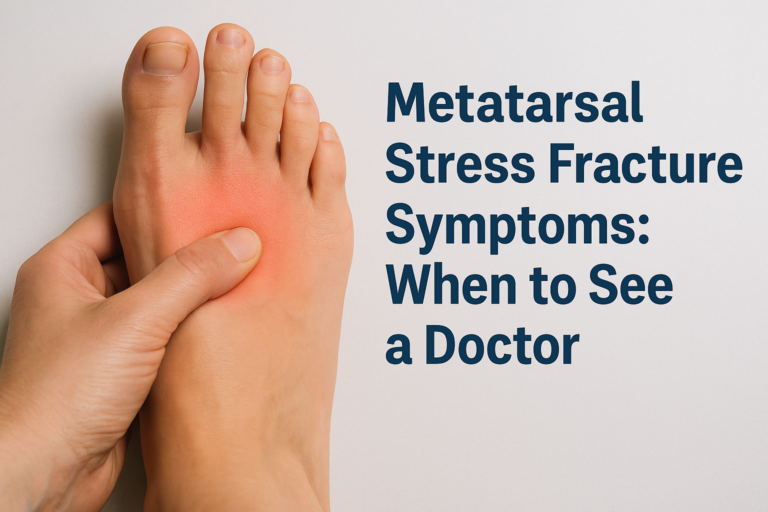
Forefoot pain that creeps in during a run or a long week on your feet is easy to brush off. But if it keeps returning, you may be dealing with a stress fracture. The stress fracture metatarsal symptoms to watch for are pain on the top or ball of the foot that builds with activity and eases with rest, plus localised tenderness and mild swelling.
Here is the short answer. A metatarsal stress fracture usually causes a sharp, pinpoint ache that you can press on with one finger. It often gets worse each day and starts to hurt even at rest or at night. Bruising is less common, but it can occur. If you can hop on the foot only with pain, or the pain has lasted more than a week, book an assessment rather than waiting it out.
In this article, we cover the early and late warning signs, how they differ from tendon pain, a Morton’s neuroma or general overload, and the red flags that mean you should be seen promptly. At ModPod Podiatry, our podiatrists assess forefoot pain across five Sydney clinics, so you will also know what to expect when you come in. You do not need a GP referral to see us.
Why metatarsal stress fracture symptoms matter
What is happening inside the bone
A metatarsal stress fracture is a small crack in one of the five long bones that run from your midfoot to your toes. It does not come from a single heavy knock. It builds from repeated load, such as running, marching or hours of standing, until the bone cannot repair itself as fast as it is being stressed. The second and third metatarsals are the most common sites.
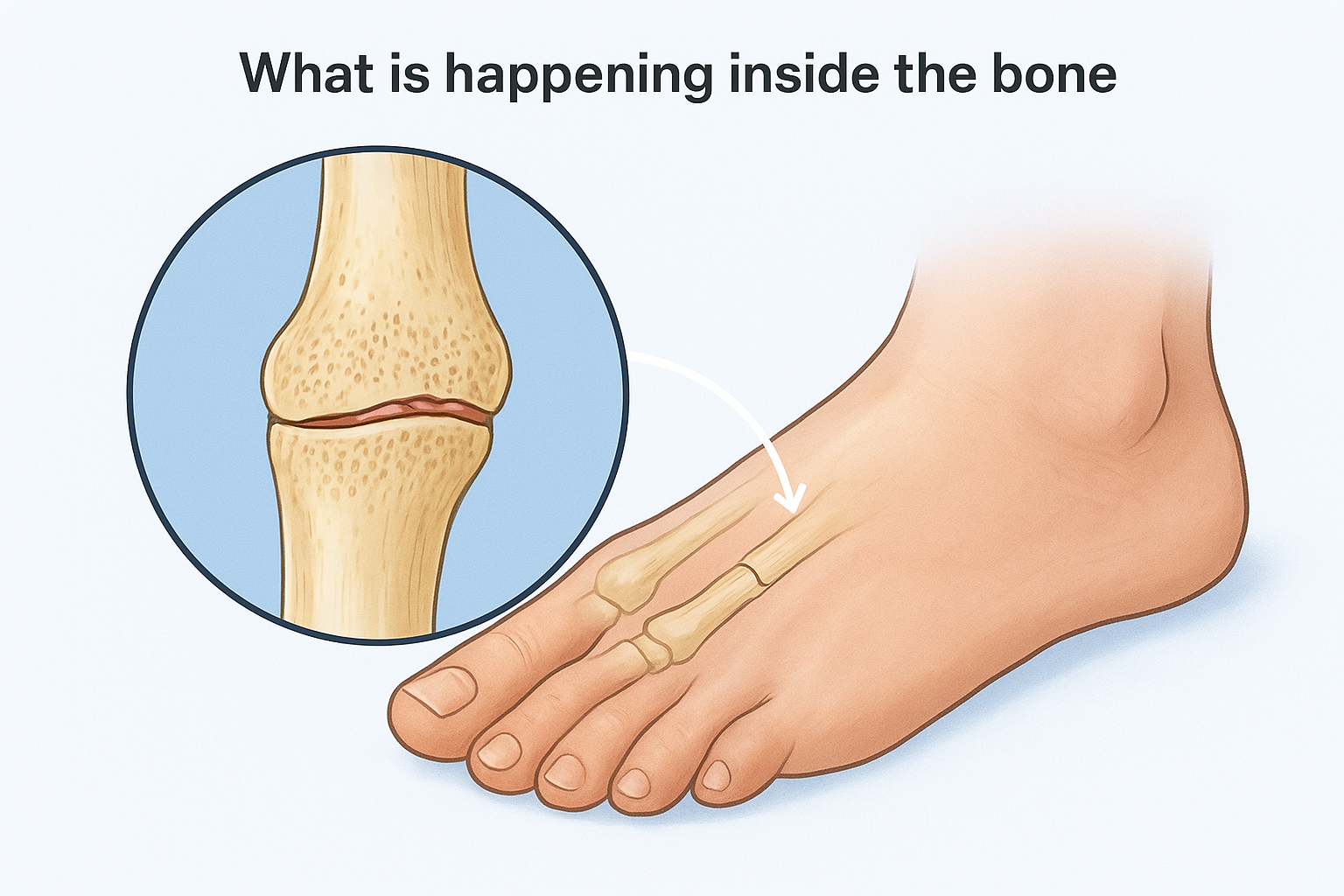
Because the crack is so fine, the signs are easy to explain away. Early metatarsal stress fracture symptoms feel like sore feet after a big week. Plain X-rays also often look normal for the first two to three weeks, so your history and a hands-on examination carry a lot of weight in the early diagnosis.
Why early recognition changes the outcome
Caught early, most of these injuries heal in about six to eight weeks with relative rest and sensible load management. Keep pushing through and the picture changes. The crack can widen into a complete break, and recovery can stretch to three months or more. Some sites, including the base of the fifth metatarsal, have a poorer blood supply. They heal more slowly and need closer management.
Pain that builds with activity and settles with rest is your foot’s early warning, and acting on it costs far less than waiting for a full fracture.
Delay also costs you in practical ways:
- More weeks away from running, sport or work
- A possible walking boot or crutches instead of simple activity changes
- Knee, hip or opposite-foot pain from limping
- A higher chance the injury returns once you restart
Who is most likely to get one
Anyone can develop one, but a sudden jump in training or standing load is the classic trigger for a foot stress fracture. Think of a beginner who goes from 10 to 30 kilometres a week, or someone starting a new job on hard floors. Runners, dancers, court-sport players and defence personnel see them often.
Other contributors matter too. Worn or unsupportive shoes, low bone density, inadequate energy intake and foot structure, such as a long second metatarsal or a stiff high arch, all raise the risk. If several of these apply to you, take forefoot pain more seriously, because your bone has less margin for error.
How to recognise a metatarsal stress fracture
Recognition comes down to pattern. The symptoms of a stress fracture in the foot follow a fairly predictable sequence, so track how your pain behaves over several days, not just how bad it feels today.
How the symptoms progress
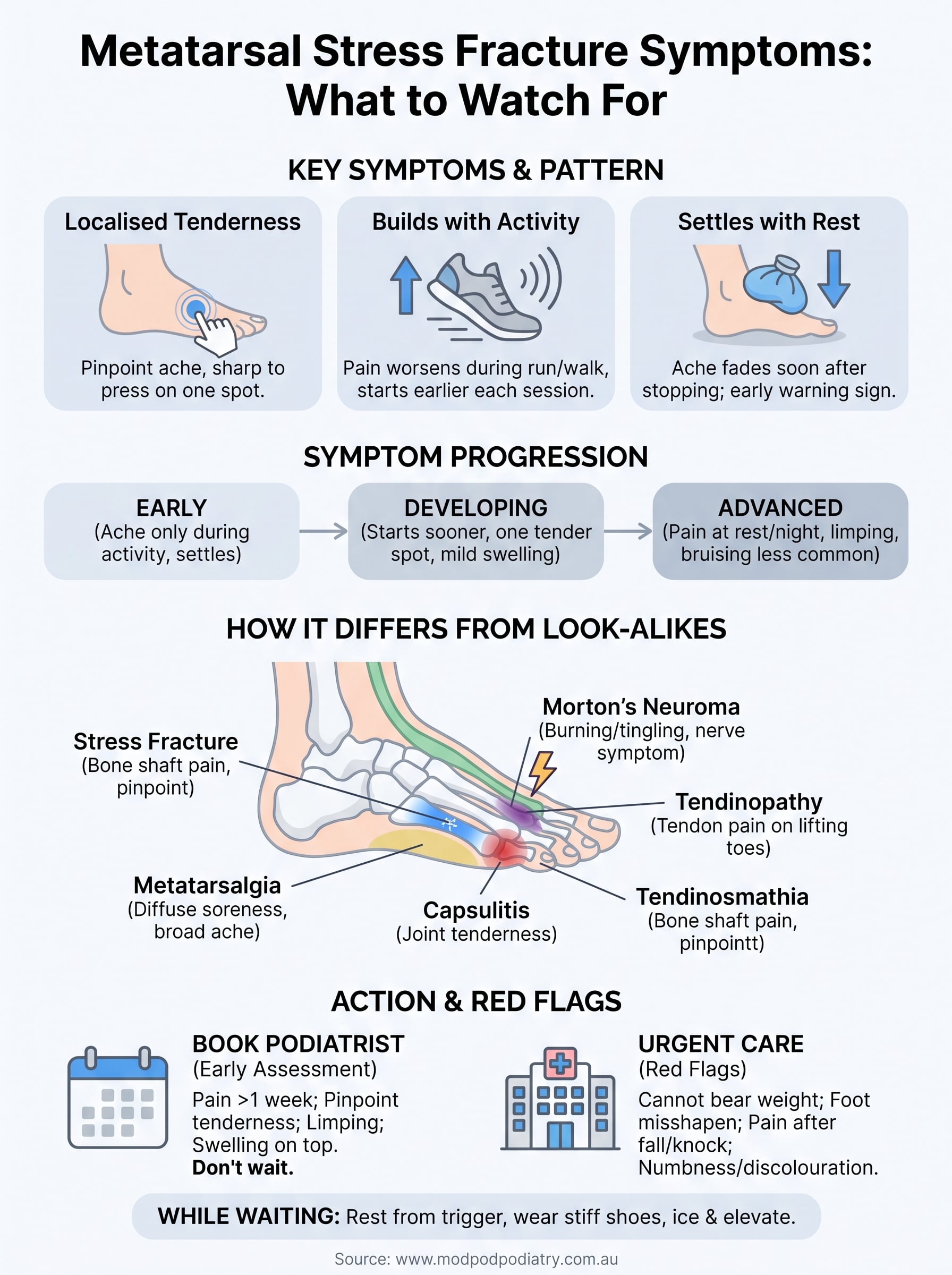
Early on, you feel a dull ache in the forefoot during activity that fades soon after you stop. One spot along the bone is tender to press, and the top of the foot may look slightly puffy.
| Stage | What you notice |
|---|---|
| Early | Ache only during activity, settles with rest |
| Developing | Pain starts sooner each session, one tender spot, mild swelling on top of the foot |
| Advanced | Pain when walking, at rest or at night, a limp, sometimes bruising |
The key shift is timing. When pain arrives earlier in each session and takes longer to settle, the bone is losing the repair race.
A pain that starts earlier each session is a fracture getting worse, not a foot warming up.
A quick check at home
A gentle home check can add useful information, but it cannot confirm a fracture. Only an examination and imaging can do that. Try this once, calmly:
- Sit with your foot relaxed and bare.
- Press a fingertip along each metatarsal shaft, from the midfoot towards the toes.
- Compare the same spot on your other foot.
- Note whether one small point is sharply tender, rather than a broad, general soreness.
Skip the hop test. If walking is already painful, hopping risks turning a small crack into a complete break.
How to tell it apart from other forefoot pain
Not every sore forefoot is a fracture. Several common problems mimic metatarsal stress fracture symptoms, and the differences are subtle. Pay attention to where the pain sits, what sets it off and how it behaves when you rest.
Common look-alikes
This comparison covers the usual suspects. Use it to narrow down the pattern, not to make a diagnosis.

| Condition | Where and how it hurts | Key difference |
|---|---|---|
| Metatarsal stress fracture | Ache over one bone shaft, worse with load | One sharply tender spot, pain builds over days |
| Metatarsalgia | Diffuse soreness under the ball of the foot | Broad ache, no single point |
| Morton’s neuroma | Burning, tingling or numbness between the toes | Nerve symptoms, feels like a pebble in the shoe |
| Capsulitis | Ache at the base of a toe, often the second | Tender at the joint, not the shaft |
| Extensor tendinopathy | Top of the foot along a tendon | Pain when lifting the toes or with tight laces |
Clues that point towards a fracture
Bone tenderness is the strongest clue. Nerve and soft tissue problems tend to hurt over a wider area or between the toes, while a fracture hurts over the bone itself. Pain that persists at rest or wakes you at night is also less typical of simple overload.
Pain you can point to with one fingertip, and that keeps building, deserves assessment before it deserves another run.
Overlap is common, so be careful. Ball-of-foot metatarsalgia can sit alongside a stress fracture, and an early crack often does not show on a plain X-ray. If suspicion is high, a podiatrist may recommend an MRI or ultrasound to confirm what is going on. Treat the table as a guide for the questions to ask, and let a hands-on examination give you the answer.
When to see a podiatrist or doctor
Book a podiatrist if the pattern fits
If your stress fracture metatarsal symptoms match the pattern above, see a podiatrist within a few days. You do not need a GP referral, and an early assessment costs far less than a complete break. Book sooner if any of these apply:
- Forefoot pain has lasted more than a week despite rest
- One spot on a metatarsal is sharply tender
- Pain is getting worse or starting earlier each session
- Walking hurts, or you are limping
- The top of the foot is swollen
Forefoot pain that lasts a week or keeps building needs an examination, not another test run.
Go to a doctor or emergency department urgently
Some signs point to something more serious than overload. Go to a GP or emergency department the same day if you cannot put weight on the foot, the foot looks misshapen, or the pain began after a fall or heavy knock. Numbness, a pale or blue toe, spreading redness, heat or fever also need urgent care.
People with diabetes, poor circulation or reduced foot sensation should not wait at all. Pain can be muted in these cases, so even mild swelling deserves prompt review.
What to expect at the appointment
Your podiatrist will ask about training, footwear and when the pain began. They will press along each metatarsal and watch how your foot loads as you walk. Because early X-rays can miss the crack, they may arrange an MRI or ultrasound if suspicion is high. Eligible patients can use a Medicare EPC plan, and HICAPS lets you claim private health rebates on the spot.
What to do while you wait for an appointment
You may wait a few days for a booking, and those days count. Your goal is to stop adding load to the bone while keeping the rest of your fitness ticking over. If you suspect a stress fracture in the foot, treat it as one until a podiatrist tells you otherwise.
Take load off the forefoot
Start by resting from whatever triggered the pain, usually running, jumping or long stretches on hard floors. Walk only as much as daily life requires. A limp shifts stress to your knee and hip, so use crutches if you have them and walking hurts.
- Wear a stiff-soled, supportive shoe indoors. Avoid bare feet, thongs and soft slippers.
- Swap running for swimming or upper-body work, but only if it is pain-free.
- Skip hopping, jumping and calf raises.
- Take stairs slowly and stop if the pain climbs.
Resting from the painful activity is the one step that protects the crack while you wait.
Manage pain and prepare for the visit
Ice the sore spot for 10 to 15 minutes with a cloth between the ice and your skin, and prop the foot up to settle swelling. Paracetamol is a common choice for pain relief. Some research suggests anti-inflammatories may slow bone healing, so check with a pharmacist or GP before taking them. Avoid massaging or repeatedly pressing the tender spot, which only irritates it.
Bring a few details to your appointment. Note the date the pain began, your weekly training or standing hours and any recent changes, such as new shoes or a new surface. Pack the pair you wear most, because worn footwear tells your podiatrist a lot about how load is reaching the forefoot.
Listening to your foot early
Metatarsal stress fracture symptoms follow a pattern. Pain builds with activity, settles with rest, then arrives earlier each session. You can usually point to one tender spot on the bone, and the top of the foot may swell. Look-alikes such as metatarsalgia, a neuroma or capsulitis tend to hurt over a wider area, but an examination is what separates them.
Acting within days, not weeks, keeps a small crack from becoming a complete break. Rest from the trigger, protect the forefoot and get it checked. Go straight to a doctor if you cannot bear weight or the pain began after a fall.
If your forefoot pain fits this picture, book a forefoot assessment online at any of our five Sydney clinics. Our podiatrists will examine the foot, explain what is going on and set out a recovery plan, with same-week availability and on-site HICAPS claiming.