

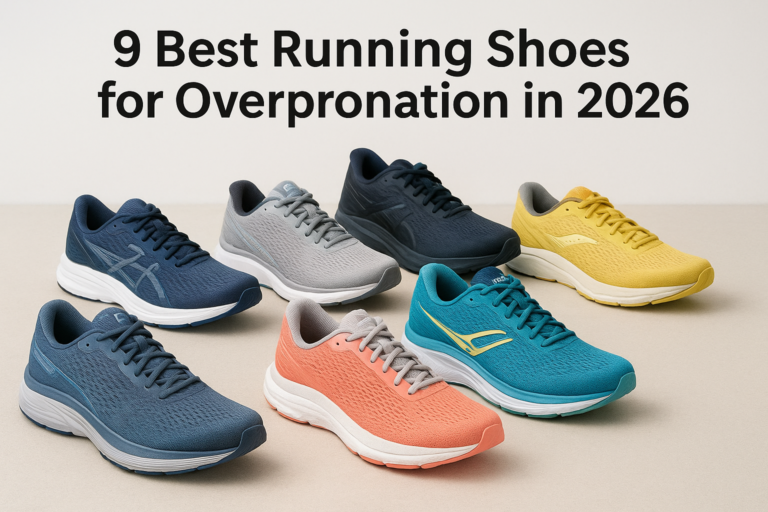
If your running shoes wear out fastest on the inside edge, or your knees and shins ache after longer runs, overpronation is probably part of the problem. Finding the best running shoes for overpronation isn’t about grabbing the most expensive stability shoe on the shelf. It’s about matching the right level of support to how your foot actually moves, which is exactly what our podiatrists assess every week across our Sydney clinics.
This guide gives you nine specific shoes worth trying in 2026, based on midsole support structures, heel-to-toe stability, and how well each model suits different running distances and foot types. We’ve included options for road runners, trail runners, and wider feet, because overpronation looks different from one person to the next.
Before you buy, it helps to understand why your feet roll inward in the first place. We’ll walk you through what overpronation means, the signs to watch for, and when a shoe alone won’t fix the issue and a proper gait assessment or custom orthotic makes more sense. If you’ve tried a few
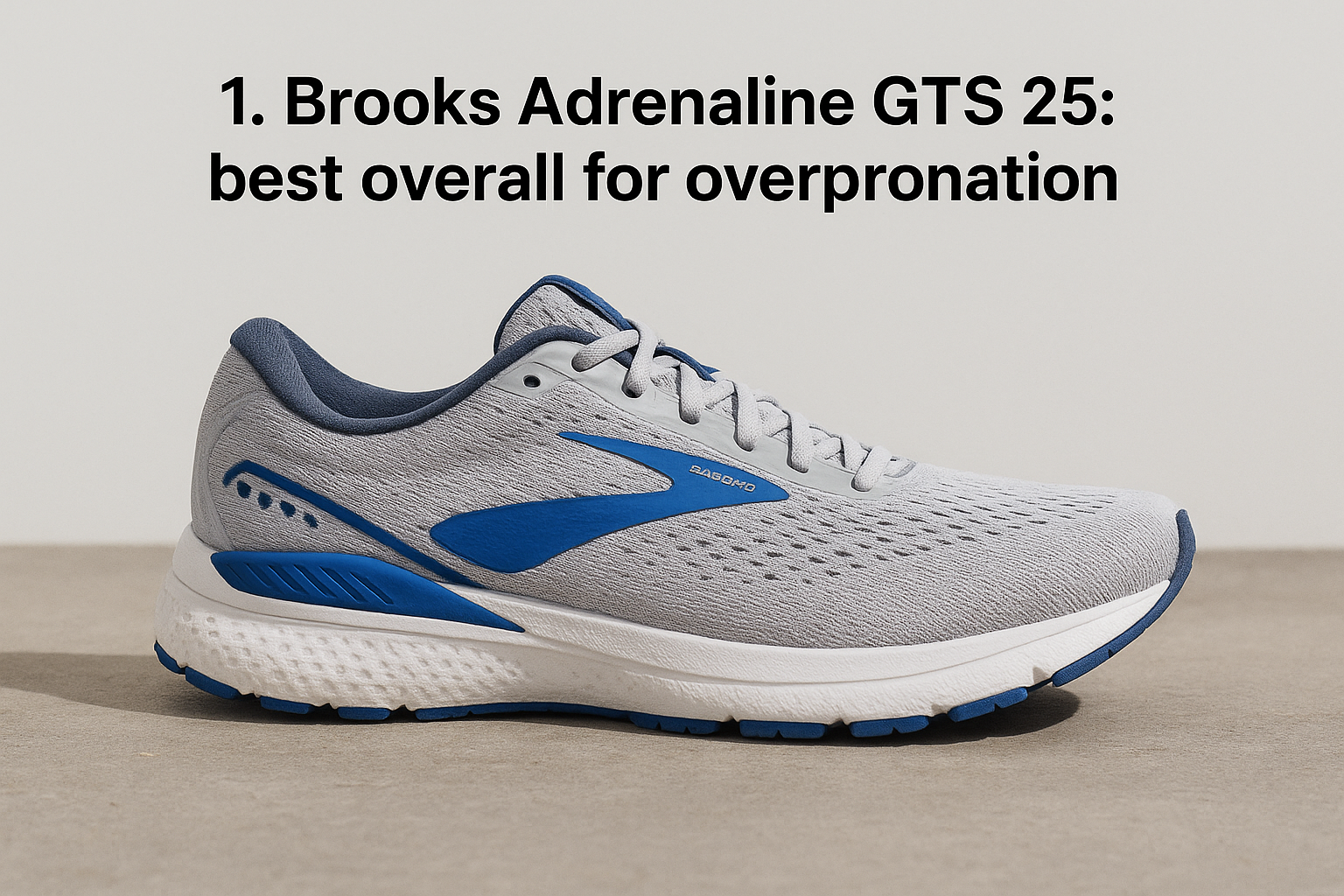
1. Brooks Adrenaline GTS 25: best overall for overpronation
Brooks has built the Adrenaline GTS line around mild-to-moderate overpronation for more than two decades, and the GTS 25 is the most refined version yet. It sits in that sweet spot between a firm, corrective stability shoe and a soft, forgiving trainer, which is why so many of our patients end up wearing it after a biomechanical assessment in Sydney confirms they need extra medial support without a rigid, clunky feel. If you’re only going to try one stability shoe from this list, start here.
How it supports overpronation
The GTS 25 uses Brooks’ GuideRails Support System rather than a traditional dual-density foam post. Instead of jamming a firmer wedge under the arch, GuideRails sit along both sides of the heel and guide excess movement at the knee and ankle back into a neutral path only when your stride drifts outside a healthy range. The result is support that works with your natural gait rather than forcing your foot into one fixed position.
A shoe that only corrects your stride when you actually need it beats one that overcorrects every step.
Underneath that, Brooks’ DNA LOFT v3 midsole cushions the landing while keeping enough structure to resist collapsing inward through the gait cycle. The 12mm heel-to-toe drop also encourages a more efficient heel-to-forefoot transition, which reduces the time your foot spends rolling inward before push-off.
Who it’s best for
The Adrenaline GTS 25 suits runners with mild to moderate overpronation who log regular kilometres on roads or footpaths and want one dependable shoe for most of their training. It works well for:
- Recreational runners doing 20 to 60km per week
- Beginners who overpronate and haven’t yet trained in a stability shoe
- Heavier runners (75kg+) who need midsole support that doesn’t break down quickly
- Anyone transitioning out of a motion-control shoe who wants a lighter, more flexible option
It’s less suited to runners with severe overpronation or collapsed arches, who often need a firmer motion-control shoe or a custom orthotic fitted alongside their footwear. If you’re unsure which category you fall into, a proper gait analysis at one of our Sydney clinics will settle it in about 30 minutes.
Price in Australia
| Retailer type | Typical price (AUD) |
|---|---|
| RRP (Brooks Australia) | $259.99 |
| Sports retailers (The Athlete’s Foot, Rebel) | $250 to $260 |
| Sale periods | $180 to $220 |
The GTS 25 sits mid-pack for a premium stability shoe. Prices rarely move much below $220 outside of end-of-season sales, since Brooks tends to hold its pricing better than most competitors. Given the shoe typically lasts 600 to 800km before the midsole loses its supportive edge, the cost per kilometre stacks up well against cheaper shoes you’d need to replace twice as often.
2. Asics Gel-Kayano 32: best for secure, structured support
Asics has kept the Gel-Kayano as its flagship stability shoe for over 30 years, and the 32nd edition leans further into structured support than the lighter, guide-rail approach you get from Brooks. This is the shoe for runners who want to feel the correction happening underfoot, rather than a subtle nudge back into alignment. Patients who’ve struggled with collapsed arches and flat feet or a noticeably rolled-in ankle tend to gravitate toward this model once they’ve tried a softer stability shoe and found it wasn’t doing enough.
How it supports overpronation
Asics built the Kayano 32 around its 4D Guidance System, a firmer medial midsole component paired with a wider, more supportive heel clutch. Unlike the Adrenaline GTS, which only intervenes when your stride drifts, the Kayano applies structured support through the entire gait cycle, which suits runners whose overpronation is consistent rather than occasional.
If your foot rolls inward the same way on every step, a shoe that supports every step usually works better than one that only steps in occasionally.
The PureGEL heel unit also absorbs impact without letting the rearfoot cave inward, and the 10mm drop keeps the transition smooth even at slower paces.
Who it’s best for
The Gel-Kayano 32 suits runners with moderate to severe overpronation who want dependable, structured support on every run:
- Marathon and half-marathon trainers logging high weekly kilometres
- Runners with flat feet or low arches, who may also want our shoe picks for flat feet
- Those coming from a motion-control shoe who need slightly more flexibility
- Heavier or taller runners needing consistent midsole support
Price in Australia
| Retailer type | Typical price (AUD) |
|---|---|
| RRP (Asics Australia) | $270 |
| Sports retailers | $260 to $270 |
| Sale periods | $190 to $230 |
Expect the Kayano to sit near the top of the stability price bracket, though outlet stores and end-of-season sales bring it close to the Adrenaline GTS.
3. Saucony Guide 19: best for long runs and marathon training
Saucony redesigned the Guide line a few years back, and the 19th version is built specifically for runners who spend long stretches on their feet without wanting a shoe that feels heavy by kilometre 30. It’s a stability trainer for people training for half marathons and marathons, where cumulative fatigue causes overpronation to worsen deep into a run. If your form holds up fine for 5km but falls apart after 15, this is the shoe worth trying.
How it supports overpronation
The Guide 19 uses Saucony’s PWRRUN+ midsole paired with a firmer medial post that sits under the arch rather than along the heel edges. This gives a more traditional stability feel, resisting inward roll through the middle of your stride rather than just correcting it at footstrike. The wider platform underfoot also gives you a stable base as fatigue sets in and your form starts to break down.
A stability shoe only earns its keep in the second half of a long run, when tired legs start to change your stride.
The 8mm heel-to-toe drop keeps momentum moving forward, which matters when you’re trying to maintain pace late in a marathon.
Who it’s best for
The Guide 19 suits distance-focused runners managing mild to moderate overpronation, particularly those training for events rather than just running for fitness. It works well for:
- Marathon and half-marathon runners doing long weekend runs
- Runners who notice their overpronation worsens as fatigue builds
- Those wanting a lighter alternative to the Kayano without losing support
- Runners transitioning from a neutral shoe who need moderate correction
Price in Australia
| Retailer type | Typical price (AUD) |
|---|---|
| RRP (Saucony Australia) | $259.99 |
| Sports retailers | $250 to $260 |
| Sale periods | $180 to $210 |
The Guide 19 tends to drop in price faster than the Kayano once new models arrive, making end-of-season sales a good time to buy a spare pair for training block two.
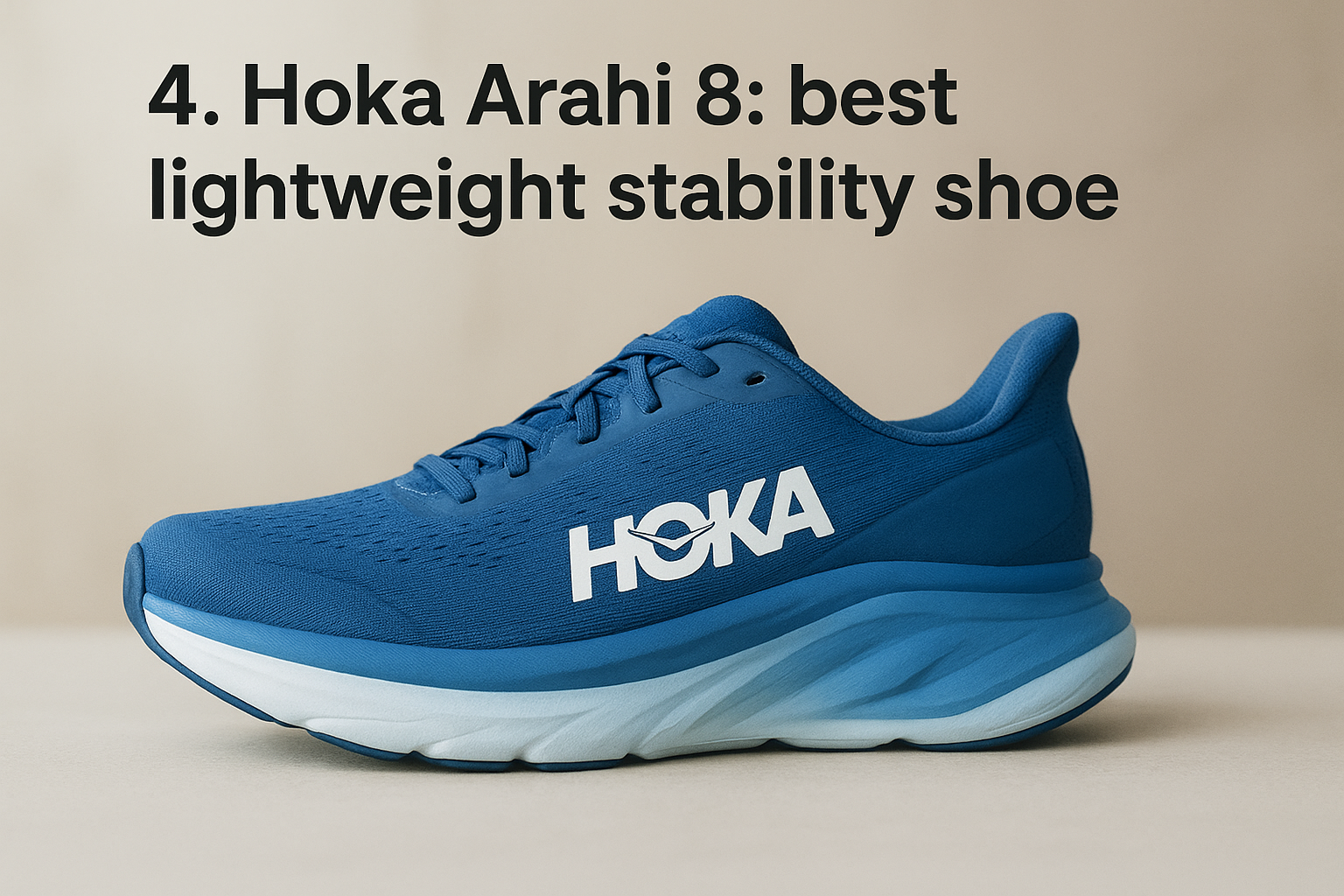
4. Hoka Arahi 8: best lightweight stability shoe
Hoka built its reputation on maximalist cushioning, and the Arahi 8 proves the brand can do stability without the bulk that usually comes with it. This is the shoe for runners who’ve been put off stability trainers because they feel heavy or restrictive underfoot. If you overpronate mildly but still want the fast, springy ride Hoka is known for, the Arahi 8 closes that gap better than anything else on this list.
How it supports overpronation
Instead of a firm medial post, Hoka uses a J-Frame midsole, a firmer strip of foam that wraps around the outer edge and underneath the heel and arch like a supportive cradle. It’s a subtler form of correction than a traditional post, guiding your foot back toward neutral without creating a hard, noticeable wedge under the arch. Combined with a wide base and Hoka’s signature rocker geometry, the shoe encourages a smooth, quick transition through your stride, which reduces the window where your foot can roll inward excessively.
Lightweight stability only works if the support is built into the shoe’s shape, not bolted on as extra foam.
At roughly 240 grams for a men’s size 9, the Arahi 8 is noticeably lighter than the Kayano or Guide, which matters over longer training blocks.
Who it’s best for
The Arahi 8 suits runners with mild overpronation who prioritise a fast, lightweight feel over heavy structural correction. It’s a strong fit for:
- Faster training runs and tempo sessions
- Runners who found other stability shoes too rigid or heavy
- Trail-to-road crossover runners wanting one versatile pair
- Lighter runners under 70kg who don’t need dense midsole foam
Runners with severe overpronation or collapsed arches will likely need firmer support elsewhere on this list.
Price in Australia
| Retailer type | Typical price (AUD) |
|---|---|
| RRP (Hoka Australia) | $260 |
| Sports retailers | $250 to $260 |
| Sale periods | $180 to $210 |
Expect the Arahi 8 to track close to other premium stability shoes on this list, with the occasional discount when new Hoka releases push older stock out.
5. Asics GT-2000 14: best value stability shoe
Asics positions the GT-2000 as the more affordable sibling to the Kayano, and the 14th edition proves you don’t need to spend $270 to get genuine stability running shoe performance. It carries a lot of the same DNA as its pricier stablemate, just with a slightly firmer ride and fewer premium extras. For runners who want reliable overpronation control without paying flagship prices, this is the shoe we point patients toward most often.
How it supports overpronation
The GT-2000 14 uses a trimmed-down version of Asics’ guidance technology, built around a firmer medial midsole section that resists inward roll through the stance phase. It’s less plush than the Kayano’s PureGEL setup, but the firmer midsole density actually gives clearer feedback to runners who want to feel the correction working rather than have it disappear into soft foam.
Stability doesn’t have to be expensive to be effective, it just needs the right foam in the right place.
The 10mm drop and slightly narrower platform than the Kayano keep the shoe feeling responsive rather than bulky, which suits shorter, faster training runs as well as easy kilometres.
Who it’s best for
The GT-2000 14 suits runners with mild to moderate overpronation who want dependable support on a budget. It’s a good match for:
- Runners doing 20 to 50km per week on roads or treadmills
- Anyone buying their first stability shoe and unsure how much support they’ll need long-term
- Value-conscious runners replacing shoes every 500 to 600km
- Gym-goers and casual runners who don’t need marathon-grade cushioning
Runners with severe overpronation will likely outgrow the support here faster than the firmer Kayano.
Price in Australia
| Retailer type | Typical price (AUD) |
|---|---|
| RRP (Asics Australia) | $200 |
| Sports retailers | $190 to $200 |
| Sale periods | $130 to $160 |
Sale pricing on the GT-2000 14 often undercuts every other shoe on this list, making it worth checking before committing to a pricier stability model.
6. On Cloudrunner 3: best for everyday training runs
On built its name on the CloudTec pod system, and the Cloudrunner 3 takes that springy, distinctive ride and adds enough structure underfoot to handle mild overpronation. It’s less clinical than the Asics or Saucony options on this list, aimed at runners who want a shoe that feels playful on easy days without abandoning support altogether. Patients who’ve mentioned they find traditional stability shoes boring or overly firm tend to enjoy this one.
How it supports overpronation
Quietly, the Cloudrunner 3 manages overpronation through a dual-density Missiongrip midsole and a wider heel platform rather than a visible medial post. The firmer foam sits along the inner edge of the shoe, resisting excess inward roll as your foot lands, while the softer outer foam keeps the ride from feeling harsh. It’s a gentler form of correction, better suited to runners whose overpronation shows up occasionally rather than on every stride.
A shoe built for enjoyment still needs to support your stride, otherwise you won’t wear it often enough for the support to matter.
On’s Speedboard, a firm nylon plate embedded in the midsole, also adds a layer of torsional stability that helps keep the foot tracking straight through toe-off.
Who it’s best for
Generally, the Cloudrunner 3 suits runners with mild overpronation who run most of their kilometres at an easy, conversational pace. It fits well for:
- Everyday training runs and recovery days
- Runners who’ve found firmer stability shoes uncomfortable
- Those wanting one shoe for both running and all-day wear
- Beginners easing into structured stability footwear
Runners managing moderate to severe overpronation should look toward the Kayano or Guide 19 instead, since the Cloudrunner’s support is noticeably subtler.
Price in Australia
| Retailer type | Typical price (AUD) |
|---|---|
| RRP (On Australia) | $259.99 |
| Sports retailers | $250 to $260 |
| Sale periods | $190 to $220 |
On rarely discounts as heavily as Asics or Brooks, so budget-conscious buyers may find better value elsewhere on this list.
7. Saucony Hurricane 25: best for maximum cushioning
Saucony sits the Hurricane 25 above the Guide in its stability range, built for runners who need heavy-duty overpronation control but refuse to give up a plush ride. Think of it as the Guide’s bigger, softer sibling, aimed at heavier runners or those with moderate to severe overpronation who’ve found firmer stability shoes uncomfortable on longer efforts. Patients recovering from plantar fasciitis or general foot fatigue often ask us about this model once daily mileage climbs past 40km a week.
How it supports overpronation
Underneath the Hurricane 25 sits a dual-layer PWRRUN midsole, with a firmer TPU-infused medial post running the full length of the arch rather than stopping at the heel. This gives continuous correction through the entire stance phase, which suits runners whose foot collapses inward steadily rather than just at footstrike. Saucony also widens the base noticeably compared to the Guide 19, giving tired legs a stable platform even when form starts slipping late in a run.
Maximum cushioning only helps overpronation if the firmer foam sits exactly where your arch needs it most.
Who it’s best for
Generally, the Hurricane 25 suits runners carrying more body weight or managing moderate to severe overpronation who prioritise comfort over a fast, responsive feel. It works well for:
- Heavier runners (85kg+) needing durable, supportive cushioning
- Those with joint pain in the knees or hips alongside overpronation
- Runners doing high weekly kilometres who want extra shock absorption
- Anyone stepping up from the Guide 19 who needs firmer arch support
Faster runners chasing tempo paces will likely find this shoe too heavy for anything but easy days.
Price in Australia
| Retailer type | Typical price (AUD) |
|---|---|
| RRP (Saucony Australia) | $279.99 |
| Sports retailers | $260 to $280 |
| Sale periods | $200 to $230 |
Holding its price better than the Guide, the Hurricane 25 rarely drops below $200 outside major sales, reflecting its position as Saucony’s premium stability option.
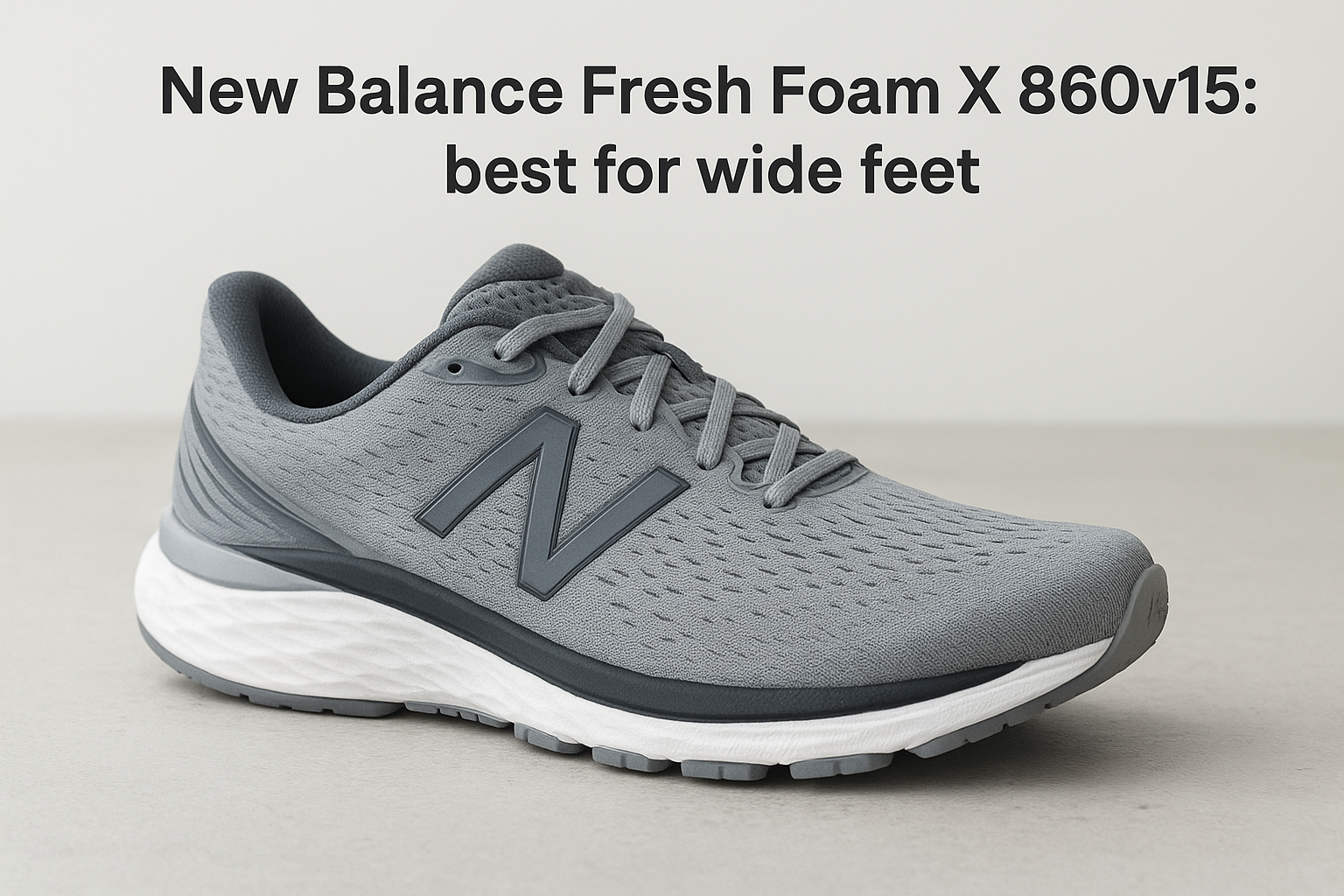
8. New Balance Fresh Foam X 860v15: best for wide feet
New Balance has quietly built the 860 into one of the most dependable stability shoes on the market, and the 860v15 finally gets the wide-foot treatment right. Unlike most stability shoes that only come in a single width, this model is available in 2E and 4E options alongside standard fitting, which matters enormously if you’ve ever squeezed a wide foot into a narrow medial post and ended up with numb toes by kilometre 10. If bunions, wide forefeet, or swelling later in a run have made every other shoe on this list feel cramped, start here, and compare it against our full list of running shoes for wide feet.
How it supports overpronation
Beneath the shoe, the 860v15 pairs a dual-density Fresh Foam X midsole with a firmer medial post running under the arch, a fairly traditional stability setup that resists inward collapse through the stance phase. The wider platform, especially in the 2E and 4E versions, gives the foot more surface area to land on, which naturally reduces excessive rolling before the post even engages. New Balance also carried over the T-beam sole guide plate from previous versions, adding torsional stability without stiffening the ride too much.
A stability shoe that pinches a wide foot will always undo whatever correction its midsole is trying to provide.
Who it’s best for
The 860v15 suits runners with wide or high-volume feet managing mild to moderate overpronation. It works well for:
- Runners who’ve struggled to find stability shoes in wide fittings
- Those with bunions or swelling that worsens in narrow toe boxes
- Recreational runners doing 20 to 50km per week
- Anyone wanting a dependable, no-frills stability trainer
Price in Australia
| Retailer type | Typical price (AUD) |
|---|---|
| RRP (New Balance Australia) | $220 |
| Sports retailers | $210 to $220 |
| Sale periods | $150 to $180 |
Sitting below the Kayano and Hurricane in price, the 860v15 offers genuine stability at a mid-range cost, and wide sizing is usually available without a surcharge.
9. Saucony Endorphin Pro 5: best for race day
Saucony built the Endorphin Pro 5 as a pure racing shoe, not a dedicated stability trainer, but it earns a place on this list because of how its carbon plate and rocker shape manage mild overpronation over short, fast efforts. This is the shoe for runners who overpronate slightly, have strong enough form to handle less structured support, and want maximum speed for race day rather than daily training miles. If you’re chasing a personal best and only need help holding your line for 10km to a marathon, this is worth trying.
How it supports overpronation
Rather than a medial post, the Endorphin Pro 5 relies on a full-length carbon fibre plate embedded in a springy PWRRUN PB midsole. The plate’s shape resists excessive torsion through the midfoot, which keeps mild inward roll in check during the propulsive phase of each stride. Saucony’s aggressive rocker geometry also shortens the window your foot spends on the ground, reducing the opportunity for your arch to collapse before push-off.
A racing shoe can only manage mild overpronation for the length of a race, not the length of a training block.
Who it’s best for
Generally, the Endorphin Pro 5 suits experienced runners with mild overpronation who’ve already built strong running form through consistent training. It fits well for:
- Racing 10km, half marathon, or marathon distances
- Runners who train in a stability shoe and race in something lighter
- Faster, lighter runners under 75kg
- Anyone chasing a specific finish time who doesn’t need daily support
Runners with moderate to severe overpronation should keep this strictly for race day and train in a proper stability shoe like the Kayano or Guide 19.
Price in Australia
| Retailer type | Typical price (AUD) |
|---|---|
| RRP (Saucony Australia) | $349.99 |
| Sports retailers | $330 to $350 |
| Sale periods | $250 to $290 |
Carbon-plated racing shoes rarely drop far below $250, and the Endorphin Pro 5 holds its price better than most given its limited lifespan of roughly 300 to 400km.
10. How to tell if you overpronate
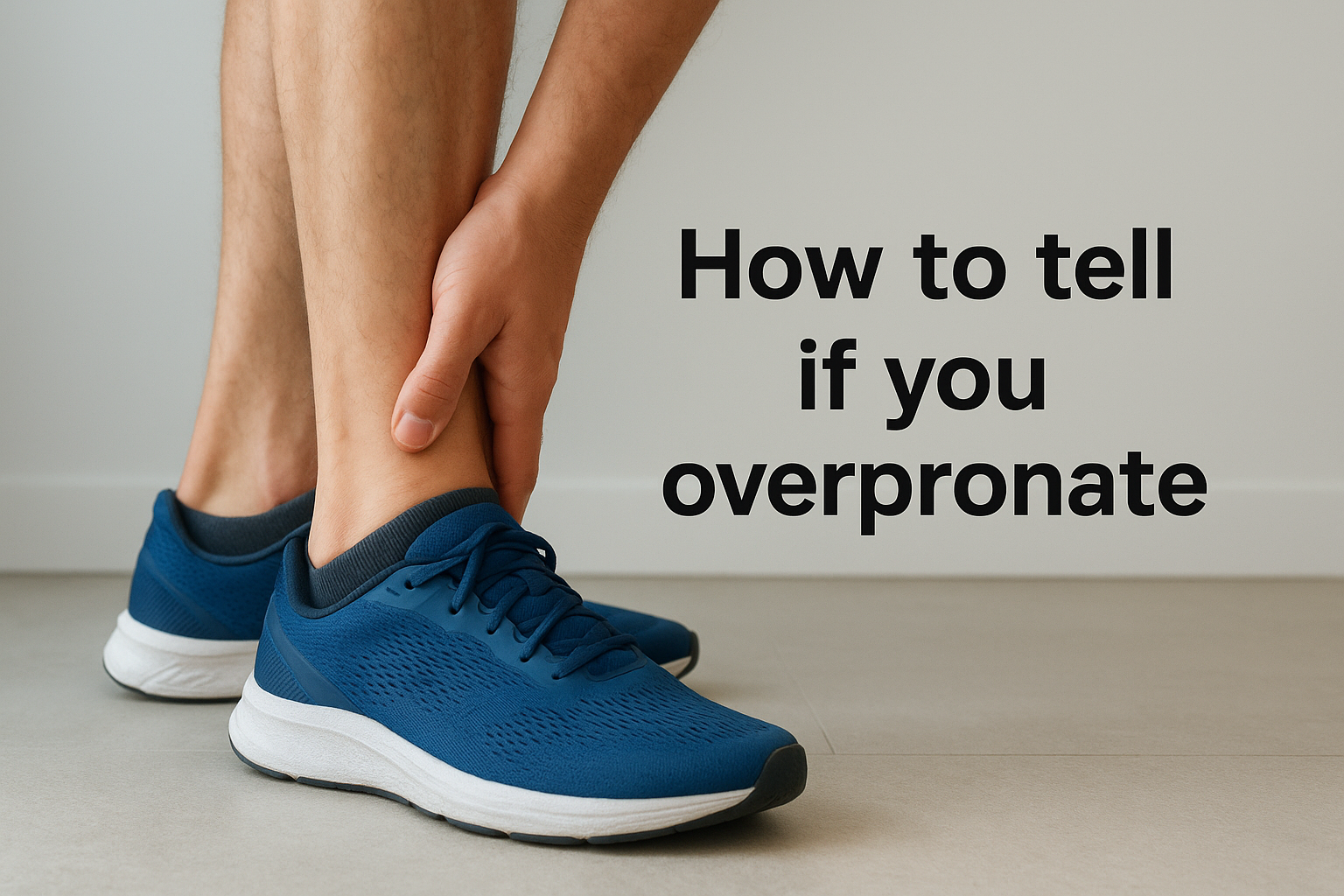
Before you spend $250 on a stability shoe, it’s worth checking whether you actually overpronate, or whether something else is causing your pain. Plenty of runners buy a heavily corrective shoe based on a guess, only to find their shin pain gets worse because they didn’t need that much support in the first place.
Signs to look for
Most overpronators notice a pattern rather than a single symptom, and there are simple self-tests you can run at home. Watch for these clues:
- Your shoes wear down faster on the inner edge of the sole, particularly under the big toe
- Your ankle visibly rolls or collapses inward when you watch yourself run on a treadmill
- You get recurring shin splints, knee pain, or plantar fasciitis without an obvious injury cause
- Your arches look flattened when you stand barefoot, or your footprint on a wet surface shows almost no arch curve
- Old shoes lean inward when placed on a flat surface
One symptom on its own means little, but three or four together usually point to overpronation.
Gait analysis and podiatrist assessment
Honestly, guessing from shoe wear only gets you so far. A proper gait analysis for runners uses a pressure plate and slow-motion video to measure exactly how much and when your foot rolls inward, which tells a podiatrist whether you need mild guidance, moderate support, or a firmer motion-control shoe. At our Sydney clinics, this assessment takes about 30 minutes and gives you a clear answer instead of a guess based on shoe reviews.
When shoes alone aren’t enough
Sometimes a stability shoe simply isn’t enough correction, especially with severe overpronation, collapsed arches, or ongoing pain that hasn’t improved after switching footwear, which raises the question of how far overpronation can actually be corrected. In these cases, custom orthotics fitted after a proper biomechanical assessment do the job a shoe alone can’t, correcting your specific foot position rather than offering generic support built for the average runner.
11. What to look for in an overpronation running shoe
Picking from nine shoes is easier once you know which features actually matter. Not every stability shoe suits every overpronator, and the wrong choice can leave you paying for correction you don’t need or, worse, not enough. Before you commit to a pair, run through the same checklist our podiatrists use when fitting motion control shoes and stability trainers in clinic.
Support features and technology
Generally, the technology behind the support matters more than the marketing term stamped on the box. A medial post gives firm, continuous correction and suits consistent overpronators, while guide rail systems (like Brooks or the Cloudrunner’s Speedboard) only intervene when your stride drifts outside a healthy range, which suits milder or occasional overpronation. Check whether the firmer foam sits under the arch, along the heel, or wrapped around the outer edge, since each placement corrects a slightly different part of your stride.
Stack height, drop and stability
Heel-to-toe drop changes how quickly your foot transitions from landing to push-off, and a lower drop (6 to 8mm) generally encourages a faster transition through the phase where overpronation happens. Higher stack heights (like Hoka’s) cushion harder but need a wider base or firm rocker shape to avoid feeling unstable. A wider platform underfoot, particularly through the midfoot and heel, reduces excessive rolling before any built-in support even engages.
The right amount of correction always beats the maximum amount of correction.
Fit and comfort considerations
Finally, no amount of clever midsole engineering fixes a shoe that doesn’t fit properly. A narrow toe box on a wide foot forces your arch to compensate elsewhere, undoing whatever stability the midsole provides. Consider these fit checks before buying:
- Thumb’s width of space between your longest toe and the front of the shoe
- No pinching across the widest part of your forefoot
- Heel sits snugly without lifting during a short jog in-store
- Arch support matches your actual arch height, not a generic average
Trying shoes on late in the day, when your feet are slightly swollen, gives a more realistic fit test than a morning try-on.
Finding the right shoe for your stride
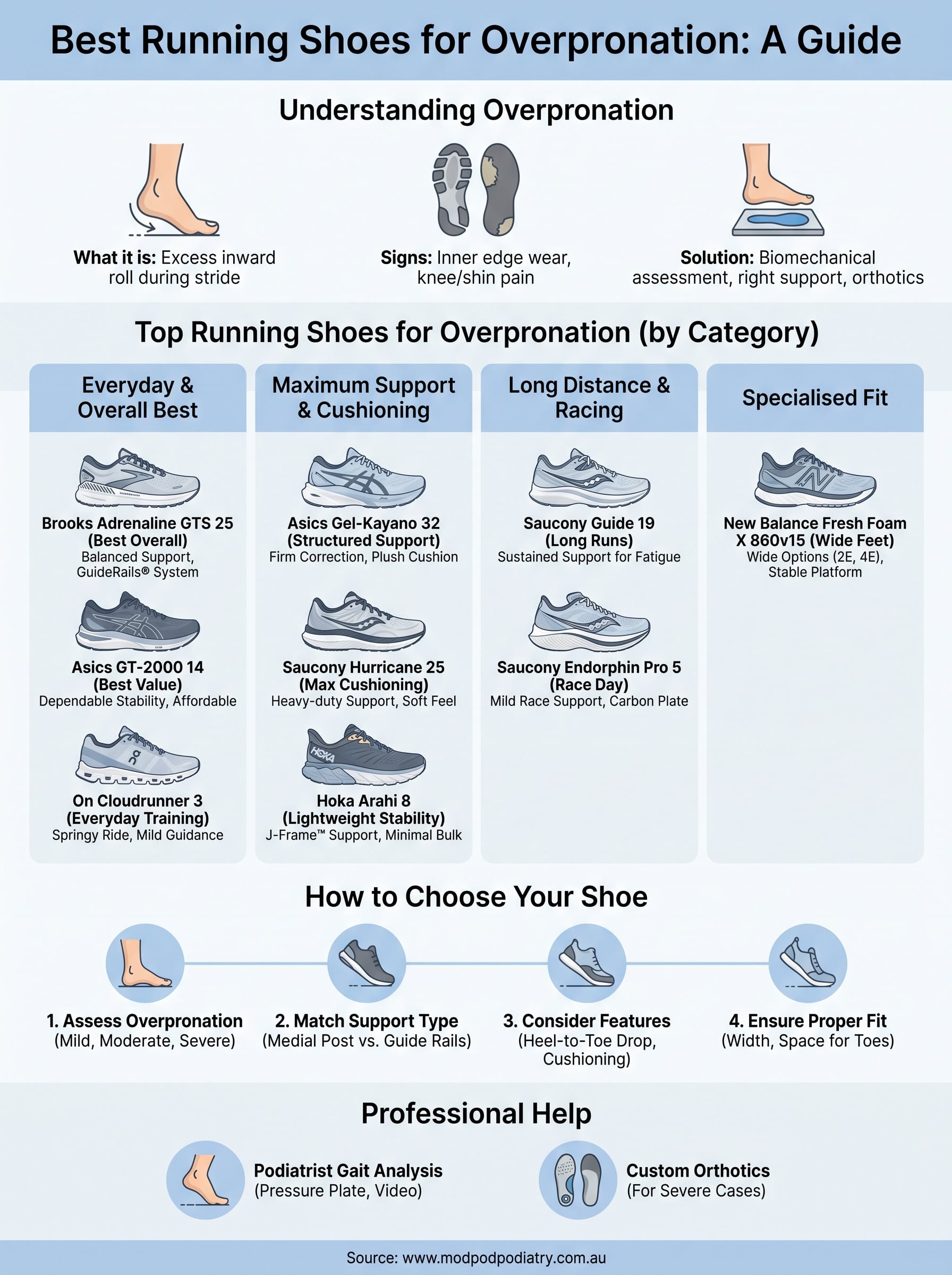
Getting the best running shoes for overpronation right comes down to matching support to how your foot actually moves, not chasing the priciest stability model on the shelf. The nine shoes above cover most scenarios, from marathon training in the Guide 19 to race day speed in the Endorphin Pro 5, but the shoe only does part of the job. Knowing whether you’re a mild, moderate, or severe overpronator changes which model actually helps, and guessing wrong means paying for correction you don’t need or missing support you do.
Questions about your own gait rarely get answered by reading reviews alone. Our podiatrists across Sydney run pressure plate assessments every week for runners in exactly your position, then match the findings to footwear or custom orthotics where needed. If your shin pain, knee pain, or worn-out shoes suggest overpronation, book an overpronation assessment at one of our Sydney clinics and get a straight answer before your next shoe purchase.

