

That deep, nagging ache along the inside of your shin after a run isn’t something to push through. If you’ve been searching what causes shin splints, you’re probably already dealing with pain that flares up during activity and lingers afterwards, and you want a straight answer rather than another vague list of stretches.
In short, shin splints happen when the muscles, tendons and bone tissue around your tibia are overloaded faster than they can recover, usually from a sudden jump in running volume, hard surfaces, worn-out shoes, or poor biomechanics. The result can include localised swelling, tenderness along the bone, and in some cases pain that radiates toward the knee, which is why so many people confuse it with a knee injury.
This article walks through the real mechanics behind shin splints, how podiatrists tell them apart from stress fractures, and what actually works for shin splints diagnosis and treatment, from load management to custom orthotics and gait correction, so you know exactly what’s driving your pain and how to fix it.
Why shin splints develop and who’s most at risk
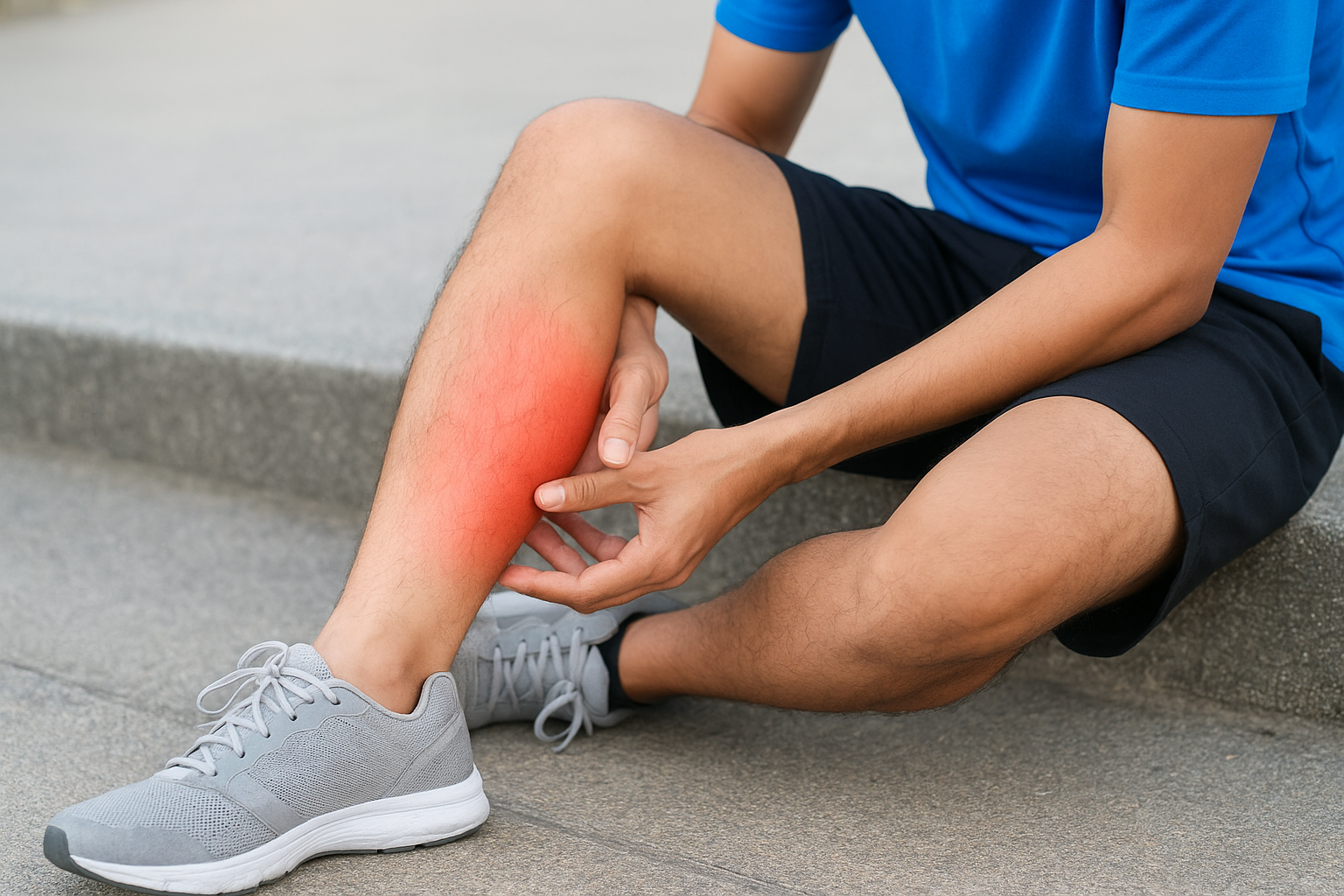
Medial tibial stress syndrome, the clinical name for shin splints, starts as a repetitive strain injury. Every time your foot strikes the ground, the muscles that attach along your tibia pull on the bone’s outer covering, the periosteum. Repeated microtrauma from thousands of strides, without enough recovery time between sessions, inflames that tissue and leaves it tender to touch. So if you’re asking what is the main cause of shin splints, the honest answer is simply doing too much, too soon, on a lower limb that hasn’t adapted yet.
Shin splints are almost always a training-load problem before they’re a biomechanical one.
The training and surface factors
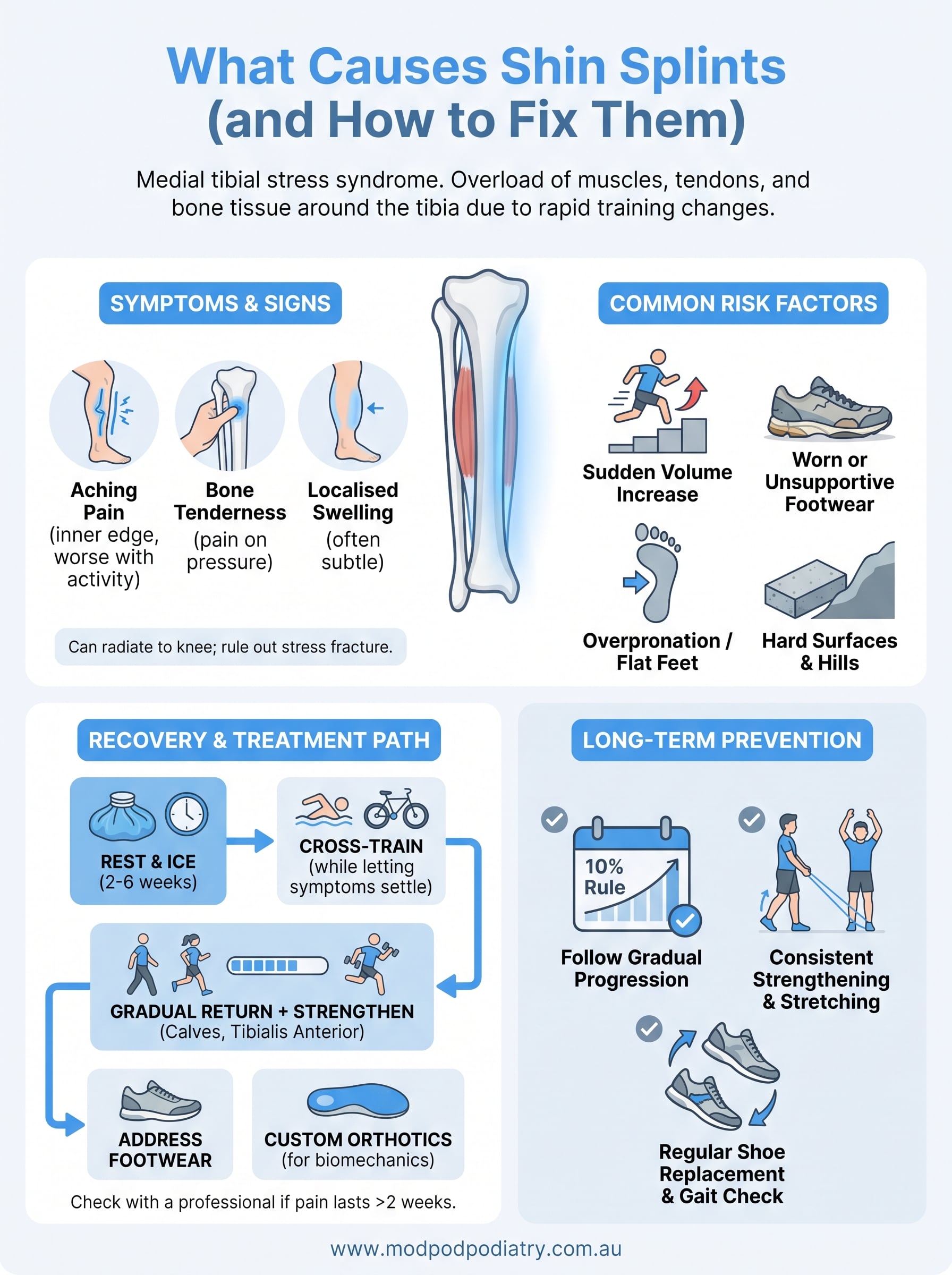
Most cases we see at ModPod trace back to a sudden change rather than a single bad step. Runners who jump their weekly distance up by more than the commonly recommended 10 percent, switch from grass to concrete, or return to sport after a break without easing back in are the classic pattern. Worn-out footwear compounds it, because shoes lose shock absorption long before they look damaged, often by the 600 to 800 kilometre mark. Hard, unforgiving surfaces and hill training also raise the load on the tibia with every stride.
Biomechanical and physical risk factors
Beyond training habits, your own biomechanics play a big part in why some people develop shin splints and others don’t. Overpronation, why feet roll inward excessively during the gait cycle, increases tension on the muscles supporting the shin. Flat feet, calf muscles that stay tight after running, and reduced ankle flexibility all shift extra strain onto the same area. Muscle imbalances between the front and back of the lower leg are common in people who’ve recently increased running intensity without building strength alongside it.
| Risk factor | Why it matters |
|---|---|
| Sudden increase in running volume | Tissue hasn’t adapted to new load |
| Worn or unsupportive footwear | Reduced shock absorption at foot strike |
| Overpronation or flat feet | Extra tension through tibial muscles |
| Hard or uneven surfaces | Higher impact forces per stride |
| Tight calves, weak hip or ankle stability | Poor load distribution up the leg |
| Returning to sport after time off | Deconditioned muscles and bone |
Athletes new to running, military recruits doing sudden basic training, and dancers are consistently over-represented in shin splint statistics, largely because all three groups combine rapid load increases with repetitive impact. If several of these factors overlap for you, for instance flat feet plus a recent jump in mileage, your risk climbs considerably, which is exactly why a proper assessment matters before the pain becomes chronic.
How to treat shin splints and speed up recovery
Rest is the first genuine treatment, not an afterthought. Cutting back on high-impact activity for two to six weeks, depending on severity, gives the periosteum time to calm down before you reload it. Ice for fifteen minutes several times a day in the first week reduces inflammation, and anti-inflammatory medication can help short-term, though it shouldn’t mask pain that lets you keep training on a damaged shin, as our guide to treating shin splints at home explains.
Recovery from shin splints depends far more on how you reload the leg than on how long you rest it.
Gradual return matters just as much as the initial rest. A podiatrist will usually guide this staged process:
- Cross-train with swimming or cycling while symptoms settle
- Reintroduce walking, then light jogging, once you’re pain-free at rest
- Increase distance by small increments, checking for next-day soreness before adding more
- Add calf and tibialis anterior strengthening to correct the muscle imbalance that likely contributed
- Address footwear, replacing worn shoes rather than pushing them further
Orthotics often make the biggest difference for anyone whose overpronation or flat feet are driving the load. At ModPod, we use pressure plate analysis and 3D scanning to build a custom orthotic that redistributes force away from the tibia during gait, rather than guessing at an off-the-shelf insert. Shockwave therapy is another option we use for stubborn cases that haven’t responded to load management alone, stimulating tissue repair in the affected area.
Getting a proper diagnosis before starting treatment matters because shin splints diagnosis and treatment overlaps heavily with stress fractures, and treating a fracture like a simple strain risks turning a six-week problem into a six-month one. If pain persists past two weeks of rest, that’s the point to book an assessment rather than keep guessing.
Shin splint symptoms: swelling, knee pain and more
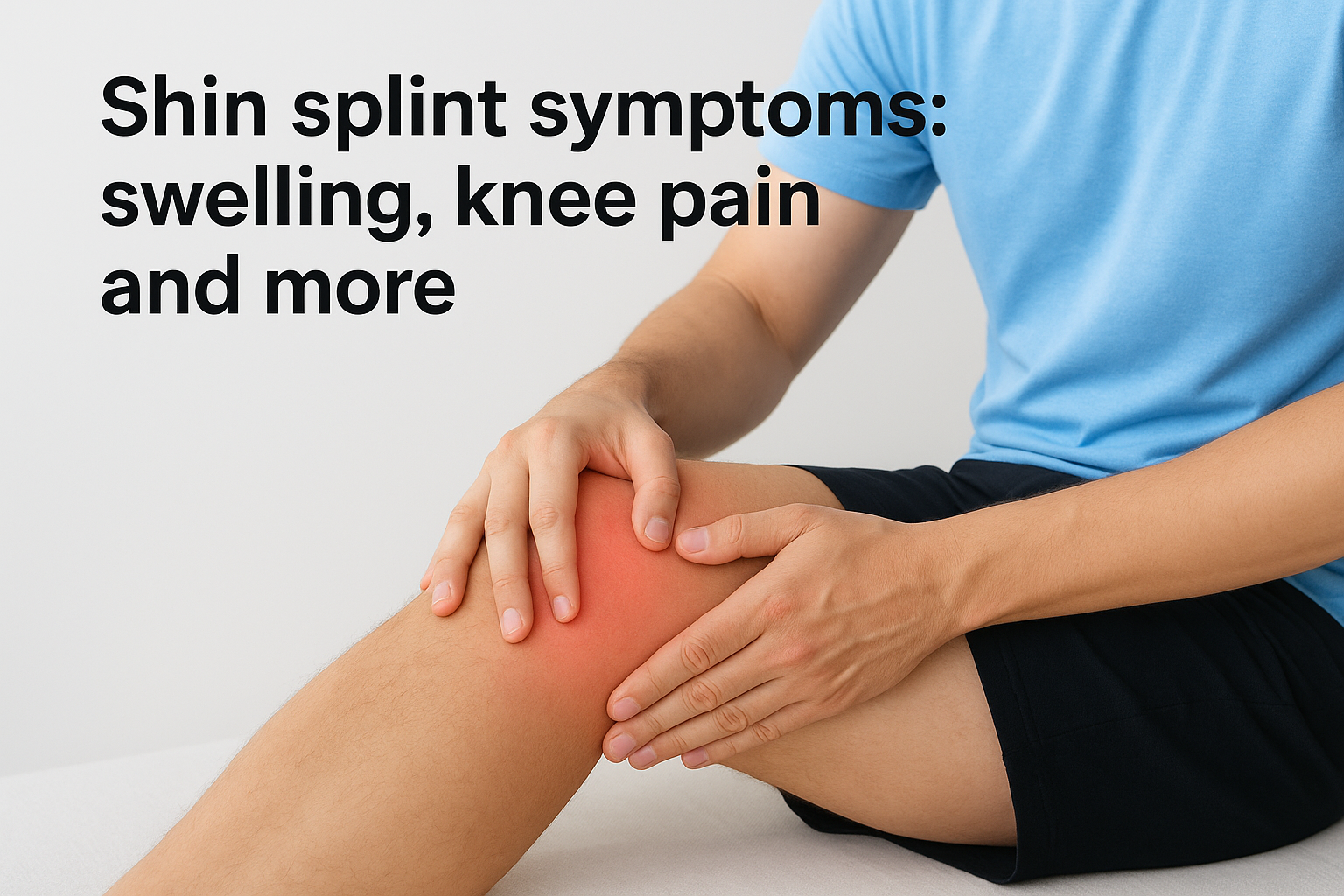
Patients often describe shin splints as a dull, aching pain along the inner edge of the tibia that worsens with activity and eases with rest, at least in the early stages. As the injury progresses, that ache can become sharper and start showing up even during everyday walking, not just running. Tenderness along the bone when you press on it is one of the clearest signs a podiatrist checks for during examination, since it helps rule out other causes of lower leg pain.
Will shin splints cause swelling?
Yes, mild localised swelling along the shin is common, particularly after a session, though it’s usually subtle rather than dramatic. If you notice pronounced swelling, bruising, or a lump you can feel under the skin, that points toward the warning signs of a stress fracture rather than straightforward shin splints, and it needs imaging to confirm. Redness or warmth over the area is another signal worth mentioning to your podiatrist rather than dismissing as normal training soreness.
Swelling that’s obvious to the eye, not just tender to touch, is a red flag for a stress fracture rather than a strain.
Can shin splints cause knee pain?
Shin splints cause knee pain indirectly more often than people expect. The muscles running up the front and inside of the lower leg connect into the same kinetic chain as the knee, so compensatory movement patterns, favouring the sore leg or altering your stride, can drag discomfort upward. It’s rarely the shin injury itself sitting in the knee joint, but rather the flow-on effect of an altered gait.
Other symptoms to watch for
- Pain that starts a few minutes into exercise and fades once you stop
- Tightness or cramping in the calf
- Discomfort that returns earlier in each session as the condition worsens
- Numbness or tingling, which suggests a nerve or circulation issue needing separate assessment
How to prevent shin splints from coming back
Once your shins have settled, the real work is stopping the injury cycling back every few months. Most repeat cases come from returning to the exact training habits that caused the problem in the first place, just with a slightly longer break in between. Gradual progression is the single biggest factor in staying injury-free long-term, so treat your return to full training as a program, not a countdown.
Prevention isn’t about never getting sore again, it’s about never letting load outpace tissue capacity a second time.
Build load tolerance the right way
Keep a simple training log and stick to the 10 percent rule for weekly mileage increases, even when your legs feel ready to push harder. Alternate hard and easy days, and schedule a genuine rest day every week rather than an active recovery session that still loads the tibia.
Strengthen and stretch consistently
A short daily routine does more for long-term prevention than any single treatment session. Focus on:
- Calf raises and eccentric lowers to build tendon resilience
- Tibialis anterior strengthening with resistance bands
- Hip and glute work to improve overall gait control
- Regular calf and ankle stretching to maintain flexibility
Check your footwear and biomechanics regularly
Replace running shoes on schedule rather than by appearance, and rotate two pairs if you’re training frequently, since alternating shoes changes the exact stress pattern on your shins. If you’ve had shin splints before, or you know you overpronate, a gait analysis for runners every year or so is worth the appointment, because feet and running mechanics change as fitness, weight, and shoe wear evolve. We run this alongside our sports podiatry assessments at ModPod, checking whether your orthotics or strengthening plan still match your current training load, rather than assuming last year’s fix still applies.
Keeping your shins injury-free
Shin splints come down to one thing: load outpacing what your tissue can handle. Whether it’s a training spike, worn shoes, or overpronation driving the strain, the fix always starts with an honest look at what changed before the pain did. Ignoring that early ache, or treating it with rest alone while the underlying biomechanical cause stays unaddressed, is why so many runners find themselves back in the same spot a few months later.
You don’t need to guess your way through it. A proper assessment tells you whether you’re dealing with straightforward shin splints or something that needs imaging, and whether custom orthotics, strength work, or a training tweak will fix it fastest. If your shins have been nagging at you for more than two weeks, don’t wait for a stress fracture to force the issue. Book a shin splints assessment online with ModPod Podiatry and get a plan that actually matches your legs, not a generic list of stretches.

