
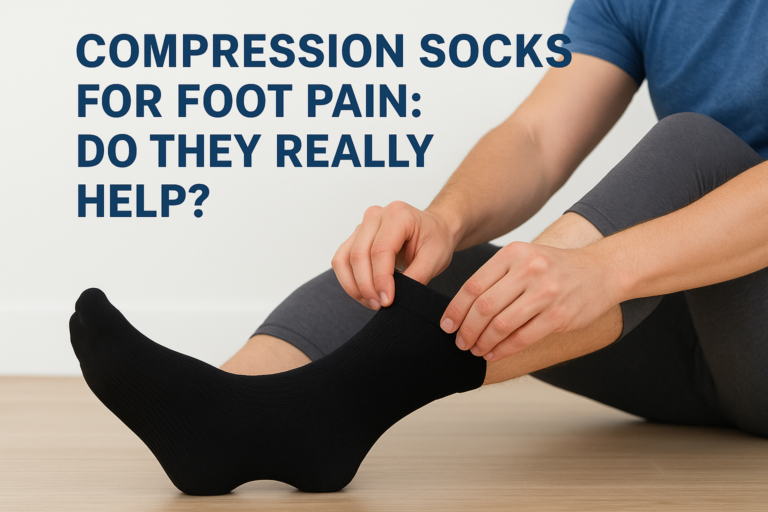
Your feet ache by mid-afternoon, someone at the gym mentions compression socks for foot pain, and now you’re standing in a shop aisle wondering if a snug pair of socks can actually fix plantar fasciitis or that nagging arch pain. It’s a fair question, and the answer isn’t a simple yes or no.
Compression socks can genuinely ease swelling and mild discomfort by improving blood flow and reducing fluid build-up around the foot and ankle. But they’re not a treatment for the underlying cause of heel pain, plantar fasciitis, or arch collapse. They work best as a support tool alongside proper diagnosis and treatment, not as a substitute for it.
In this article, we’ll walk you through what compression socks actually do, which conditions they help with, and where they fall short. We’ll also cover how to choose the right pair and when it’s time to see a podiatrist for a proper biomechanical assessment rather than relying on socks alone.
Why compression socks can ease foot pain
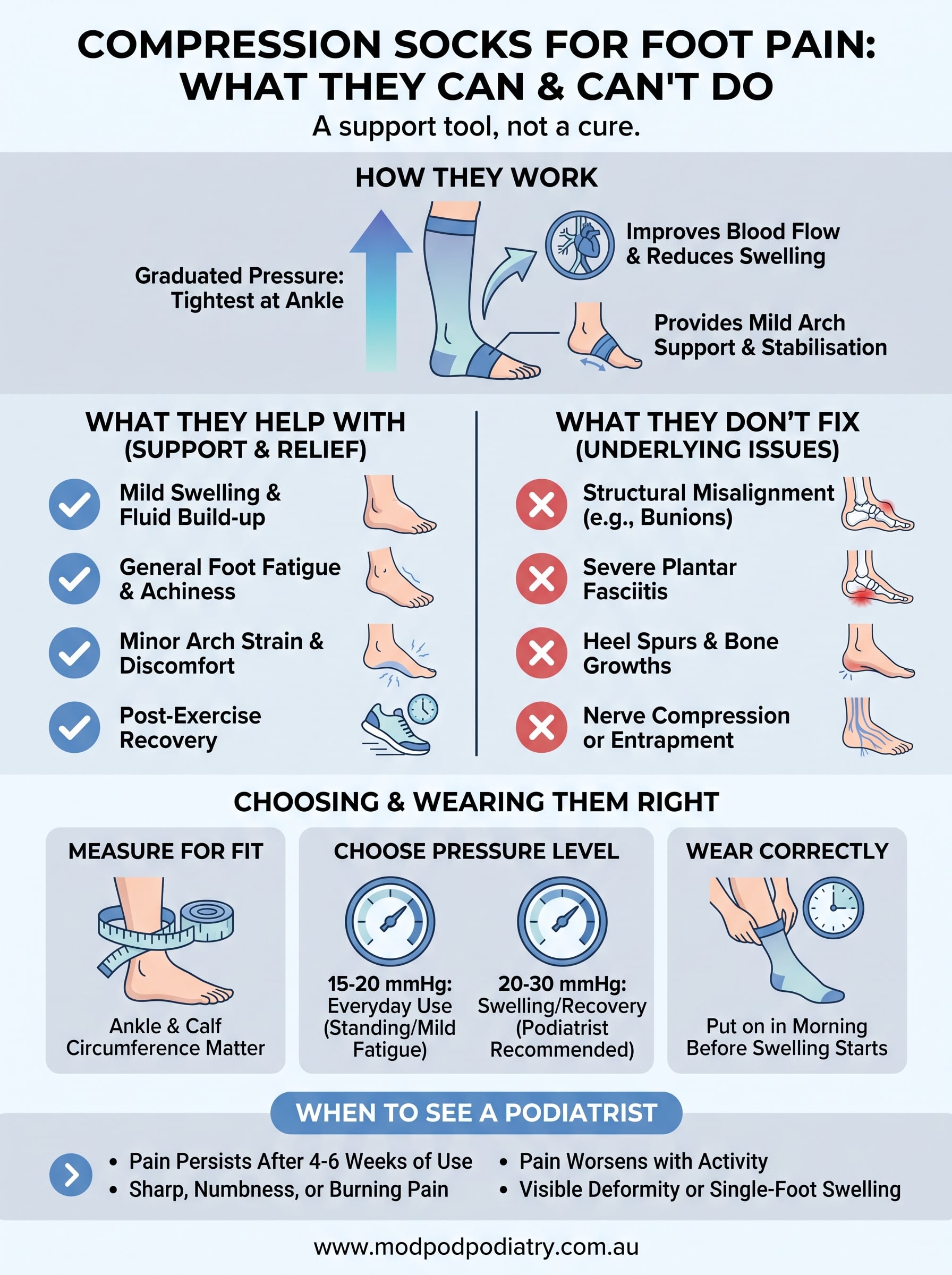
Compression socks work through graduated pressure, meaning they squeeze tightest at the ankle and gradually loosen as they move up the leg, and it helps to understand what makes a compression sock actually work. This pushes blood and fluid back toward the heart instead of letting it pool around your foot and ankle. For anyone on their feet all day, that mechanical push can noticeably reduce the puffy, heavy feeling that builds up by evening.
The support effect on arches and heels
Beyond circulation, a firm compression sock adds external arch support that mimics what a brace or strapping tape does, just less aggressively. Sizzling in on this support can take some load off the plantar fascia, the thick band of tissue running along the sole of your foot, which is often the source of stabbing heel pain first thing in the morning. Many people with mild plantar fasciitis or arch strain report their feet feel more stable and less fatigued when wearing compression socks during long shifts, runs, or flights.
Compression socks reduce swelling and add support, but they don’t correct the biomechanics causing your pain in the first place.
Why circulation matters more than people realise
Poor circulation contributes to that dull, achy sensation many people describe as "tired feet" rather than sharp pain. Improving blood flow speeds up the clearance of inflammatory fluid and metabolic waste from tissue after exercise or prolonged standing, which can shorten recovery time between training sessions. Runners and athletes often notice this benefit most, since sports-related foot pain frequently involves inflammation from repetitive impact rather than a structural problem alone.
What the relief actually covers
Here’s a realistic breakdown of what compression socks tend to help with versus what they leave untouched:
- Help with: mild swelling, general foot fatigue, minor arch strain, post-exercise recovery
- Don’t fix: structural misalignment, severe plantar fasciitis, heel spurs, bunions, nerve compression
Government health guidance on managing swelling, such as the information published by Healthdirect Australia, backs this up: compression is a supportive measure, not a cure. If your pain persists despite consistent use, that’s a signal something structural is going on underneath, which no sock, however tight, is designed to solve.
How to choose and wear compression socks for foot pain
Getting the fit right matters more than the brand on the box. A pair that’s too loose won’t apply enough pressure to help, while one that’s too tight can cut off circulation and make things worse. Look for graduated compression socks rated between 15-20 mmHg for everyday foot fatigue, or 20-30 mmHg if a podiatrist has recommended a firmer option for swelling or recovery, and see our podiatrist picks for people who stand all day.
Checking compression levels and sizing
Measuring your ankle and calf circumference before buying saves you a return trip. Most reputable brands include a sizing chart, and getting this wrong is the most common reason people give up on compression socks within a week.
| Compression level | Best for |
|---|---|
| 8-15 mmHg | Mild fatigue, travel |
| 15-20 mmHg | Standing all day, mild plantar fasciitis |
| 20-30 mmHg | Swelling, recovery, podiatrist-recommended |
Wearing them the right way
Slipping compression socks on first thing in the morning, before swelling sets in, gives you the best result. Wear them during activity or long periods of standing, then take them off at night unless a podiatrist advises otherwise for medical swelling, since how long you keep compression socks on matters as much as the pressure rating.
The right compression level, put on early in the day, does more for foot pain than any premium fabric or fancy pattern.
Washing them regularly keeps the elastic fibres working properly, since stretched-out compression socks lose their therapeutic effect within a few months of heavy use.
Types of compression socks for common foot conditions
Not every ache in your foot needs the same kind of compression. Compression sleeves that cover only the arch and ankle work well for people who want targeted support without the tightness of a full sock, particularly useful for mild plantar fasciitis or arch strain during a workday. Full-length compression socks, on the other hand, suit anyone dealing with swelling that extends up the ankle or lower calf, since the graduated pressure needs that extra length to push fluid properly.
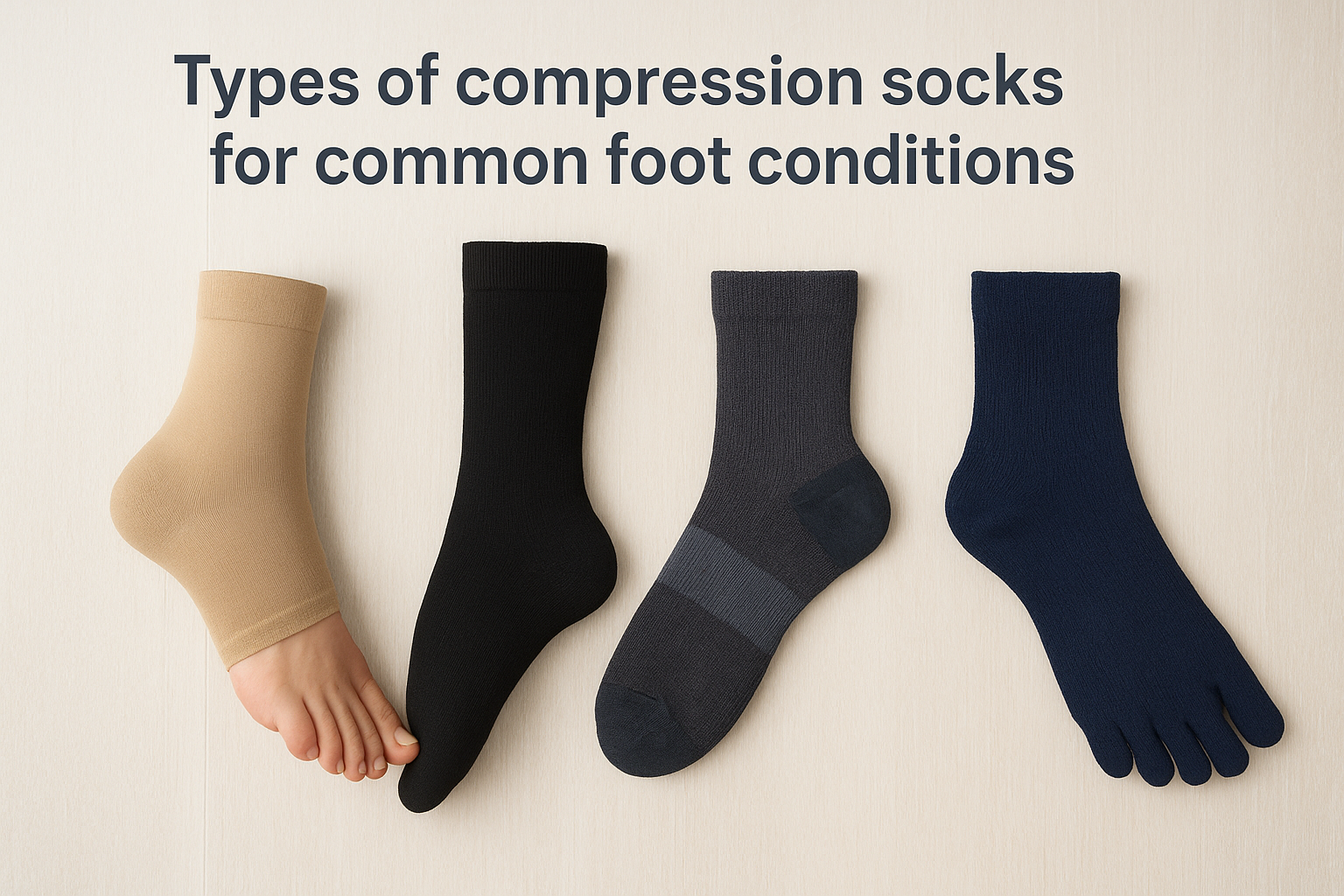
Athletes chasing sports-related foot pain often prefer the best compression socks for athletes, with reinforced arch bands and moisture-wicking fabric designed to handle repetitive impact during running or court sports. Toe-separator compression socks suit people managing bunions or overlapping toes, gently realigning digits while still offering mild pressure through the forefoot.
Matching the sock style to your specific pain, rather than grabbing the first pair on the shelf, makes the biggest difference in comfort.
| Condition | Best sock type |
|---|---|
| Plantar fasciitis (mild) | Ankle compression sleeve |
| General swelling | Full-length graduated sock |
| Running or sports strain | Reinforced arch-band sock |
| Bunions | Toe-separator compression sock |
Selecting the wrong style wastes money and delays relief. If you’re unsure which type suits your foot pain, a podiatrist can match compression choice to your actual diagnosis rather than guesswork.
When compression socks aren’t enough for foot pain
Socks can only do so much. If your pain lingers after weeks of consistent use, or if it’s sharp rather than dull, that’s your body telling you the problem sits deeper than swelling. Persistent heel pain, numbness, or pain that worsens with activity despite compression usually points to a structural issue that needs proper diagnosis, not just better socks.
Signs you need a proper assessment
Watch for these warning signs that compression alone won’t resolve:
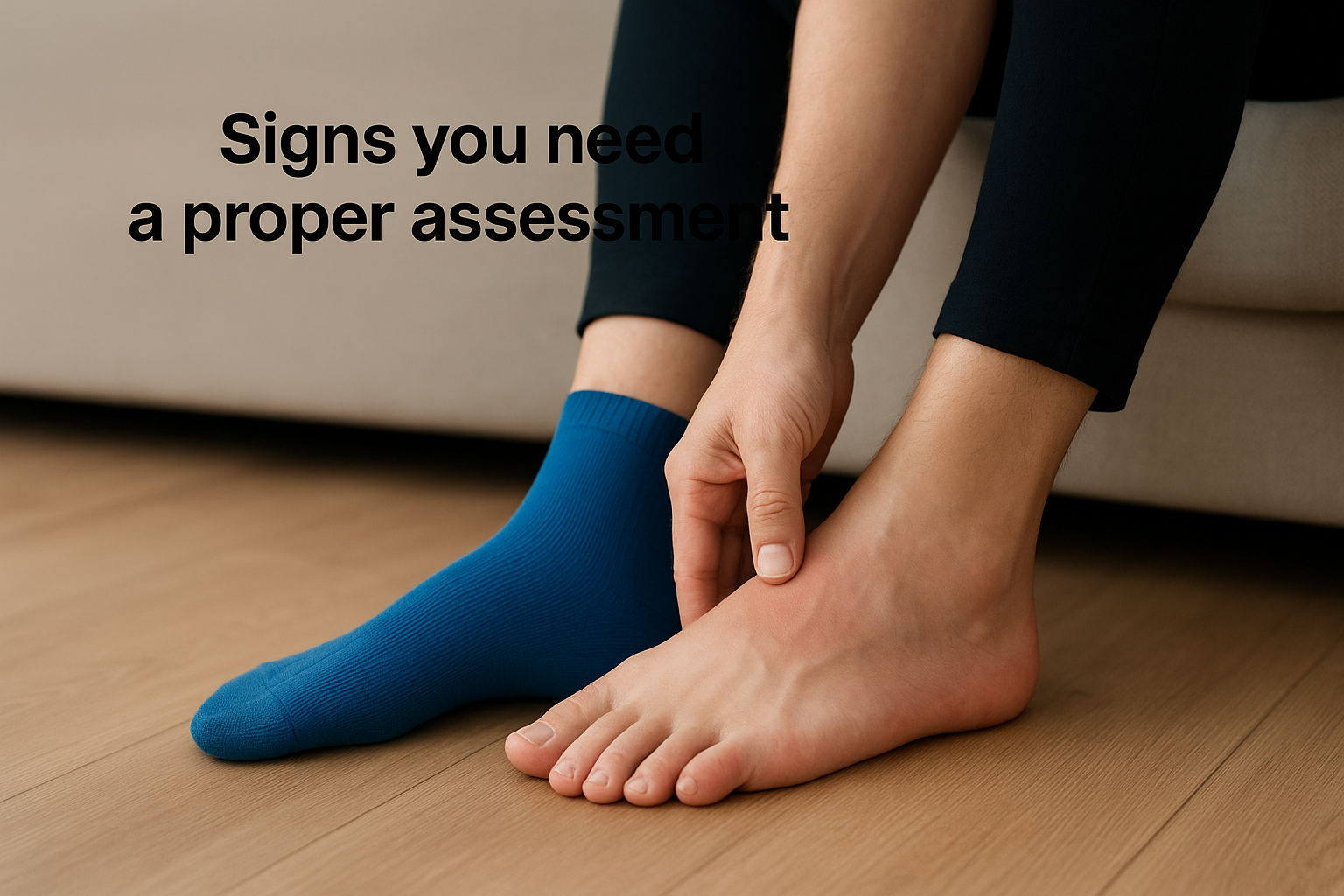
- Pain that wakes you at night or worsens after rest
- Numbness, tingling, or a burning sensation in the toes
- Visible deformity, such as a growing bunion or hammer toe
- Swelling in only one foot without an obvious cause
- No improvement after four to six weeks of consistent sock use
If compression socks haven’t shifted your pain within a month, the cause is likely mechanical, not circulatory.
What a proper diagnosis adds
Getting an accurate diagnosis changes everything, because it tells you whether you’re dealing with arch pain or plantar fasciitis, a stress fracture, nerve entrapment, or something else entirely. A podiatrist can run a gait analysis and pressure plate assessment to pinpoint exactly where the load is going wrong, then build a treatment plan around orthotics, stretching, or shockwave therapy rather than guesswork. Treating the actual cause, instead of masking the discomfort with pressure, is what actually gets you back on your feet pain-free.
Finding the right support for your feet
Compression socks earn their place in a foot care routine, but only as one piece of it. They ease swelling and take some strain off tired arches, yet they can’t correct the biomechanical faults driving conditions like plantar fasciitis, bunions, or heel spurs. Treat them as a support tool, not a fix, and you’ll get realistic results instead of disappointment.
If you’ve tried compression socks and your foot pain hasn’t budged, that’s your cue to stop guessing and get a proper assessment. A podiatrist can identify what’s actually happening in your feet and pair the right treatment, whether that’s custom orthotics, stretching, or something else, with the support compression socks alone can’t provide. Sore feet deserve more than a temporary squeeze. Book a foot pain assessment with our Sydney podiatrists and get a diagnosis that actually explains what’s going on.