

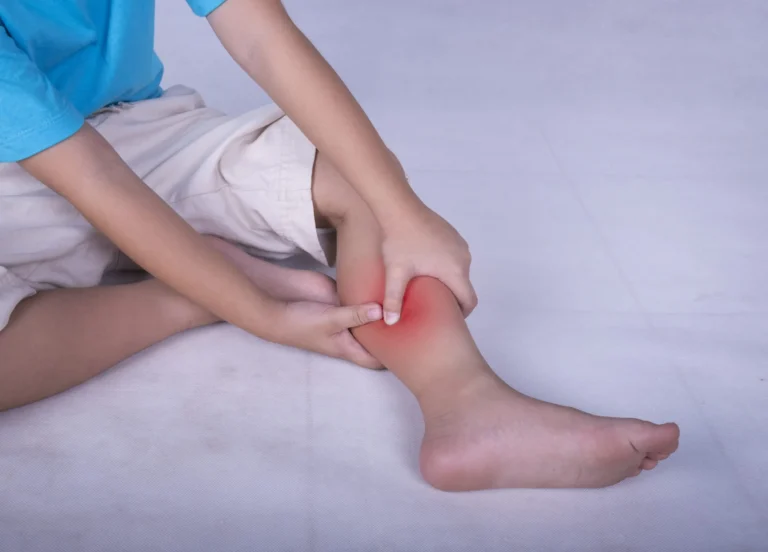
Your child wakes up crying at 2 a.m., clutching their legs. You rub their calves, give them some paracetamol, and wait it out. Sound familiar? Most parents have been there. Doctors call it “growing pains,” but that name is misleading — and the real cause may be hiding in your child’s feet.
What Are Growing Pains?
Growing pains are recurrent leg aches that affect children between the ages of 3 and 12. They tend to strike in the late afternoon or at night and fade by morning. Both legs are usually affected, and the pain centres on the muscles — not the joints.
Despite the name, growth itself does not cause pain. Bones grow at a rate of roughly 0.01 mm per day. That is too slow to trigger the deep, throbbing ache children describe. The term “growing pains” has stuck around since the 1800s, but modern research points to other explanations.
Up to 40% of children experience growing pains at some stage. They are more common in active kids and tend to run in families. The pain is real — it is not made up or attention-seeking — but the label often stops parents from looking further into the cause.
Why Do Growing Pains Happen at Night?
Children run, jump, and climb all day. Their muscles work hard and accumulate fatigue. During the day, movement and distraction mask the discomfort. At night, when the body is still and there is nothing else to focus on, that muscle fatigue surfaces as pain.
Think of it like a mild version of what happens after you spend a full day on your feet in bad shoes. You feel fine during the day, but your legs ache once you sit down. The same principle applies to children — except their muscles and bones are still developing, so they feel the strain more.
The calves and thighs bear the brunt because they absorb the most load during walking and running. When a child’s foot mechanics are off — even slightly — those muscles have to work harder to compensate. Over a full day, that extra effort adds up.
The Biomechanical Connection Most Parents Miss
Here is the part most GPs do not have time to explain: many cases of growing pains have a biomechanical cause. The feet, ankles, and lower legs work as a chain. When one part of that chain is not aligned well, the muscles upstream pay the price.
Flat feet are one of the most common triggers. When a child’s arches collapse inward (overpronation), the calf muscles and tibialis posterior tendon work overtime to stabilise each step. Over hundreds of steps a day, those muscles fatigue and cramp — producing the leg pain parents call “growing pains.”
Tight calf muscles also play a role. Children go through growth spurts where bones lengthen faster than muscles can stretch. The calf muscles pull on the heel, increasing strain through the Achilles tendon and up the leg. This tightness alters how the foot hits the ground and creates a cycle of poor mechanics and muscle fatigue.
A podiatrist can spot these patterns with a biomechanical assessment and gait analysis. Digital video analysis lets us slow down your child’s walking and running to see exactly where the strain is coming from. Often, parents are surprised to learn that the leg pain at night started in the feet.
Growing Pains vs Sever’s Disease
Parents sometimes confuse growing pains with Sever’s disease (calcaneal apophysitis). Both affect active children and both involve leg pain — but they are different conditions that need different treatment.
Growing pains produce a diffuse, achy sensation in the muscles of the calves, thighs, or behind the knees. The pain comes and goes, usually at night, and there is no swelling, redness, or limping.
Sever’s disease causes pinpoint heel pain — typically at the back or underside of the heel. It gets worse during and after sport, and your child may limp or walk on their toes to avoid pressing on the sore spot. Squeezing both sides of the heel reproduces the pain. Sever’s disease affects the growth plate in the heel bone and is most common between ages 8 and 14.
The distinction matters because Sever’s disease needs targeted treatment — rest from aggravating activities, heel raises, stretching, and often custom orthotics to reduce traction on the growth plate. Growing pains with a biomechanical cause also respond well to orthotics, but the approach differs. A podiatrist can tell you which condition your child has and map out the right plan.
When to See a Podiatrist
Occasional growing pains that settle with a massage and a good night’s sleep are not a concern. But some patterns deserve a closer look. Book an assessment if your child has:
Frequent episodes — leg pain that occurs several nights a week or disrupts sleep regularly.
Pain during the day — growing pains should ease by morning. Daytime pain, limping, or reluctance to walk suggests something else is going on.
Pain in one leg only — classic growing pains affect both legs. One-sided pain needs investigation to rule out injury or other conditions.
Visible flat feet or in-toeing — if you notice your child’s arches collapsing or their feet turning inward, the leg pain may stem from poor foot mechanics.
Pain that limits activity — if your child avoids sport or play because their legs hurt, it is time to find the root cause rather than waiting for them to “grow out of it.”
Swelling, heat, or redness — these are not features of growing pains. They may indicate an injury, infection, or inflammatory condition that needs prompt medical review.
How We Treat Growing Pains at ModPod
At ModPod Podiatry’s children’s clinics, we start by working out why the pain is happening. We do not just treat symptoms — we look at the whole lower limb chain from hip to toe.
Digital video gait analysis — we record your child walking and running, then review the footage in slow motion. This shows us exactly how their feet, ankles, and knees move with each step. We look for overpronation, tight calves, asymmetry, and other patterns that drive muscle fatigue.
Range of motion testing — we check ankle flexibility, calf muscle length, and hip rotation. Tight calves are one of the most treatable causes of growing pains and often respond to a simple stretching program.
Stretching and strengthening program — we prescribe targeted exercises your child can do at home. Calf stretches, foot intrinsic muscle exercises, and balance work all help reduce the load on tired leg muscles. Most children see a clear improvement within 4 to 6 weeks of consistent stretching.
Custom orthotics — when flat feet or overpronation are driving the problem, orthotics support the arch and improve foot alignment. This reduces the extra work the calf muscles have to do and breaks the cycle of fatigue and pain. Children’s orthotics are lightweight, fit inside school shoes, and are designed to accommodate growing feet.
Footwear advice — the wrong shoes can make biomechanical issues worse. We check your child’s current shoes and recommend options with the right support, a firm heel counter, and enough room for growth.
Most children with growing pains improve within a few weeks once the underlying cause is addressed. The goal is to get them sleeping through the night and back to full activity without pain.
Book an Appointment
If your child’s leg pain keeps coming back, do not wait for them to grow out of it. A podiatry assessment can uncover the cause and give you a clear path forward. At ModPod Podiatry, our team sees children with growing pains every week across our 5 Sydney clinics — CBD, Mosman, Dee Why, Rose Bay, and North Ryde.
Visit our children’s podiatry page to learn more about how we help kids with leg and foot pain, or call any of our clinics to book an appointment. Early assessment means less pain, better sleep, and happier kids.