


Dry, cracked heels don’t fix themselves with any random tub of cream from the supermarket shelf. If you’re searching for the best moisturiser for feet Australia has to offer, you’ve probably already tried a few that promised soft skin and delivered nothing but a greasy floor and disappointed feet. Aussie conditions, hot pavements, thongs, chlorinated pools, and dry winters, are tough on skin, and generic body lotion just doesn’t cut it below the ankle.
As podiatrists, we see the damage that poor foot care causes every week, from painful heel fissures to skin so thick it cracks and bleeds. This guide skips the marketing fluff and gives you our actual clinical picks, the creams we recommend to patients and use ourselves, based on ingredients that genuinely soften and repair skin rather than sit on top of it.
Below, we’ve ranked six moisturisers worth your money, explaining what each does best, who it suits, and how to use it properly for real results. If your feet need more than a good cream, our team across Sydney can assess what’s really going on underneath the dryness.
1. Walkers Urea 25 Ultra Cream
Key ingredients
This cream leads with 25% urea, the highest concentration you’ll typically find in an over-the-counter foot product sold in Australia, alongside lactic acid and glycerin to pull moisture into the skin. Urea at this strength works as a keratolytic, meaning it actually breaks down and softens thick, dead skin rather than just sitting on top of it. We often reach for this one first when a patient’s heel skin has hardened to the point of splitting.
A 25% urea cream doesn’t just moisturise cracked heels, it dissolves the hardened skin causing the cracks in the first place.
Best for
Anyone with severely dry or callused heels will get the most out of this formula, particularly people who spend long hours standing in work boots or on hard floors. Diabetics and older Australians with naturally thinner, drier skin also tend to do well with it, though we’d suggest checking with your podiatrist first if you have any open wounds, since higher urea concentrations can sting on broken skin.
How to use it
Apply it correctly and you should notice softer skin within a week or two:
- Wash and dry your feet thoroughly before applying.
- Massage a generous amount into heels and any thickened, callused patches.
- Use nightly, then pop socks on to lock in the moisture overnight.
- Drop back to two or three applications a week once your skin has softened.
Price guide
Expect to pay somewhere between AU$18 and AU$25 for a 100g tube, available through pharmacies and online retailers across Australia. It’s not the cheapest foot cream on this list, but the high urea concentration means a little goes a long way, so one tube usually lasts several months of regular use.
2. Restorate Revive Extra Strength with 30% urea
Key ingredients
Restorate pushes the urea concentration even higher, to 30%, blended with panthenol and allantoin to calm irritated skin while the urea gets to work breaking down hardened tissue. Manufactured in Australia, this cream sits at the pharmaceutical end of the foot cream spectrum rather than the cosmetic end, which explains why podiatry clinics stock it alongside dressings and wound care products.
When 25% urea isn’t cutting through the callus fast enough, 30% usually finishes the job.
Best for
This formula suits people with stubborn, thickened calluses that haven’t responded well to lower-strength creams, including tradies on concrete floors all day and long-distance runners who develop heavy callus buildup under the forefoot. It’s also a solid option for anyone managing chronic dry skin conditions like eczema on the feet, though the higher urea strength means it’s worth avoiding on cracked or bleeding skin until things have settled.
How to use it
Start with a nightly application on clean, dry feet, focusing on the thickest patches of skin.
- Apply after showering when skin is slightly damp for better absorption.
- Avoid the area between the toes to reduce moisture buildup.
- Reduce to every second night once callus thickness noticeably improves.
Price guide
Tubes run around AU$20 to AU$28 for 100g through Australian pharmacies, chemist chains, and podiatry clinics, placing it roughly in line with other high-strength urea creams.
3. ACE Luxe 30
Key ingredients
ACE Luxe 30 combines 30% urea with macadamia oil and vitamin E, giving it a richer, more emollient feel than the pharmaceutical-style creams above. It’s formulated by an Australian podiatry supplier, and the added oils mean it sinks in without the slightly clinical texture some high-urea creams have. Glycerin and panthenol round out the formula, helping the skin hold onto moisture once the urea has done its softening work.
A high urea percentage still needs oils and humectants alongside it, otherwise you’re left with soft skin that dries out again by lunchtime.
Best for
This one suits people who want strong keratolytic action without the drying, tacky finish some 30% urea creams leave behind. It works well for anyone with moderate to severe heel callus who also has generally dry, flaky skin elsewhere on the foot, since the added oils help the whole foot rather than just the hardened patches. Older patients often prefer it for this reason.
How to use it
Apply nightly to clean feet, paying extra attention to heels and the ball of the foot:
- Warm a small amount between your palms before applying, it absorbs faster this way.
- Use socks overnight for the first fortnight.
- Switch to alternate nights once skin feels noticeably smoother.
Price guide
A 100g tube typically costs AU$22 to AU$30 through podiatry clinics and select pharmacies, sitting at the premium end of the urea cream category.
4. Footlogix Cracked Heel Formula
Key ingredients
Footlogix takes a different approach to the urea creams above, relying on its Dermal Infusion Technology to carry active ingredients deep into the skin without leaving a greasy residue. The formula combines a lower dose of urea with silicon and other moisture-binding agents, so it’s gentler than the 25% to 30% options while still targeting the dry, split skin around the heel rim. It’s a foam rather than a thick cream, which changes how it feels and how it works on the skin.
A lighter foam formula still repairs cracked heels effectively if you apply it consistently, and it suits skin that reacts badly to heavier creams.
Best for
This product suits anyone who finds traditional urea creams too heavy or greasy, particularly people who need to moisturise during the day and put shoes straight back on. It’s also a good fit for those with sensitive skin who’ve found higher-strength urea creams sting or irritate, and for anyone managing mild to moderate heel fissures rather than severe callus buildup.
How to use it
Shake the bottle well before dispensing, since the active ingredients settle.
- Pump a small amount onto clean, dry heels.
- Massage until fully absorbed, usually under a minute.
- Apply twice daily for cracked heels, or once daily for maintenance.
Price guide
A 125ml bottle costs roughly AU$25 to AU$32 through pharmacies and podiatry clinics across Australia.
5. PodoExpert Orange skin repair foam
Key ingredients
PodoExpert’s Orange formula uses a lower, gentler dose of urea alongside citrus extracts and moisturising oils, delivered as a foam rather than a thick cream. Skin absorbs foam faster than dense cream, which matters for patients who don’t want greasy residue on their sheets or socks. Podiatry clinics stock this range because it treats the whole foot, not just the heel, without irritating skin that’s already inflamed or fragile.
Best for
Daily maintenance suits this product better than emergency repair, so reach for it if you’ve already got soft, healthy skin and want to keep it that way. People with sensitive or reactive skin who find stronger urea creams uncomfortable often settle on this as their everyday option. It also works well for anyone managing mild dryness across the whole foot, including the top of the foot and between the toes, areas thicker creams rarely reach properly.
Maintenance creams keep healthy skin healthy, but they won’t reverse damage that’s already set in.
How to use it
Apply the foam once daily after showering, when skin is clean and slightly damp.
- Dispense a small amount into your palm.
- Massage over the entire foot, not just the heel.
- Use nightly for general dryness, or twice daily during winter months.
Price guide
A 125ml bottle costs around AU$28 to AU$35 through podiatry clinics and select pharmacies nationwide.
6. L’Occitane shea butter foot cream
Key ingredients
This French brand builds its foot cream around 15% shea butter, sourced through a fair-trade cooperative, alongside arnica and peppermint extract for a light cooling effect on tired skin. It’s a cosmetic moisturiser rather than a clinical keratolytic, so you won’t find urea or lactic acid breaking down thick callus here. What you get instead is a rich, fast-absorbing cream designed for comfort and softness rather than treating hardened skin.
Shea butter softens and soothes tired skin beautifully, but it won’t touch a callus that urea would clear in a fortnight.
Best for
People with generally healthy feet who want a pleasant, everyday moisturiser suit this cream best, particularly those on their feet all day who want the cooling, refreshing feel more than deep repair. It also appeals to anyone who prefers a nicer scent and texture over clinical strength, making it a reasonable gift option or travel companion. Anyone with actual cracked heels or callus buildup needs a stronger, urea-based option from higher up this list.
How to use it
Apply a small amount to clean feet, working it in until fully absorbed.
- Use morning or evening depending on preference.
- Focus on the whole foot rather than just problem areas.
- Reapply after swimming or long periods in enclosed shoes.
Price guide
A 150ml tube costs around AU$35 to AU$42 through L’Occitane boutiques and department stores, making it the priciest option on this list for what’s essentially general skincare.
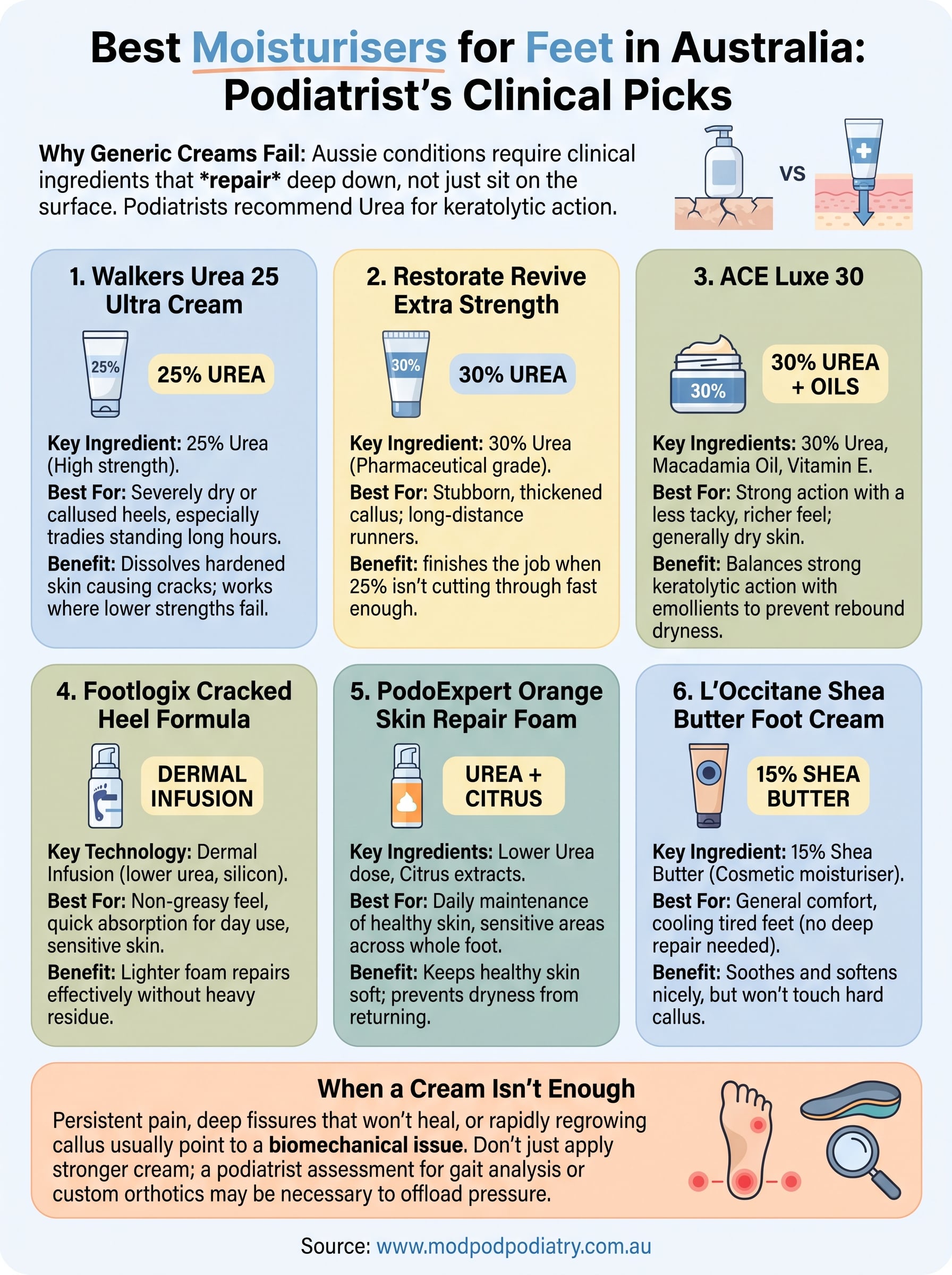
When a cream isn’t enough for your feet
Sometimes the best cream in the world won’t fix what’s actually wrong with your feet. Deep fissures that keep splitting, calluses that regrow within days of a debridement, or heel pain that no amount of urea touches usually point to a biomechanical issue rather than simple dryness. If you’ve worked through this list and your skin still isn’t cooperating, that’s your cue to get a proper assessment rather than reaching for a stronger tub.
Our podiatrists across Sydney see this pattern constantly, patients who’ve tried every cream on the shelf before finally coming in for help. We’ll check your gait, your footwear, and whether something like custom orthotics would take the pressure off the areas causing the damage in the first place. Ready to stop guessing and get answers? Book online with one of our clinics today.

