

Blisters seem minor until you’re three kilometres into a run or halfway through a work shift and every step burns. Learning how to prevent blisters on feet matters just as much for weekend hikers as it does for marathon runners and anyone stuck in new shoes all day. That hot spot you feel forming is friction and moisture doing damage under the skin, and once it blisters, you’re often sidelined for days.
The good news is that blister prevention comes down to a handful of practical habits, not luck. Sock choice, shoe fit, and how you prepare your skin before activity all play a bigger role than most people realise, and small changes make a real difference.
We see blistered, raw feet come through our Sydney clinics constantly, particularly from runners training for events and people breaking in new work boots. Below, our podiatrists share six practical tips that actually work, covering the right socks, smarter lacing, anti-friction balms, and when a blister needs proper treatment rather than a home fix.
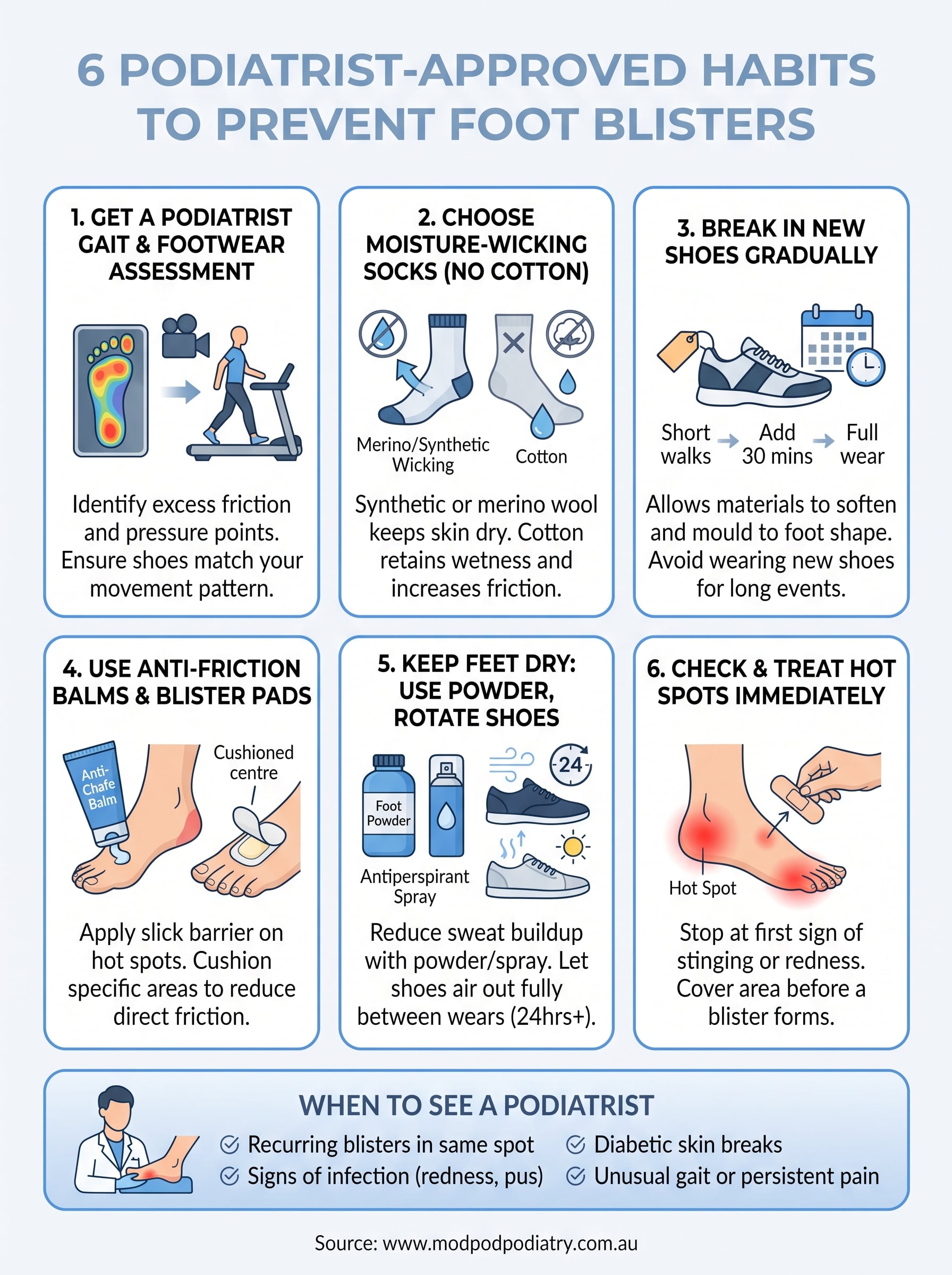
1. Get a footwear and gait assessment from a podiatrist
Most blisters aren’t random. They form because your foot moves differently inside your shoe than the shoe was designed for, creating repeated rubbing in the same spot every single step. A podiatrist gait assessment looks at how your foot strikes the ground, how much you pronate or supinate, and whether your current shoes match that movement pattern at all. This is the step most people skip, and it’s why they keep getting the same blister on the same toe no matter how many sock brands they try.
How it prevents blisters
Once we identify where excess movement or pressure is happening, we can pinpoint exactly why friction keeps building in that spot. A shoe that’s too narrow through the forefoot, too loose in the heel, or wrong for your arch type will shift and rub with every stride, and no amount of blister plasters fixes a shoe fit problem at its source. Correcting the fit, or adjusting how your foot sits inside the shoe with padding or orthotics, removes the friction rather than just cushioning it.
Fixing the shoe fit stops blisters forming in the first place, rather than just treating them after they do.
How to do it right
A proper assessment at one of our clinics typically involves:
- Pressure plate analysis to map exactly where load and friction concentrate across your foot
- Video gait analysis, walking and running, to see how your foot and ankle move in real time
- A physical check of your current shoes for uneven wear patterns
- Recommendations on shoe width, heel counter fit, and lacing techniques suited to your foot shape
Athletes training for events and anyone starting a new job that requires all-day boots benefit most from booking this before problems start, not after.
Podiatrist’s tip
Bring your two or three most-worn pairs of shoes to the appointment, not just your newest ones. Wear patterns on older shoes tell us more about your gait than a fresh pair ever will, and comparing several pairs often reveals a pattern you’d otherwise miss. If you’re already getting recurring blisters in the same spot, that’s a strong signal it’s time to book in rather than keep experimenting with padding on your own.
2. Choose socks that manage moisture and friction
Cotton socks feel soft in the shop, but they’re one of the worst choices for blister prevention. Cotton soaks up sweat and stays wet against your skin, and wet skin is far more prone to friction damage than dry skin. Switching to the right sock fabric is one of the simplest ways to prevent blisters on your feet without changing anything else about your routine.
How it prevents blisters
Moisture softens the outer layer of skin, making it grip against your sock rather than glide smoothly with each step. That grip is what tears the skin layers apart and creates a blister pocket. Moisture-wicking socks made from merino wool or synthetic blends pull sweat away from your skin, keeping the surface drier and reducing that friction buildup.
Dry feet slide inside your shoe instead of sticking, and that’s what keeps blisters from forming.
How to do it right
Look for these features when you’re buying socks for training, work, or long days on your feet:
- Merino wool or synthetic wicking fabric, never cotton
- A snug, wrinkle-free fit through the heel and toe box
- Double-layer construction for high-friction zones like heels and toes
- Seamless toe closures if you’re prone to toe blisters
Runners and hikers should also try toe socks, which stop toes rubbing against each other directly.
Podiatrist’s tip
Always try on new shoes with the actual socks you’ll wear during activity, not thin dress socks. Sock thickness changes how a shoe fits, and that mismatch is a common, overlooked cause of blisters we see in clinic.
3. Break in new shoes gradually
New shoes need time to adapt to your foot shape, and your feet need time to adapt back. Stiff materials around the heel and forefoot haven’t softened yet, so they rub against your skin in ways a worn-in pair never would. Jumping straight into a long run or a full work shift in brand new shoes is one of the fastest ways to end up with a blister by lunchtime.
How it prevents blisters
Leather, synthetic uppers, and structured heel counters all stiffen slightly during manufacturing and storage. Wearing them gradually flexes those materials so they mould to your foot’s actual shape rather than fighting against it. This shoe break-in period lets pressure points soften before you ask the shoe to perform under load for hours at a time.
Give new shoes short, repeated wears before a long day, and the shoe learns your foot’s shape instead of fighting it.
How to do it right
- Wear new shoes around the house for an hour or two before taking them outside
- Build up wear time gradually over one to two weeks, adding an extra 30 minutes each session
- Save new shoes for short walks first, never a race day or a double shift
- Flex and gently work stiff areas by hand if the material still feels rigid after a week
Podiatrist’s tip
Never wear brand new shoes for the first time on race day, a hike, or a big event. We see this constantly with runners who save new shoes for a personal best attempt, only to end up limping at the finish line covered in blisters instead.
4. Use anti-friction products and blister pads
Sometimes footwear and socks are already right, but a long run, hike, or work shift still creates enough repeated rubbing to cause trouble. That’s where anti-friction balms and blister pads earn their place in your kit. They’re not a substitute for good shoe fit, but they add a second layer of defence on spots that are prone to trouble, like the back of the heel or the second toe.
How it prevents blisters
Anti-chafe balms and sticks create a slick barrier on the skin, letting your sock or shoe glide over it rather than grip and drag. Blister prevention pads, usually thin hydrocolloid or moleskin patches, cushion a specific spot and reduce the direct friction hitting that area. Both work by tackling the same mechanical problem from a different angle to sock choice.
A thin layer of balm on a known hot spot stops friction before it ever builds up into a blister.
How to do it right
- Apply anti-chafe balm to heels, toes, and arches before long runs, hikes, or shifts on your feet
- Stick blister pads directly over areas that have blistered before, even if they feel fine that day
- Reapply balm during activities lasting several hours, particularly in hot or humid conditions
- Avoid thick, bulky bandages inside snug shoes, as they can create new pressure points
Podiatrist’s tip
Test any new balm or pad on a short walk first, never on race day or a big hike. Some products interact badly with certain sock fabrics, and you don’t want to discover that ten kilometres from the car.
5. Keep your feet dry throughout the day
Sweat builds up whether you’re running, hiking, or standing behind a counter for eight hours, and damp feet are far more likely to blister than dry ones. Keeping feet dry matters just as much in humid Sydney summers as it does during winter training when boots trap moisture inside. This tip works alongside sock choice, but it’s worth treating as its own habit because sweat management changes throughout the day, not just when you get dressed.
How it prevents blisters
Softened, waterlogged skin loses its natural resistance to friction, which is exactly why feet that sweat heavily blister faster than dry feet under the same conditions. Foot powder and antiperspirant sprays reduce how much moisture builds up against the skin in the first place, giving your socks less to soak up over a long day.
Dry skin holds up against friction far better than damp skin ever will.
How to do it right
- Apply foot antiperspirant the night before long runs, hikes, or work shifts
- Dust talc-free foot powder into socks and shoes before putting them on
- Swap sweaty socks midway through very long events or double shifts if possible
- Let shoes air out fully between wears rather than reaching for the same damp pair daily
Podiatrist’s tip
Rotate between two pairs of work or training shoes rather than wearing one pair daily. Shoes need at least 24 hours to dry out fully inside, and a damp shoe from yesterday starts today’s activity already working against you.
6. Check your feet for hot spots early
A blister rarely appears without warning. There’s almost always a stinging or warm patch a few minutes before the skin actually breaks, and catching that early warning sign is one of the simplest ways to stop it developing into something painful. Most people push through the discomfort because stopping feels inconvenient, but that short pause saves you days of limping afterwards.
How it prevents blisters
Redness and warmth mean friction has already started damaging the outer skin layers, even though a blister hasn’t formed yet. Stopping at this stage and covering the spot, loosening a lace, or changing socks removes the friction before fluid builds up underneath. Hot spot management during long runs, hikes, or shifts is what separates a minor irritation from a full blister that sidelines you for days.
Treat the sting the moment you feel it, because a hot spot is far easier to fix than a blister.
How to do it right
- Stop and check your feet the moment you notice heat, stinging, or redness
- Cover the spot immediately with tape or a blister pad before continuing
- Loosen or re-lace shoes if pressure feels uneven
- Check feet again at rest breaks during multi-hour events, not just at the finish
Podiatrist’s tip
Keep a small strip of tape or a spare blister pad in your pocket or pack, always. Runners and hikers who carry one small item like this rarely end up with a full-blown blister, because they can act within seconds instead of pushing on and hoping it settles.
When it’s time to see a podiatrist
Most blisters heal fine with basic care, but some don’t. See a podiatrist if a blister keeps recurring in the same spot despite trying different socks and shoes, if it looks infected with redness spreading or pus forming, or if you’re diabetic and notice any skin break on your foot. Recurring blisters almost always point back to a fit or gait issue that home remedies won’t fix, no matter how many pads you stack on.
Getting the right footwear assessment, sock strategy, and skin care habits in place stops blisters before they start, and that’s far better than treating them after the damage is done. Persistent friction problems, unusual gait patterns, or blisters that won’t stay away deserve a proper look from someone trained to spot the cause, not just the symptom.
If you’re dealing with recurring blisters, pain, or footwear issues our team hasn’t already covered here, book an appointment online with one of our podiatrists and get a proper assessment sorted this week.

