
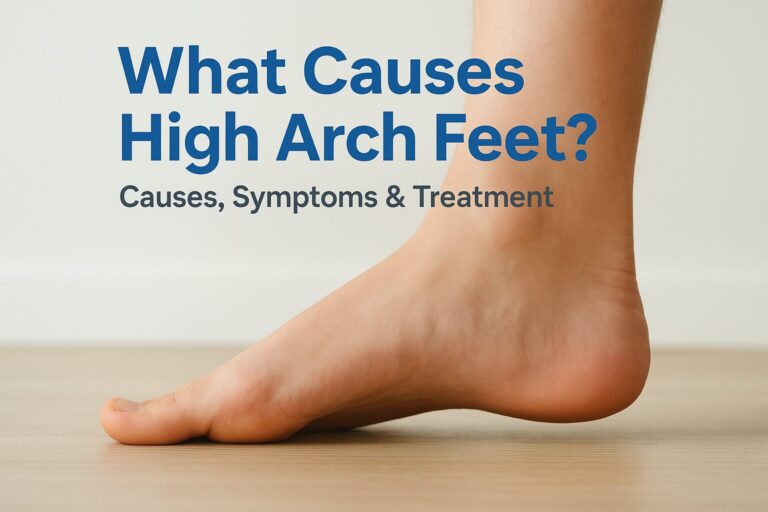
If you’ve noticed a noticeable gap between the middle of your foot and the floor when you stand, or your shoes wear out unevenly at the heel and ball, you’re probably dealing with what causes high arch feet, medically known as pes cavus. It’s more than an unusual foot shape. High arches change how weight travels through your foot with every step, and that often leads to pain in the heel, ball of the foot, or ankle instability that doesn’t resolve on its own.
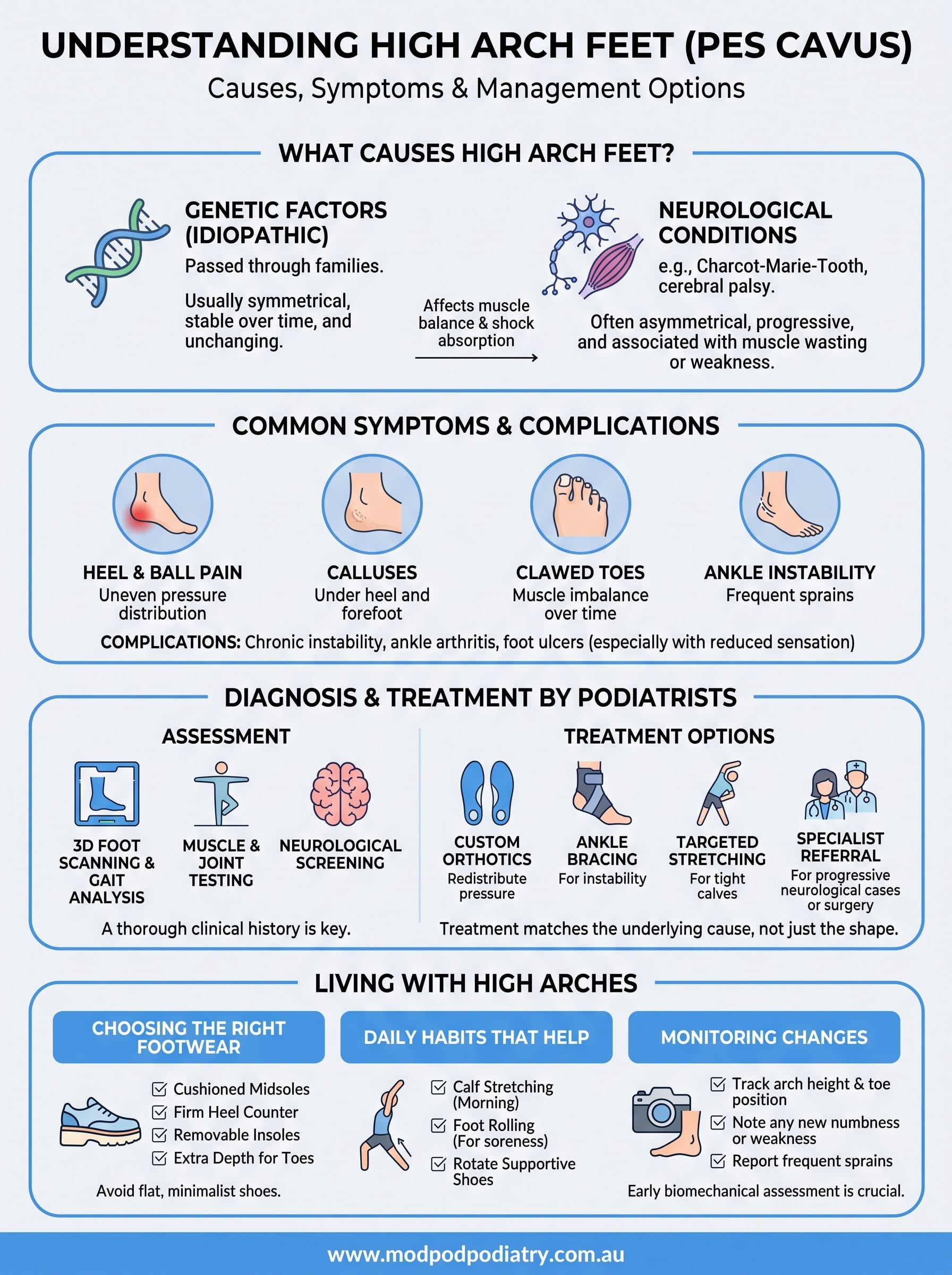
The short answer is that high arches usually come from genetic factors passed down through families, or from underlying neurological conditions such as Charcot-Marie-Tooth disease, cerebral palsy, or spina bifida that affect muscle balance in the foot. Sometimes there’s no clear cause at all, and the arch has simply always been that way. Either way, the shape affects shock absorption, which is why symptoms like calluses, clawed toes, and recurrent ankle sprains tend to follow.
In this article, we’ll walk through the specific medical and neurological causes, the symptoms that typically go with high arch feet, and the treatment options our podiatrists use every day, from custom orthotics to targeted stretching and, in some cases, referral for further investigation.
Why the cause of your high arches matters
Knowing what’s driving your high arches changes everything about how you manage them. A foot that’s shaped this way because of family genetics usually stays stable for life, needing little more than supportive footwear and the occasional orthotic check. A foot that’s cavus because of an underlying neurological condition, though, can keep changing shape over years, and ignoring that progression often means bigger problems down the track, including nerve damage, chronic instability, or surgery that could have been avoided with earlier intervention.
Genetic versus neurological causes
Understanding this difference is the first thing we sort out when a patient comes in with pes cavus. Idiopathic cases, where no clear cause is found, tend to be symmetrical, mild to moderate, and unchanging from year to year. Neurological cases, on the other hand, are often asymmetrical (one foot noticeably higher than the other), get worse over time, and come with other signs like muscle wasting in the calf, weakness lifting the foot, or numbness in the toes. Conditions like Charcot-Marie-Tooth disease account for a significant share of progressive pes cavus, and the Royal Australian College of General Practitioners has noted that unexplained, worsening high arches in adults warrant neurological review rather than routine orthotic fitting alone.
A high arch that’s getting worse, not just uncomfortable, is the clearest sign the cause needs proper investigation.
What the wrong assumption can cost you
Assuming every high arch is "just how your feet are" can delay diagnosis of something more serious. We’ve seen patients treated for years with orthotics alone before anyone asked why their arch kept climbing or why one foot dragged slightly when walking. Catching a progressive neurological cause early means we can loop in a neurologist, monitor nerve function, and adjust footwear and bracing before falls or ulcers become a real risk. Skipping that step doesn’t make the underlying issue disappear, it just delays proper care.
Quick comparison of common causes
| Likely cause | Typical pattern | Usual next step |
|---|---|---|
| Family history (idiopathic) | Symmetrical, stable over time | Orthotics, supportive footwear |
| Charcot-Marie-Tooth disease | Progressive, often asymmetrical, calf wasting | Neurology referral, orthotics, bracing |
| Cerebral palsy or spina bifida | Present from childhood, linked to other neuro signs | Multidisciplinary management |
| Trauma or muscle imbalance | Follows an injury or surgery, one-sided | Biomechanical assessment, targeted rehab |
Getting this right at the assessment stage saves patients months of trial-and-error treatment. It’s also why a thorough podiatry consultation always starts with questions about family history, other symptoms, and how long the arch has looked this way, rather than jumping straight to a mould for orthotics.
How podiatrists diagnose and treat high arches
Working out the cause of your pes cavus starts long before any scanning equipment comes out. A thorough clinical history covering family patterns, childhood development, and any recent changes in shape or balance tells us most of what we need to know. From there, a hands-on examination checks muscle strength, joint flexibility, and how your foot behaves under load, which is often the first clue that something neurological is at play rather than simple genetics.
Assessment tools we rely on
Modern diagnostic technology adds precision to that clinical picture. At ModPod Podiatry, assessments typically include:
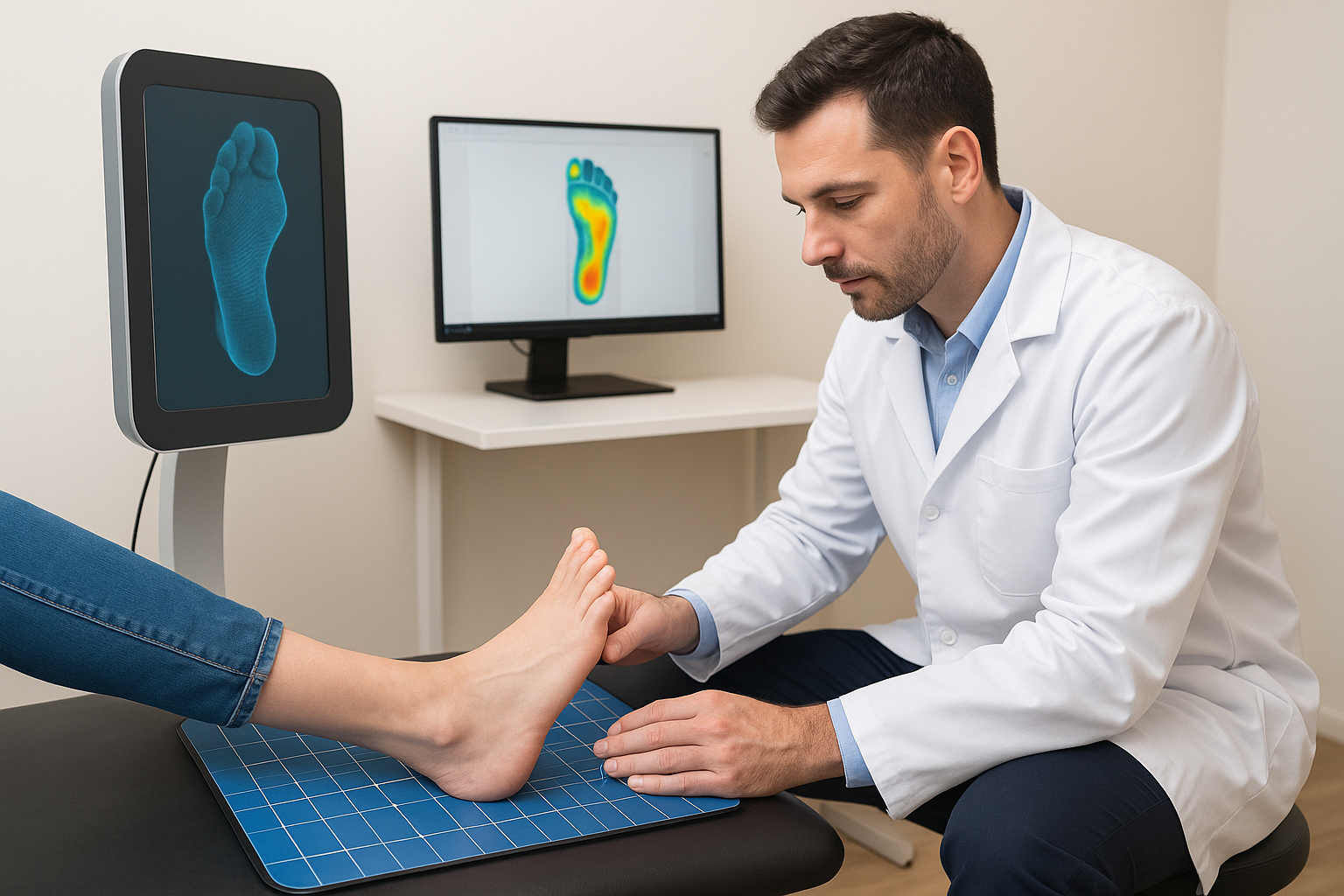
- 3D foot scanning to map the exact height and shape of the arch
- Pressure plate gait analysis to see how weight shifts across the foot during walking and running
- Muscle strength testing, particularly for the muscles that lift the foot and stabilise the ankle
- Neurological screening questions, with referral to a neurologist or GP when red flags appear
Getting the diagnosis right the first time means treatment actually matches the cause, not just the shape.
Treatment that matches the cause
Once we know what’s driving the high arch, treatment gets specific rather than generic. Idiopathic cases usually respond well to custom orthotics designed to redistribute pressure away from the heel and ball of the foot, paired with supportive footwear that limits excess supination. Neurological cases need a broader plan, often combining orthotics with ankle bracing, targeted stretching for tight calf muscles, and regular monitoring of nerve function alongside a neurologist.
Surgery isn’t the first option we reach for, but it does come into play when clawed toes, severe instability, or advanced deformity make everyday walking painful despite conservative care. Podiatrists coordinate that referral pathway rather than sending patients off blind, keeping the same team involved in follow-up and orthotic adjustment afterwards. Booking a proper biomechanical assessment early, rather than waiting until symptoms worsen, remains the single most useful step anyone with high arches can take.
Symptoms and complications linked to high arches
High arch feet rarely stay a purely cosmetic issue. Because the foot’s natural shock absorption is reduced, pressure concentrates on the heel and ball with every step, and that uneven loading is what triggers most of the pain and secondary problems podiatrists see with pes cavus. Reduced ground contact also means less stability, so ankle rolls and sprains happen far more often than in a neutral or flat foot.
Common signs to watch for
Patients with high arches typically describe a cluster of recurring issues rather than a single symptom. In clinic, the most frequent complaints include:
- Persistent heel or ball-of-foot pain, especially after standing or walking long distances
- Thick calluses under the heel and forefoot from concentrated pressure
- Clawed or hammer toes that develop gradually as muscle imbalance pulls the toes out of position
- Frequent ankle sprains or a feeling of instability on uneven ground
- Shoes that wear out unevenly at the outer heel edge
When symptoms become complications
Left unmanaged, these everyday symptoms can progress into more serious problems. Chronic ankle instability increases the risk of ligament damage and, over years, early ankle arthritis. Calluses that keep thickening can crack or ulcerate, particularly concerning in patients with diabetes or reduced sensation. Clawed toes that stiffen over time become far harder to correct without surgery than when caught early.
Small, recurring symptoms like calluses and ankle rolls are usually the first warning that a high arch needs proper management, not just new shoes.
Who’s most at risk
Complications tend to escalate faster in people with an underlying neurological condition driving their arch height, since ongoing muscle imbalance keeps reshaping the foot. Athletes and highly active people also face higher complication rates simply from repeated impact. Anyone noticing new numbness, worsening toe clawing, or sprains becoming more frequent should get it assessed rather than waiting for the pain to settle on its own.
Practical tips for living with high arch feet
Managing pes cavus day-to-day comes down to consistent small choices rather than one dramatic fix. Footwear choice matters more for high arches than almost any other foot shape, because the wrong shoe amplifies every pressure point the arch already creates. Building a few simple habits around footwear, stretching, and monitoring keeps most people comfortable without ever needing surgery.
Choosing the right footwear
Living well with high arches starts at the shoe rack. Look for shoes with:
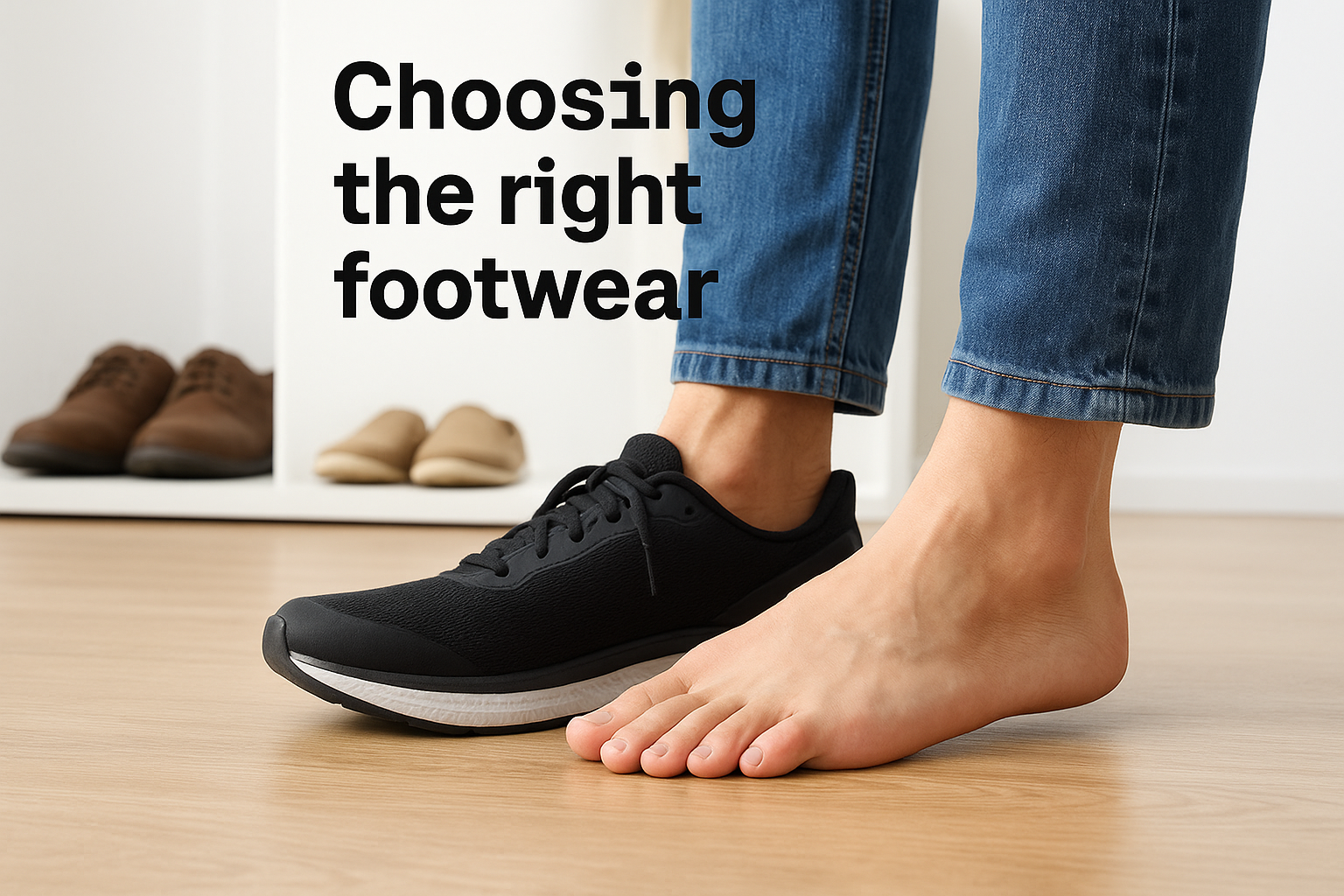
- Cushioned midsoles that absorb shock the arch can’t manage alone
- A firm heel counter for lateral stability on uneven ground
- Removable insoles, so custom orthotics fit properly
- Extra depth in the toe box if clawed toes are developing
Avoid completely flat, minimalist shoes. They strip away what little natural shock absorption the arch already has.
The right shoe won’t fix a high arch, but the wrong shoe will make every symptom worse.
Daily habits that help
Simple daily routines make a real difference in symptom control. Stretching the calf muscles each morning reduces tightness that pulls on the heel and worsens clawed toes over time. Rolling the foot gently over a spiky ball or frozen water bottle eases heel and forefoot soreness after long days on your feet. Rotating between two pairs of supportive shoes, rather than wearing one pair until it collapses, keeps cushioning consistent underfoot.
Monitoring changes over time
Regularly checking your feet catches problems before they escalate. Photograph your feet from the front every few months if you have a known neurological cause, since gradual changes in arch height or toe position are easy to miss day to day. Track any new numbness, increased stumbling, or sprains happening more often than before, and mention it at your next podiatry visit rather than waiting for a scheduled check-up.
Combining supportive footwear, daily stretching, and honest self-monitoring keeps most people with high arches active and pain-free for years, even when the underlying cause itself can’t be changed.
Looking after your feet going forward
High arch feet aren’t something you just have to put up with. Whether your pes cavus comes from family genetics or a neurological condition that needs ongoing monitoring, knowing the cause shapes every decision from footwear to treatment. Ignoring the changes, or assuming a high arch is purely cosmetic, is what turns manageable symptoms into recurring sprains, thickened calluses, and toes that stiffen beyond easy correction.
Getting a proper biomechanical assessment early gives you a clear plan rather than years of guesswork with off-the-shelf insoles. Our podiatrists across Sydney combine 3D scanning, gait analysis, and hands-on assessment to work out exactly what’s driving your arch height and what will actually help. If you’ve noticed heel pain, frequent ankle rolls, or shoes wearing unevenly, don’t wait for it to settle on its own. Book an appointment online and get a straightforward answer about your feet, backed by two decades of treating pes cavus across our clinics.