
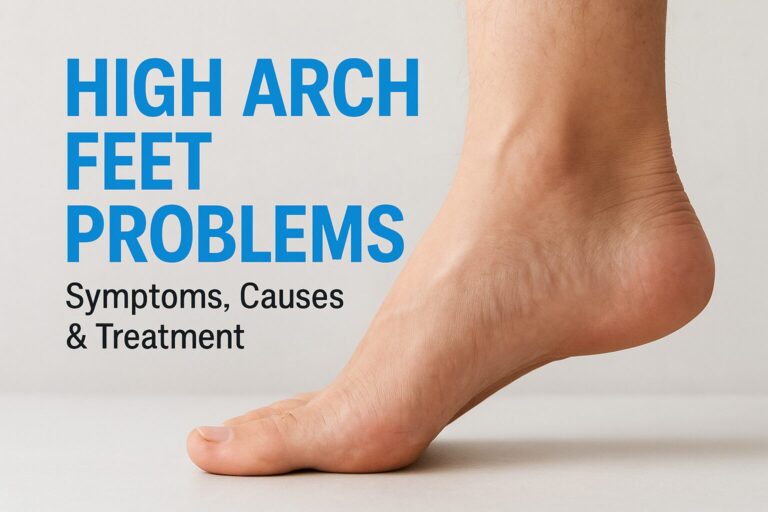
If you have high arch feet problems, you already know the frustration. Shoes that never quite fit right, aching feet after a long day, or ankles that feel unstable on uneven ground. A high arch, known clinically as pes cavus, affects how your foot absorbs shock and distributes pressure, and it can set off a chain reaction of issues through your ankles, knees, and even your lower back.
The thing is, not everyone with high arches experiences the same symptoms. Some people develop painful calluses and metatarsal pain, while others deal with recurring ankle sprains or stress fractures. What matters is understanding why your feet behave the way they do, and what you can actually do about it.
At ModPod Podiatry, our podiatrists assess and treat high arch conditions across our five Sydney clinics every week, using gait analysis, pressure plate technology, and hands-on biomechanical assessment to get to the root of the problem. This article covers the symptoms, causes, and treatment options for pes cavus so you can make informed decisions about your foot health.
What high arch feet are and how they affect gait
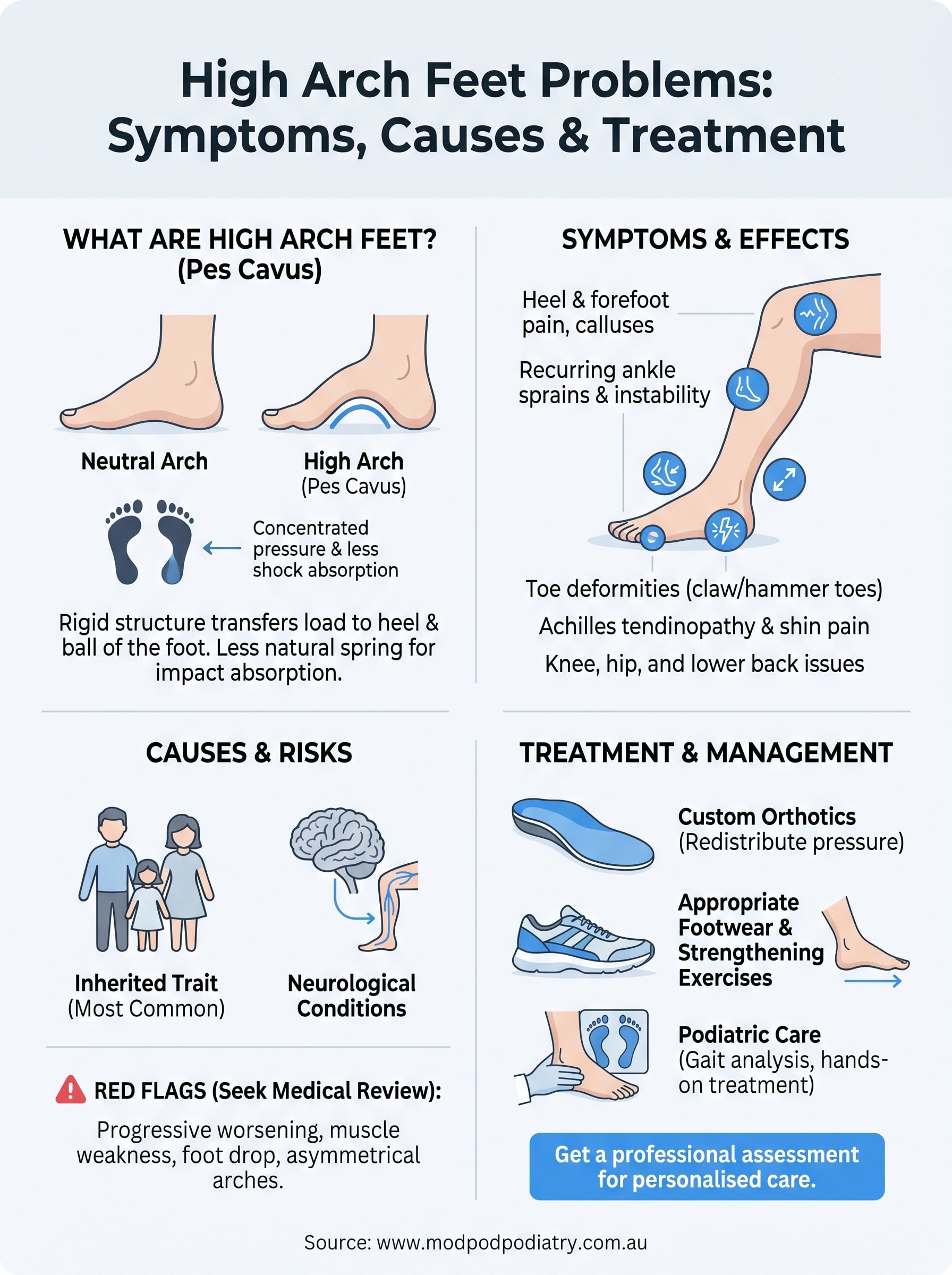
A high arch foot, or pes cavus, is a foot where the arch running along the inside of the sole sits significantly higher than normal when you stand. Unlike a flat foot, which collapses inward and spreads load across a wider surface, a high arch creates a rigid foot structure that transfers pressure to a smaller contact area, mainly the heel and the ball of the foot. This structural difference affects everything from how your shoes wear to how forces travel up through your ankles and legs.
How the structure of a high arch differs
In a foot with a neutral arch, the bones and soft tissues work together to create a flexible, shock-absorbing system that adapts as you walk or run. In a high arch foot, the bones are arranged so the arch remains elevated and relatively rigid. This means the foot has less range of motion when it contacts the ground, and the natural spring-like function that helps absorb impact is reduced. The midfoot rarely makes full contact with the ground, which concentrates load at two main points.
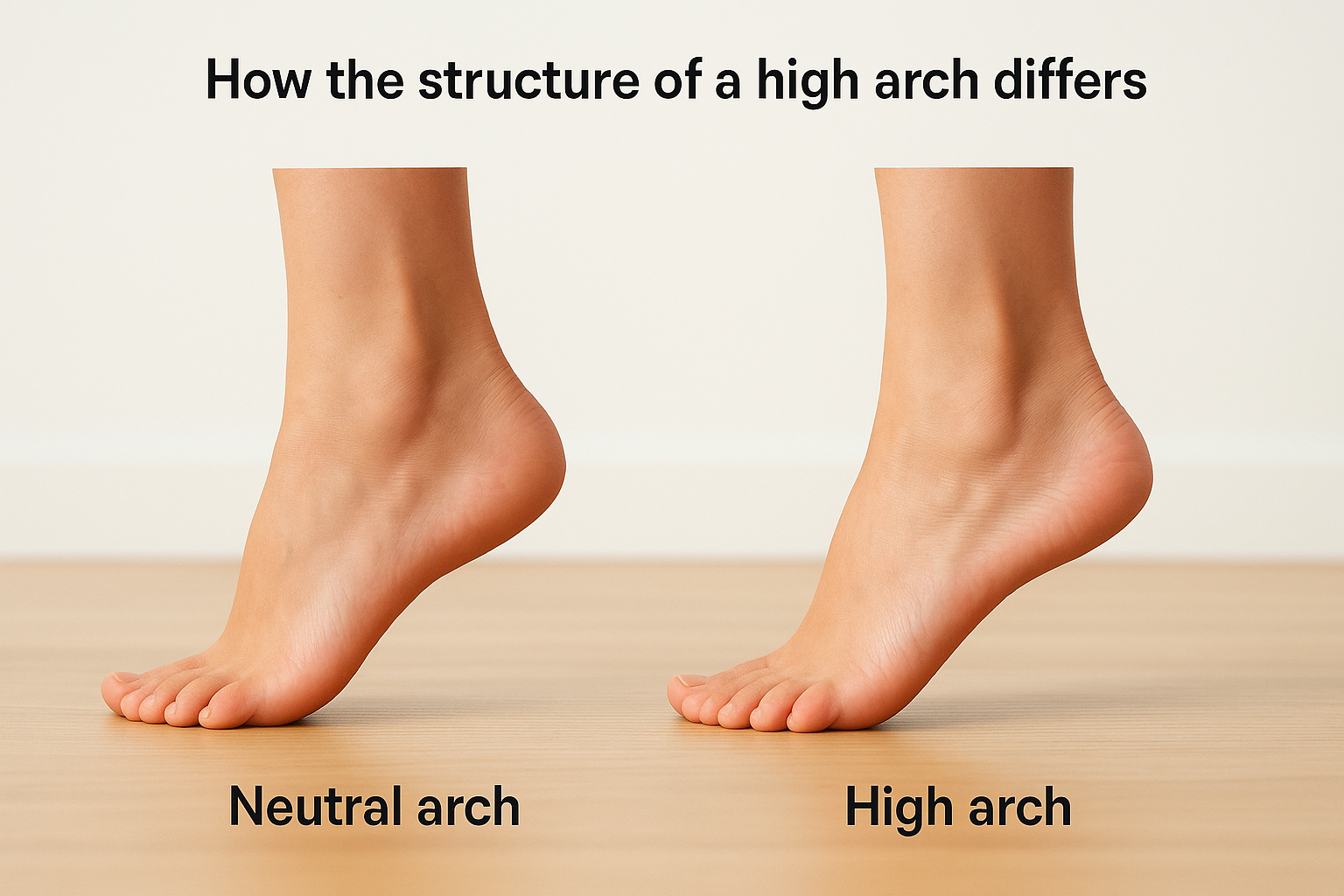
Because the midfoot barely touches the ground, the heel and forefoot carry a disproportionate share of every step you take.
The key structural differences you may notice include:
- A visible, pronounced curve along the inner sole when you stand
- Reduced or absent midfoot contact when you walk on a wet surface and check your footprint
- Toes that claw or curl, particularly the lesser toes, as the muscles compensate for altered load distribution
- Thick callus formation under the heel and ball of the foot where pressure consistently concentrates
How high arches change the way you walk
High arch feet problems show up clearly during gait. Because the foot is rigid and lacks normal pronation (the inward roll that helps absorb shock), your body has fewer ways to dissipate the forces generated with each step. Instead, those forces travel more directly into your ankles, knees, and hips, loading structures that were not designed to manage that demand alone.
Your foot also tends to supinate (roll outward) rather than pronate inward, which shifts weight toward the outer edge of the foot. This places repeated stress on the lateral ankle ligaments and can make the ankle feel unstable, particularly on uneven ground or during sport.
Why high arches can lead to pain and injury
A rigid, high-arched foot does not absorb impact the way a neutral foot does. Every time your heel strikes the ground, shock forces travel upward with less attenuation than normal, loading your joints and soft tissues with more stress per step. Over time, this cumulative loading is what turns a structural difference into a genuine source of pain.
The role of reduced shock absorption
Because your foot stays relatively rigid through the gait cycle, the ankle, knee, and hip joints have to compensate for the energy your foot cannot dissipate. This significantly increases the risk of overuse injuries, particularly if you run or stand for extended periods. The most common high arch feet problems linked to poor shock absorption include:
- Plantar fasciitis from repeated tension on the sole
- Metatarsal stress fractures caused by concentrated forefoot loading
- Achilles tendinopathy from altered lower leg mechanics
A rigid foot that cannot pronate normally forces other structures to absorb load they were never designed to manage.
How muscle imbalance develops
The muscles in your foot and lower leg work harder to stabilise a high arch during movement. Over time, certain muscles become overloaded while others weaken from underuse, creating an kind of imbalance that puts you at greater risk of injury.
Your peroneal muscles along the outer ankle are under continuous strain as they try to control your tendency to supinate. When these muscles fatigue during sport or a long day on your feet, your lateral ankle ligaments take over and become vulnerable to sprains, which is why repeated ankle injuries are a common consequence of unmanaged high arches.
High arch feet problems and symptoms to watch for
Recognising high arch feet problems early gives you a much better chance of managing them before they become chronic. Many people live with progressive discomfort for years without connecting it to their foot structure, and by the time they seek help, secondary injuries have already developed. Understanding the warning signs makes a real difference to how quickly you can get on top of the problem.
Pain at the heel and forefoot
The most common complaint among people with pes cavus is sharp or aching pain concentrated under the heel and the ball of the foot. Because your midfoot rarely contacts the ground fully, these two areas absorb far more pressure per step than they should. You may notice that the pain worsens after standing for long periods or walking on hard surfaces, and that thick calluses have built up in those same spots.
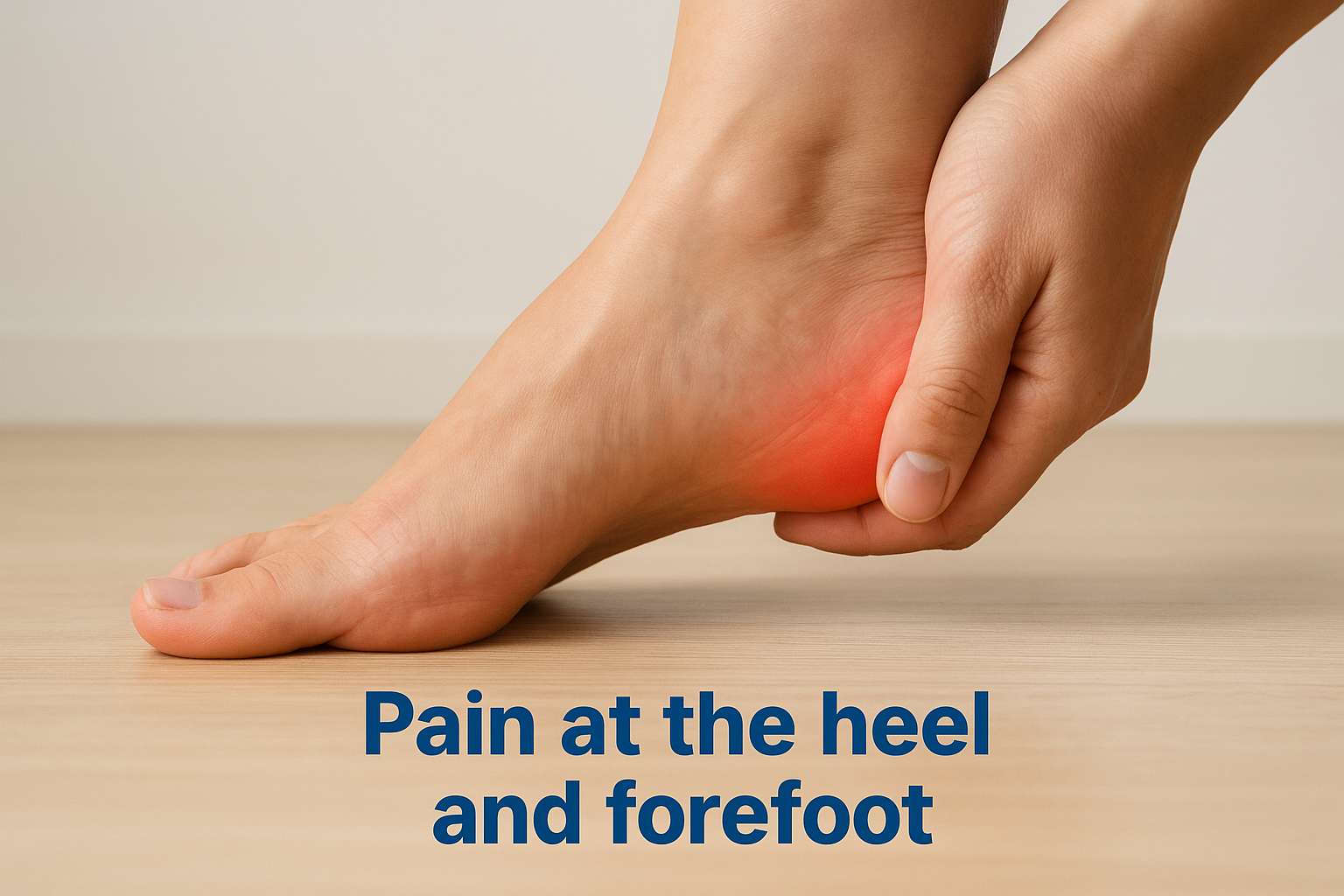
If your calluses are forming faster than usual, it is a reliable sign that pressure is concentrating in areas that warrant a proper assessment.
Toe deformities and lateral foot symptoms
Claw toes and hammer toes develop because the smaller muscles inside your foot must work overtime to compensate for the rigid arch. Over time, this imbalance pulls the toes into a flexed position that becomes fixed without intervention. You may also notice that the outer edge of your shoe wears down faster than the inner edge, which reflects the supination pattern that accompanies most high arch presentations.
Additional symptoms worth monitoring include:
- Frequent ankle sprains, particularly rolling outward
- Shin pain or stress reactions after running
- Numbness or tingling across the toes from nerve compression
- Foot fatigue that sets in quickly during normal daily activity
Causes and risk factors including key red flags
High arch feet can develop for several reasons, and identifying the underlying cause matters because it changes both the urgency and the type of treatment you need. Some people are born with the structure, while others develop it later in life due to neurological conditions or progressive changes in the musculature of the foot and lower leg.
Neurological and inherited causes
The most important thing to understand about high arch feet problems is that a significant proportion of pes cavus cases have a neurological origin. Conditions such as Charcot-Marie-Tooth disease, cerebral palsy, and spina bifida can all cause progressive muscle weakness that pulls the foot into a high-arched position over time. In other cases, the cause is purely structural and runs in the family, meaning your arch height is simply an inherited trait with no associated disease process.
If your high arch has developed or worsened in adulthood rather than being present from childhood, a neurological assessment is worth pursuing alongside podiatric care.
Red flags that signal something more serious
Most high arch presentations are manageable with the right podiatric support, but certain signs suggest you need prompt medical review beyond a standard foot assessment. You should seek professional attention quickly if you notice any of the following:
- Progressive worsening of your arch height over months or years
- Muscle weakness or loss of sensation in your feet or lower legs
- Foot drop or difficulty controlling your foot during walking
- High arches that appear asymmetrical, with one foot significantly more affected than the other
These patterns point toward an underlying neurological condition that requires investigation alongside your foot treatment.
Treatment options and self-management that help
Managing high arch feet problems effectively usually involves a combination of professional podiatric care and consistent self-management at home. The goal is to reduce excessive pressure on your heel and forefoot, improve shock absorption, and support the muscles and joints that are working harder than they should be because of your foot structure.
Custom orthotics and footwear adjustments
Custom foot orthotics are often the most significant single intervention for a high-arched foot. A podiatrist prescribes them using pressure plate analysis and 3D scanning to design a device that fills the space under your arch and redistributes load away from the heel and ball of the foot. Unlike over-the-counter insoles, custom orthotics account for your specific arch height and gait pattern.
Wearing the right footwear alongside orthotics makes a significant difference. Shoes with a wider toe box and cushioned midsole give your foot room to function and reduce the impact forces your rigid arch cannot absorb on its own.
Strengthening exercises and hands-on treatment
Your podiatrist will typically prescribe targeted strengthening exercises for your intrinsic foot muscles and peroneal muscles to correct the imbalances that develop with a high arch. Calf stretches and toe-spreading exercises are commonly included, and consistency with these matters more than intensity.
Hands-on treatment options include shockwave therapy for plantar fasciitis or Achilles tendinopathy, dry needling for overloaded soft tissue, and mobilisation techniques to improve the limited motion in your ankle and midfoot joints. For severe structural problems that do not respond to conservative care, a surgical referral may be appropriate, though this is uncommon.
Next steps if your feet hurt
High arch feet problems rarely improve on their own, and the longer you leave symptoms unmanaged, the more likely secondary issues such as ankle instability or stress fractures are to develop. If you are noticing heel pain, recurring sprains, or calluses that keep coming back, that is a clear signal your feet need a proper assessment rather than another pair of over-the-counter insoles.
A podiatrist can identify your specific arch type, assess how your gait pattern is loading your joints, and build a treatment plan that addresses the actual cause of your pain, not just the symptoms. At ModPod Podiatry, our team uses pressure plate technology and hands-on biomechanical assessment across five Sydney clinics to give you a clear picture of what is happening and what will actually help. Same-week appointments are available, so you do not need to wait weeks to get answers. Book your appointment online and take the first step toward pain-free movement.