
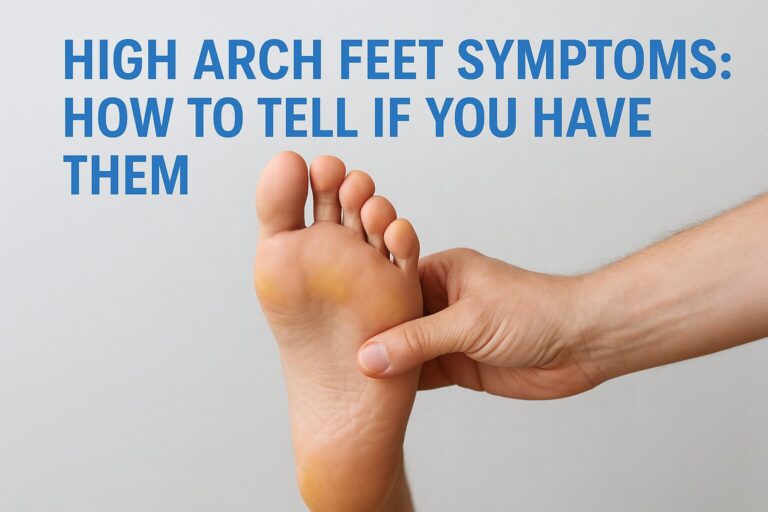
If your shoes wear out at the heel and outer edge within months, or your feet ache after a short walk, you might be dealing with high arch feet symptoms rather than general tiredness. High arches are less common than flat feet, but they cause their own set of problems, from calluses on the ball of the foot to ankle instability that keeps catching you out on uneven ground.
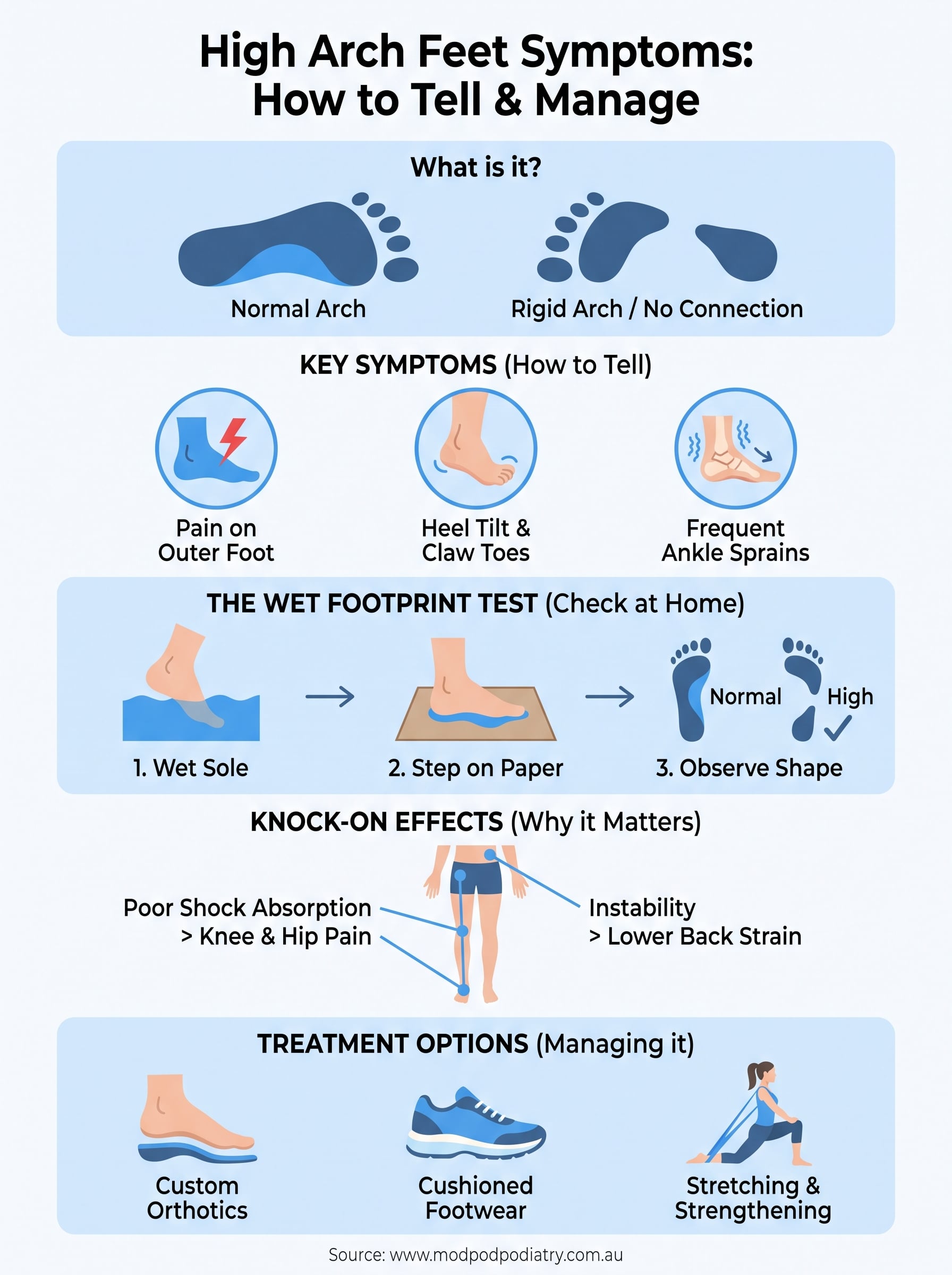
So how do you know if your arches are actually the issue? The clearest signs include a rigid arch that barely flattens under weight, pain along the outside of the foot, and a noticeable heel tilt when you look at your feet from behind. Claw-like toes and frequent ankle sprains are also common markers, and many people only notice the pattern once they start tracking when the pain flares up.
In this article, we’ll walk through the specific symptoms to check for, what typically causes high arches, and the treatment options that actually help, including custom orthotics and footwear changes. If you’re in Sydney and want a proper assessment rather than guesswork, our podiatrists across ModPod’s clinics can confirm what’s going on and map out a plan from there.
Why high arch feet symptoms shouldn’t be ignored
High arches change how weight travels through your foot with every step. Instead of spreading load across a flexible arch that flattens slightly on impact, a rigid, high arch pushes pressure into two small zones: the heel and the ball of the foot. Over months and years, this uneven weight distribution causes thickened calluses, bruised heels, and stress on the plantar fascia. Left unchecked, that concentrated pressure often turns into chronic pain that flares every time you’re on your feet for more than an hour.
The knock-on effects further up your body
Because a high arch doesn’t absorb shock the way a normal arch does, that impact energy has to go somewhere. It typically travels up into the ankles, knees, hips, and lower back, forcing joints that weren’t designed for heavy shock absorption to take on extra strain. Runners and walkers with high arches frequently develop knee pain or hip discomfort that seems unrelated to their feet, when the arch shape is actually the root cause. Podiatrists see this pattern often enough that it’s worth checking your feet first before assuming a knee issue is purely a knee problem.
A high arch that goes untreated rarely stays a foot problem. It tends to become a knee, hip, or back problem instead.
Higher risk of sprains, fractures, and falls
High arches also tend to tip the heel slightly inward or outward, a pattern called hindfoot varus, which makes the ankle less stable on uneven ground. That instability is why people with high arches report more frequent ankle sprains than the general population, and why one sprain often leads to another within the same year. Repeated rolling of the ankle stretches the ligaments each time, so what starts as a minor twist can become a chronic instability issue that flares with every uneven footpath or bushwalk.
Untreated high arches are also linked to a higher chance of stress fractures in the metatarsal bones, since the concentrated pressure at the ball of the foot has nowhere else to distribute. According to research summarised by the Australian Government’s Healthdirect service, foot shape and biomechanics play a measurable role in overuse injuries among active people. Ignoring the early symptoms doesn’t just mean living with discomfort. It usually means the underlying mechanical issue keeps quietly doing damage until something forces you to deal with it, often at a less convenient time and with a bigger injury than you started with.
How to check if you have high arch feet at home
You don’t need fancy equipment to get a rough idea of your arch type. A few minutes with a wet foot and a piece of paper will tell you more than staring at your feet ever will. This isn’t a substitute for a proper biomechanical assessment, but it’s a solid first step before booking one.
The wet footprint test
Wet the sole of your foot, then step firmly onto a paper bag, dark tile, or piece of cardboard and look at the shape left behind. A normal arch leaves a footprint with a wide band connecting the heel and forefoot. A high arch leaves only a thin sliver, or sometimes no connection at all between the heel and toes.
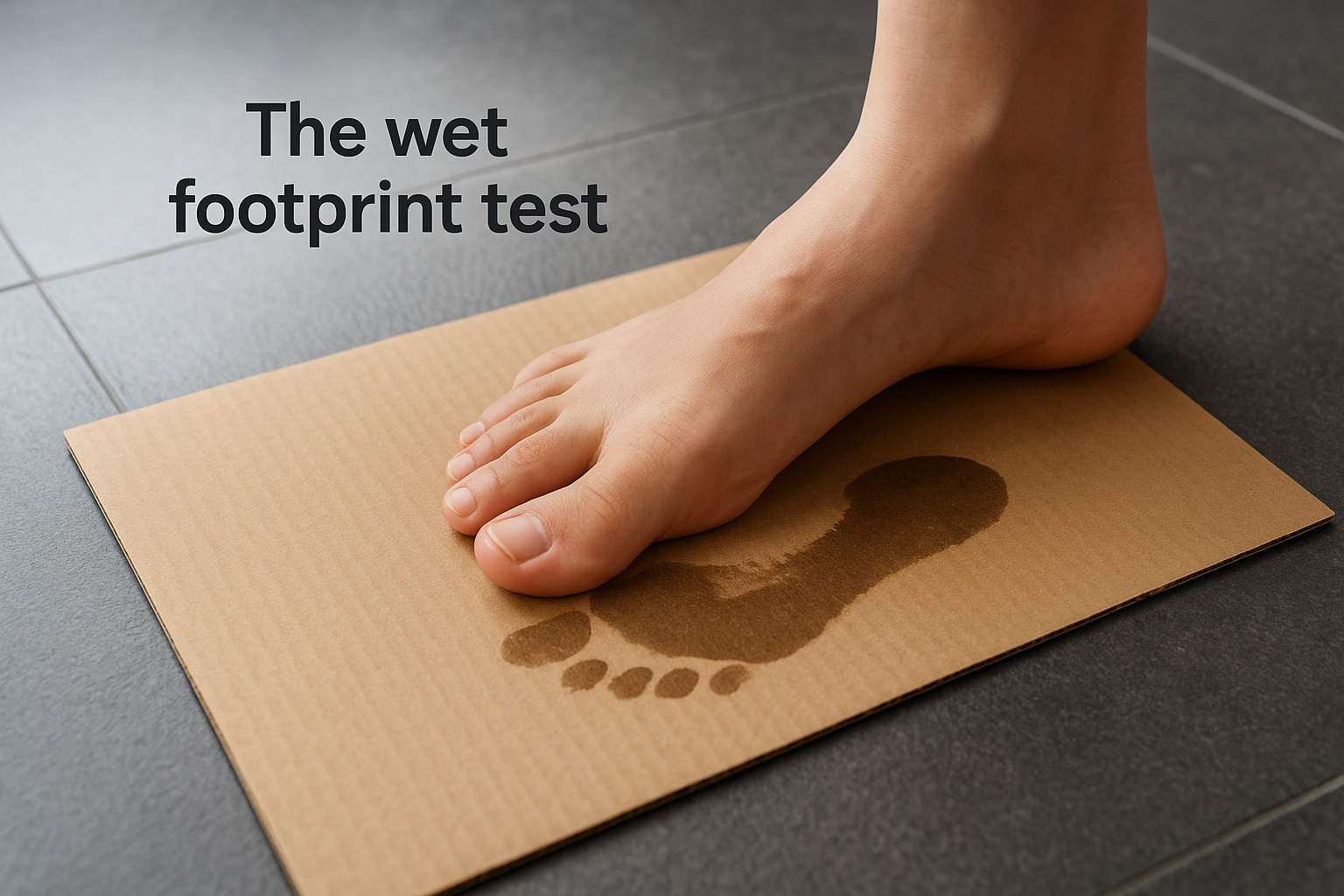
Footprint type        What you'll see
---------------------  --------------------------------------
Flat foot              Full sole print, little to no curve
Normal arch            Curved band, roughly half the width
High arch              Thin strip or a gap between heel/toes
If the middle of your footprint barely shows up at all, that gap is telling you exactly where your arch height sits.
Other quick checks worth doing
Beyond the footprint, check the wear pattern on an old pair of shoes. Excessive wear along the outer edge and heel, rather than evenly across the sole, points towards a high arch. Also try standing barefoot and gently rocking side to side. People with high arches often feel less stable and wobblier than expected, because the rigid arch doesn’t spread contact area across the ground the way a flatter foot does.
Combine these two checks with the symptom list earlier in this article, and you’ll have a reasonably clear picture of whether your arches are worth getting properly assessed.
What causes high arches to develop
Most cases of pes cavus, the medical term for a high arch, come down to genetics rather than anything you did wrong. If a parent or grandparent has a noticeably arched foot, there’s a good chance you inherited the same bone structure, and the arch simply forms that way from childhood without any other explanation needed. Recognising this hereditary pattern is often the first clue when someone starts investigating their high arch feet symptoms and wants to know whether the shape is fixed or fixable.
Structural factors you’re born with
Sometimes the cause is purely mechanical rather than genetic. A shorter Achilles tendon, tightly positioned metatarsal bones, or a naturally curved midfoot can all push the arch higher than average without any underlying condition at play. These structural cases tend to develop early, stay fairly stable throughout life, and rarely worsen dramatically unless an injury or years of unsuitable footwear add extra strain on top.
Genetics explains the majority of high arches, but a smaller group of cases point to a neurological condition that needs proper investigation.
Neurological and muscular conditions behind some cases
When an arch develops or worsens later in life, especially alongside numbness, weakness, or changes in balance, it’s worth ruling out an underlying neurological cause. Podiatrists commonly check for:
- Charcot-Marie-Tooth disease
- Cerebral palsy
- Muscular dystrophy
- Spina bifida
- Previous polio infection
These conditions affect the nerves or muscles controlling the foot, pulling it into a more arched, clawed position over time. Catching this pattern early matters, since the underlying condition often needs management beyond footwear or orthotics alone.
Treatment options for managing high arch feet
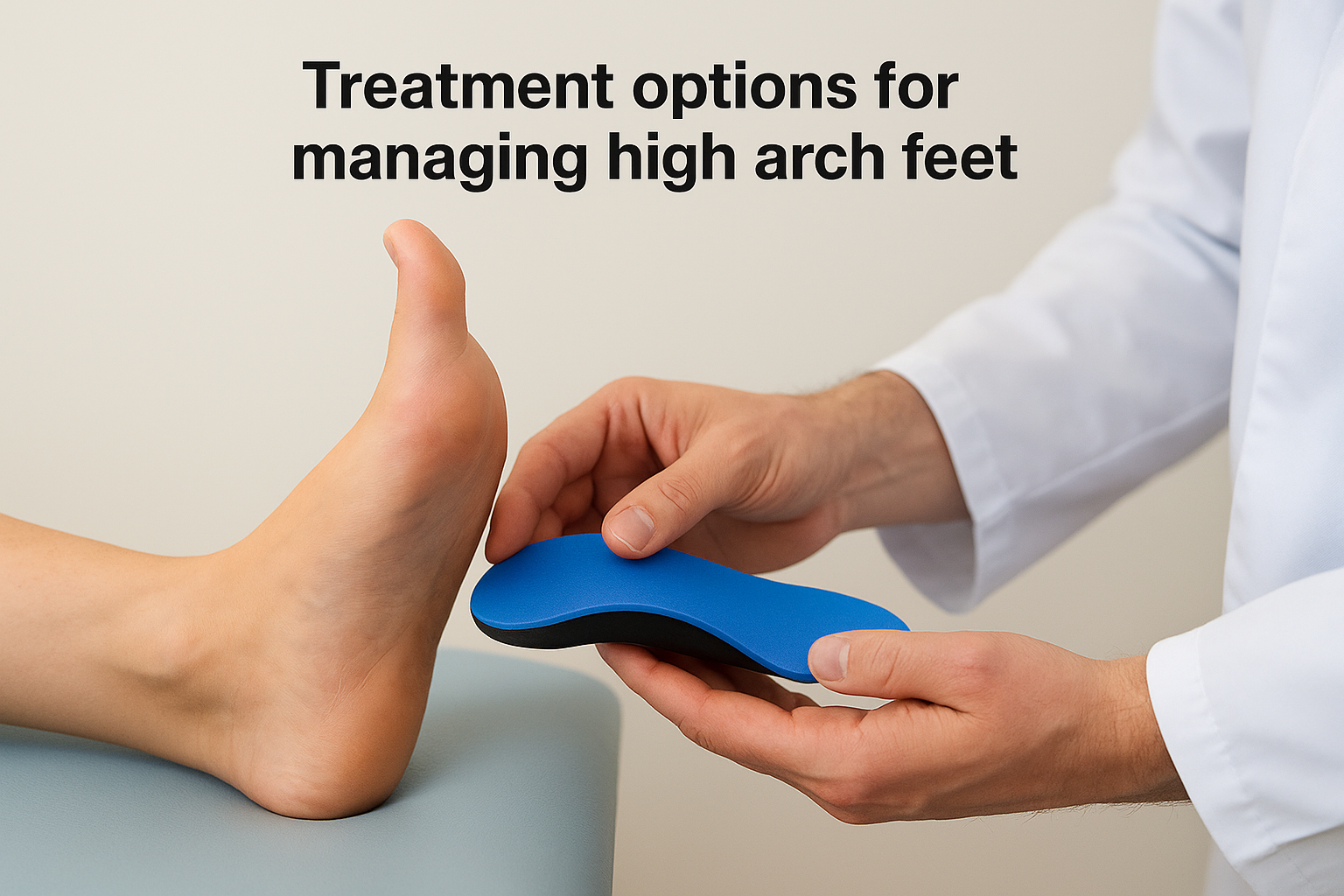
Most people with high arches never need surgery. Custom orthotics remain the first line of treatment because they redistribute pressure away from the heel and ball of the foot, cushioning the areas taking the most impact. A podiatrist designs these from a 3D scan or pressure plate reading, shaping the device to match your specific arch height rather than relying on an off-the-shelf insert that only partially fits.
Footwear and orthotic adjustments
Beyond orthotics, switching to shoes with a cushioned midsole and a slightly wider base makes an immediate difference to comfort and stability. Look for these features when replacing worn-out shoes:
- Extra padding at the heel and forefoot
- A firm heel counter to control side-to-side rocking
- Removable insoles, so an orthotic can sit properly inside
- Lacing that adjusts easily for a snugger midfoot fit
Orthotics and shoes work as a pair. One without the other rarely solves the problem on its own.
Stretching, strengthening, and manual therapy
Tight calf muscles and a shortened Achilles tendon often accompany high arches, so a structured stretching routine targeting the calf and plantar fascia helps loosen the tissue pulling the arch upward. Strengthening the peroneal muscles along the outer lower leg also improves ankle stability, which matters given how prone high arches are to sprains. Some podiatrists add manual therapy or taping during flare-ups to settle inflammation faster.
Surgical correction for severe cases
Surgery sits at the far end of the treatment scale and only comes up when the arch is rigid, painful despite conservative care, or linked to a progressive neurological condition. Procedures might involve tendon transfers or bone realignment, and recovery runs into months rather than weeks, so it’s reserved for genuinely severe, unresponsive cases rather than everyday discomfort.
When to see a podiatrist about your arches
Self-checks and stretching routines only take you so far. Once pain sticks around for more than a couple of weeks, or you notice your balance getting worse rather than better, that’s the point to book a proper assessment rather than keep guessing. Persistent pain along the outside of the foot, repeated ankle rolling, or calluses that keep thickening despite better shoes are all reasons to stop self-managing and get a biomechanical check.
Red flags that need attention sooner
Certain signs move this from a general recommendation to something urgent. Get seen quickly if you notice:
- Numbness, tingling, or weakness in the foot or toes
- Your arch shape changing noticeably within months
- Sprains happening more often than every few months
- Toes curling or clawing more than they used to
- Pain that wakes you at night or worsens with rest
A high arch that’s changing shape or numb rather than just sore is a signal to get assessed, not a symptom to wait out.
Any of these point towards a progressive condition rather than a straightforward mechanical issue, and waiting usually makes the underlying problem harder to manage.
What a proper assessment involves
Getting checked doesn’t need a GP referral first. A podiatrist will look at your gait, test the flexibility of your arch, and often use a pressure plate to map exactly where load concentrates through your foot. From there, they can tell you whether custom orthotics, footwear changes, or a referral for further investigation makes sense. If you’re weighing up whether your own symptoms warrant this step, our team across ModPod’s Sydney clinics can book you in for an assessment this week and give you a clear answer rather than more guesswork.
Looking after your feet going forward
High arches aren’t something you need to just live with. Once you can spot the rigid arch, the outer-foot pain, and the recurring ankle sprains for what they are, you’re already ahead of most people who put it down to bad luck or old shoes. The wet footprint test and wear-pattern check give you a rough answer at home, but a proper biomechanical assessment is what actually tells you whether custom orthotics, footwear changes, or something more involved is the right next step.
Waiting rarely makes a high arch easier to manage. The pressure keeps concentrating in the same two spots, the ankle keeps rolling, and the knees and hips keep absorbing shock they weren’t built for. If your feet match the pattern we’ve covered here, get it checked properly rather than guessing for another year. You can book online with ModPod Podiatry and get a clear plan for your arches this week.