

Diabetes changes how your feet handle everyday wear and tear. Reduced circulation and nerve damage mean a small blister or cut can go unnoticed for days, and what starts as a minor irritation can turn into an ulcer or infection before you even feel it. That’s why foot care tips for diabetics aren’t just general advice, they’re a genuine line of defence against hospital admissions and, in severe cases, amputation.
This article gives you eight daily habits you can start using tonight, not vague warnings about "watching your feet". We cover practical steps like proper washing and drying technique, how to check for problems you can’t feel, what to look for in socks and shoes, and when a callus or nail issue needs a podiatrist rather than a home remedy. Each habit is something you can build into your existing routine within minutes.
At ModPod Podiatry, our podiatrists across Sydney see diabetic patients regularly for routine foot checks and early intervention, and we know which habits actually prevent complications versus which ones just sound sensible. Read on for the eight that matter most, and where to get professional support if something doesn’t look right.
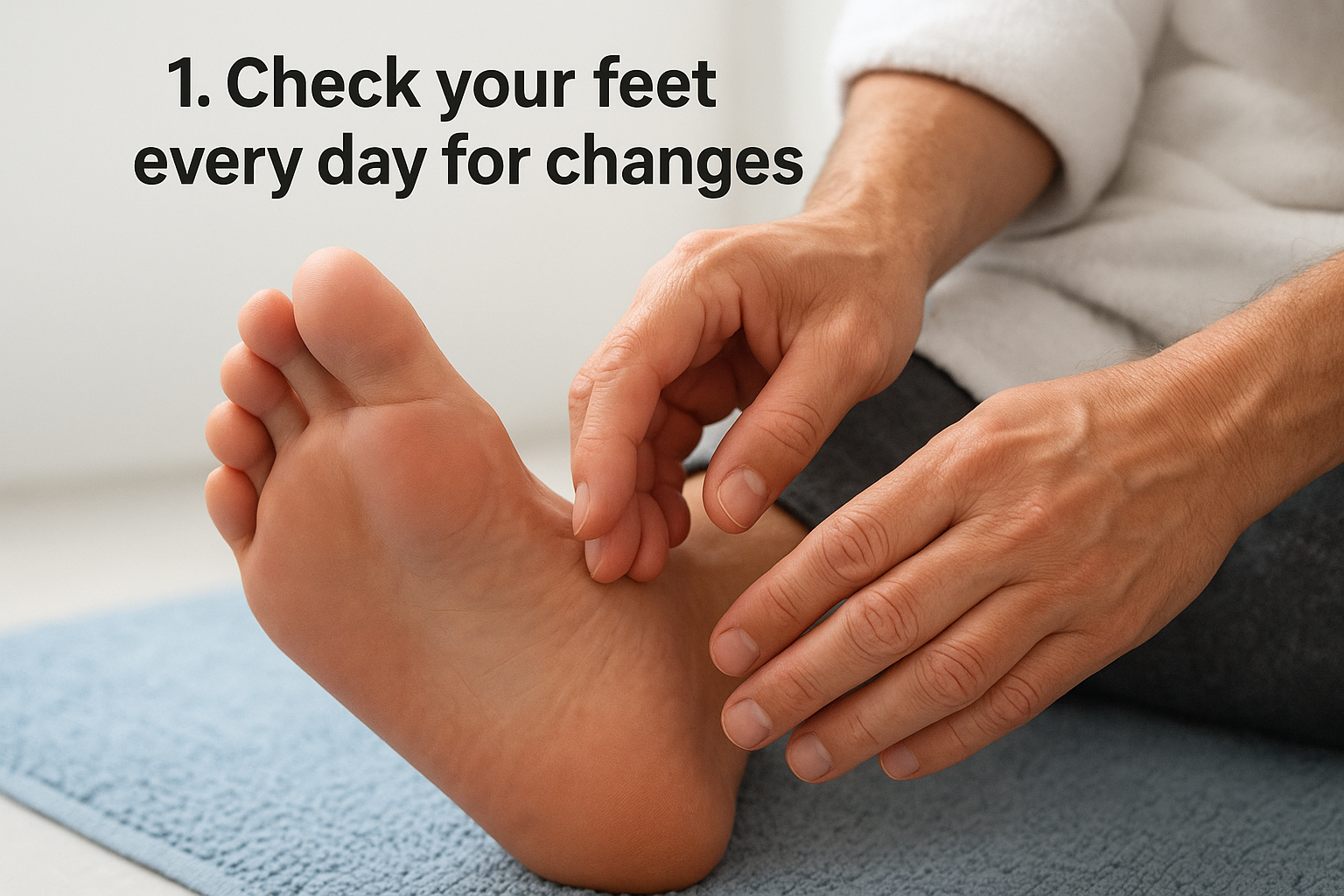
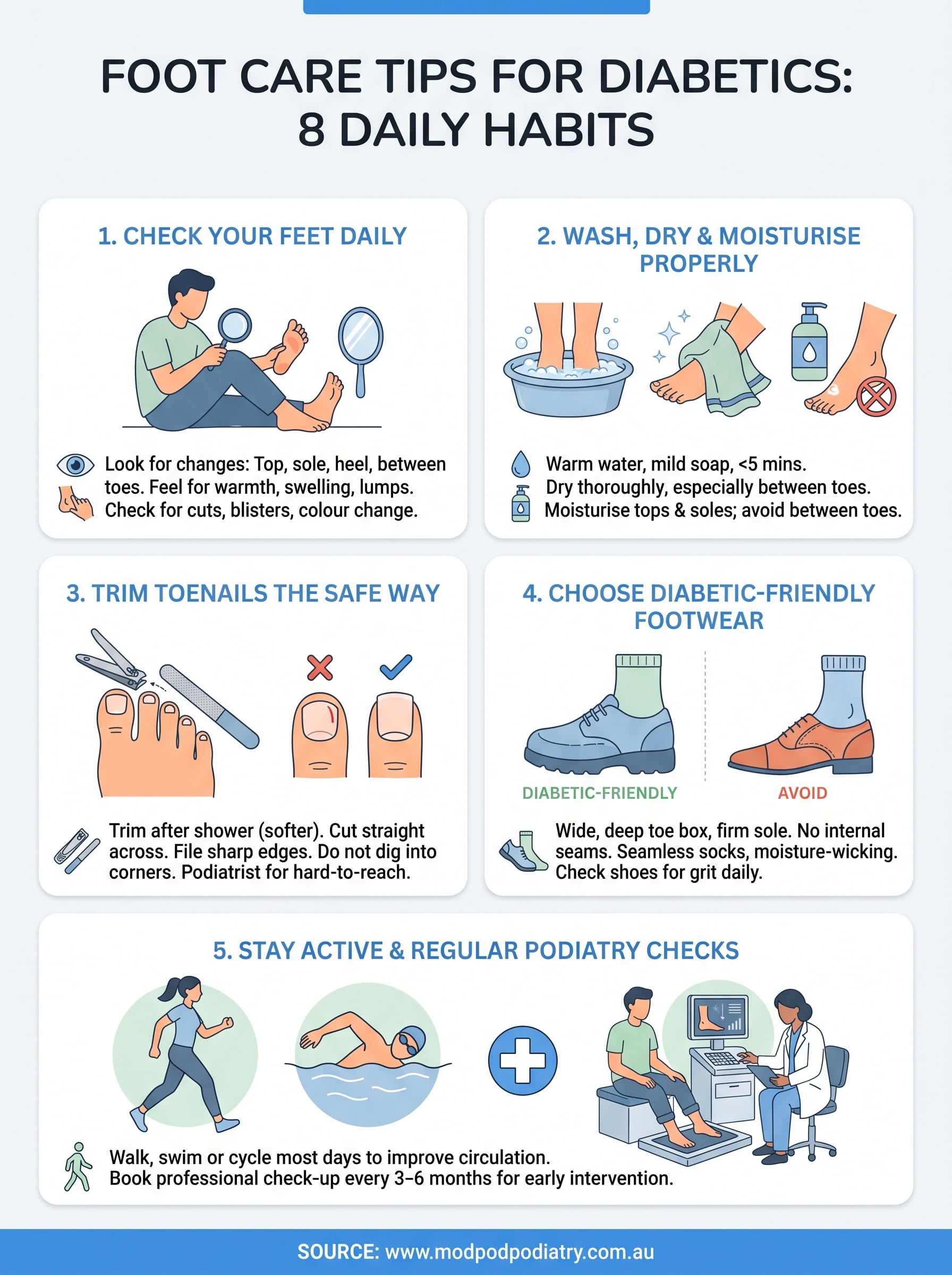
1. Check your feet every day for changes
A daily foot check takes two minutes and catches problems while they’re still small. Nerve damage (diabetic neuropathy) means you might step on a pin, rub a blister into your heel, or develop a pressure sore without feeling a thing, so your eyes have to do the job your nerves can’t.
What to do
Set a fixed time each day, straight after your shower works well, and run through the same checklist so nothing gets skipped:
- Look at the top, sole, heel and between each toe
- Use a mirror or ask someone to check the parts you can’t see
- Feel for warm spots, swelling or hard lumps
- Note any colour change, redness, cracking or discharge
- Check for cuts, blisters, corns or ingrown nails
Why it matters
Small issues in a diabetic foot don’t stay small for long. Reduced circulation slows healing, so a blister that would clear up in three days for most people can sit open and vulnerable for weeks, giving bacteria plenty of time to get in. Left unchecked, that same blister can progress to an ulcer, and diabetic foot ulcers are one of the leading causes of hospital admission and lower limb amputation in Australia, according to the Australian Institute of Health and Welfare. Catching a hot spot or discoloured patch on day one, rather than day ten, is usually the difference between a dressing at home and a referral to a wound clinic.
Checking your feet daily is the single habit that catches diabetic foot complications before you can feel them.
Common mistakes to avoid
Relying on how your feet feel is the biggest trap, since numbness hides exactly the sensations that would normally warn you. Others skip the soles and between the toes because those spots are awkward to see, yet that’s precisely where pressure sores and fungal infections tend to start. Finally, people put off calling a podiatrist when they spot something unusual, hoping it’ll resolve on its own; with diabetic feet, a same-week check is always the safer call.
2. Wash, dry and moisturise properly
Washing your feet properly sounds basic, but for diabetics it’s a daily safeguard rather than a hygiene habit. Warm water and mild soap clean away bacteria without stripping the skin, which matters when your healing capacity is already reduced.
What to do
Wash your feet daily in warm (not hot) water, test the temperature with your hand or elbow first if you have neuropathy, and keep it under five minutes to avoid softening the skin too much. Dry thoroughly, especially between the toes, using a soft towel and gentle patting rather than rubbing. Apply a fragrance-free moisturiser to the tops and soles, but skip the area between your toes where extra moisture encourages fungal growth.
Why it matters
Dry, cracked skin creates entry points for bacteria, while damp skin between the toes breeds the fungus behind tinea and nail infections. Getting the balance right, clean and dry where moisture causes harm, moisturised where dryness does, keeps your skin barrier intact. This single step addresses two opposite risks with one routine.
Dry between your toes and moisturise everywhere else, that balance protects your skin barrier from both cracking and fungal infection.
Common mistakes to avoid
Hot water feels good but damages neuropathic skin without you noticing, so always check temperature manually. Soaking your feet for long periods, a common home remedy, actually dries out skin further and raises infection risk. And using regular lotion between the toes, rather than skipping that area, sets up the exact damp conditions fungal infections need to take hold.
3. Trim toenails the safe way
Toenail trimming seems too small a task to cause harm, but for diabetics it’s one of the more common ways an infection starts. Straight-cut nails and the right tools make the difference between a routine trim and a wound that needs weeks to heal.
What to do
Trim after a shower, when nails are softer, using clean nail clippers rather than scissors. Cut straight across, following the natural shape of the nail tip, and never dig into the corners. File any sharp edges smooth rather than cutting them off. If your eyesight, flexibility or nerve sensation makes this hard to judge, book a podiatrist to do it instead.
Why it matters
Cutting nails too short or rounding the corners invites the edge to grow into the surrounding skin, and an ingrown toenail on a diabetic foot can progress to a serious infection far faster than it would for someone without nerve or circulation issues. Reduced sensation also means you might not feel the nick that starts it all, so the injury goes unnoticed until it’s already inflamed.
A straight-cut trim with clean tools prevents the ingrown nails that turn into serious infections on diabetic feet.
Common mistakes to avoid
Rounding the corners to match your fingernail habit is the most frequent error, and it’s the exact shape that encourages ingrowth. Cutting nails too short, chasing a "neat" look, removes the natural barrier the nail provides. And treating your own ingrown nail with a blade or over-the-counter kit is risky; a podiatrist can remove it safely and check for infection underneath.
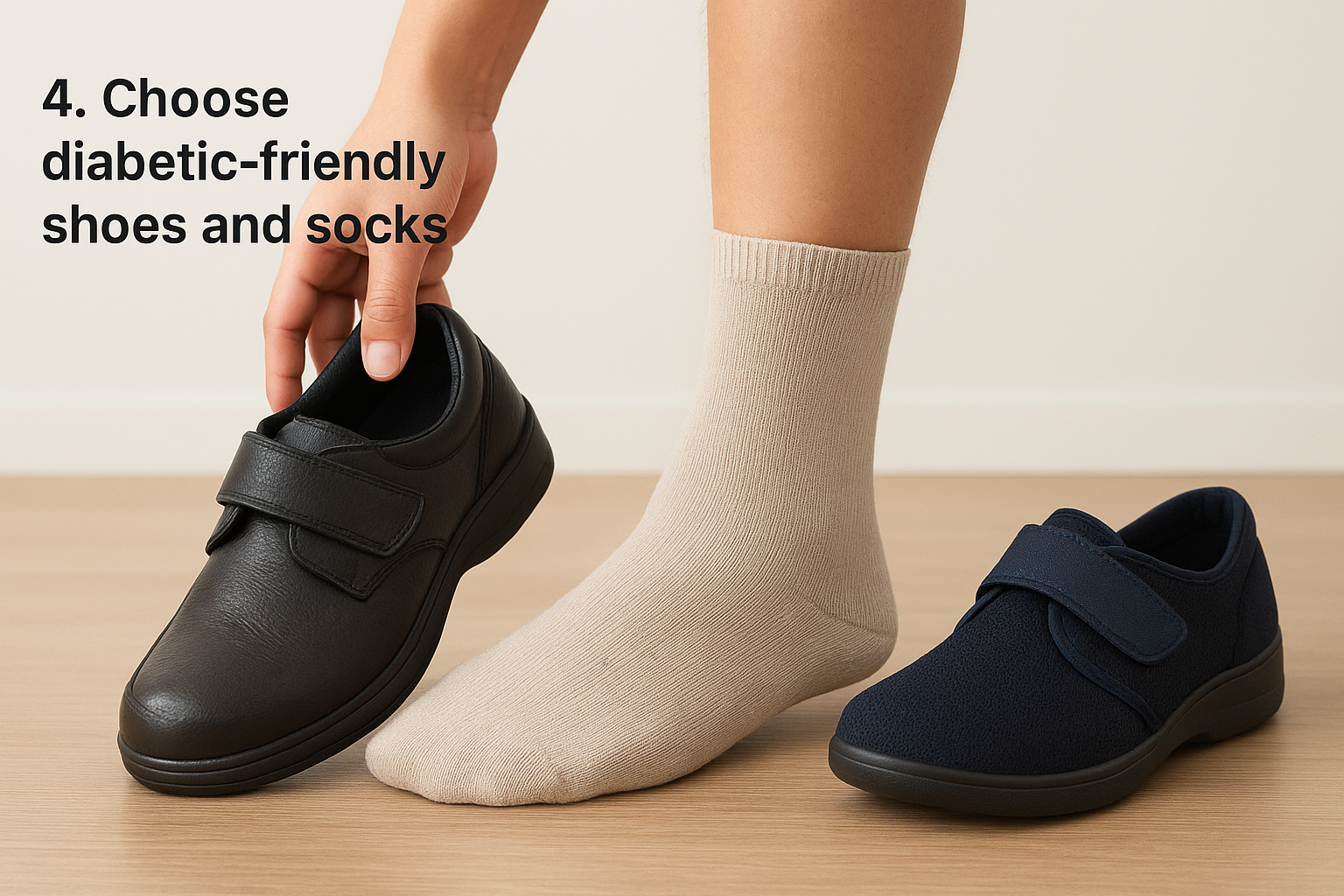
4. Choose diabetic-friendly shoes and socks
Footwear rubs, pinches and traps moisture more than most people realise, and on a diabetic foot that friction turns into blisters and pressure sores without any warning pain. Diabetic-friendly shoes and socks aren’t a niche product, they’re a practical adjustment to how your feet already respond to daily wear.
What to do
Look for shoes with a wide, deep toe box, no internal seams pressing on your skin, and a firm sole that supports without squeezing. Pair them with seamless socks in moisture-wicking fabric, changed daily, and check the inside of each shoe for grit or worn lining before you put it on.
| Feature | Diabetic-friendly | Regular |
|---|---|---|
| Toe box | Wide, deep, rounded | Narrow, tapered |
| Seams | Flat or seamless | Raised internal seams |
| Sock fabric | Moisture-wicking, no elastic band | Cotton, tight cuff |
| Fit | Room to swell through the day | Fixed, snug fit |
Why it matters
Ill-fitting shoes are one of the most common triggers for diabetic foot ulcers, because pressure builds in the same spot with every step and neuropathy means you won’t feel the damage forming. A proper fit spreads that pressure evenly, which is exactly what a foot with reduced sensation and slower healing needs.
The right shoe fit prevents the repeated pressure points that turn into ulcers on a foot that can’t feel them forming.
Common mistakes to avoid
Choosing shoes by look rather than fit, or squeezing into an old pair that’s stretched out of shape, are the most frequent slip-ups. Wearing socks with tight elastic cuffs restricts circulation further, and going without socks at all removes a layer of protection your skin can’t afford to lose.
5. Stay active and get regular podiatry check-ups
Movement keeps blood flowing to the exact areas that need it most, and for a diabetic foot, circulation is the difference between a wound healing in days or festering for weeks. Regular check-ups catch the changes you can’t spot yourself, which matters just as much as the daily habits already covered above.
What to do
Walk, swim or cycle most days, whatever suits your joints and fitness level, and book a podiatry check-up every three to six months even if nothing feels wrong. A podiatrist can assess circulation, nerve sensation and pressure points using tools you don’t have at home, including pressure plate analysis to spot problem areas before they become sores.
Why it matters
Exercise improves blood flow and helps manage blood glucose, both of which slow the nerve and vessel damage behind diabetic foot complications. Professional checks add a layer daily self-checks can’t, because a podiatrist can detect reduced sensation or poor circulation using proper testing, often before you’d notice anything yourself.
Regular podiatry check-ups catch nerve and circulation changes long before you’d feel them at home.
Common mistakes to avoid
Skipping check-ups because your feet look fine is the biggest mistake, since neuropathy hides problems from view as well as feel. Choosing high-impact exercise that risks blisters or rubbing, like long unbroken runs in worn shoes, undoes the benefit. And avoiding activity altogether out of fear of injury only worsens circulation over time.
Making foot care part of your daily routine
None of these eight habits takes more than a few minutes, but together they’re what stands between a minor blister and a hospital admission. Daily checks, proper washing, safe nail trimming and the right footwear handle most of the risk on their own, while staying active and keeping up with regular podiatry visits catches what you can’t see or feel at home. The goal isn’t perfection, it’s consistency, because diabetic foot complications build up slowly and quietly until they suddenly don’t.
If it’s been more than six months since your last check, or you’ve noticed anything unusual during your daily inspection, don’t wait for it to get worse. Our podiatrists across Sydney see diabetic patients every week and know exactly what to look for, from early pressure points to nail issues that need proper treatment. Book an appointment online and get a proper assessment before a small problem becomes a serious one.