

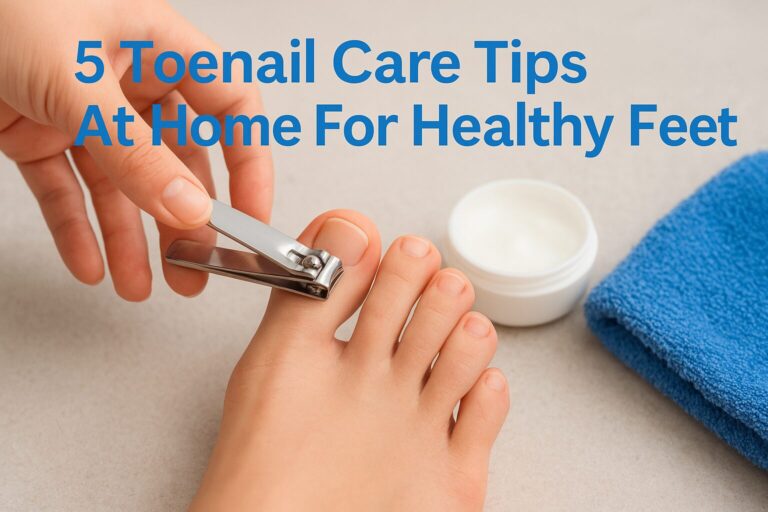
Most toenail problems start small. A nail cut too short, a corner rounded off instead of straight, a pair of shoes that pinch just slightly. Then a few weeks later you’re dealing with an ingrown toenail, a fungal infection, or pain that stops you walking properly. If you’re searching for toenail care tips at home, you’re probably already noticing something isn’t right, or you simply want to avoid a trip to the podiatrist altogether.
The good news is that proper toenail care isn’t complicated once you know the basics. Cutting your nails the right shape, keeping them clean and dry, and choosing footwear that actually fits your feet will prevent most of the common issues we see across our Sydney clinics every week. It’s about consistent habits, not expensive products or complicated routines.
In this article, we’ll walk you through five practical, easy-to-follow tips that cover trimming technique, hygiene, moisturising, footwear choice, and knowing when a problem needs professional attention rather than a home remedy. These are the same fundamentals our podiatrists explain to patients in Mosman, Dee Why, Rose Bay, North Ryde, and the CBD every day.
1. Trim your toenails the right way
The single most useful toenail care tip at home is also the one people get wrong most often: how you actually cut the nail. A straight cut across the top, level with the tip of your toe, does more to prevent problems than any cream or soak. This one habit determines whether you end up with a healthy nail or an ingrown one within weeks.
How to do it
Trim after a shower or bath, when nails are softer and less likely to split. Use a proper pair of toenail clippers, not scissors or nail files alone, and work in one or two straight passes rather than lots of small snips.
- Cut straight across, following the natural line of the toe.
- Leave a small white edge visible, roughly 1 to 2mm.
- Avoid rounding the corners down into the skin.
- File any sharp edges lightly with an emery board.
- Trim every 3 to 4 weeks, or when you notice snagging on socks.
Why it helps your feet
A straight, level cut stops the nail from digging into the surrounding skin as it grows, which is the main cause of ingrown toenails. It also reduces pressure points inside shoes, so nails are less likely to catch, tear, or bruise during exercise or long days on your feet.
Cut straight across, not curved, and you’ll prevent most ingrown toenail cases before they start.
Common mistakes to avoid
Cutting nails too short or digging into the corners with clippers are the two biggest culprits we see in clinic. People also tend to reach for sharp scissors designed for paper or fabric, which crush rather than cleanly cut the nail. If you’ve got thickened or curved nails, or diabetes affecting sensation in your feet, get a podiatrist to trim them for you rather than risking a cut you can’t feel.
2. Keep feet clean and thoroughly dry
Fungus and bacteria thrive in warm, damp conditions, which makes drying your feet properly just as important as washing them. Sydney’s humid summers make this even trickier, especially if you’re pulling trainers on straight after a swim or a run. This is one of the simplest toenail care tips at home, yet it’s the step most people skip.
How to do it
Wash your feet daily with mild soap and lukewarm water, then dry thoroughly, paying particular attention to the spaces between your toes. Use a separate towel for your feet if anyone in the household has a fungal infection, and let shoes air out fully between wears rather than shoving damp feet straight back into them.
Why it helps your feet
Moisture trapped under and around the nail creates the perfect environment for fungal nail infections and bacterial growth. Drying thoroughly, especially between the toes, removes that environment before problems can take hold.
Dry feet properly between the toes, and you remove the one thing fungus needs most: moisture.
Common mistakes to avoid
Rushing the drying step or wearing the same sweaty socks twice are common habits worth breaking. Skip cotton socks for exercise; they hold moisture rather than wicking it away.
3. Moisturise nails and care for cuticles
Dry, brittle nails crack more easily and let bacteria in around the edges, so moisturising deserves a spot in your weekly routine, not just your face and hands. Cracked cuticles are also a common entry point for infection, especially if you’re pushing them back with metal tools.
How to do it
Apply a foot cream or cuticle oil to the nail bed and surrounding skin after showering, while skin is still slightly damp. Massage it in gently, then push cuticles back with a soft towel rather than cutting them. Do this two or three times a week; daily is unnecessary unless your skin is particularly dry.
Why it helps your feet
Well-moisturised nails stay flexible instead of splitting, and healthy cuticles act as a natural seal against bacteria and fungus. This small habit protects the exact area where infections most often start.
Healthy cuticles are your foot’s natural barrier against infection, don’t cut through that barrier.
Common mistakes to avoid
Cutting cuticles with clippers is the biggest error we see, since it opens the skin to infection for no real benefit. Avoid heavily perfumed lotions on broken skin, and never share cuticle tools between household members.
4. Choose footwear and socks that protect your nails
Tight shoes are behind a huge number of the nail problems we treat, from bruised toenails to chronic ingrown corners. If your toes are squashed together every day, even a perfect trim won’t stop friction damage. Getting your footwear fit right is one of the most overlooked toenail care tips at home.
How to do it
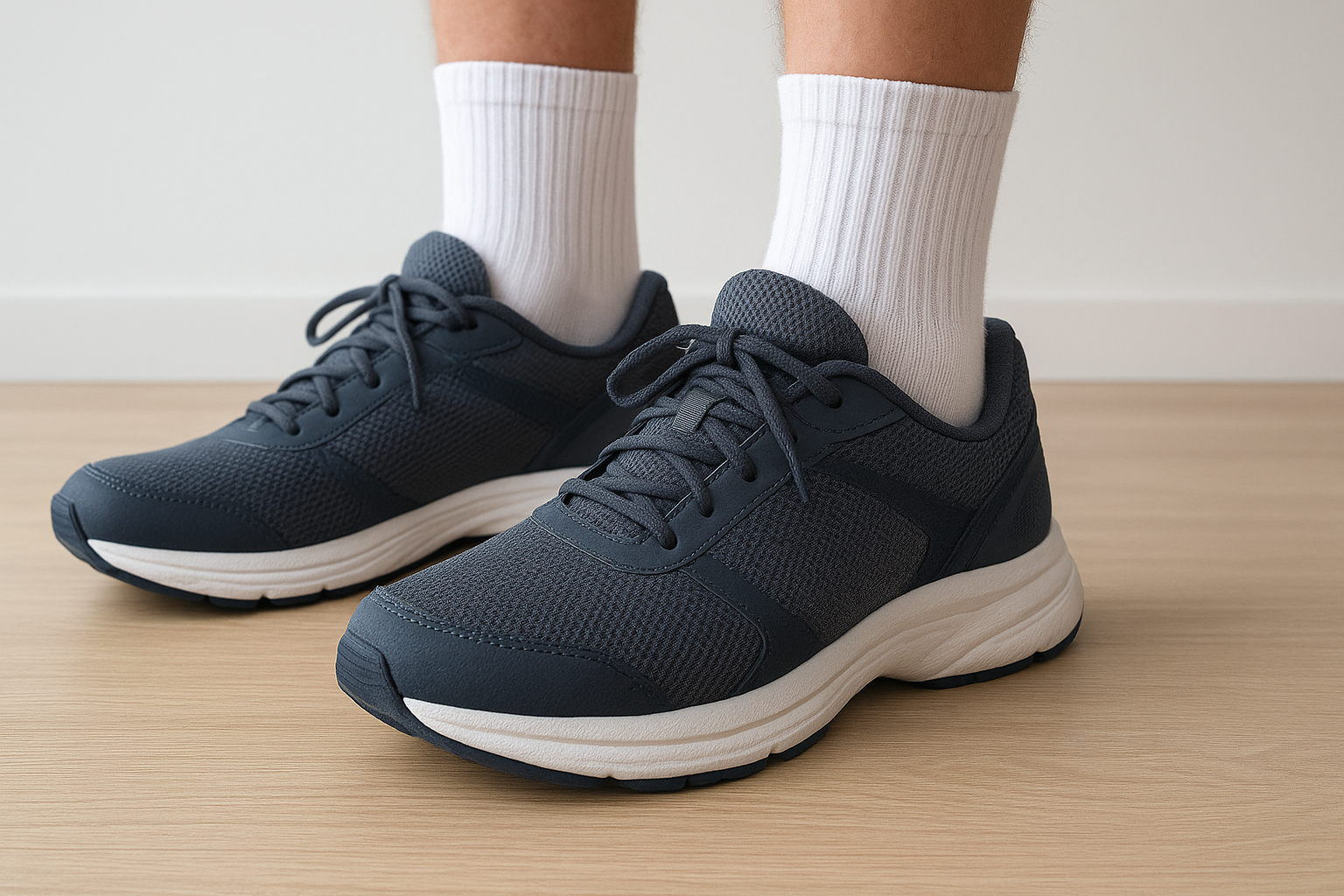
Buy shoes with roughly a thumb’s width of space between your longest toe and the front of the shoe, and check width as well as length. Swap tight-fitting socks for moisture-wicking pairs, and avoid shoes that taper sharply at the toe box, especially for running or long walks.
Why it helps your feet
Properly fitted shoes stop repeated pressure on the nail plate, which is what causes bruising, thickening, and eventual nail loss over time. Breathable socks also keep moisture down, reducing your fungal infection risk alongside better nail health.
A shoe that’s too tight does more damage to your toenails than a bad trim ever will.
Common mistakes to avoid
Buying shoes by size alone rather than trying them on with the socks you’ll actually wear is a common slip-up. Watch out for hand-me-down trainers or shoes bought online without checking width, and replace worn-out shoes that have stopped offering proper support.
5. Check for warning signs and know when to see a podiatrist
Even with a good routine, it’s worth running a quick check on your toenails every week or two. Catching a problem early is far easier to treat than one that’s been left for months, and it saves you from home remedies that only mask what’s actually going on. This final step among our toenail care tips at home is about knowing your limits, not just your feet.
How to do it
Look for changes in colour, thickness, or shape, and note any pain, swelling, or discharge around the nail. Photograph anything unusual so you can track whether it’s improving or getting worse over a week or two.
Why it helps your feet
Conditions like fungal infections, ingrown toenails, and thickened nails rarely resolve on their own and tend to worsen with more walking or exercise. A podiatrist can diagnose the exact cause and treat it properly, rather than you guessing with over-the-counter products.
If a nail looks or feels wrong for more than two weeks, get it checked rather than waiting it out.
Common mistakes to avoid
Ignoring persistent pain or discharge in the hope it clears up is the biggest risk. Don’t attempt DIY surgery on an ingrown nail, especially if you have diabetes or poor circulation.
Keeping your feet healthy for the long run
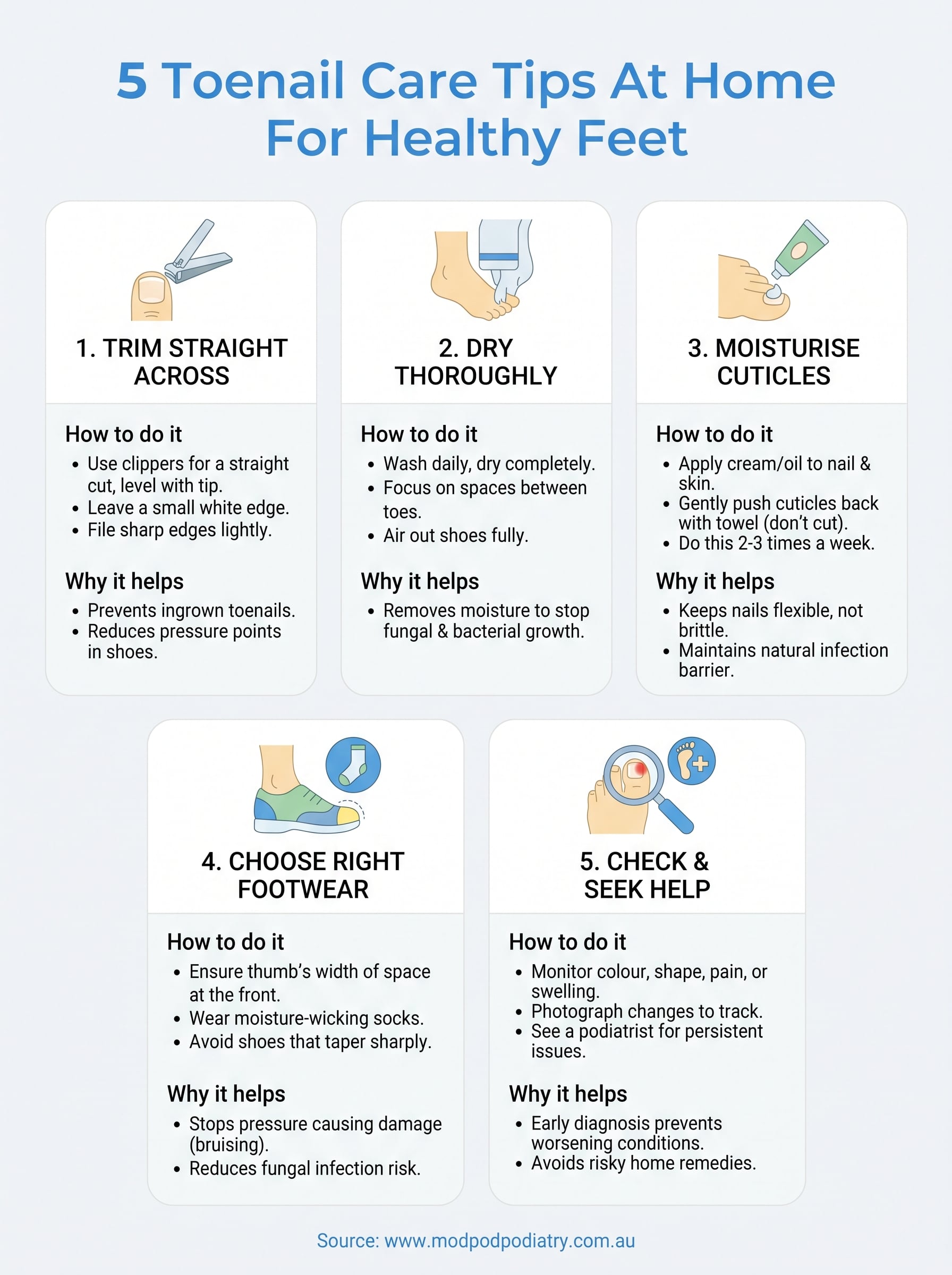
Healthy toenails come down to five habits repeated consistently: cutting straight across, drying properly between the toes, moisturising the nail bed, wearing shoes that actually fit, and checking for changes before they become painful. None of this requires special equipment or a complicated routine, just a few minutes each week paid at the right time. Most of the ingrown toenails and fungal infections we treat across our Sydney clinics started as something small that got ignored or trimmed the wrong way for months on end.
Once you’re following these steps and something still doesn’t look or feel right, don’t wait it out. A nail that’s thickened, discoloured, or genuinely sore needs proper assessment, not another home remedy. Our podiatrists across Mosman, Dee Why, Rose Bay, North Ryde, and the CBD see this exact pattern every week, and early treatment is always simpler than late treatment. If you’re dealing with a painful corner or a nail that keeps digging in, book an ingrown toenail assessment and get it sorted properly.

