

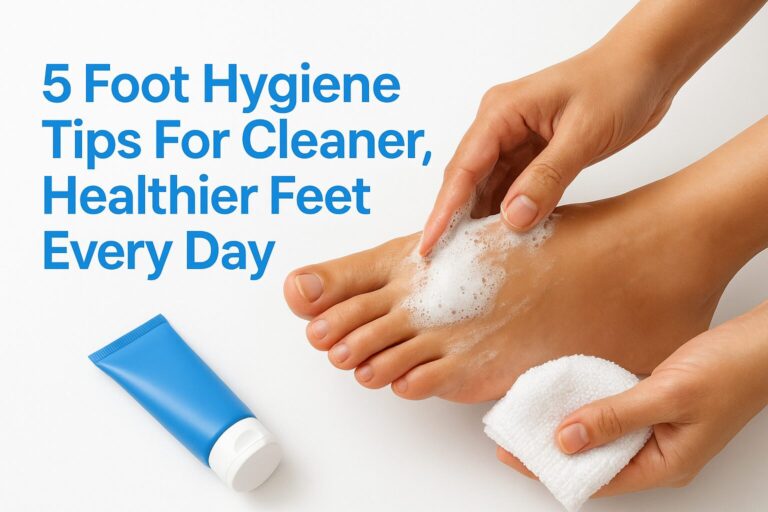
Most people spend time on skincare routines, dental care, and hair maintenance, but foot hygiene tips rarely make the list. That’s a problem, because neglecting your feet opens the door to fungal infections, bacterial growth, cracked skin, and persistent odour. The good news? Keeping your feet healthy doesn’t require much effort, just the right habits done consistently.
At ModPod Podiatry, our team treats thousands of patients across Sydney each year, and we regularly see conditions that proper daily foot care could have prevented. From fungal nails to skin infections, many common foot problems start with basic hygiene oversights. We’ve put together this list based on what we see in clinic every day, not generic advice, but practical steps that actually make a difference.
Here are five foot hygiene tips to keep your feet cleaner, healthier, and problem-free.
1. Book a podiatry check for ongoing foot issues
Good foot hygiene tips cover your daily habits at home, but some foot problems need professional assessment to catch early. A podiatrist identifies issues before they escalate into something that requires more involved treatment.
Foot hygiene problems a podiatrist can spot early
Podiatrists are trained to find fungal infections, skin breakdown, and structural changes that are easy to overlook at home. Many patients are surprised to discover a condition has already progressed further than they realised.
- Fungal nail discolouration or thickening
- Skin breakdown between the toes
- Pressure-related callus build-up
- Early signs of diabetic foot changes
Red flags that need an appointment soon
Some symptoms need prompt attention rather than a wait-and-see approach. Persistent pain lasting more than a week, open skin breaks, or a nail growing into the skin all warrant a booking without delay.
If you notice spreading redness, swelling, or warmth around a nail or wound, contact a podiatrist promptly rather than waiting it out, as these can signal an active infection.
What to expect at a ModPod Podiatry foot health check
Your appointment at ModPod Podiatry starts with a thorough assessment of your skin, nails, and lower limb function. Podiatrists use pressure plate analysis and visual examination to find the source of your concerns, then walk you through a straightforward treatment plan with no guesswork.
Your podiatrist will also give you personalised hygiene advice based on your foot type, activity level, and any existing conditions, so you leave with practical steps, not just a diagnosis.
How often to get checked if you are high risk
People with diabetes, poor circulation, or a history of foot infections should book a podiatry review at least once per year. Those with active or recurring issues benefit from appointments every three to six months to stay ahead of complications.
2. Wash daily and dry properly
Washing your feet daily is one of the most effective foot hygiene tips you can apply at home. Use warm water and mild soap, scrubbing between your toes and around the heel where bacteria and dead skin accumulate most.
The simple wash routine that actually works
Spend at least 30 seconds cleaning each foot thoroughly during your shower or bath. Focus on the spaces between toes and under nail edges, as these areas trap sweat and debris faster than any other part of the foot.
Why drying between toes matters for fungus prevention
Moisture left between your toes creates the perfect conditions for fungal growth. Pat each toe gap dry with a clean towel rather than rubbing, which can irritate already sensitive skin and create small breaks that let bacteria in.
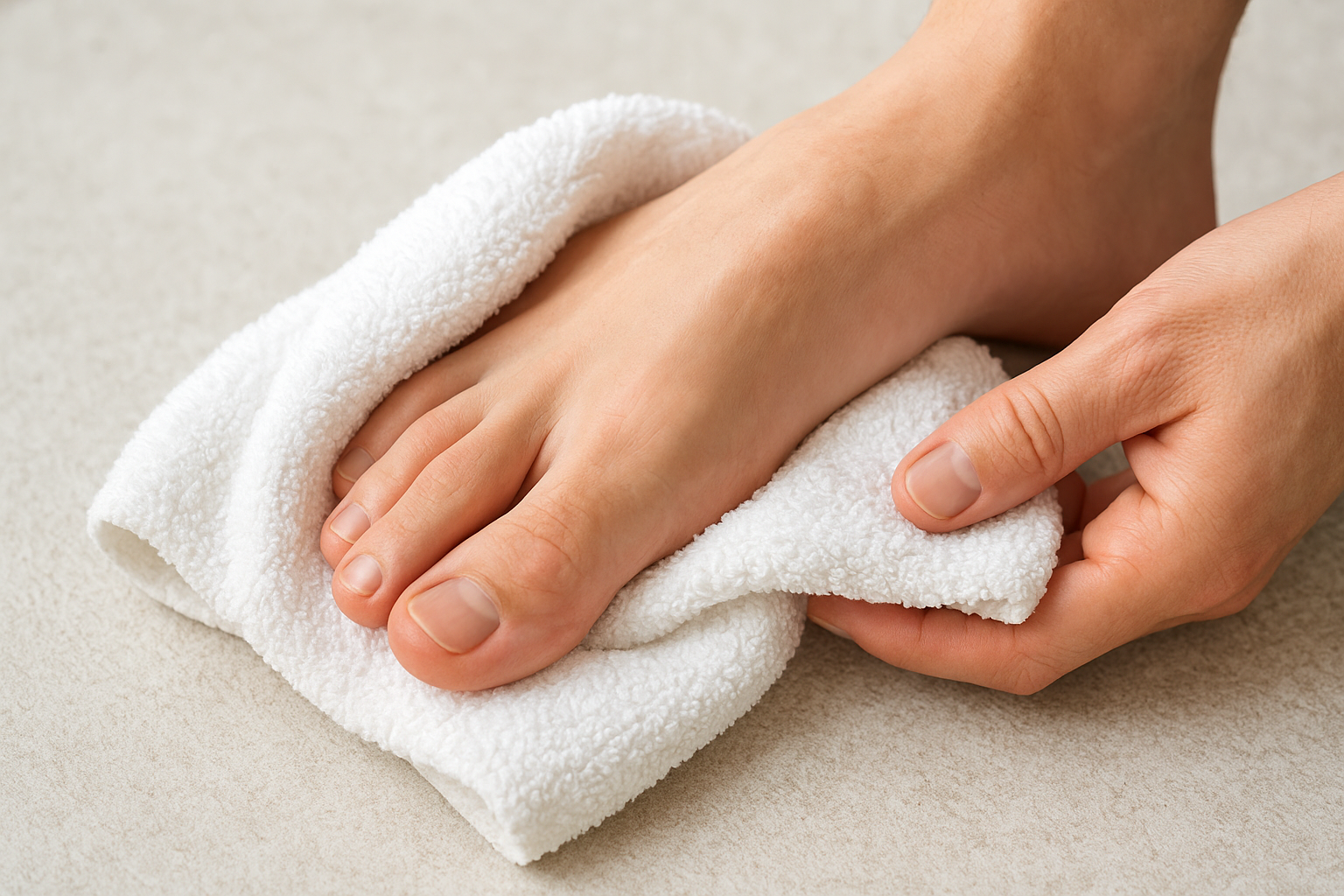
Leaving your feet damp after washing is one of the most common triggers for athlete’s foot.
What to do after exercise, work boots, or sweaty days
Wash your feet again after intense exercise or a long shift in closed footwear. A quick rinse and thorough dry removes sweat build-up before it has time to cause odour or infection.
Sensitive skin and eczema friendly washing tips
Choose a fragrance-free, soap-free cleanser if your skin reacts to standard products. Lukewarm water rather than hot reduces irritation and helps preserve your skin’s natural protective barrier against infection.
3. Keep feet dry with socks and shoes that breathe
What you put on your feet after washing matters just as much as the wash itself. Damp socks and poorly ventilated shoes trap moisture against your skin all day, creating the exact conditions where fungal infections and odour-causing bacteria thrive.
How often to change socks and why it matters
Change your socks every single day as a minimum, and more often if you exercise or sweat heavily. Wearing the same pair twice without washing gives bacteria and fungi a warm, moist environment to multiply. Fresh socks each morning is one of the simplest foot hygiene tips you can build into your routine.
Best sock materials for sweat and odour control
Merino wool and moisture-wicking synthetic blends draw sweat away from your skin far better than cotton, which holds moisture and stays wet. Avoid 100% cotton socks during exercise or long shifts in closed footwear.
Damp cotton against your skin all day significantly increases your risk of blisters and fungal infections.
Rotate and air out shoes to cut fungal risk
Alternating between two pairs of shoes gives each pair at least 24 hours to dry fully. Remove insoles after wearing and leave shoes in a well-ventilated spot rather than a closed bag or cupboard.
When to replace shoes that hold moisture and bacteria
Replace shoes when the interior lining breaks down or persistent odour remains after airing out. Worn footwear retains far more bacteria and moisture than a fresh pair, making replacement a practical step in protecting your foot health long term.
4. Trim toenails safely and keep tools clean
Nail care is one of the most overlooked foot hygiene tips, yet poor technique causes a significant number of the ingrown toenail cases we treat at ModPod Podiatry. Cutting your nails correctly and keeping your tools clean takes less than five minutes but makes a real difference to your nail health.
How to cut nails to reduce ingrown toenail risk
Cut nails straight across rather than curved at the edges, leaving a small amount of white nail visible. Cutting too short or rounding the corners pushes nail edges into surrounding skin, which is the most common cause of painful ingrown toenails.
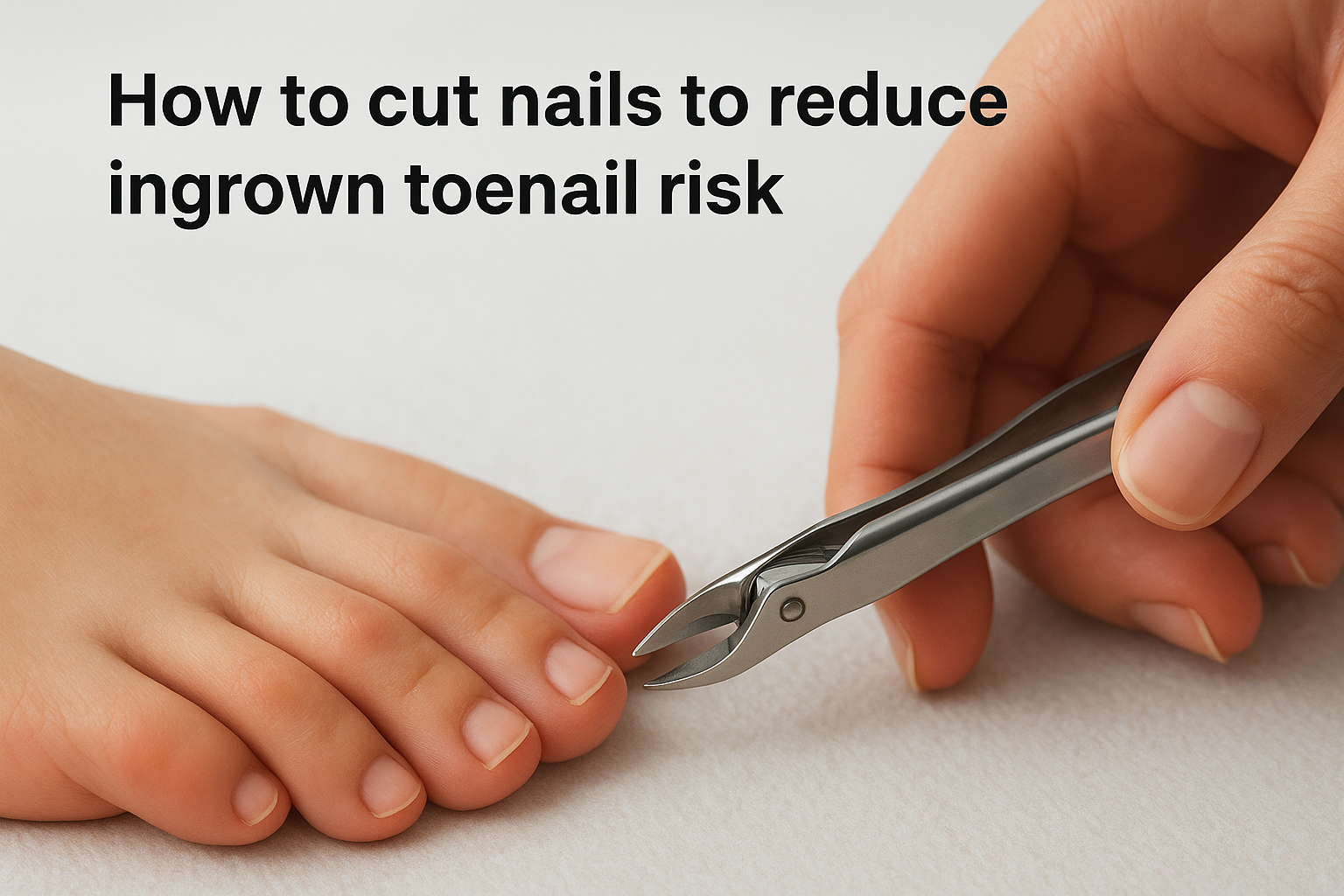
Trimming after a shower softens the nail and makes cutting cleaner and more controlled.
How to file thick or sharp nails without injury
Use a nail file or emery board to smooth any sharp corners after cutting. File gently in one direction rather than sawing back and forth, which weakens the nail plate over time.
Tool hygiene and why sharing clippers spreads infection
Clean your clippers with rubbing alcohol after each use and store them dry. Sharing nail tools transfers fungal spores and bacteria directly between people.
When nail changes suggest fungal infection or trauma
Nails that appear thickened, discoloured, or crumbly need a podiatry assessment rather than home treatment. These changes often indicate a fungal infection or underlying trauma requiring targeted treatment.
5. Moisturise smart and manage rough skin safely
Dry, cracked skin on your feet isn’t just uncomfortable. It creates entry points for bacteria and fungal infections, making moisturising one of the most practical foot hygiene tips you can add to your evening routine.
Where to moisturise and where to avoid moisturiser
Apply moisturiser to your heels, soles, and the tops of your feet after washing and drying thoroughly. Avoid putting cream between your toes, as extra moisture in those gaps increases your risk of fungal infections like athlete’s foot.
Vaseline overnight for dry heels and cracked skin
Petroleum jelly applied to dry heels before bed works effectively for deep cracks. Wear a pair of cotton socks overnight to lock in the moisture and soften even severely cracked skin within a few nights of consistent use.
This simple overnight method costs very little and outperforms many expensive heel creams available at pharmacies.
Safe callus care at home and what to never cut
Use a pumice stone or foot file on wet skin after a shower to gently reduce callus build-up. Never cut calluses with a blade or razor, as doing so creates open wounds that bacteria can enter before you even notice the damage.
When cracks, blisters, or sores need medical care
Deep heel cracks that bleed or show redness around the edges, along with blisters that refuse to heal, need a podiatry assessment. Your podiatrist can debride damaged skin safely and identify any underlying cause driving the problem.
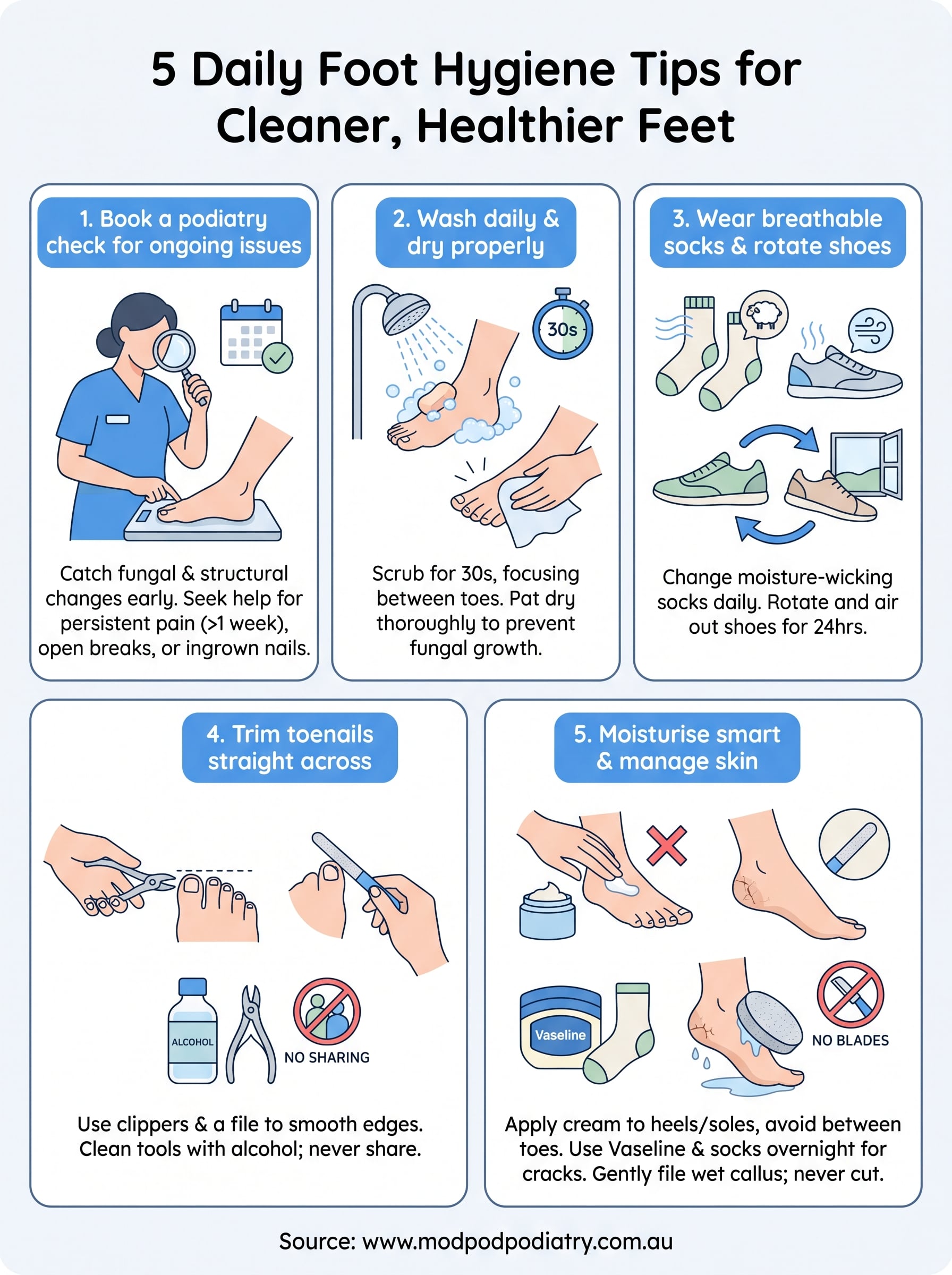
Next steps for healthier feet
These five foot hygiene tips cover everything from daily washing to nail care and moisturising, giving you a clear routine to follow at home. Consistency matters more than perfection, so start with one or two habits and build from there rather than trying to change everything at once.
Most foot problems respond well to early attention, and many conditions we treat at ModPod Podiatry could have been resolved sooner with prompt care. If you have noticed persistent odour, nail changes, cracked skin that isn’t healing, or any pain that keeps coming back, those signs deserve a professional assessment rather than continued home management.
Our podiatrists across five Sydney locations can identify what is driving your symptoms and put together a practical plan to fix it. Book an appointment online and get the same-week availability that works around your schedule.

