

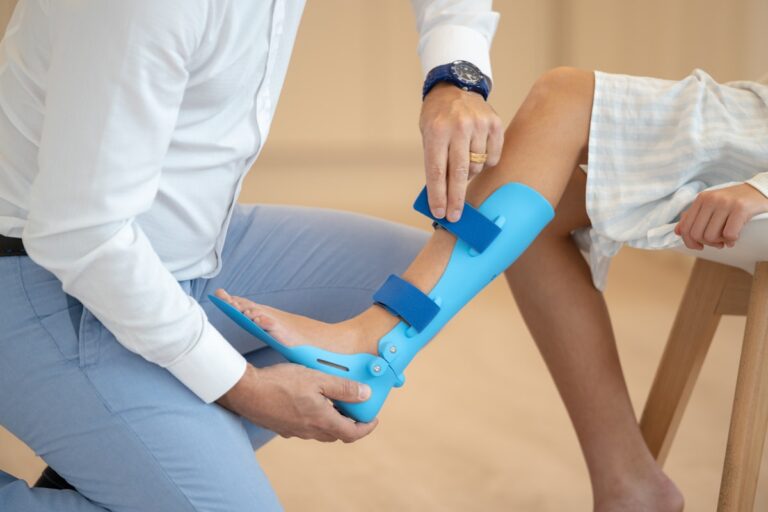
A sprained ankle is one of the most common acute injuries we treat at ModPod Podiatry across Sydney. You roll your ankle stepping off a kerb, landing awkwardly from a jump, or changing direction on uneven ground — and suddenly you are managing sharp pain, swelling, and uncertainty about whether to walk on it. Knowing how to heal a sprained ankle fast starts with understanding the grade of injury you have sustained, what to do in the first 48 hours, and when self-management is not enough. Left untreated, ankle sprains frequently lead to chronic instability and repeat injury. This guide covers the grading system, the RICE protocol and its limits, common mistakes that slow recovery, and what a podiatrist can do to help.
The Three Grades of Ankle Sprain
Not all ankle sprains are the same. Podiatrists grade sprains based on the degree of ligament damage:
- Grade 1: Mild stretching of the lateral ligament. Minimal swelling, tenderness on palpation, and you can usually weight-bear. Typical recovery: 1–3 weeks.
- Grade 2: Partial tearing of the ligament. Noticeable swelling, bruising, and pain with weight-bearing. Typical recovery: 3–6 weeks.
- Grade 3: Complete rupture of the ligament. Significant swelling, bruising, and joint instability. You may have heard or felt a pop at the time of injury. Recovery: 6–12 weeks or longer, generally requiring structured rehabilitation.
Grade 1 sprains often respond well to self-management. Grade 2 and 3 injuries require a proper clinical assessment to rule out fracture, confirm the extent of damage, and guide a rehabilitation programme.
The RICE Protocol — and Where It Falls Short
RICE (Rest, Ice, Compression, Elevation) is the standard first-aid response in the initial 48–72 hours after a sprained ankle.
- Rest: Reduce weight-bearing during the acute phase. If walking is painful, use crutches.
- Ice: Apply for 15–20 minutes every 2 hours. Always wrap ice in a cloth — never apply it directly to skin.
- Compression: A firm bandage from toes to mid-calf helps limit swelling.
- Elevation: Keep the ankle above heart height when resting.
RICE manages acute symptoms but does not address the underlying ligament damage. For Grade 2 and 3 sprains, RICE alone is not adequate. Without structured rehabilitation, the lateral ligaments often heal in a lax position, which reduces proprioception — the body’s sense of where the joint is in space — and significantly increases re-sprain risk.
What Not to Do in the First 48 Hours
Several common mistakes prolong recovery:
- Heat: Applying heat in the first 48 hours increases blood flow and worsens swelling. Avoid heat packs, hot water bottles, and hot baths.
- Walking through the pain: If significant pain prevents normal gait, you are likely dealing with a Grade 2 or 3 sprain. Continuing to load the ankle delays healing.
- Ignoring it: Untreated ankle sprains are the primary driver of chronic ankle instability, which affects long-term mobility and sporting performance.
When to See a Podiatrist — and When to Go to Emergency
Go directly to an emergency department if:
- You cannot put any weight on the foot at all
- There is severe bruising within the first hour of injury
- The ankle or foot appears visibly deformed
- You heard or felt a crack at the time of injury (possible fracture)
For all other presentations, our ankle sprain treatment service at ModPod assesses the grade of injury, applies clinical strapping or bracing, and prescribes a graduated rehabilitation programme. We refer for imaging — X-ray or diagnostic ultrasound — where a fracture or complete rupture is suspected.
What a Podiatrist Does for a Sprained Ankle
At ModPod Podiatry, a sprained ankle consultation typically includes:
- Gait assessment — examining how you load the ankle and foot through the walking cycle
- Clinical strapping or bracing — providing mechanical support while the ligament heals
- Proprioceptive rehabilitation — targeted exercises to retrain the muscles and ligaments around the joint
- Imaging referral — where fracture or full ligament rupture needs to be confirmed
For patients with chronic ankle instability — where repeated sprains have created permanent ligament laxity — custom orthotics can offload the lateral ankle structures and reduce ongoing injury risk. In cases where the lateral ligaments have not healed adequately, shockwave therapy can assist in stimulating tissue repair and reducing chronic pain.
Why Ankle Sprains Keep Coming Back
Recurrent ankle sprains are common when the initial injury is not fully rehabilitated. Two factors drive this pattern:
- Ligament laxity: Incompletely healed ligaments leave the ankle joint mechanically unstable.
- Impaired proprioception: Nerve fibres within the ligament are damaged during a sprain. Without retraining exercises, the ankle cannot respond to sudden position changes, and re-injury occurs.
This is why self-managed RICE is rarely sufficient for anything beyond a Grade 1 sprain, and why professional assessment reduces your risk of a second or third episode.
Australian Context: Ankle Sprains in Sport
According to Sports Medicine Australia, ankle sprains are the most common acute musculoskeletal sports injury in the country, accounting for 10–30% of all sporting injuries. Participation in netball, football codes, basketball, and trail running — all common across Sydney — places hundreds of thousands of Australians at risk each year, particularly through the winter sports season.
If your ankle sprain is being managed under a GP-referred Medicare Chronic Disease Management (CDM) plan, podiatry is a covered allied health service, with rebates available for up to five sessions per calendar year. Most private health funds — including Medibank, BUPA, HCF, and NIB — provide Extras rebates for podiatry consultations. Check your Extras level for applicable item numbers.
Frequently Asked Questions
Q: How long does a sprained ankle take to heal?
A: A Grade 1 sprain typically resolves within 1–3 weeks. Grade 2 sprains take 3–6 weeks. Grade 3 sprains — complete ligament ruptures — can take 6–12 weeks or longer, particularly when rehabilitation is required to restore proprioception and strength.
Q: Should I walk on a sprained ankle?
A: For Grade 1 sprains, gentle weight-bearing is acceptable if you can do so without significant pain. For Grade 2 and 3 injuries, avoid walking through pain. Using crutches in the first few days reduces additional stress on the damaged ligament.
Q: When should I see a podiatrist for a sprained ankle?
A: See a podiatrist if you are not walking normally within 48–72 hours, if swelling or bruising is substantial, if it is a recurring injury, or if you need a structured rehabilitation plan to return to sport.
Q: Can a sprained ankle heal without treatment?
A: Grade 1 sprains often resolve without formal treatment. Grade 2 and 3 sprains require professional assessment and rehabilitation to prevent chronic instability and reduce re-injury risk.
If you have recently rolled your ankle and are unsure of the severity, book online with ModPod Podiatry. We consult at our clinics in Sydney CBD, Mosman, Dee Why, Rose Bay, and North Ryde.

