


If you’re living with diabetes, your feet need more attention than most people’s. Nerve damage and poor circulation mean small problems like dry skin or a minor blister can turn into serious complications before you even notice them. Finding the right foot care products for diabetics isn’t about luxury pampering. It’s about protecting skin integrity and catching issues early, before they become an ulcer or worse.
This guide cuts through the marketing noise and gives you practical recommendations that actually matter for diabetic foot health. We’ve focused on products that address the real risks: cracked heels, moisture control, pressure points, and daily skin checks. Each pick considers what podiatrists actually see working for patients managing diabetes day to day, not just what looks good on a shelf.
Below, you’ll find our top five picks, covering everything from specialised moisturisers to socks designed for sensitive feet. We’ll explain what makes each one worth buying and who it suits best. And because products alone aren’t a substitute for professional care, we’ll also cover when it’s time to book a podiatry check-up with a qualified clinician who understands diabetic foot risk.
1. Regular podiatry check-ups and custom orthotics
Before you reach for any cream or gadget, understand this: the single most effective foot care product for diabetics isn’t a product at all. It’s a standing appointment with a podiatrist who checks your circulation, nerve function, and skin integrity on a regular schedule. Custom orthotics, made from a 3D scan or pressure plate reading of your actual foot, redistribute pressure away from spots where diabetic feet tend to break down.
How it helps diabetic foot health
Nerve damage from diabetes often means you can’t feel a blister forming until it’s already infected. A podiatrist picks up on skin changes, callus build-up, and reduced sensation using tools you don’t have at home, then adjusts your orthotics to offload pressure before a wound develops. This proactive monitoring is what actually prevents amputations, not a jar of cream.
Regular podiatry checks catch diabetic foot problems before you can feel them.
Who it’s best suited to
Anyone diagnosed with diabetes should have a podiatry review at least once a year, and more often if you already have reduced sensation, poor circulation, or a history of ulcers. It’s especially important for older patients and anyone who’s had a previous foot complication.
What to look for when choosing one
Look for a clinic staffed by APodA-registered podiatrists with genuine experience in diabetic foot assessment, not just general foot care. Ask whether they offer gait analysis, pressure plate testing, and orthotics made specifically for your foot shape rather than off-the-shelf inserts.
Price range in Australia
| Service | Typical cost |
|---|---|
| Podiatry consultation | $110–$140 |
| Custom orthotics | $400–$700 per pair |
| Medicare EPC rebate (if eligible) | Reduces out-of-pocket cost |
Many patients with a chronic disease management plan from their GP qualify for Medicare rebates, and private health extras cover often applies too.
2. Diabetic-friendly moisturising creams and foot balms
Dry, cracked skin is one of the most common entry points for infection in diabetic feet. Diabetic-friendly moisturising creams are formulated to restore the skin barrier without leaving residue between the toes, where excess moisture can trigger fungal problems.
How it helps diabetic foot health
Urea-based creams and specialist foot balms soften thickened, cracked skin on the heels and soles, reducing the risk of fissures that can become entry points for bacteria. Regular application also gives you a reason to inspect your feet daily, which matters more than the cream itself when nerve damage dulls sensation.
A daily moisturising habit doubles as a daily foot check.
Who it’s best suited to
This suits anyone with diabetes who notices dry, flaky, or thickened skin, particularly around the heels. It’s also useful for older patients whose skin naturally loses elasticity and moisture over time.
What to look for when choosing one
Choose a urea-based cream (10-25% concentration) without heavy fragrances or alcohol, which can irritate sensitive skin. Avoid applying anything between the toes, since trapped moisture there encourages fungal growth rather than preventing it.
Price range in Australia
Expect to pay $15 to $35 for a quality diabetic-specific foot cream from a pharmacy or podiatry clinic, with larger tubs offering better value for daily long-term use.
3. Diabetic socks designed for sensitive feet
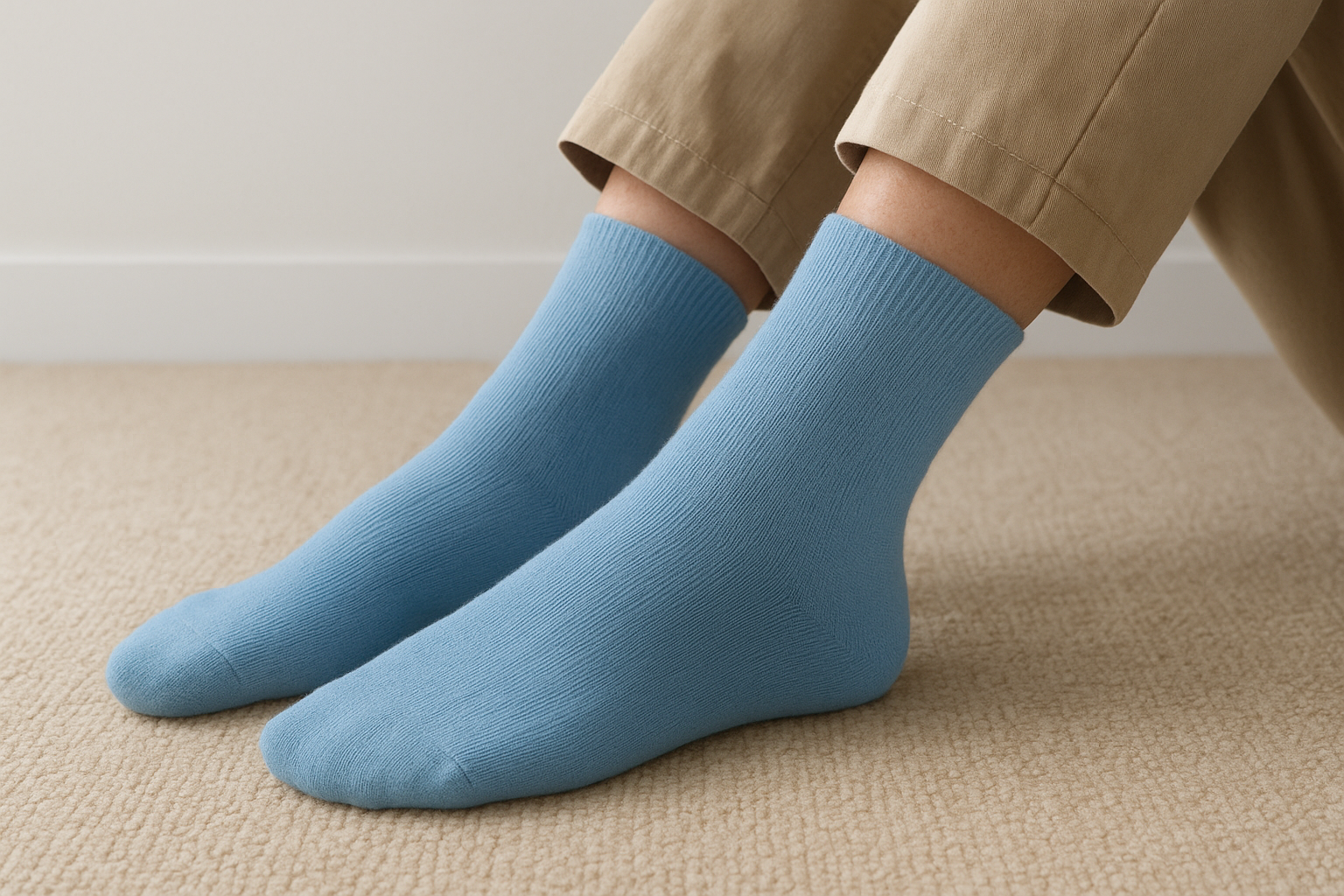
Ordinary socks aren’t built for feet that can’t feel friction or pressure building up. Diabetic socks use seamless construction and non-binding tops to remove the two things that cause the most damage to sensitive feet: rubbing and restricted circulation.
How it helps diabetic foot health
Seamless toe closures stop the small ridges that cause blisters you might never feel forming. Non-binding cuffs sit loosely around the calf instead of digging in, which matters because tight elastic can restrict already-compromised blood flow in diabetic legs. Many diabetic socks also include moisture-wicking fibres that keep feet dry, cutting the risk of fungal infection between the toes.
Loose cuffs and seamless toes protect feet that can’t feel damage happening.
Who it’s best suited to
Anyone with diabetic peripheral neuropathy or circulation problems benefits from switching over completely, not just for exercise. It’s also worth it for people who spend long hours standing or walking, since friction damage builds up faster under those conditions.
What to look for when choosing one
Check for a seamless toe seam, cushioned sole, and a non-binding top band. Natural fibres like bamboo or merino wool manage moisture better than synthetic blends, and avoid anything with tight elastic bands or visible seams.
Price range in Australia
Expect $15 to $30 per pair, with multi-packs from pharmacies or specialist diabetic retailers offering better value than buying single pairs.
4. Supportive diabetic footwear
Standard shoes are built for average feet, not feet with reduced sensation, altered pressure points, or bony deformities from years of diabetes. Supportive diabetic footwear has a wider toe box, seam-free interiors, and cushioned soles that distribute pressure evenly instead of concentrating it under one spot.
How it helps diabetic foot health
Extra depth and width remove the pressure points that cause corns, calluses, and eventually ulcers on feet that can’t signal pain properly. A rigid, supportive sole limits excessive movement inside the shoe, cutting down on the friction that damages skin without you noticing.
Shoes without pressure points prevent damage you’d never feel happening.
Who it’s best suited to
Anyone with diabetic neuropathy, foot deformities like bunions or hammertoes, or a history of ulcers needs proper diabetic footwear, not just comfortable trainers. It also suits patients whose feet have changed shape over years of living with diabetes.
What to look for when choosing one
Look for a wide, deep toe box, removable insoles that accommodate custom orthotics, seamless linings, and a firm heel counter. Get properly fitted rather than guessing your size, since diabetic feet often need half a size larger than you’d expect.
Price range in Australia
Expect $150 to $350 per pair for genuine diabetic-approved footwear, with some brands eligible for partial rebates under private health extras cover.
5. Daily foot inspection tools and mirrors
Spotting a problem early means checking your feet every single day, and that’s hard to do properly when you can’t see the sole or heel without twisting into an awkward position. A long-handled foot mirror solves this simple but critical gap, letting you inspect every angle of your foot without straining your back or missing a spot.
How it helps diabetic foot health
Neuropathy hides pain signals, so a cut or pressure sore can sit unnoticed for days unless you actually look for it. Using a foot mirror daily turns inspection into a routine rather than something you remember only when something already hurts. Combined with good lighting, a magnifying mirror catches early redness, blistering, or skin breakdown that’s easy to miss with the naked eye alone, especially among the broader range of foot care products for diabetics worth keeping at home.
A foot mirror shows you what neuropathy won’t let you feel.
Who it’s best suited to
Anyone with reduced sensation, limited mobility, or difficulty bending should keep one within reach. It’s particularly useful for older patients living alone without someone else to check their feet regularly.
What to look for when choosing one
Choose a mirror with an adjustable, long handle, a stable base, and a magnifying section for close inspection of toes and nail beds. LED lighting built into the mirror helps in dim bathrooms.
Price range in Australia
Expect to pay $20 to $45 for a quality long-handled diabetic foot mirror from a pharmacy or medical supply retailer.
Building a foot care routine that works for you
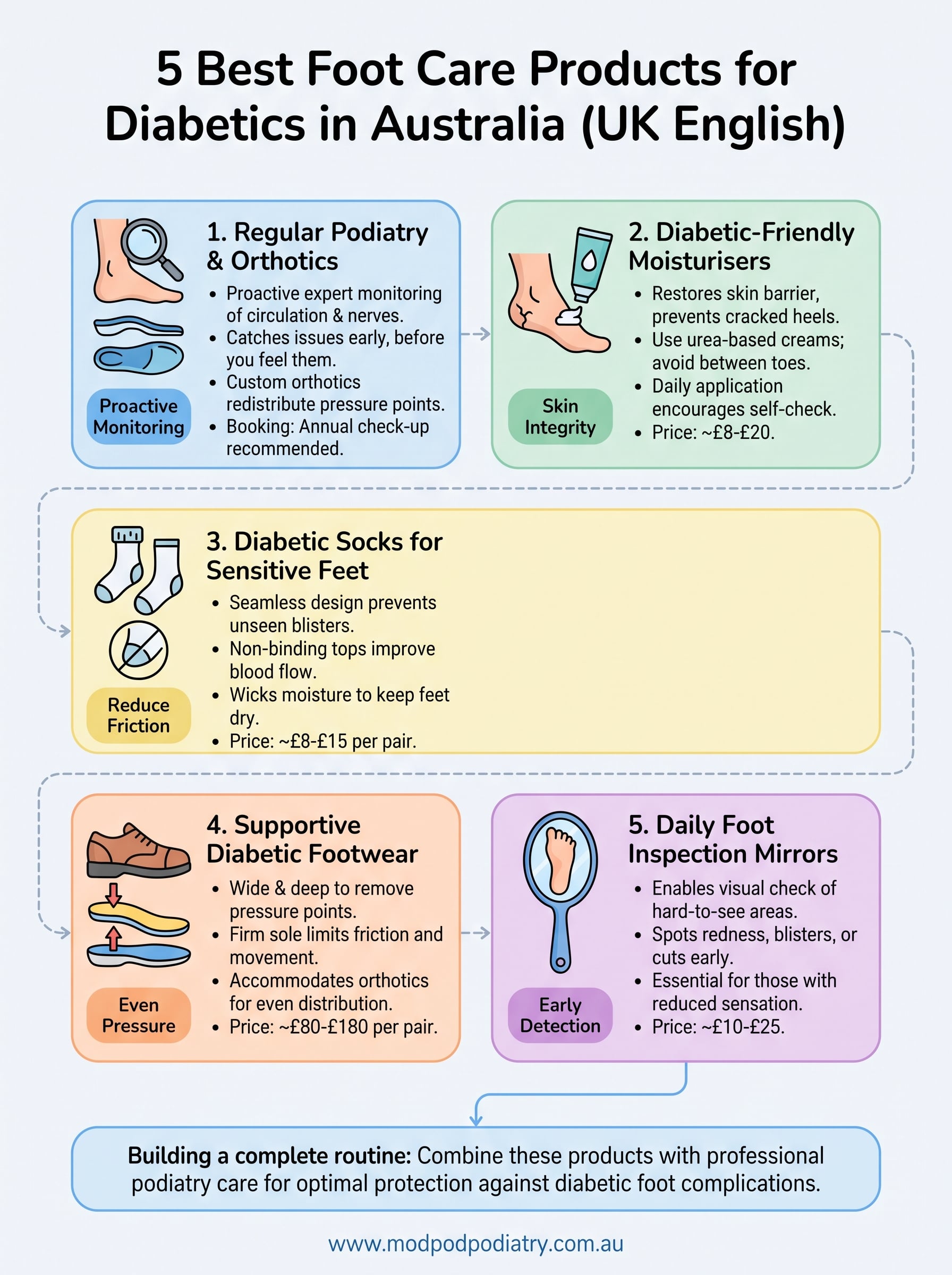
None of these five products work in isolation. Diabetic foot care succeeds when moisturising, proper socks, supportive shoes, and daily mirror checks all sit alongside professional monitoring, not instead of it. Skip the podiatry visits and you’re relying on products alone to catch problems that need a trained eye and proper equipment to spot early.
Overlooking this combination is exactly how minor issues turn into ulcers, so treat these products as support for your routine, not a replacement for it. Start with what’s missing from your current routine, whether that’s swapping to seamless socks or finally buying a foot mirror, and build from there.
If it’s been more than a year since your last check, or you’ve never had a proper diabetic assessment, don’t wait for a problem to force the issue. Book an appointment online with a podiatrist who understands diabetic foot risk and can help you build a routine that actually protects you.

