

Arch pain can turn simple things, walking to the shops, standing at work, going for a run, into something you dread. If you’ve been dealing with that tight, aching sensation through the middle of your foot, you’re not alone. It’s one of the most common complaints we see at ModPod Podiatry across our Sydney clinics, and the good news is that the right foot arch pain exercises can make a real difference.
Stretching and strengthening the muscles that support your arch helps reduce pain and, just as importantly, helps prevent it from coming back. These aren’t complicated gym routines, they’re simple movements you can do at home, no equipment required, in just a few minutes a day.
Below, we’ll walk you through five exercises our podiatrists regularly recommend to patients. Each one targets the structures that support your foot arch, from the plantar fascia to the intrinsic foot muscles. Whether you’re managing an existing issue or trying to stay ahead of one, these are a solid place to start.
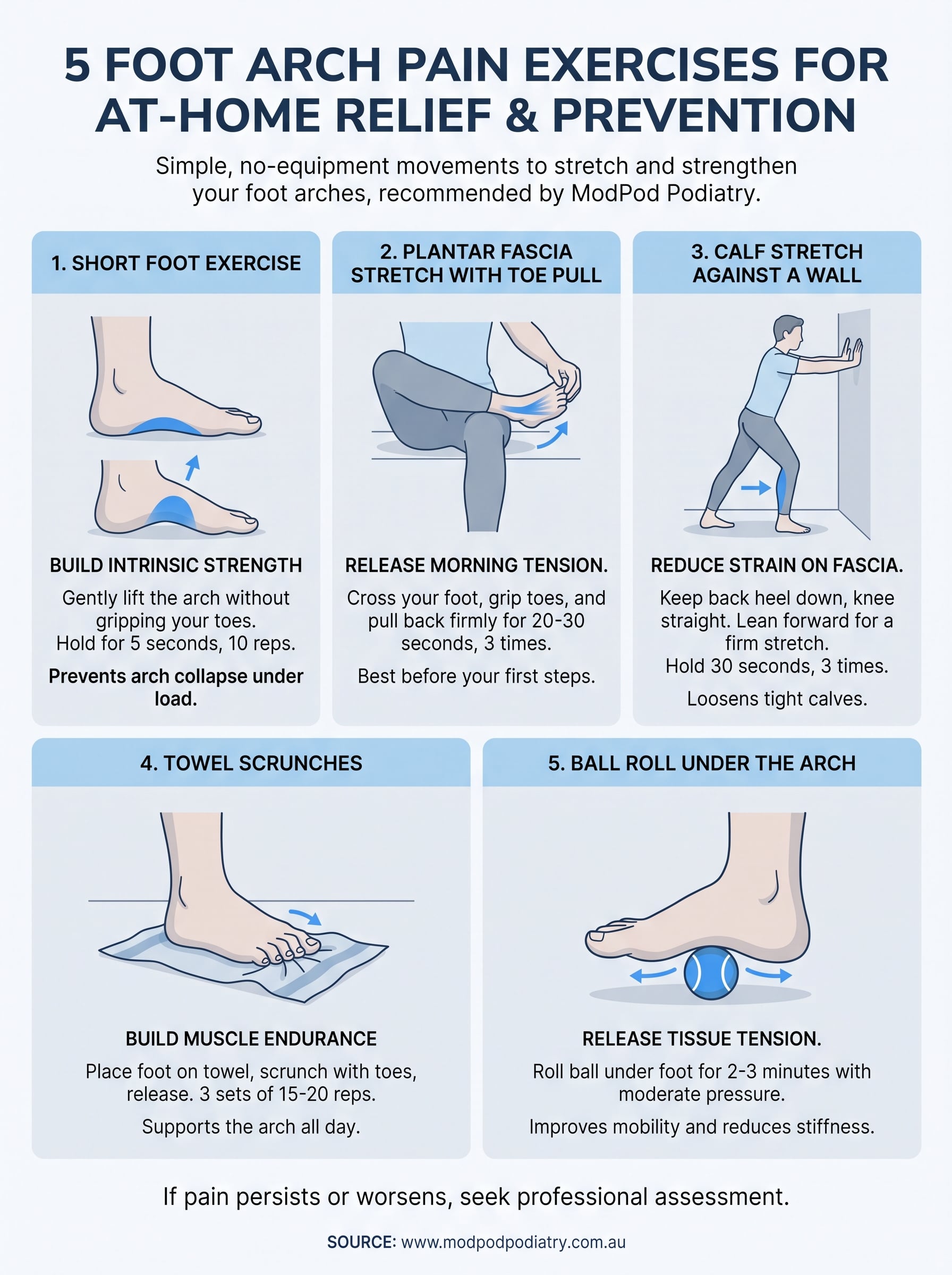
1. Short foot exercise
The short foot exercise is one of the most effective foot arch pain exercises for building intrinsic foot muscle strength, targeting the small muscles that run along the base of your foot and hold your arch up from within.
What it targets and why it helps arch pain
This exercise works the intrinsic muscles of the foot, particularly the ones running from your heel to the ball of your foot underneath the arch. When these muscles are weak, your arch drops under load and the plantar fascia takes on extra stress. Strengthening them gives your arch its own active support structure, reducing the pull on the fascia and the ache that follows.
How to do it with good form
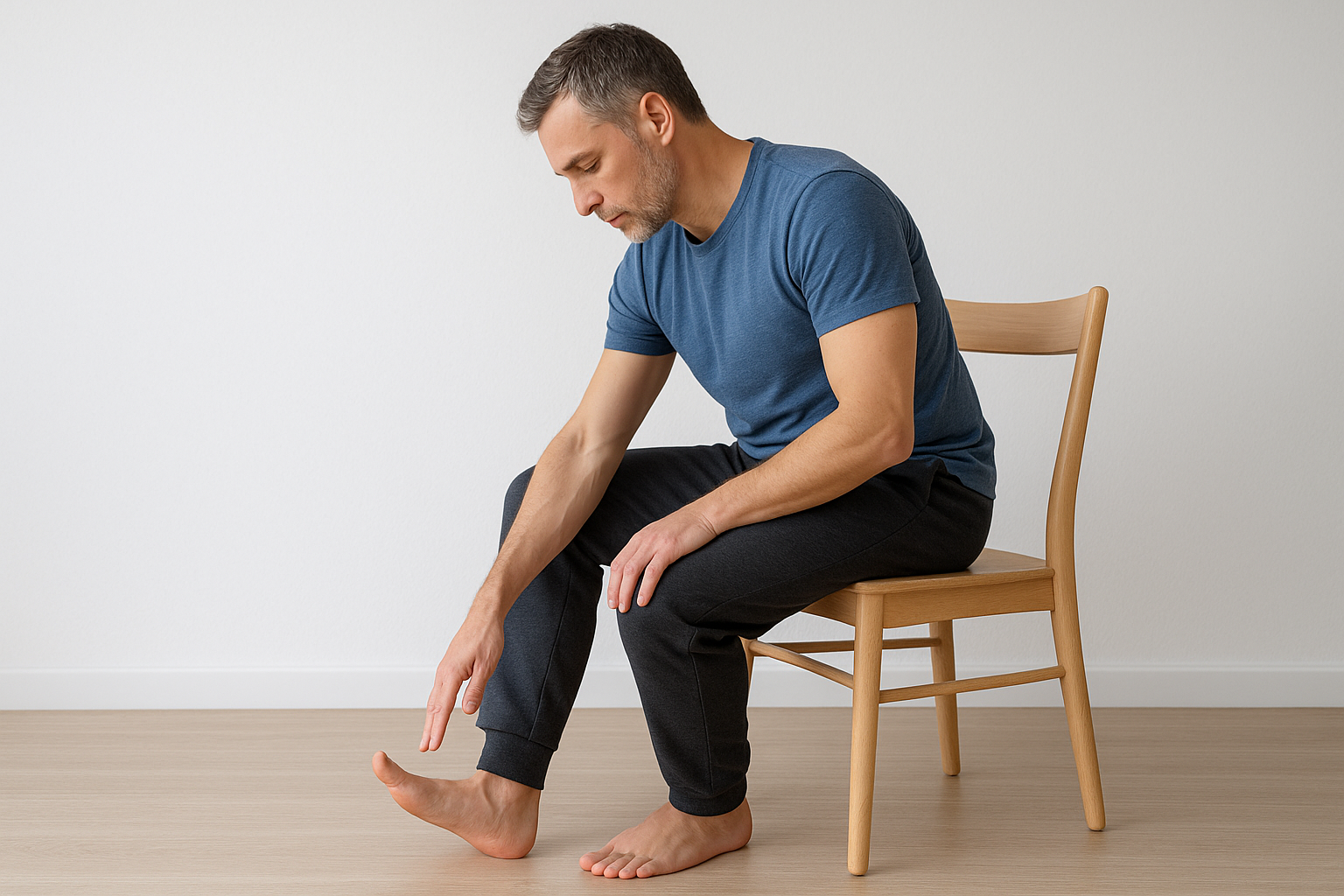
Sit in a chair with your foot flat on the floor and your toes relaxed. Without curling your toes, try to shorten the distance between your heel and the ball of your foot by doming the arch upward. Hold for five seconds, then release. Think of it as lifting the arch without gripping the toes. Do 10 repetitions on each foot.
Keep your toes long and flat throughout. If they curl under, you’re recruiting the wrong muscles and losing the benefit of the exercise.
Common mistakes and easier progressions
The most common mistake is scrunching the toes rather than doming the arch. If that keeps happening, try placing your toes gently against a wall to prevent them from bending inward. Once you can complete the movement cleanly while seated, progress to standing with your weight evenly spread across both feet, then work toward a single-leg version.
How often to do it and when to stop
Aim for two to three sessions daily, particularly in the morning before your first steps. Stop if you notice sharp or worsening pain in the arch or heel, and speak with a podiatrist before continuing.
2. Plantar fascia stretch with toe pull
This classic stretch directly targets the plantar fascia, the band of tissue running along the base of your foot that’s responsible for much of your arch pain.
What it targets and why it helps arch pain
The plantar fascia tightens during overnight rest, which is why that first-step morning pain hits so sharply. Pulling your toes back lengthens the fascia before it bears any load, reducing tension through your arch.
How to do it with good form
Sit on a chair and cross one foot over your opposite knee. Grip your toes and pull them back toward your shin until you feel a stretch along the base of your foot. Hold for 20 to 30 seconds, then repeat three times per foot.
Do this stretch before your first steps in the morning for the most noticeable reduction in arch pain.
Common mistakes and easier progressions
Avoid yanking the toes back hard; a firm, steady pull is sufficient. If reaching your foot is difficult, loop a towel or belt around your toes and use that to apply the stretch instead.
How often to do it and when to stop
Two to three times daily works well, particularly first thing in the morning and after long periods of sitting. Stop if the stretch produces sharp pain rather than a firm pulling sensation.
3. Calf stretch against a wall
Tight calf muscles are a surprisingly common contributor to arch pain, and this stretch is one of the most practical foot arch pain exercises you can add to your daily routine. When your calves lack flexibility, they place extra strain on the plantar fascia with every step you take.
What it targets and why it helps arch pain
This stretch works the gastrocnemius and soleus, the two calf muscles that attach to your heel bone via the Achilles tendon. When these muscles are tight, they pull on the heel and compress the arch structures during walking and running, which contributes directly to that familiar ache underfoot.
How to do it with good form
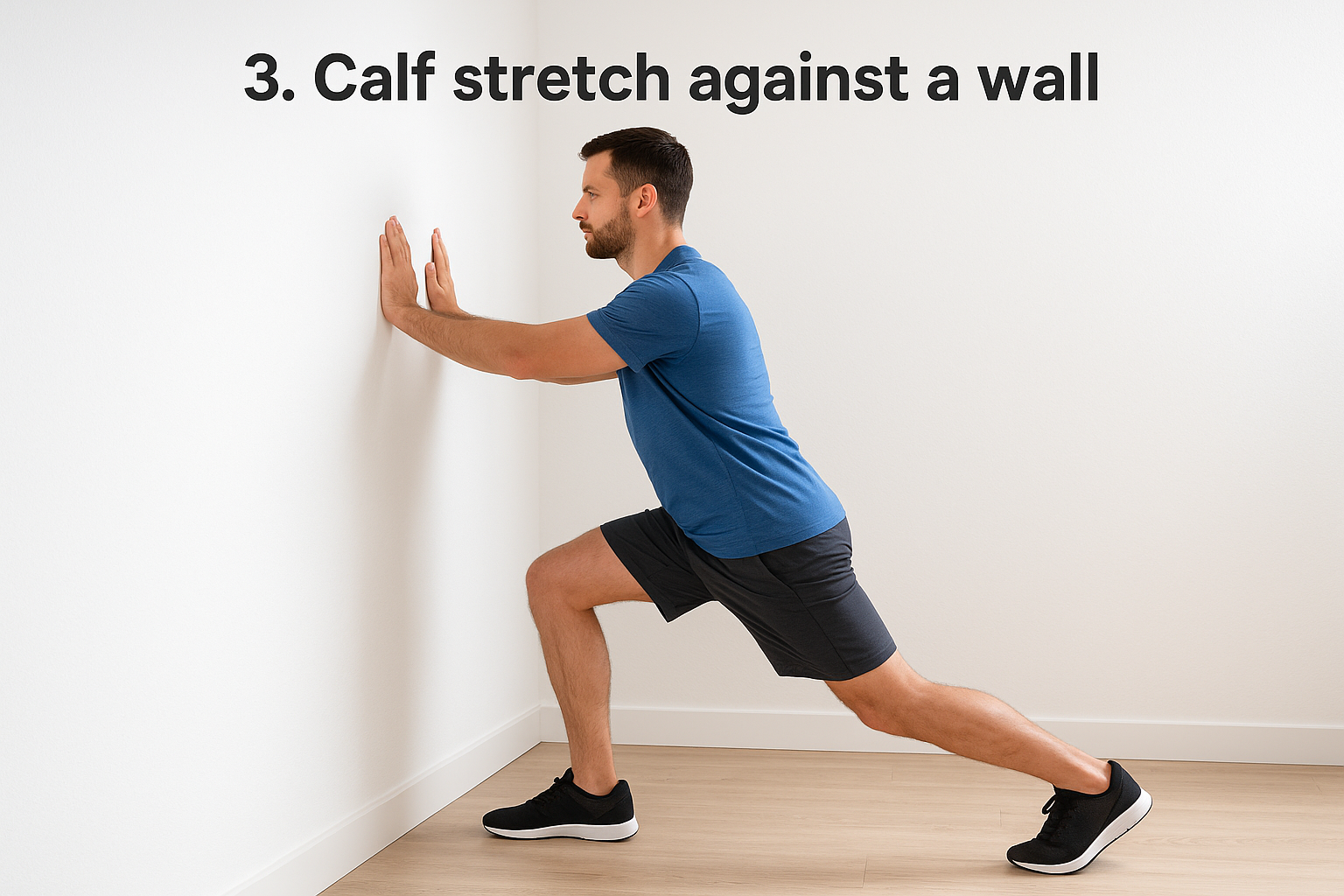
Stand facing a wall with both hands flat against it. Step one foot back, keep your rear knee straight, and press your heel firmly into the floor. Lean forward until you feel a firm stretch through your calf. Hold for 30 seconds, then switch sides and repeat three times per leg.
For a deeper stretch targeting the soleus, repeat the movement with your back knee slightly bent.
Common mistakes and easier progressions
The most common error is allowing your back heel to lift, which removes the stretch entirely. If the position feels too intense, move your rear foot closer to the wall and increase the distance gradually as your flexibility builds.
How often to do it and when to stop
Aim for two to three sessions daily, particularly after waking and following any exercise. Stop if you feel sharp pain in your heel or arch rather than a steady pull through the calf.
4. Towel scrunches
Towel scrunches are a low-impact entry point into foot arch pain exercises that builds intrinsic muscle endurance through repetitive gripping movements. All you need is a small towel and a hard floor.
What it targets and why it helps arch pain
This exercise works the flexor muscles of your toes and the small intrinsic muscles running through the arch. Repeatedly contracting these muscles against resistance builds endurance in the structures that support your arch throughout the day, reducing fatigue-related pain.
How to do it with good form
Place a small towel flat on a hard floor and position your bare foot on top of it. Using only your toes, scrunch the towel toward you, then spread it back out. Complete three sets of 15 to 20 repetitions on each foot.
Keep your heel planted throughout the movement so the work stays in your toes and arch rather than shifting into your ankle.
Common mistakes and easier progressions
Lifting your heel is the most common error, as it reduces the load on the arch muscles you’re trying to train. If the movement feels too easy, place a small water bottle on the far edge of the towel to add resistance.
How often to do it and when to stop
Perform this once or twice daily. Stop if you notice cramping that persists beyond a few minutes after finishing.
5. Ball roll under the arch
Rolling a firm ball under your foot is one of the most accessible foot arch pain exercises you can add to your routine, requiring nothing more than a tennis ball or lacrosse ball and a few minutes of your time.
What it targets and why it helps arch pain
This exercise works directly on the plantar fascia and surrounding soft tissue, applying targeted pressure that releases tension built up through the arch. The myofascial release effect improves tissue mobility and reduces the stiffness that accumulates after long periods of standing or walking.
How to do it with good form
Place the ball on a hard floor and rest your foot on top of it. Apply moderate pressure and slowly roll the ball from your heel to the ball of your foot and back. Spend two to three minutes per foot, pausing on any spots that feel particularly tight.
Use a lacrosse ball for firmer pressure, or a tennis ball if your arch is especially sensitive.
Common mistakes and easier progressions
Moving too fast is the most common mistake, which reduces the release effect significantly. Start seated to control how much weight you put through the ball, then progress to standing as your tolerance builds.
How often to do it and when to stop
Aim for once or twice daily, particularly in the evening after you’ve been on your feet. Stop if you feel sharp or piercing pain rather than a firm, manageable pressure.
Next steps if the pain keeps coming back
These foot arch pain exercises work well for most people, but they do have limits. If your pain has been going on for more than a few weeks, keeps returning after short periods of relief, or gets noticeably worse despite consistent effort, your arch needs a professional assessment, not just more stretching at home.
A podiatrist can identify the specific underlying cause of your arch pain, whether that’s plantar fasciitis, flat feet, a biomechanical issue in your gait, or something else entirely. That diagnosis shapes everything about how you treat it effectively. In some cases, custom orthotics provide the structural support your arch needs to fully recover and stay that way long term, something no exercise routine alone can replicate.
If you’re in Sydney and ready to get clear answers about your foot pain, book an appointment online with the ModPod Podiatry team. Same-week appointments are available across five clinic locations.