
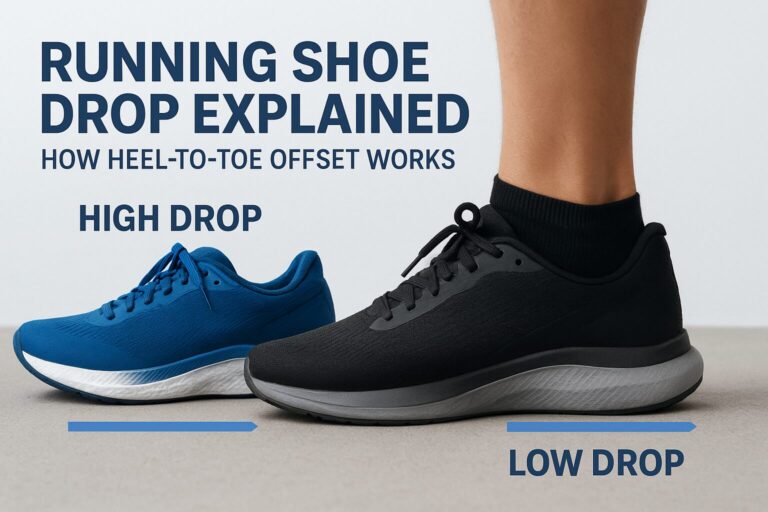
Pick up any two running shoes and you’ll notice one sits your heel higher off the ground than the other. That difference, measured in millimetres between the heel height and the forefoot height, is what’s known as the heel-to-toe drop, or offset. Having running shoe drop explained properly matters because it directly influences how your foot strikes the ground, how force travels through your ankles and knees, and ultimately, whether a shoe helps or hurts your running mechanics.
At ModPod Podiatry, our sports podiatrists assess runners’ biomechanics across our Sydney clinics every week. One of the most common questions we hear is whether someone should be running in a low-drop, mid-drop, or high-drop shoe. The answer is never one-size-fits-all, it depends on your gait pattern, injury history, and what your body actually needs. We’ve seen firsthand how the wrong offset can aggravate conditions like Achilles tendinopathy and plantar fasciitis, and how the right one can make a genuine difference.
This article breaks down what heel-to-toe drop actually means, how different drop levels affect your running, and how to choose an offset that suits your stride.
Why heel-to-toe drop matters
Most runners spend time comparing cushioning levels and brand names, but heel-to-toe drop is one of the most mechanically significant specifications a running shoe carries. It directly influences how your foot contacts the ground with every stride, and that contact point determines how impact forces travel through your ankle, knee, hip, and lower back. Choosing a shoe without considering its drop is like choosing a mattress without knowing your sleep position.
The link between drop and foot strike
A higher drop encourages a heel-strike pattern, where your heel lands first and your body absorbs impact through the heel and knee. A lower drop shifts your landing toward the midfoot or forefoot, which transfers more load to the calf, Achilles tendon, and plantar fascia. Neither contact pattern is inherently superior, but if your shoe’s drop conflicts with your natural gait, you are asking unprepared muscles and tendons to absorb forces they have not been trained to handle.
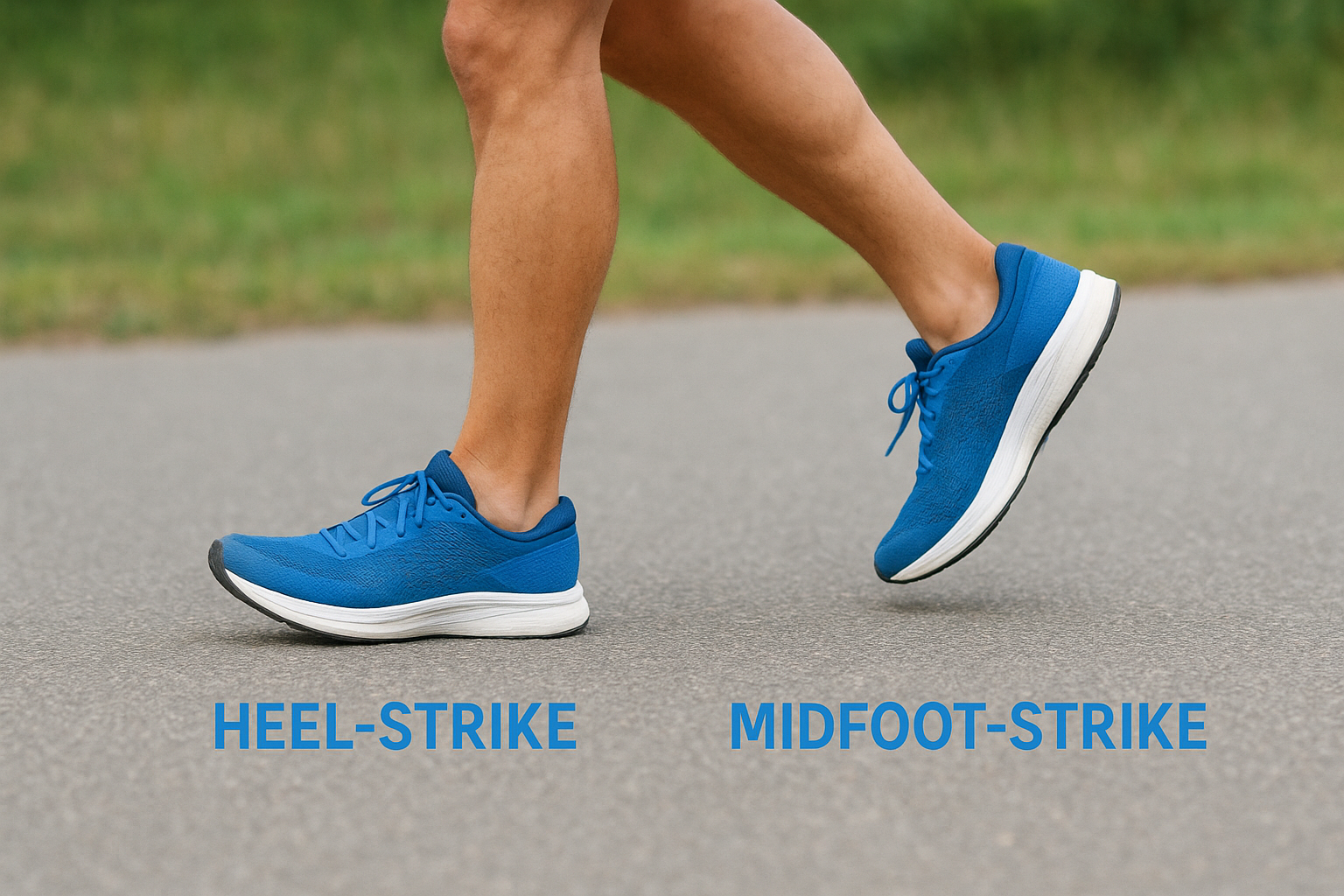
Getting running shoe drop explained properly in the context of your own gait is far more useful than following generic recommendations based on drop numbers alone.
How drop affects your injury risk
High-drop shoes (10 mm or more) reduce the workload placed on your calf complex and Achilles tendon, making them a common recommendation for runners managing Achilles tendinopathy or persistent calf tightness. Low-drop shoes (4 mm or under) reduce the load on your knee, which can benefit runners prone to knee pain, but they significantly increase the demand on your foot and ankle structures in return.
Your injury history and current flexibility matter enormously here. A runner with stiff ankle joints who switches to a low-drop shoe risks overloading the Achilles and developing plantar fasciitis. Conversely, a runner with strong, mobile calves may find a high-drop shoe alters their stride in a way that increases knee strain. Individual biomechanics always outweigh general drop guidelines, which is why a clinical assessment is worth more than any shoe shop recommendation.
How running shoe drop is measured
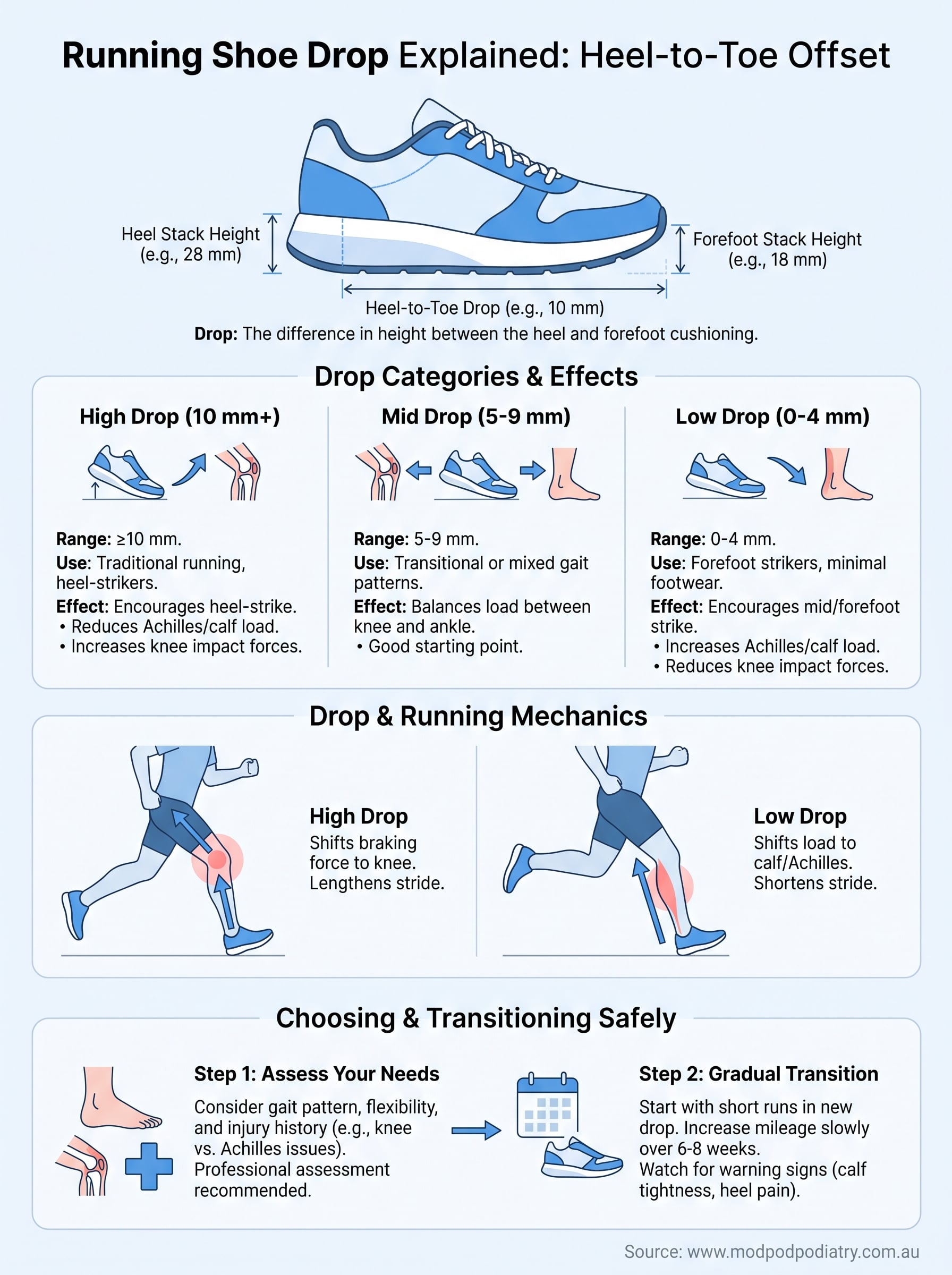
Manufacturers calculate heel-to-toe drop by measuring the stack height at the heel and subtracting the stack height at the forefoot. Stack height refers to the total thickness of material sitting beneath your foot, including the midsole, outsole, and any internal cushioning layers. The resulting number, expressed in millimetres, is the drop. A shoe with 28 mm of heel cushioning and 18 mm under the forefoot, for example, has a 10 mm drop.
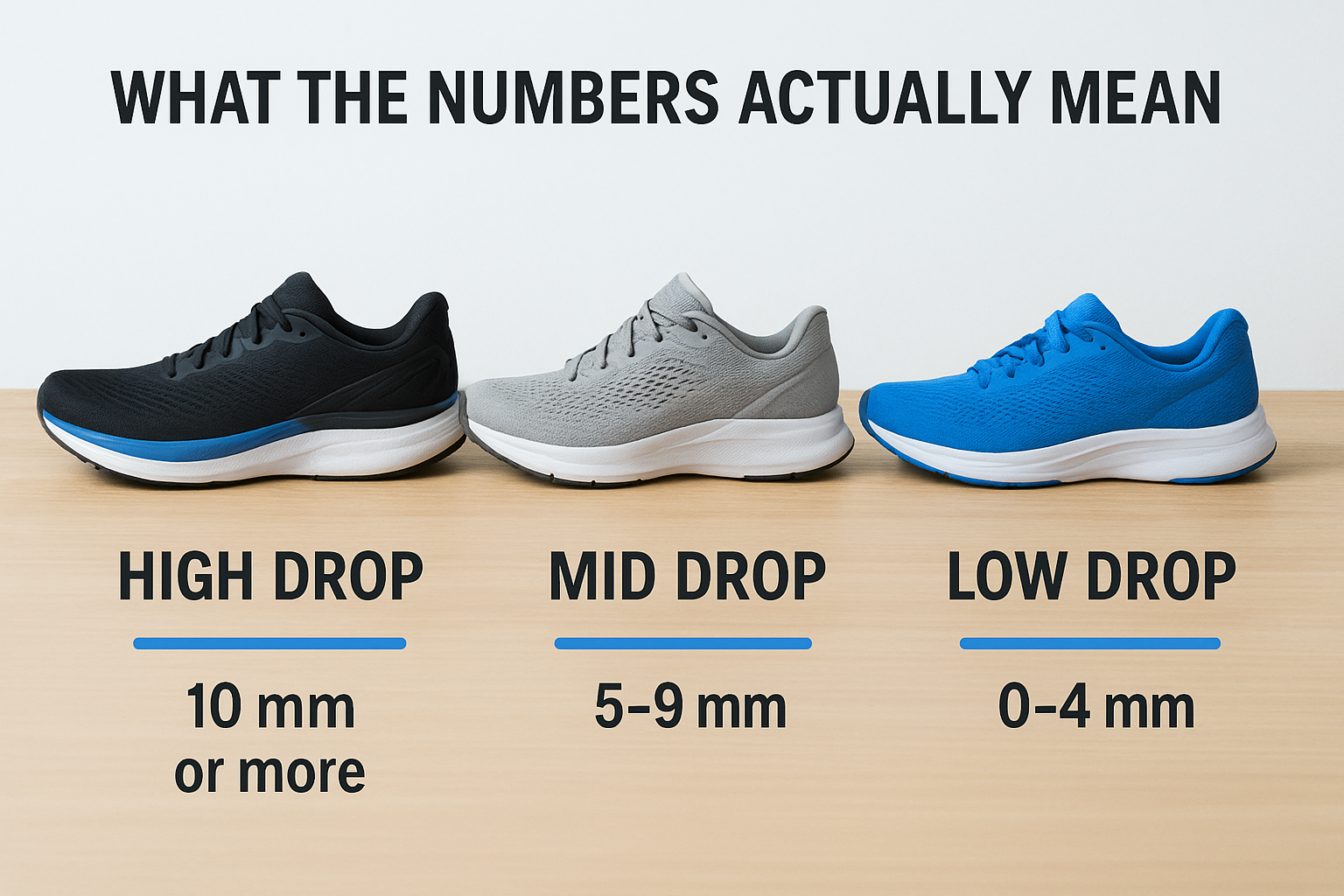
What the numbers actually mean
Drop values generally fall into three bands, and understanding each one gives you a clearer starting point when comparing shoes:
| Category | Drop range | Typical use case |
|---|---|---|
| High drop | 10 mm or more | Traditional running, heel-strikers, Achilles load reduction |
| Mid drop | 5-9 mm | Transitional or mixed gait patterns |
| Low drop | 0-4 mm | Forefoot strikers, minimal footwear preference |
Zero-drop shoes place your heel and forefoot at exactly the same height, closely mimicking barefoot movement. A high-drop shoe lifts your heel well above your toes, which is the standard setup in most conventional running shoes. Knowing where a shoe sits on this scale is the first step in getting running shoe drop explained in a way that is actually relevant to your footwear decisions.
The number itself only becomes meaningful when you match it against your own running mechanics and foot structure.
How different drops change your running mechanics
The offset built into your shoe actively shapes your movement from the moment your foot hits the ground. High-drop shoes tilt your body into a position that encourages your heel to land first, which lengthens your stride and shifts the braking force toward your knee. Low-drop shoes do the opposite: they level your foot position, which shortens your stride and pushes more demand onto your calf and Achilles tendon with each step.
What happens at each drop level
High-drop shoes (10 mm or more) increase knee flexion at contact and reduce ankle dorsiflexion demand. This reduces the stretch placed on your Achilles tendon, which is why runners managing calf or tendon issues often feel immediate relief in them. Low-drop shoes demand significantly more from your posterior chain, particularly your soleus, gastrocnemius, and plantar fascia, because your ankle must absorb more of the landing load independently.
Getting running shoe drop explained in terms of what actually changes in your stride helps you make a more informed choice than simply following a number.
Mid-drop shoes (5-9 mm) split the difference, reducing extreme loading at either the knee or the ankle, which makes them a workable starting point for runners without a strong directional need.
How to choose the right drop for you
Choosing the right drop starts with understanding your current running pattern and what your body does under load. If you have a long history of knee pain, a higher drop may reduce that strain. If Achilles tightness is your issue, dropping too low too quickly will aggravate it. Your injury history is the most reliable starting point when narrowing down which offset will suit you.
Consider your gait and flexibility
Before making a decision, look at where your foot lands naturally. Heel-strikers generally tolerate high-drop shoes better because the shoe complements their existing pattern. If you naturally land toward your midfoot or forefoot, a mid-drop shoe keeps that pattern intact without adding unnecessary calf load. Ankle flexibility also plays a significant role: runners with limited dorsiflexion range should be cautious about moving to low-drop shoes.
Getting running shoe drop explained in the context of your own biomechanics, rather than a generic guideline, is what leads to genuinely useful footwear decisions.
Get a professional assessment
A gait analysis from a sports podiatrist removes the guesswork entirely. At ModPod Podiatry, our clinicians use pressure plate technology to assess exactly how force travels through your foot, giving you a precise recommendation rather than a trial-and-error approach.
How to switch drops safely
Switching your running shoe drop too quickly is a reliable path to calf strain, Achilles tendinopathy, or plantar fasciitis. Your tendons and muscles need weeks to adapt to a new load pattern, so any transition should be gradual and deliberate.
Drop your mileage first
Before you run full sessions in a new drop, wear the new shoe for short runs only while keeping your current shoes for longer training efforts. Increase the share of mileage done in the new shoe by roughly 20-25% every two weeks until you reach a full transition after six to eight weeks.
Rushing a drop transition is one of the most common causes of preventable running injuries that sports podiatrists treat in clinic.
Watch for warning signs
Calf tightness, heel pain, or Achilles soreness following runs in your new shoes are signals to slow the transition, not push through discomfort. Track how your body responds after each session and back off mileage in the new shoe if anything flares up.
Getting running shoe drop explained by a sports podiatrist before you make the switch gives you a personalised transition plan and reduces your risk of injury. Professional guidance is particularly important if you are moving more than 4 mm in either direction.
Key takeaways and next steps
Heel-to-toe drop is one of the most mechanically significant specifications in any running shoe, yet most runners overlook it entirely. Your foot strike pattern, injury history, and ankle flexibility all determine which drop level suits you, and none of those factors are universal. Getting running shoe drop explained in the context of your own body is far more valuable than following a number on a box.
Switching drops incorrectly, or choosing the wrong offset from the start, creates a predictable chain of overuse injuries. Gradual transitions and professional assessment cut that risk significantly. If you are unsure where to start, a sports podiatrist can assess your gait under load and give you a clear recommendation tailored to your running mechanics.
Your next step is to get a proper assessment before your next shoe purchase. Book an appointment at ModPod Podiatry and our sports podiatry team will use pressure plate gait analysis to match you to the right drop for your stride.