
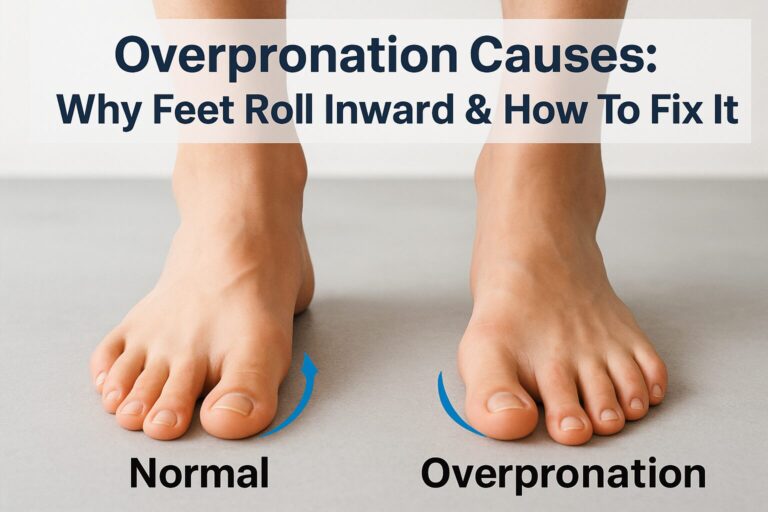
Every time you take a step, your foot naturally rolls inward slightly to absorb impact. That’s normal pronation, and it’s a healthy part of how your body moves. But when that inward roll becomes excessive, it shifts the way force travels through your foot, ankle, knee, and hip, often leading to pain that seems to come out of nowhere. Understanding overpronation causes is the first step toward figuring out why your feet, legs, or even your lower back have been giving you trouble. It’s also one of the most common biomechanical issues we assess at ModPod Podiatry.
The thing is, overpronation rarely has a single cause. It’s usually a combination of factors, your foot structure, muscle strength, footwear choices, and sometimes life stages like pregnancy, all working together. Some of these factors are inherited and difficult to change, while others respond well to targeted treatment and simple adjustments.
In this article, we break down the specific reasons feet roll inward excessively, how to recognise the signs, and what actually works to correct it. Whether you’re dealing with arch pain after a run or noticing your child’s feet turning inward, you’ll find straightforward answers based on what our podiatrists see and treat across our Sydney clinics every week.
Why overpronation matters
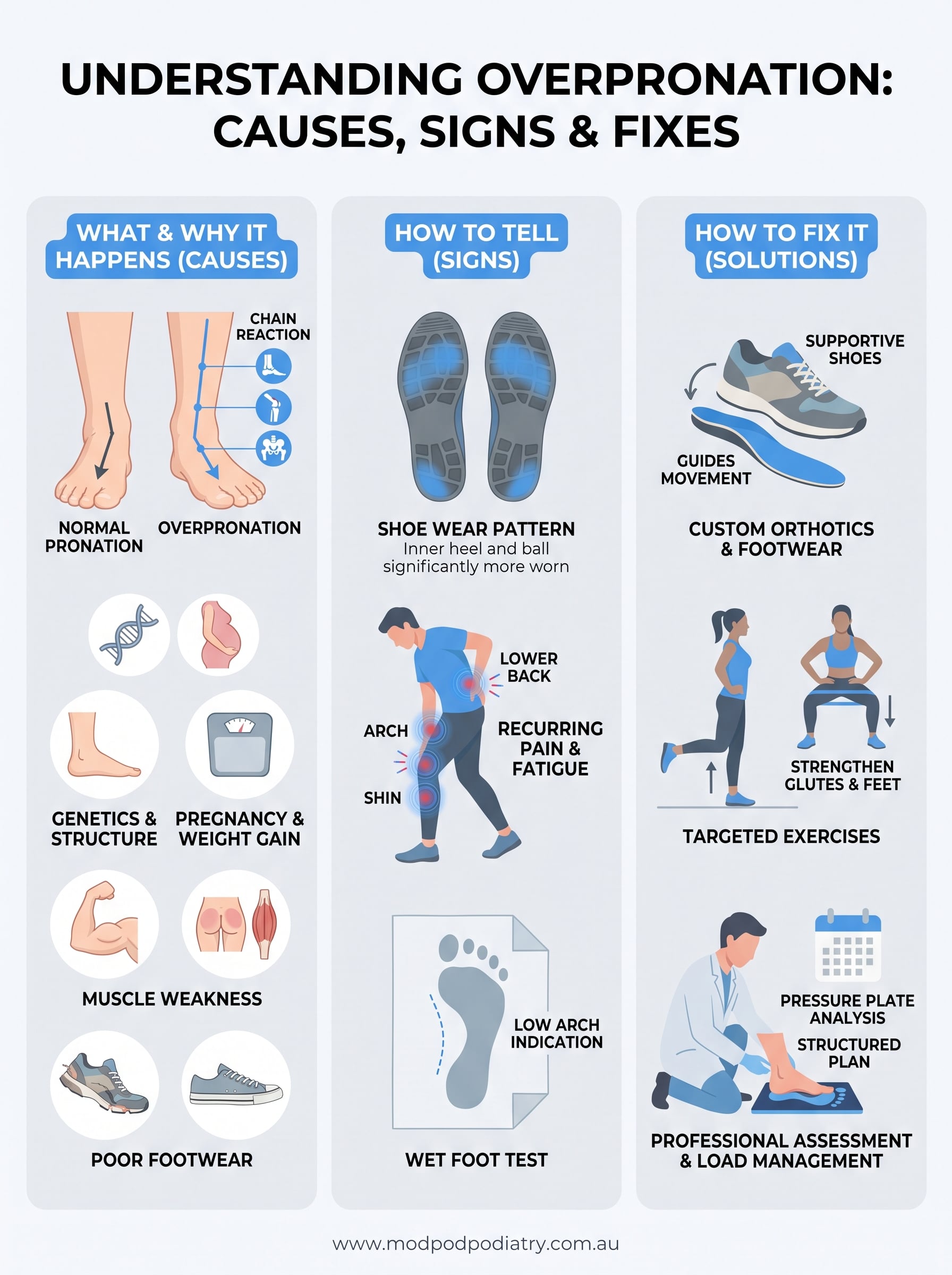
Overpronation does more than cause sore feet. When your foot rolls inward too far with each step, it creates a chain reaction up your entire lower limb. Your ankle, shin, knee, and hip all compensate for the altered movement pattern, and over time, that compensation leads to stress and strain in places that have nothing to do with your foot. That’s why patients often come to us with knee pain or back pain and leave with orthotics.
The foot is the foundation of everything above it. When the foundation shifts, the whole structure has to adjust.
The injuries linked to overpronation
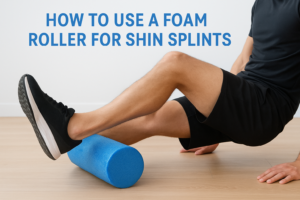
Research consistently links overpronation to a range of overuse injuries, particularly in people who run, play sport, or spend long hours on their feet. Plantar fasciitis, shin splints, patellofemoral pain syndrome (runner’s knee), and Achilles tendinopathy are among the most common conditions that develop when excessive inward rolling goes unaddressed. These injuries tend to build slowly, which means many people push through early warning signs until the pain becomes harder to ignore.
The connection between overpronation causes and these injuries isn’t always obvious at first. You might feel pain in your knee and never think to look at how your foot moves. That’s exactly why a biomechanical assessment matters. It connects the dots between where the pain appears and where the problem actually begins.
Why it affects more than just athletes
Overpronation isn’t exclusive to runners. Standing on hard surfaces for long shifts, carrying extra weight during pregnancy, or simply having a foot structure inherited from a parent can produce the same excessive inward roll. The difference is the timeline. Athletes tend to notice symptoms faster because of repetitive load, while non-athletes may develop gradual fatigue, discomfort, or postural changes over months or years before seeking help.
What overpronation is and what it is not
Overpronation means your foot rolls inward past the normal range with each step or stride. A healthy foot naturally pronates slightly, dropping the arch as your heel strikes the ground to help absorb shock. The problem starts when that inward movement goes too far or continues for too long in the gait cycle, putting strain on structures that were not designed to handle it.
The line between normal and excessive pronation
Most people pronate to some degree, and that is completely normal. The difference lies in how far and how long the foot rolls. Normal pronation corrects itself as you push off; overpronation does not. Your foot stays in that rolled-in position longer, which changes the angle of your ankle, shin, and knee.
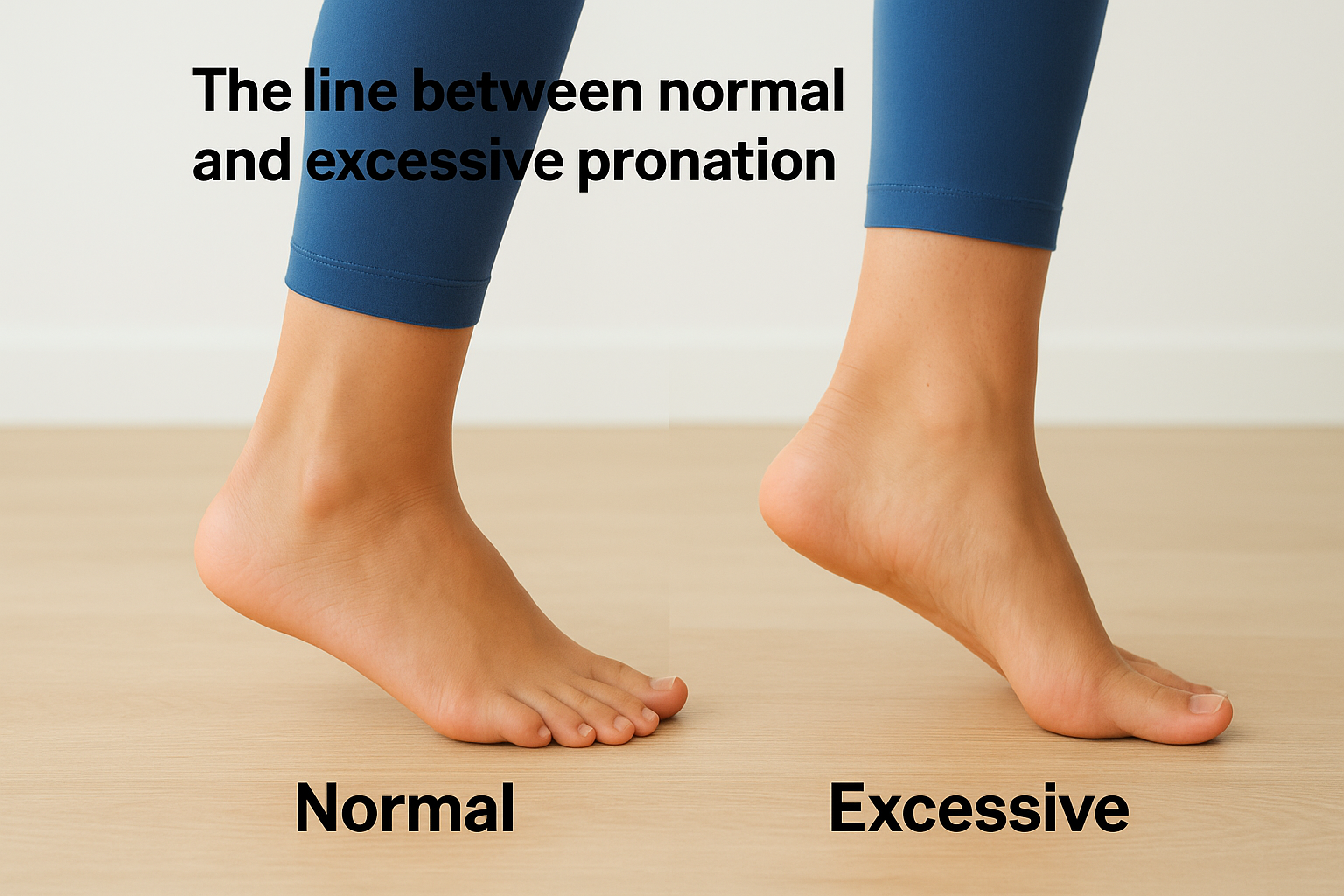
Pronation is not the problem. The problem is when it goes beyond what your body can comfortably absorb.
What overpronation is not
Overpronation is not the same as flat feet, though the two often appear together. You can have low arches without overpronating, and you can overpronate with a moderate arch. Confusing the two leads people to buy arch-support insoles that do not address the actual movement problem.
Understanding this distinction matters because overpronation causes vary depending on your foot structure, muscle strength, and movement patterns, not arch height alone.
Overpronation causes in everyday life and sport
Several factors drive overpronation causes, and they rarely act in isolation. Your foot structure, muscle strength, and footwear all play a role in how much your foot rolls inward with each step, whether you’re running a 10k or standing at a checkout for eight hours.
Structural and physical factors
Genetics is a significant contributor. If one or both of your parents have flat feet or low arches, there is a strong chance your foot structure sits similarly. Flat feet reduce the arch’s ability to control inward movement, which directly increases the degree of pronation. Pregnancy and weight gain also affect pronation by increasing load through the feet and relaxing ligaments, particularly through the hormone relaxin during pregnancy.
Your foot structure is inherited, but how much it affects your movement depends on what you do with it.
Muscle weakness and footwear
Weak hip abductors and glute muscles allow the thigh to rotate inward, which pulls the knee and foot into a pronated position. Your calf and intrinsic foot muscles also matter; when they fatigue or lack strength, the arch collapses further under load during sport or long periods on your feet.
Common footwear issues that increase overpronation risk:
- Worn-out running shoes with compressed midsoles that no longer support your foot
- Flat canvas shoes or thongs with no arch structure
- High heels worn regularly, which shorten calf muscles over time
How to tell if you overpronate
Spotting overpronation does not always require a clinic visit. Several reliable self-checks give you a clear starting picture before you book an appointment. That said, these checks identify clues, not diagnoses, and the overpronation causes behind your specific case may need a trained eye to fully understand.
Signs to look for at home
Start with your shoes. Flip a worn pair over and check the sole wear pattern. Overpronators typically wear through the inner edge of the heel and ball of the foot faster than the outer edge. If the inner sole compresses more than the outer side, that is a strong indicator your foot rolls inward excessively.
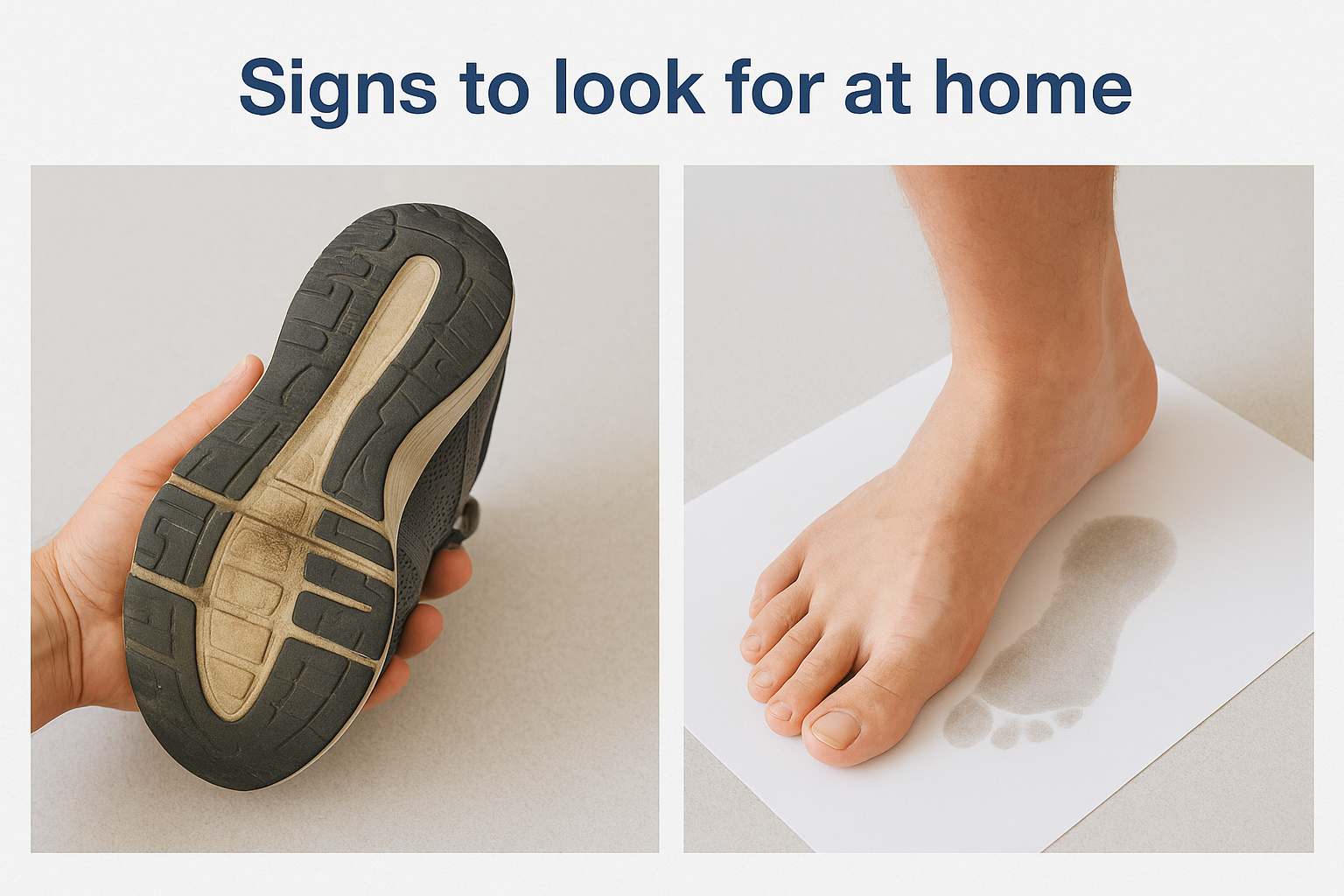
Your shoes often show a movement pattern your body has been repeating for years before symptoms appear.
You can also do a wet foot test: wet your foot and step onto a flat surface or paper. A full footprint with little to no visible arch curve suggests low arch structure and a higher likelihood of overpronation.
When to see a podiatrist
If you notice recurring pain in your arch, shin, knee, or Achilles, or your shoe wear pattern looks uneven, a professional gait assessment removes the guesswork. A podiatrist uses pressure plate analysis to measure exactly how your foot loads during movement, giving you precise answers rather than assumptions.
How to fix overpronation and stop flare-ups
Treating overpronation starts with understanding what’s driving it in your case. Because overpronation causes vary from person to person, there is no universal fix. The right approach depends on your foot structure, muscle strength, and how you load your feet during daily activity or sport.
Orthotics and footwear
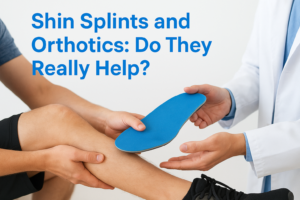
Custom orthotics are the most direct way to control excessive inward rolling. A podiatrist prescribes them based on your specific gait pattern and pressure distribution, not a generic arch profile. Supportive footwear reinforces this. Key habits to maintain:
- Replace running shoes every 500-800 kilometres
- Avoid thongs and flat canvas shoes for long shifts on hard surfaces
- Choose lace-up shoes with a firm heel counter for everyday wear
The right orthotic does not prop your arch up, it guides your foot through a more efficient movement pattern.
Strengthening and load management
Targeted exercises that strengthen your glutes, hip abductors, and intrinsic foot muscles reduce the pull that drives your foot inward. Single-leg calf raises and resistance band hip work are effective starting points that require no gym equipment.
Reducing your training load temporarily during a flare-up allows inflamed tissue to settle before you return to full activity. A podiatrist can build you a structured rehabilitation plan that addresses both the movement problem and the pain it causes.
Next steps
Overpronation causes range from inherited foot structure to muscle weakness and worn-out footwear, and most cases respond well to the right combination of treatment and exercise. Understanding what drives your specific pattern is more useful than applying a generic fix, because the solution that works for one person may do nothing for another.
If you’ve noticed uneven shoe wear, recurring arch or knee pain, or fatigue that doesn’t match your activity level, a professional gait assessment gives you a clear picture of what’s happening and why. Our podiatrists use pressure plate technology and biomechanical assessment to identify exactly where the problem starts and build a treatment plan around your individual needs, not a standard template.
Book an appointment online at any of our five Sydney locations and get straightforward answers about your feet. Same-week appointments are available across the clinics, and no GP referral is required to get started.