


If you’ve noticed arch pain when walking, you’re probably doing what most people do, pushing through it, hoping it sorts itself out. Sometimes it does. But when that ache in the middle of your foot keeps showing up, it’s usually your body flagging a problem that won’t resolve on its own.
The arch of your foot absorbs enormous force with every step. When something disrupts that system, whether it’s a structural issue, overuse, or the wrong footwear, pain is often the first and only warning sign. The tricky part is that several different conditions can cause it, and each one needs a different approach. At ModPod Podiatry, we see patients across our Sydney clinics every week with this exact concern, and the earlier it’s assessed, the simpler it is to treat.
This article covers the most common causes of arch pain during walking, what you can do at home for relief, and the signs that mean it’s time to get a professional assessment. Whether you’re dealing with a niggling ache or something that’s started affecting your daily routine, you’ll walk away with a clearer picture of what’s going on, and what to do about it.
What arch pain when walking feels like
Arch pain when walking isn’t a single, predictable sensation. The location, intensity, and timing of your discomfort can vary significantly depending on the underlying cause, which is why paying close attention to those details matters when you’re trying to work out what’s happening. Understanding your own symptoms gives both you and a podiatrist a much more useful starting point before any formal assessment takes place.
Where and when you feel it
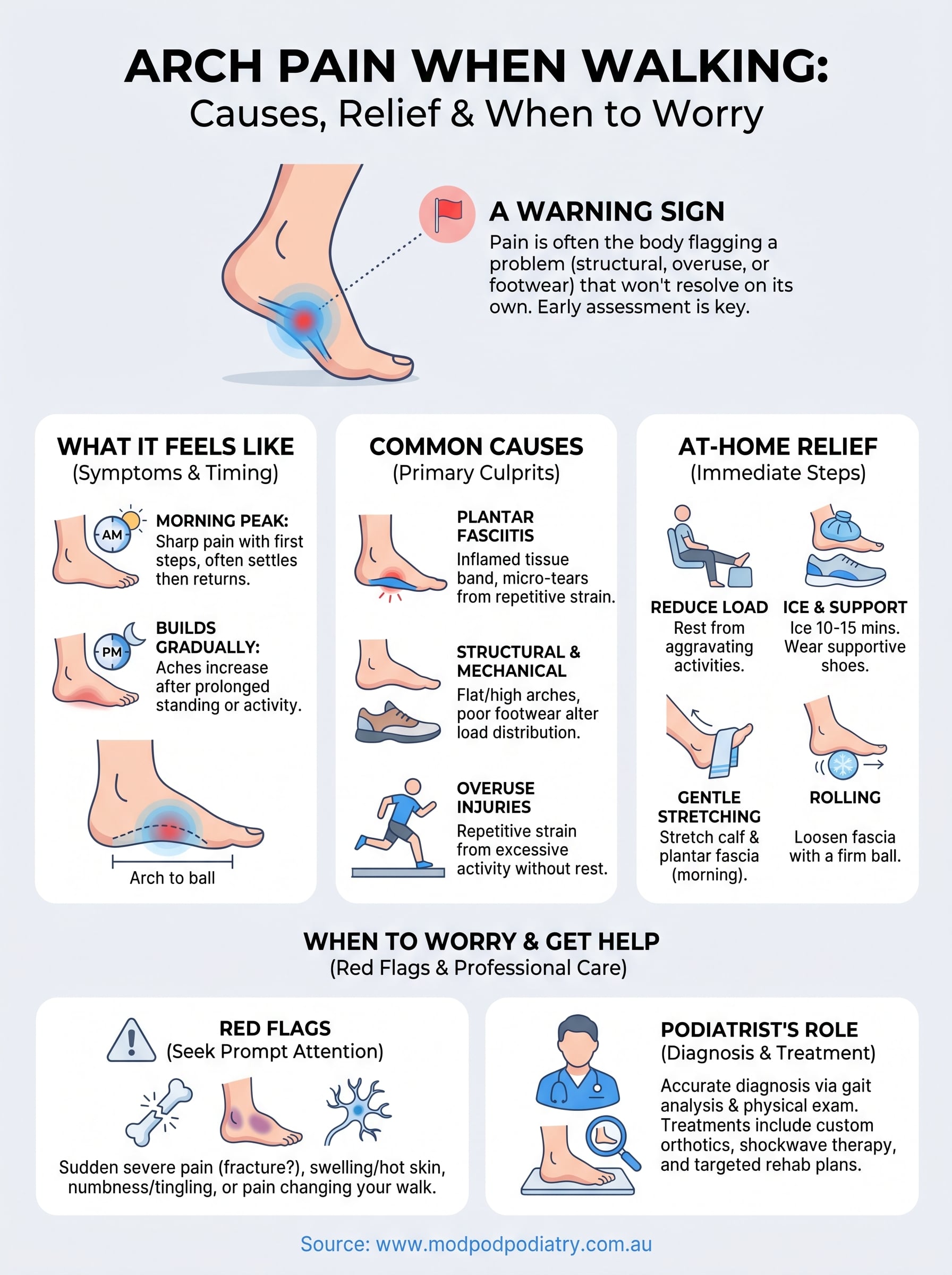
The arch spans the inside bottom of your foot, running from the heel through to the ball. Most people describe the sensation as a burning, aching, or sharp pain somewhere along that line. Some notice it concentrated right at the heel where the arch begins; others feel it more centrally through the foot or closer to the ball. The exact location is a meaningful clue and worth noting before you see a professional.
Where your pain sits, and when it peaks, tells a podiatrist a great deal about the likely cause before any formal examination even begins.
How it changes throughout the day
For many people, arch pain is worst in the morning, particularly with those first few steps out of bed. It can settle after a few minutes of walking, only to return after prolonged activity or time on your feet. This predictable pattern is one of the most recognisable signs of plantar fasciitis, the most common driver of arch discomfort.
Your pain may instead build gradually across the day, especially after extended periods of standing or following a long walk or run. If that sounds familiar, overuse or a problem with your underlying foot mechanics is often involved. Tracking when your pain peaks, what aggravates it, and whether rest brings relief gives your podiatrist a clearer picture to work from right from the start.
Common causes of arch pain when walking
Several conditions can trigger arch pain when walking, and identifying the right one matters because each cause responds to a different treatment approach. The three most common culprits are plantar fasciitis, structural foot problems, and overuse injuries, each with distinct characteristics that set them apart.
Plantar fasciitis
This is the most frequent cause of arch and heel pain. The plantar fascia is a thick band of tissue running along the bottom of your foot. When it becomes inflamed through repetitive strain, micro-tears develop and produce that sharp, burning sensation most noticeable with your first steps of the day. Runners, people who stand for long hours, and those wearing unsupportive footwear are particularly at risk.

Plantar fasciitis is the single most common diagnosis for heel and arch pain seen in podiatry practice.
Structural and mechanical factors
Flat feet and high arches both alter the way load is distributed across your foot during walking. If you pronate excessively (rolling inward) or supinate outward, your arch absorbs force unevenly with every step. Poor footwear choices compound the problem, as shoes without adequate support force the surrounding muscles and tendons to work harder, leading to overuse and pain over time.
Quick self-checks and red flags
Before booking an appointment, you can run a few simple checks at home to better understand your symptoms. Press firmly along the inside of your foot, starting at the heel and moving toward the ball. Pain that spikes at a specific point, particularly near the heel, often points to plantar fasciitis. Also note whether your arches appear very flat or unusually high when you stand, as both can drive the mechanical problems behind arch pain when walking.
Warning signs that need prompt attention
Some symptoms go beyond routine arch discomfort and signal something more serious. Sudden, severe pain following a misstep or impact may indicate a stress fracture and needs urgent assessment. Swelling, bruising, or skin that feels hot to the touch are not typical of plantar fasciitis alone and warrant a professional review sooner rather than later.
If your pain doesn’t improve after a week of rest, or keeps returning despite changes to your footwear, that’s your cue to seek a proper diagnosis.
Numbness or tingling running into your toes can indicate nerve involvement, and pain that forces you to change the way you walk is placing extra strain on your knees and hips. Don’t let it linger.
What you can do at home for relief
Several straightforward strategies can reduce arch pain when walking before you see a podiatrist. The most immediate step is reducing the load on your foot by cutting back on activities that aggravate it, particularly running, long walks, or extended periods of standing on hard surfaces. Swapping unsupportive footwear for shoes with adequate arch support and cushioning can make a noticeable difference within days.
Managing pain and tightness
Icing the arch for 10 to 15 minutes after activity helps reduce inflammation and settles acute flare-ups. Apply a cloth between the ice pack and your skin to avoid irritation. Over-the-counter anti-inflammatory medication, such as ibuprofen, can assist with discomfort short-term, though it addresses symptoms rather than the underlying cause.
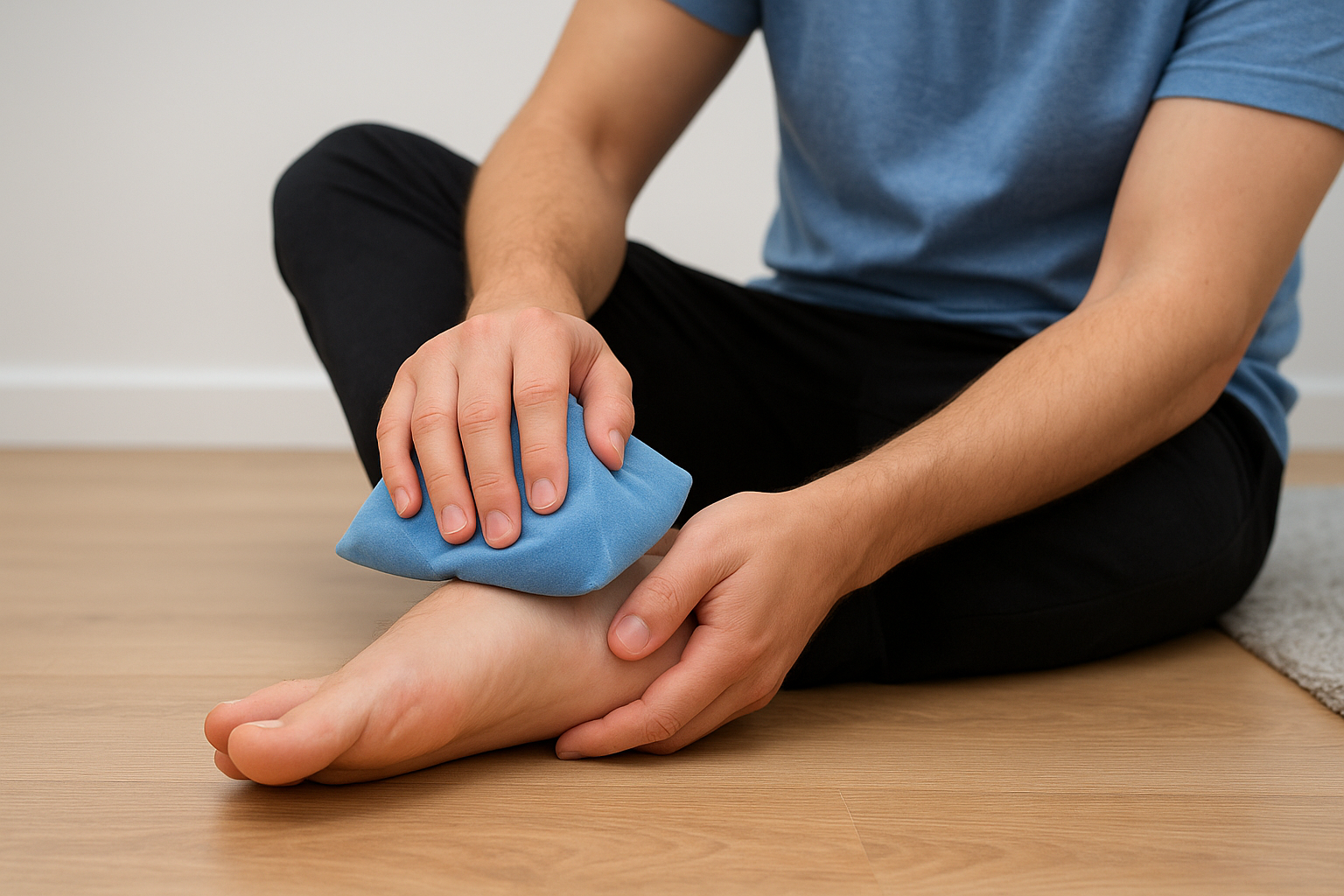
Stretching the plantar fascia and calf muscles each morning before your first steps can significantly reduce that sharp initial pain.
Stretch by pulling your toes gently toward your shin while seated, holding for 30 seconds on each foot. Rolling a firm ball or frozen water bottle under your arch also loosens the fascia effectively. These measures work well as short-term relief, but they won’t correct the structural or mechanical problem driving your pain in the first place.
How a podiatrist diagnoses and treats it
When home remedies fall short, a podiatrist can pinpoint exactly what’s driving your arch pain when walking and build a treatment plan around the actual cause. The process is straightforward and targeted, giving you clear answers rather than guesswork.
What the assessment involves
Your podiatrist will ask detailed questions about when your symptoms started, what aggravates them, and how your pain changes throughout the day. From there, they’ll examine your foot posture, range of motion, and walking pattern using pressure plate technology and gait analysis to capture objective data about how your foot functions under real load.
A biomechanical assessment shows your podiatrist how your foot performs in motion, not just how it looks while standing still.
A physical examination identifies specific tender points and tissue tightness alongside structural characteristics that narrow the diagnosis considerably before any treatment begins.
Treatment approaches
Custom orthotics correct the underlying mechanics driving your pain and are one of the most effective long-term solutions available. Your podiatrist may also prescribe targeted stretching programs, shockwave therapy for persistent cases, or specific footwear modifications based on your foot type and the severity of your condition.
Getting back to walking comfortably
Most cases of arch pain when walking respond well to treatment, particularly when you address them before they become ingrained habits or lead to secondary problems in your knees and hips. The key is accurate diagnosis followed by consistent management, whether that’s correcting your foot mechanics with orthotics, adjusting your footwear, or working through a structured rehabilitation plan. Pushing through ongoing pain rarely leads anywhere useful, and it often extends your recovery unnecessarily.
Your foot carries your full bodyweight across thousands of steps every day. Giving it the right support makes a significant difference to how you feel not just while walking, but across every activity you do. If your arch pain has been hanging around for more than a week or keeps coming back despite your best efforts at home, a professional assessment is the most direct path forward. Book an appointment with the team at ModPod Podiatry and get a clear answer about what’s driving your discomfort.

