
That sudden, gripping pain in your toes, whether it hits mid-run, in bed at night, or halfway through a long shift on your feet, is more than just bad luck. If you’re searching for how to prevent toe cramps, you’re probably dealing with a recurring problem that’s starting to interfere with sleep, sport, or everyday comfort. The good news is that toe cramps almost always have identifiable triggers, and once you know what they are, prevention becomes straightforward.
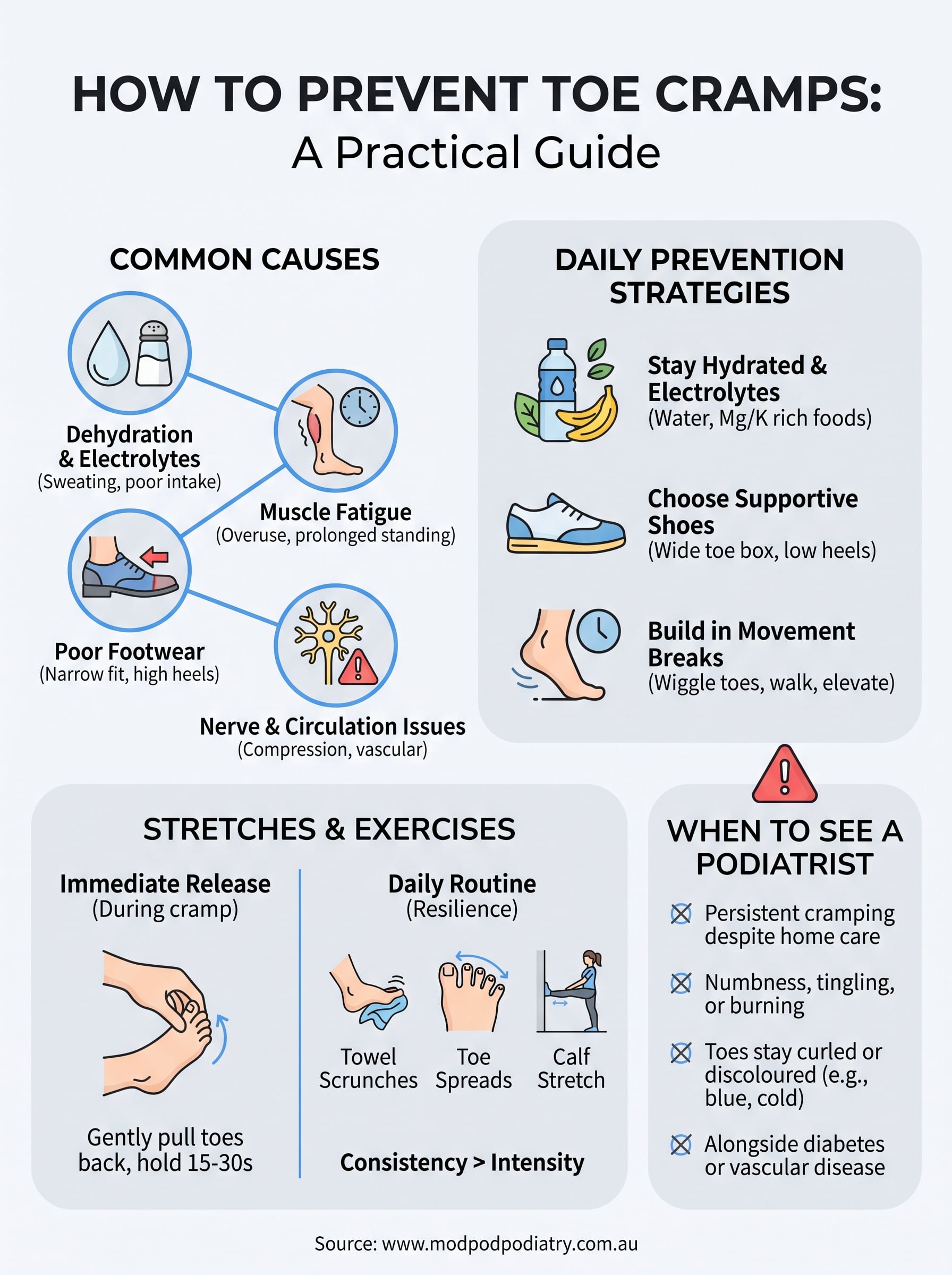
Most toe cramps come down to a handful of causes: dehydration, muscle fatigue, poor footwear fit, or underlying issues like nerve compression or reduced circulation. Fixing them isn’t about guesswork. It’s about matching the right fix, whether that’s a specific stretch, a hydration adjustment, or a footwear change, to what’s actually causing your cramps.
In this guide, we’ll walk through the common causes behind toe cramps, share practical prevention strategies including stretches you can do at home, and explain when persistent cramping needs a proper podiatry assessment rather than a home remedy. Our podiatrists across Sydney see this issue regularly, and we’ll draw on that clinical experience to give you answers you can actually use.
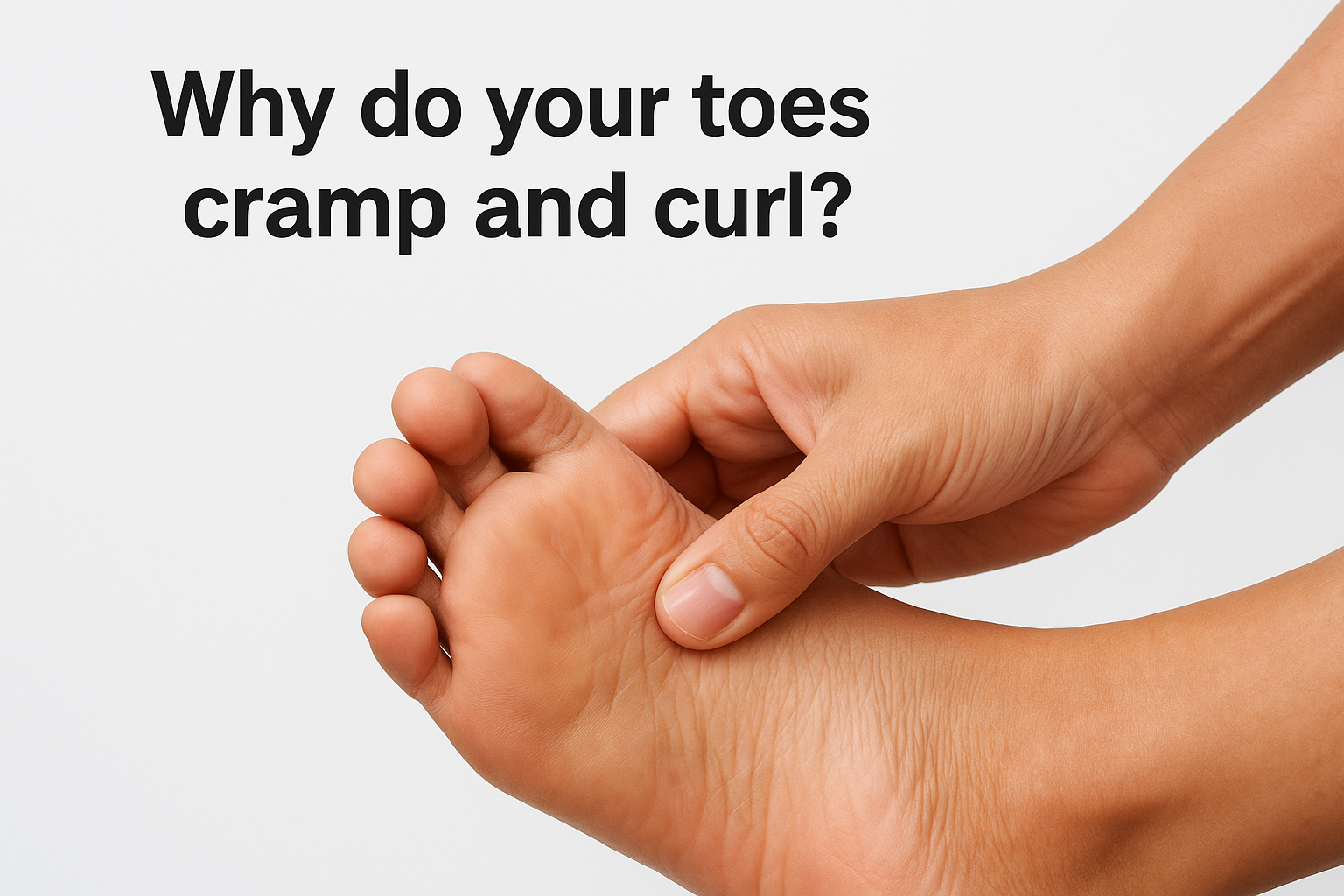
Why do your toes cramp and curl?
A toe cramp happens when the small muscles in your foot suddenly and involuntarily contract, pulling your toes into a tight, curled position that can last seconds or minutes. These muscles, the lumbricals and interossei, are some of the smallest in your body, but they work hard every time you walk, run, or stand. When they’re pushed past their limit or starved of what they need to function properly, they seize up. Understanding why toes cramp is the first step to stopping it happening again.
Dehydration and electrolyte imbalance
Muscles rely on a steady balance of sodium, potassium, calcium and magnesium to contract and relax smoothly. When you sweat heavily during exercise, skip meals, or simply don’t drink enough water through the day, that balance tips and your toe muscles become far more likely to misfire. This is one of the most common causes we see in active patients, particularly runners and gym-goers who train in Sydney’s heat without replacing fluids or electrolytes properly.
Muscle fatigue and overuse
Standing all day at work, hiking further than usual, or ramping up your training load too quickly all place repetitive strain on the small muscles that stabilise your toes. Fatigued muscles lose their normal coordination, and that’s when cramping and involuntary curling tend to strike, often at night once you’ve finally stopped moving.
Toe cramps are rarely random. They’re your foot muscles telling you something specific went wrong, whether that’s fluid loss, fatigue, or a shoe that doesn’t fit.
Footwear that squeezes or destabilises your toes
Shoes with a narrow toe box force your toes into an unnatural, cramped position for hours at a time, and high heels shift your weight forward onto the ball of the foot, overloading the same small muscles. Worn-out running shoes that no longer support your gait can have a similar effect, forcing your toes to work overtime to compensate for lost stability.
Nerve compression and circulation problems
Sometimes the cause sits deeper than dehydration or fatigue. Conditions like Morton’s neuroma, diabetic neuropathy, or lumbar nerve compression can all trigger cramping and curling in the toes, as can poor circulation from vascular disease or tight, restrictive socks and hosiery. Persistent night-time cramping in particular is often linked to nerve or circulation issues rather than simple fatigue.
Common causes at a glance
| Cause | Typical trigger | Common pattern |
|---|---|---|
| Dehydration/electrolytes | Heavy sweating, low fluid intake | Cramps during or after exercise |
| Muscle fatigue | Prolonged standing, sudden activity increase | Cramps at end of day or overnight |
| Poor footwear fit | Narrow toe box, high heels, worn shoes | Cramps during wear or straight after removing shoes |
| Nerve compression | Neuroma, neuropathy, spinal nerve issues | Cramps with numbness, tingling, or burning |
| Circulation issues | Vascular disease, tight socks | Cramps with cold or discoloured toes |
Understanding which of these applies to you matters because the fix looks completely different depending on the cause. Someone dehydrated after a long run needs fluids and electrolytes, not new orthotics, while someone with nerve-related cramping needs a proper assessment, not just more stretching.
How to prevent toe cramps in daily life
Prevention starts with small, consistent changes rather than a single fix. Once you’ve got a sense of what’s triggering your cramps, these daily habits address the most common causes: fluid loss, poor footwear, and unrelieved muscle strain.
Stay properly hydrated
Aim for at least two litres of water daily, more if you’re active or the weather’s warm, and top up electrolytes with a pinch of salt in water or a low-sugar sports drink after heavy sweating. Magnesium and potassium rich foods, think bananas, leafy greens, nuts and avocado, support muscle function and are worth adding to your regular diet if cramping is frequent. Skipping meals or crash dieting often triggers electrolyte swings that show up as toe cramps within days.
Choose footwear that supports your toes
Swap narrow, pointed shoes for ones with a wide toe box that lets your toes sit flat and spread naturally. Retire running shoes after roughly 500-600 kilometres, since worn-out cushioning and support force your toes to overcompensate. Avoid high heels for extended periods, and if you must wear them, alternate with flat, supportive shoes throughout the day.
Fixing footwear fit solves more toe cramp cases than any stretch or supplement ever will.
Build movement breaks into your day
Prolonged standing or sitting without moving your feet lets fatigue build unnoticed in the small toe muscles. Break this pattern with regular movement:
- Wiggle and spread your toes every hour if you’re desk-bound or standing all day
- Walk barefoot on grass or sand occasionally to naturally strengthen and mobilise toe muscles
- Elevate your feet briefly during breaks to support circulation
- Avoid tight socks, stockings or compression wear that isn’t medically prescribed
Thinking about how to stop toe cramps before they start means treating hydration, footwear and movement as a daily routine rather than a reaction to pain. Most patients who make these three changes consistently see a noticeable drop in cramping frequency within a few weeks, particularly if dehydration or footwear was the underlying driver.
Stretches and exercises to ease toe cramps
Once a cramp has already gripped your toes, the priority is releasing the muscle fast rather than working out why it happened. Gently grab the cramping toe and pull it back towards your shin, holding for 15 to 30 seconds while you breathe through the discomfort. Standing up and walking slowly on a flat surface afterwards helps restore normal blood flow and signals the muscle to relax. Immediate relief techniques like these won’t stop cramps recurring, but they shorten how long each episode lasts.
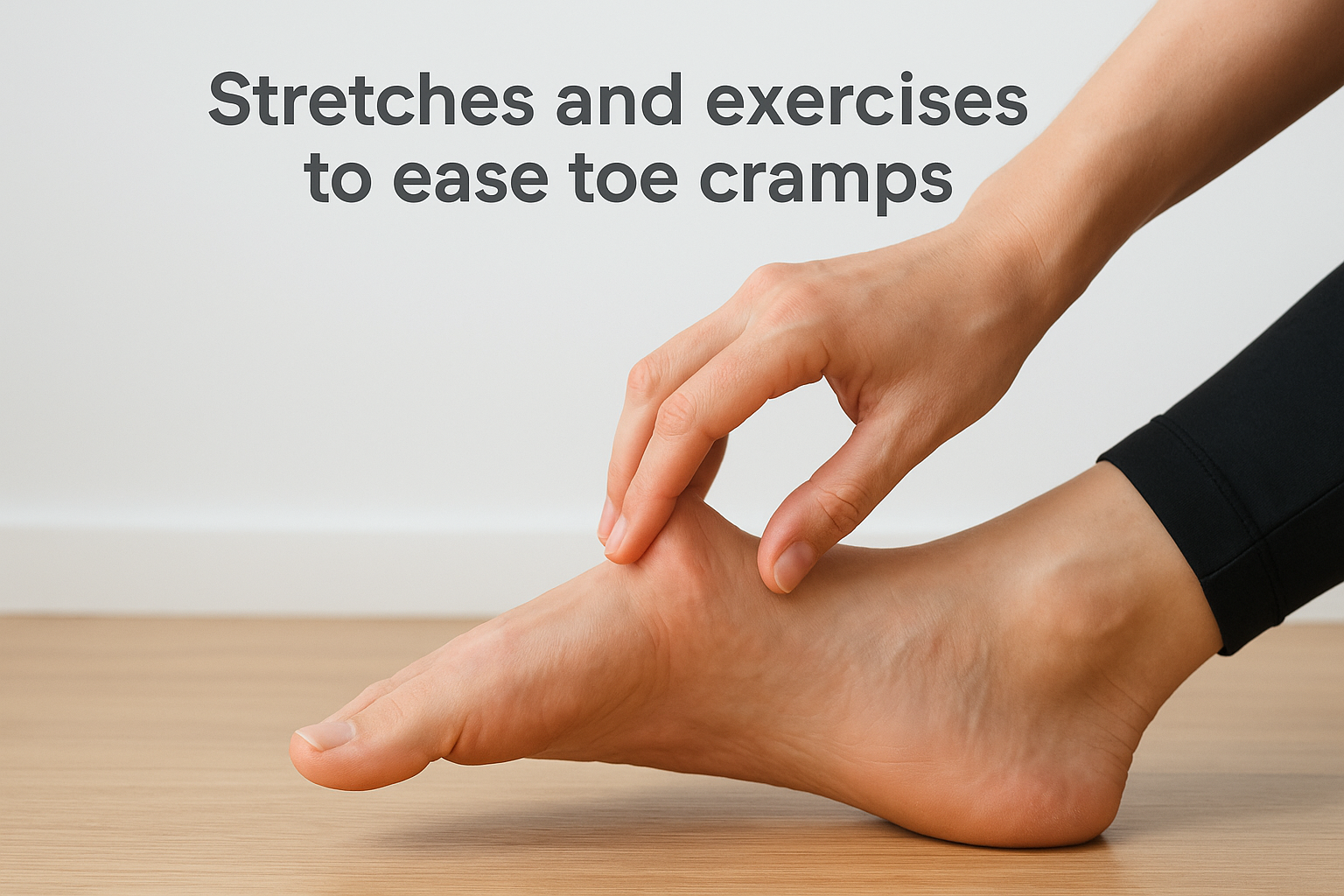
Beyond the moment of pain, a short daily routine builds resilience in the small muscles that cause trouble. Toe strengthening exercises train the lumbricals and interossei to fire correctly under load, which is exactly what breaks down when they’re fatigued or dehydrated.
A cramping toe needs release right now, but a strong, flexible foot needs a routine you repeat every day, not just when it hurts.
A simple five-minute routine
Run through this sequence once in the morning and once before bed if cramps tend to strike overnight:
- Towel scrunches: place a small towel on the floor and scrunch it toward you using only your toes, ten reps each foot
- Toe spreads: sit down, lift your foot, and spread your toes apart as wide as possible, hold for five seconds, repeat ten times
- Marble or coin pick-ups: pick up small objects with your toes and drop them into a bowl, ten to fifteen reps
- Calf and plantar fascia stretch: lean against a wall with one leg back, heel flat, holding 30 seconds each side, since tight calves often transfer strain down into the toes
- Ankle circles: rotate each ankle slowly in both directions ten times to keep the whole lower limb loose
Consistency matters more than intensity here. Doing this routine three to four times a week, alongside the hydration and footwear changes covered earlier, addresses both the trigger and the underlying muscle weakness that makes cramping more likely in the first place.
When to see a podiatrist about toe cramps
Most toe cramps settle down once you’ve sorted hydration, footwear and muscle fatigue, but not all of them do. Persistent toe cramps that keep returning despite consistent prevention efforts are your body’s way of flagging something that needs a proper look, not just more stretching at home.
Warning signs that need assessment
Certain patterns point beyond simple fatigue or dehydration and warrant a podiatry appointment rather than another week of home remedies:
- Cramping paired with numbness, tingling or burning in the toes or forefoot
- Toes that stay curled or clawed even after the cramp itself has passed
- Cramps affecting one foot only, especially with colour change or coldness
- Cramping alongside known diabetes, vascular disease or nerve conditions
- No improvement after several weeks of proper hydration, footwear changes and stretching
- Cramps disrupting sleep most nights or limiting your ability to walk or exercise
If cramping keeps returning despite doing everything right at home, that’s your cue to get it properly assessed rather than persisting with guesswork.
What a podiatry assessment actually involves
Getting cramping toes properly diagnosed usually starts with a straightforward conversation about when cramps occur, what you’ve already tried, and any other symptoms like numbness or swelling. From there, a podiatrist checks your gait, foot structure and footwear fit, and may use pressure plate analysis to see exactly how weight moves through your foot with each step. Nerve function and circulation get tested where nerve compression or vascular issues are suspected, since these need a different treatment path entirely to simple stretching or hydration.
Seeing someone sooner rather than later matters because underlying causes like Morton’s neuroma or early neuropathy respond far better to early management. Many patients are also surprised to learn that assessment and treatment for persistent foot pain, including recurrent cramping, can fall under a Medicare Chronic Disease Management (formerly EPC) plan if their GP refers them, which reduces the out-of-pocket cost considerably. Ongoing, unexplained toe cramping isn’t something to push through indefinitely. It’s worth ruling out the deeper causes properly.
Keeping your feet cramp-free
Toe cramps feel alarming in the moment, but they’re rarely mysterious once you look at the pattern. Consistent hydration, well-fitted shoes, and a few minutes of daily toe strengthening resolve most cases without any need for medical intervention. Sorting through dehydration, fatigue, footwear, and the rarer nerve or circulation causes gives you a clear path forward instead of guessing at remedies each time your toes seize up.
Give the daily habits and stretches from this guide a few consistent weeks before judging whether they’re working. If cramping keeps returning despite doing everything right, or you notice numbness, colour change, or toes that won’t uncurl properly, that’s persistent cramping worth having checked properly rather than managed indefinitely at home. Our podiatrists across Sydney assess gait, footwear, and nerve function to find the actual cause. If home fixes haven’t worked, book an appointment online and get it sorted properly.