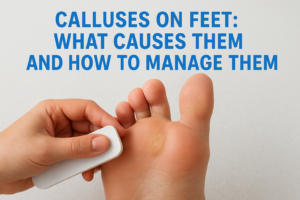


Shin pain that flares up every time you increase your mileage. A sore heel that won’t settle no matter how much you stretch. An ankle that never quite felt right after last season’s sprain. These are the kinds of niggles that send active people searching for a podiatrist sports clinic rather than just resting and hoping for the best.
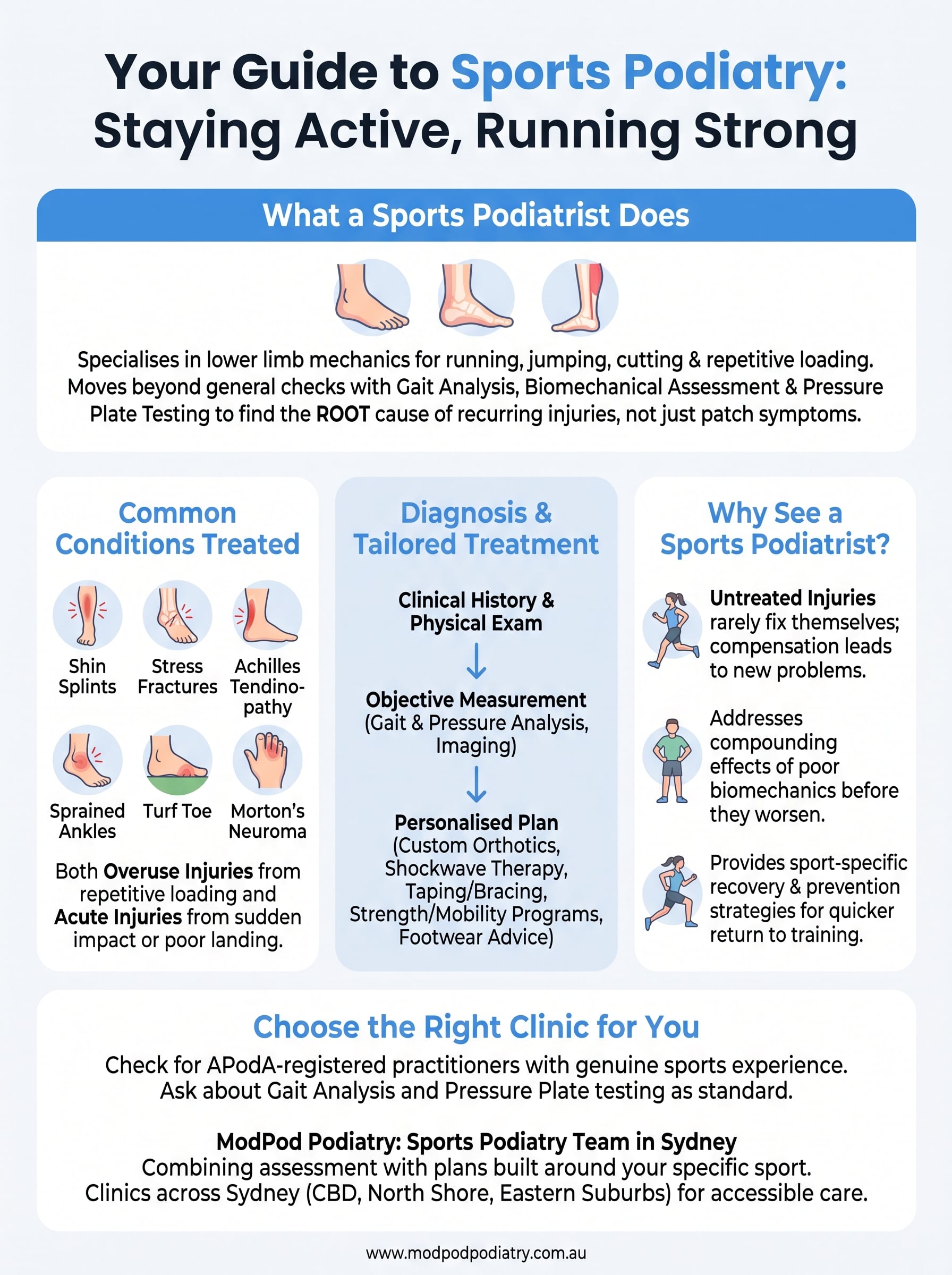
A sports podiatrist deals specifically with how your feet, ankles and lower limbs cope with the demands of running, jumping, cutting and repetitive loading. Unlike a general check-up, this involves gait analysis, biomechanical assessment and often pressure plate testing to work out exactly why an injury keeps recurring, not just how to patch it up for one more game or race.
This guide walks through what a sports podiatrist near me search should actually turn up: the conditions they treat, from shin splints and stress fractures to Achilles tendinopathy and plantar fasciitis, and the signs that mean it’s time to book in rather than push through. If you’re on Sydney’s north shore or anywhere across the city, knowing what proper sports medicine podiatry care looks like helps you get back to training sooner and stay there.
Why seeing a sports podiatrist matters
Most active people wait far too long before booking an appointment. You tape the ankle, swap running shoes, cut back on hill sessions, and hope the ache fades on its own. Sports injuries rarely resolve through guesswork, though. A sports podiatrist looks at the mechanics behind the pain, not just the symptom sitting on the surface, which is why so many niggles that limp along for months clear up within weeks of proper assessment.
Untreated injuries rarely fix themselves
Ignoring a nagging pain doesn’t make it disappear; it usually makes your body compensate in ways that create a second problem. Someone with a sore Achilles will shift weight onto the outside of the foot, which then loads the peroneal tendons or the knee differently. Give it six months and you’re no longer treating one injury, you’re untangling three, and each extra month of compensation adds recovery time later.
A niggle you run through today is often the injury you can’t run through in six months.
The compounding effect of poor biomechanics
Biomechanics rarely gets blamed early enough. Overpronation, a stiff big toe joint, or uneven leg length can sit quietly for years until training volume increases and the load finally exceeds what the tissue can handle. Gait analysis and pressure plate testing pick up these patterns before they turn into full-blown stress fractures or tendinopathies, which is the whole point of seeing someone trained specifically in sports biomechanics rather than general foot care. Left unchecked, these small mechanical faults are usually what turns a one-off tweak into a recurring injury that flares every season.
Finding the right sports medicine support
Athletes training across Sydney’s north shore, the eastern suburbs or the CBD all face the same issue: generic advice from a running forum doesn’t replace a proper assessment. Searching for a sports podiatrist north shore or podiatrist sports medicine near me should lead you to a clinic that actually tests how you move, not one that hands out orthotics without checking your gait first. ModPod’s sports podiatry team in Sydney combines biomechanical assessment with treatment plans built around your specific sport, whether that’s marathon training, netball, or weekend soccer, so you’re not just told to rest, you’re told why the injury happened and how to stop it recurring.
Common injuries and conditions a sports podiatrist treats
Runners, footballers and netball players tend to land in a podiatrist’s chair for the same handful of reasons. Overuse injuries dominate the caseload because repetitive loading, especially when volume jumps too quickly, wears down tissue faster than it can repair. Acute injuries from a bad landing or sudden direction change make up the rest, and both categories respond well to early, targeted treatment rather than generic rest.
Overuse injuries from repetitive loading
Shin splints, stress fractures and Achilles tendinopathy all share a common thread: tissue that’s been asked to absorb more load than it’s conditioned for. Plantar fasciitis treatment in Sydney also comes up often in this group, particularly for runners who’ve increased mileage or switched to minimalist shoes too fast. These conditions build gradually, which is exactly why people ignore them until the pain stops them training altogether.

Overuse injuries don’t appear overnight, and they rarely disappear overnight either.
| Condition | Typical sport | Common trigger |
|---|---|---|
| Shin splints | Running, football | Sudden mileage increase |
| Stress fractures | Running, dance | Repetitive impact, low bone density |
| Achilles tendinopathy | Running, tennis | Poor calf flexibility, hill training |
| Plantar fasciitis | Running, netball | Tight calves, unsupportive footwear |
Acute injuries and instability
Sprained ankles are the classic acute injury, particularly in netball, basketball and touch football where sudden pivots put enormous strain on the lateral ligaments. Without proper rehabilitation, a first sprain often becomes a second and third, leaving the ankle permanently unstable. Turf toe, Morton’s neuroma and chronic ankle instability round out the list, and a sports podiatrist assesses each one against your specific sport’s demands, not a generic recovery timeline that ignores how you’ll actually use your feet next season.
How a sports podiatrist diagnoses and treats injuries
Getting a proper diagnosis starts long before any treatment is discussed. A sports podiatrist will ask about training history, footwear, previous injuries and the exact moment pain shows up, then move into a hands-on assessment of joint range, muscle strength and tissue tenderness. This combination of history-taking and physical testing is what separates a proper podiatrist sports medicine consultation from a quick guess based on symptoms alone.
Building a clear diagnosis
Most clinics then add objective measurement on top of the clinical exam. Pressure plate analysis shows exactly where load concentrates through the foot during walking or running, while video gait analysis captures what the eye misses at full speed, like a knee dropping inward on landing or a heel striking too far forward. Imaging such as ultrasound or referral for X-ray comes into play when a stress fracture or tendon tear is suspected.
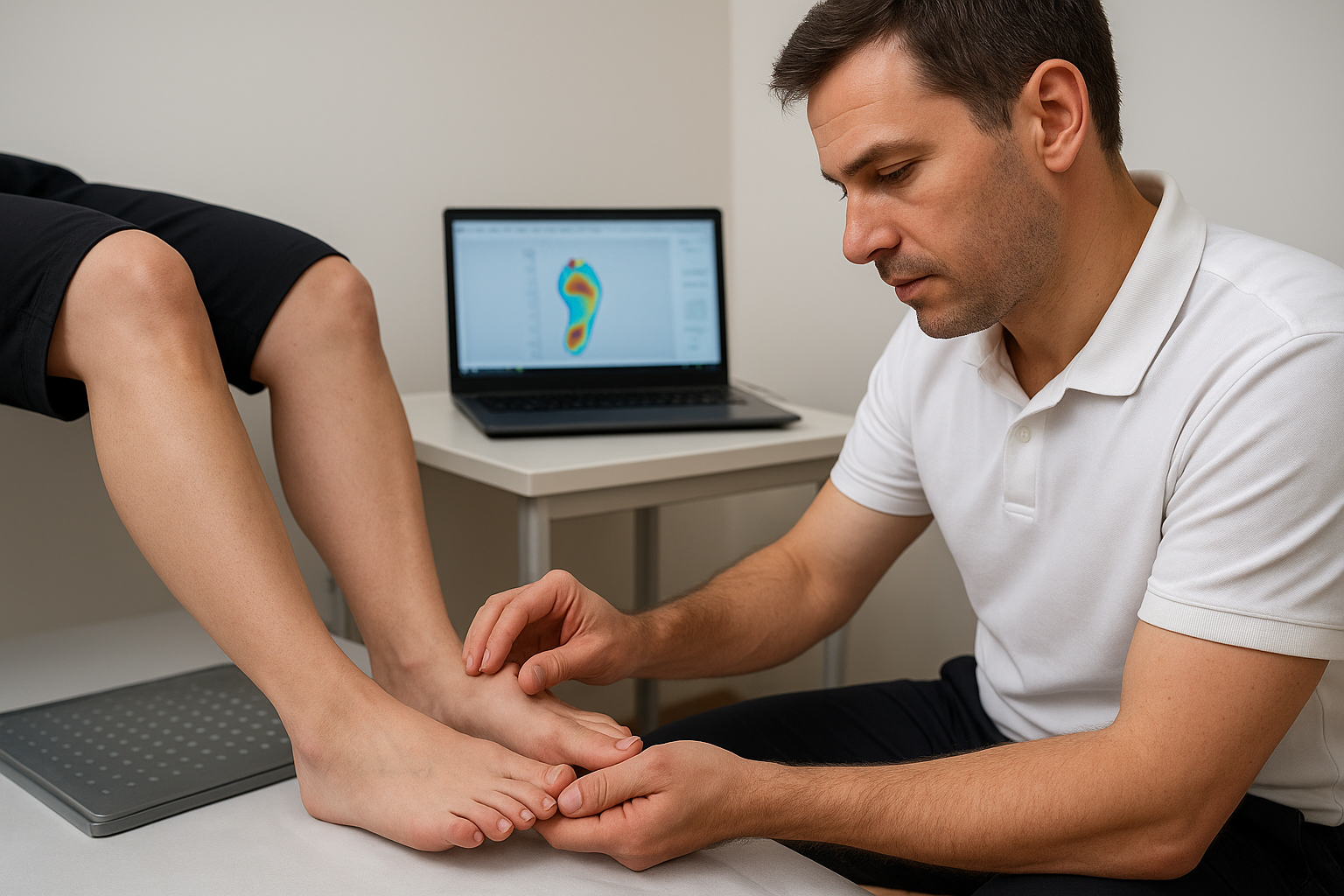
You can’t fix what you haven’t measured, which is why guesswork rarely outperforms proper assessment.
Treatment options built around your sport
Once the cause is clear, treatment gets tailored to the sport and the timeline you’re working towards, whether that’s a marathon in eight weeks or getting back to weekend football.
- Custom orthotics to correct load distribution and offload irritated tissue
- Shockwave therapy for stubborn tendinopathies like Achilles or plantar fasciitis
- Taping and bracing to manage acute sprains and instability
- Strength and mobility programs targeting the muscles that failed to control the original injury
- Footwear advice matched to your gait pattern and training surface
Treatment rarely stops at symptom relief. A good plan addresses the mechanical fault behind the injury, so you return to training with a lower chance of the same problem resurfacing next season.
How to choose a sports podiatrist near you
Not every clinic that lists podiatry services actually specialises in sport, so it helps to know how to choose a podiatry clinic for a sports injury. Before booking, check that the practitioner is APodA-registered and has genuine experience treating athletes rather than general foot care alone. A quick look at their website or a phone call asking about gait analysis and pressure plate testing tells you fast whether you’re dealing with a sports podiatrist or a general clinic that happens to see the occasional runner.
Questions worth asking before you book
Getting straight answers early saves you a wasted appointment and, more importantly, wasted training weeks.
- Do you use gait analysis or pressure plate testing as standard?
- Have you treated my specific sport or injury before?
- Can you claim through Medicare EPC or HICAPS on the day?
- What does a typical treatment plan involve beyond rest?
A clinic that can’t answer these questions clearly probably isn’t built for sports injuries.
Location, availability and ongoing support
Proximity matters more than people admit, especially when you need follow-up sessions during a training block. Searching sports podiatrist north shore should return clinics you can actually get to between work and training, not somewhere across town that eats an evening every visit. ModPod runs clinics across Sydney CBD, Mosman, Dee Why, Rose Bay and North Ryde, so whether you’re chasing a podiatrist sports medicine near me result on the north shore or in the eastern suburbs, you’re not stuck choosing convenience over quality. Same-week appointments and on-site HICAPS claiming mean you’re not left waiting weeks while an injury quietly worsens, which defeats the whole point of catching it early in the first place.
Looking after your feet for the long run
Strong feet don’t happen by accident. They come from catching overuse injuries early, correcting the biomechanical faults behind them, and treating your training load with the same respect you give your diet or sleep. A sports podiatrist isn’t just someone you see once an injury sidelines you, they’re part of keeping you training consistently, season after season, without the same niggle resurfacing every winter.
Getting this right matters more the longer you stay active, whether that’s chasing a marathon PB or just managing weekend sport without limping through Monday. If shin pain, heel soreness or an unstable ankle has been quietly limiting your training, don’t wait for it to get worse. Book a sports podiatry assessment online with ModPod Podiatry and get the cause checked properly before the next training block puts even more load through the problem.