
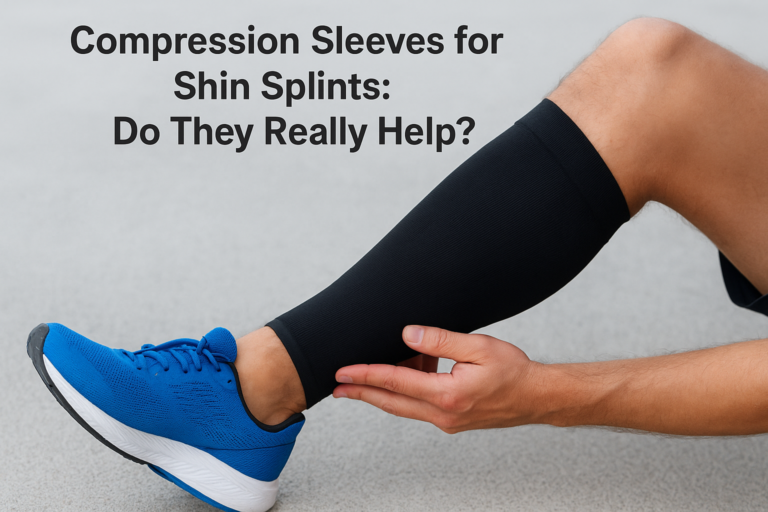
That nagging ache along your shin after every run doesn’t just disappear because you bought a compression sleeve off the shelf. If you’re weighing up compression sleeves for shin splints, you’ve probably already read mixed reviews online and want a straight answer before spending your money. Fair enough, that pain is enough to put anyone off running altogether.
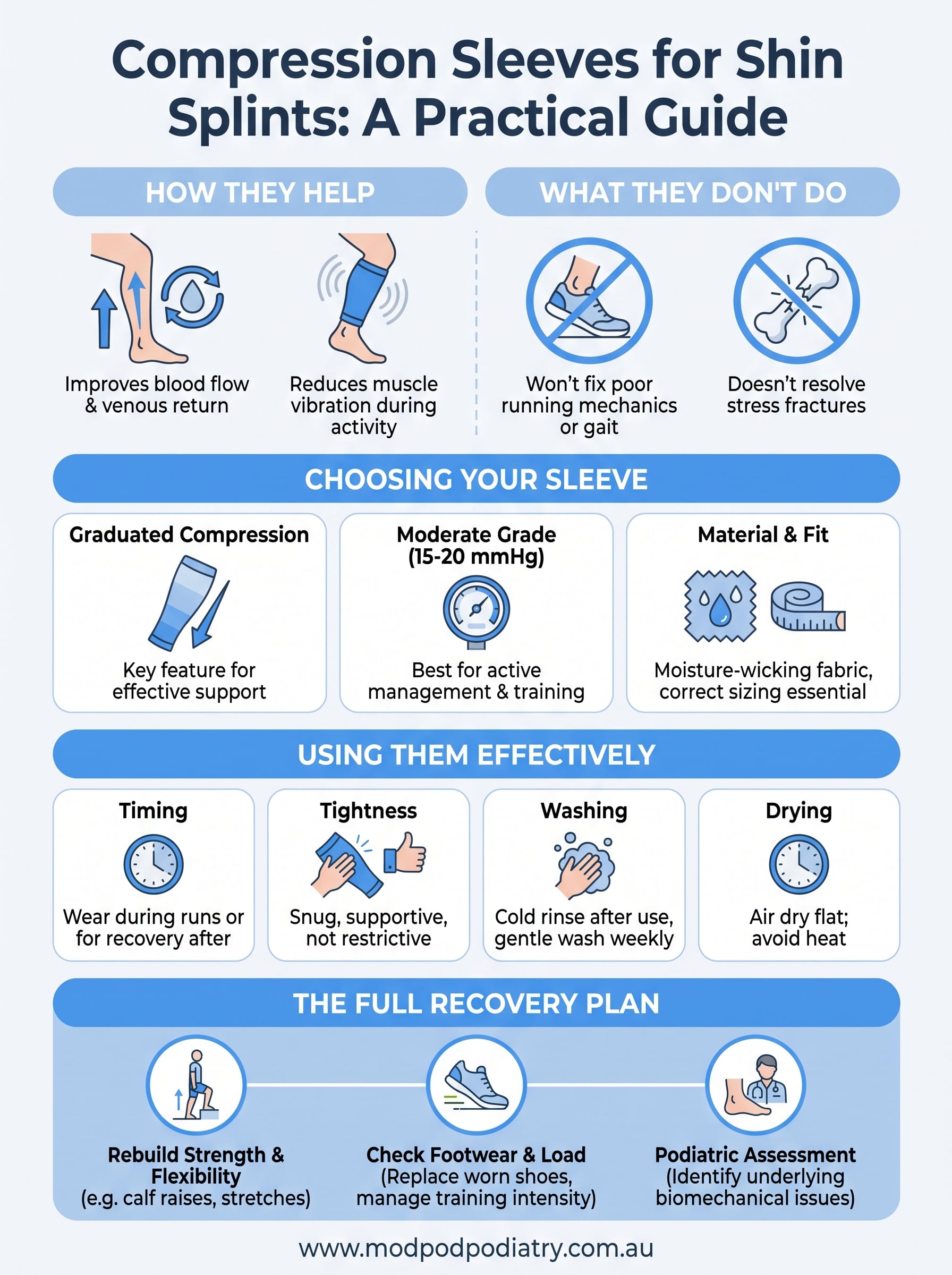
Here’s the honest answer: compression sleeves can ease symptoms and support recovery, but they won’t fix the underlying cause of your shin splints. They work by improving blood flow and reducing muscle vibration during activity, which takes some load off irritated shin tissue. Used alongside proper treatment, a shin compression sleeve is a genuinely useful tool. Used alone, it’s a band-aid over a problem that keeps coming back.
In this guide, we’ll unpack what the research actually shows, when a compression sleeve helps versus when you need proper podiatric assessment, and what to look for if you decide to buy one. We treat shin splints daily across our Sydney clinics, so we’ll share what actually works for our patients.
Why compression sleeves matter for shin splint relief
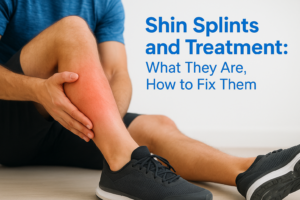
Medial tibial stress syndrome, the medical name for shin splints, develops when repeated impact pulls at the muscles and connective tissue attached to your tibia faster than your body can repair the damage. Compression sleeves and shin splints get mentioned together so often because compression targets two of the mechanical problems behind that pain: excess muscle movement and poor circulation in the lower leg. That’s a genuine physiological reason to try one, not just marketing spin.
What’s actually happening in your shin
Every stride sends a shockwave up through your foot and into your tibia. If your calf muscles are fatigued, your running mechanics break down, or you’ve ramped up training too quickly, that force transfers straight into the bone lining and the muscles wrapping around it. Over days and weeks, this causes small tears in the periosteum, the sensitive membrane covering the shin bone. That’s the sharp, localised ache you feel along the inner edge of your shin, worse at the start of a run and sometimes lingering for hours afterwards.
What the evidence shows about compression
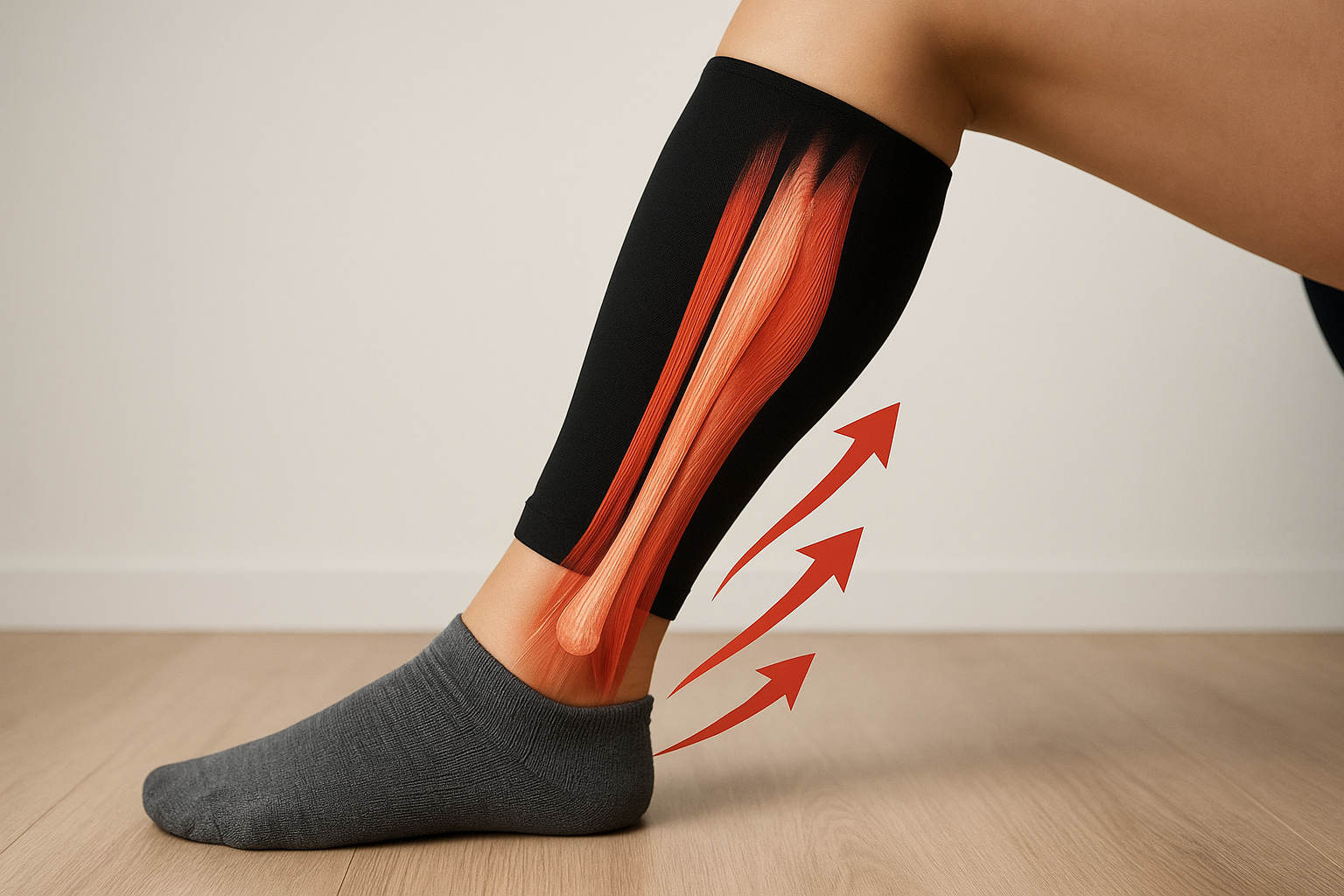
Studies on graduated compression garments consistently show two measurable effects: reduced muscle oscillation during high-impact movement and improved venous return, meaning blood moves more efficiently back up the leg instead of pooling around the injury site. Better circulation brings more oxygen and nutrients to inflamed tissue, which can genuinely speed up the repair process. Less muscle vibration means less repetitive strain pulling at the tibia with each footstrike, which is exactly the mechanism causing your pain in the first place. Research published through bodies like the National Institutes of Health has explored these effects in athletes, though results vary depending on the compression grade, garment fit, and the specific condition being treated.
Compression sleeves reduce the muscle vibration and poor circulation that feed shin splint pain, but they don’t correct the biomechanics that caused the injury.
Graduated compression, where pressure is tightest at the ankle and gradually eases up the calf, tends to outperform uniform compression for this reason, and it’s worth understanding why compression works on the lower leg. Patients often tell us the sleeve makes their shin feel "supported" during a run, and that’s a fair description. It’s proprioceptive feedback, your nervous system gets extra input about where your lower leg is in space, which can subtly improve muscle activation patterns and reduce the jarring sensation with each step.
Where compression fits in your treatment plan
Here’s what a shin splints compression sleeve realistically does and doesn’t do for you:
- Helps with: reducing pain during activity, easing swelling after training, improving comfort on long runs, supporting recovery between sessions
- Doesn’t help with: correcting poor running gait, fixing weak or tight calf muscles, addressing flat feet or overpronation, resolving a stress fracture if one has developed
That second list matters more than most people realise. We regularly see patients at our Sydney clinics who’ve worn a sleeve faithfully for months while their underlying biomechanical issue, whether that’s a leg length difference, poor footwear, or overtraining, keeps causing the same injury to flare up. A proper assessment from a podiatrist who works with athletes identifies exactly what’s driving your shin splints, so compression becomes part of a plan rather than your only line of defence. Sorting the cause first means you’ll actually need the sleeve less over time, not more.
How to choose the right compression sleeve for your shins
Not every compression sleeve or sock marketed for shin splints is built the same, and picking the wrong one wastes your money and leaves your shins no better off. Graduated compression is the feature that matters most, so check the product description or ask the retailer directly rather than assuming a snug-fitting sleeve automatically delivers therapeutic pressure. A garment that squeezes evenly from top to bottom won’t move blood the way a properly graduated one does, no matter how tight it feels.
Compression grade and fit
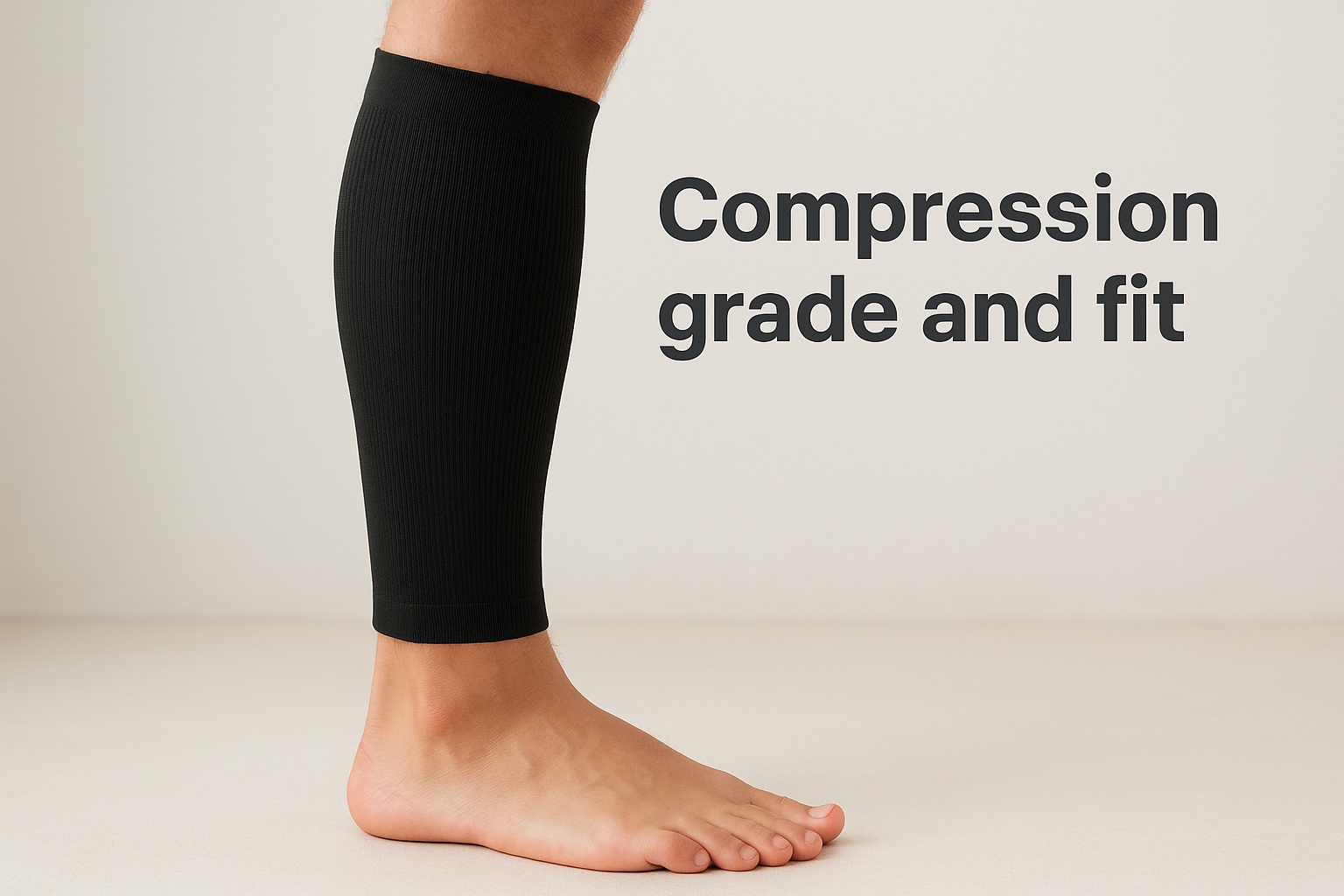
Medical-grade compression is measured in millimetres of mercury (mmHg), and this figure tells you far more than marketing language like "firm" or "extra support". For everyday shin splint management, most podiatrists recommend a moderate grade rather than the highest available, since overly tight compression can restrict circulation instead of improving it.
| Compression grade | mmHg range | Best suited for |
|---|---|---|
| Light | 8-15 mmHg | General comfort, everyday wear |
| Moderate | 15-20 mmHg | Active shin splint management, training |
| Firm | 20-30 mmHg | Post-injury recovery, under podiatrist guidance |
The right compression grade supports your shin without cutting off the circulation it’s meant to improve.
Material, length and sizing
Once you’ve settled on a grade, the material determines whether you’ll actually keep wearing it. Look for a moisture-wicking fabric blend, usually nylon and spandex or similar, that stretches with your calf shape rather than rolling down mid-run. Length matters too: a full calf sleeve covering from just below the knee to the ankle spreads pressure evenly across the whole muscle group, while a shorter version only targets the lower shin and offers less benefit for runners whose calves stiffen up after every run and add to their pain.
Sizing yourself correctly makes or breaks the whole purchase. Measure the widest point of your calf and the narrowest point above your ankle, then check these figures against the brand’s specific sizing chart rather than guessing your usual clothing size. A sleeve that’s too loose won’t apply meaningful compression, and one that’s too tight can leave marks, numbness or tingling, all signs to size up immediately.
Quick checklist before you buy a compression sleeve for shin splints:
- Confirm it’s graduated compression, not uniform pressure throughout
- Choose 15-20 mmHg for general training use
- Pick moisture-wicking fabric that won’t slip during activity
- Measure calf and ankle circumference against the actual size chart
- Check for reinforced stitching around high-stress areas like the ankle seam
Spending a bit more on a well-fitted, graduated sleeve from a sports medicine brand our podiatrists rate for training beats grabbing the cheapest option at your local pharmacy. Fit and pressure accuracy matter more than brand names, but cheap sleeves rarely hold either specification for long.
How to wear compression sleeves for the best results
Owning the right sleeve is only half the job. How you actually use a compression sleeve for shin splints determines whether it eases your pain or just sits in your gym bag doing nothing useful. Timing, tightness and washing habits all affect how much benefit you get from graduated compression, so it’s worth getting these details right rather than treating the sleeve as a set-and-forget purchase.
Before, during or after training
Wearing your sleeve throughout the entire run gives you the most consistent benefit, since the muscle vibration and circulation problems it’s addressing are happening the whole time you’re on your feet. Some runners prefer to pull the sleeve on about ten minutes before they start, letting the compression settle and improve blood flow before impact begins. Others find the real value comes afterwards, wearing the sleeve for an hour or two post-run to support venous return while the shin tissue is at its most inflamed. Testing both approaches over a few weeks will show you which timing eases your specific symptoms best, because shin splint presentations vary enough that there’s no single correct answer for everyone.
Getting the tightness right
Snug is the goal, not tight. Your sleeve should feel like firm, even pressure along the whole shin and calf, without pinching at the top band or leaving deep marks when you take it off. Stop and check the fit immediately if you notice any of these signs during wear:
- Numbness or tingling in your foot or toes
- Visible colour change in your skin below the sleeve
- Increased swelling around the ankle after removing it
- Sharp pain rather than steady pressure
A compression sleeve should feel supportive, never restrictive; pain or numbness means it’s time to size up.
Those symptoms usually mean you’ve sized down too far or grabbed a firmer compression grade than your leg needs. Reaching for a size up almost always solves the problem without losing the therapeutic benefit.
Washing and replacing your sleeve
Graduated compression relies on elastane fibres holding their shape, and those fibres weaken with heat, harsh detergent and rough drying. Rinse your sleeve in cold water after each use, wash it on a gentle cycle roughly once a week, and always air dry it flat rather than tumble drying. Most quality sleeves lose meaningful compression after four to six months of regular training use, even if they still look fine on the outside. Once the fabric feels loose or stretched compared to when you bought it, it’s no longer delivering the pressure gradient that made it worth buying in the first place.
What else helps shin splints heal for good
Relying on a sleeve alone leaves the real drivers of your pain untouched, so lasting recovery needs a broader plan and a realistic idea of the shin splint healing timeline. Compression sleeves and shin splints management work best as one piece of a strategy that also addresses training load, muscle strength and footwear. Skip any of these and you’ll likely be back in the same sleeve, treating the same flare-up, in a few months’ time.
Rebuild strength and flexibility
Weak or tight calf muscles force your tibia to absorb shock it shouldn’t have to handle. A simple strengthening routine done three to four times a week makes a measurable difference within a few weeks:
- Calf raises, both straight-leg and bent-knee, to target the full muscle group
- Eccentric heel drops off a step, lowering slowly to build tendon resilience
- Tibialis anterior raises, lifting your toes while your heel stays planted
- Calf and Achilles stretches that target shin pain, held for 30 seconds after every session
Strengthening the muscles around your shin does more for long-term recovery than any sleeve ever will.
Fix the load and the footwear
Most shin splints trace back to a training error, worn shoes, or both. Ramping up running distance or intensity by more than 10% a week overloads tissue faster than it can adapt, and shoes past 600-800 kilometres lose the cushioning that once absorbed impact. Reviewing your training log and shoe age honestly is often the single biggest fix available, cheaper than any garment and far more effective long-term.
Know when to get it properly assessed
Persistent or worsening shin pain despite rest, strengthening and compression is a signal worth taking seriously, since it can indicate a stress fracture in the tibia rather than straightforward medial tibial stress syndrome. A podiatrist can assess how you run stride by stride, check for overpronation or leg length differences, and rule out anything more serious before it sidelines you for months instead of weeks.
| Approach | Addresses | Timeframe to notice change |
|---|---|---|
| Compression sleeve | Symptom relief, circulation | Immediate to a few sessions |
| Strength and stretching | Muscle weakness, tightness | 3-6 weeks |
| Load and footwear changes | Training errors, worn cushioning | 2-4 weeks |
| Podiatric assessment | Underlying biomechanics | Ongoing, tailored |
Getting all four working together, rather than leaning on one alone, is what actually resolves shin splints instead of just quieting them down between flare-ups. If you’ve tried the basics without lasting improvement, our podiatry care for shin splints across Sydney starts with a biomechanical assessment so we can find out exactly what’s driving your pain.
Moving forward without shin pain
A good compression sleeve for shin splints genuinely eases pain and supports recovery while you’re training, but it was never meant to work alone. The runners who actually stop getting shin splints are the ones who pair compression with proper strength work, sensible training loads, decent footwear, and an honest look at what’s driving their pain in the first place. Skip that last part and you’re just managing symptoms on repeat.
If you’ve tried the sleeve, done the calf raises, and you’re still feeling that familiar ache creeping back after every run, it’s time for a proper look at your biomechanics. Our podiatrists across Sydney see this exact pattern every week, and sorting the underlying cause is usually quicker and cheaper than another few months of trial and error. Book a shin splint assessment online and let’s get your shins sorted for good.