
That dull ache under your foot when you step out of bed, or the sharp twinge halfway through a run, usually points to strain in the arch. Working out how to relieve foot arch pain properly, rather than just pushing through it, is the difference between a few days of discomfort and months of niggling problems that keep coming back.
The good news is that most arch pain responds well to the right combination of rest, stretching, supportive footwear and targeted exercises, often within one to two weeks. This guide walks you through practical steps you can start today, plus the warning signs that mean it’s time to get a proper diagnosis rather than guess at the cause.
We’ll cover simple home remedies, stretches that target the plantar fascia and calf muscles, footwear and orthotic changes worth trying, and when arch pain signals something more serious like plantar fasciitis or a structural issue. As podiatrists who’ve treated thousands of Sydney patients across our five clinics, we’ve seen what actually works, and what just wastes time before you see someone who can assess your feet properly.
Why does your arch hurt?
Your arch is a shock absorber, built from bone, ligament and the plantar fascia, a thick band of tissue running from your heel to the base of your toes. Every step you take loads that structure, and when it’s stretched beyond what it can handle, the tissue develops small tears and inflammation. That’s usually what you’re feeling as arch pain, and it’s the same mechanism behind plantar fasciitis, the most common cause podiatrists see in clinic.
Understanding the trigger matters because treating the wrong cause wastes weeks. Sudden increases in running distance, standing all day on hard floors, worn-out shoes, or simply having naturally flat arches or high arches all put extra strain on the plantar fascia and surrounding muscles. Carrying extra weight adds load too, and so does a tight calf and how to loosen it, since a stiff Achilles pulls on the heel and changes how force travels through your foot with each stride.
Arch pain is rarely random. It’s your foot telling you something in your daily load, footwear or biomechanics needs to change.
Common causes of arch pain
| Cause | What’s happening | Typical trigger |
|---|---|---|
| Plantar fasciitis | Micro-tearing and inflammation of the fascia band | Overuse, sudden training increase |
| Flat feet or fallen arches | Arch collapses under load, overstretching tissue | Standing long hours, poor footwear |
| High arches | Reduced shock absorption, more heel and forefoot pressure | Rigid foot structure |
| Tight calf muscles | Restricted ankle movement pulls on the heel and arch | Sitting most of the day, inactivity |
| Worn or unsupportive shoes | Loss of cushioning and arch support | Shoes past 500-800km of use |
Occasionally, arch pain isn’t mechanical at all. Nerve irritation, stress fractures and arthritis can all mimic plantar fasciitis, which is one reason self-treating the same way for months without improvement is a red flag rather than just bad luck. If you’re unsure which of these applies to you, our guide to telling arch pain apart from plantar fasciitis breaks down how a podiatrist tells them apart during an assessment.
Step 1. Rest and ice the area
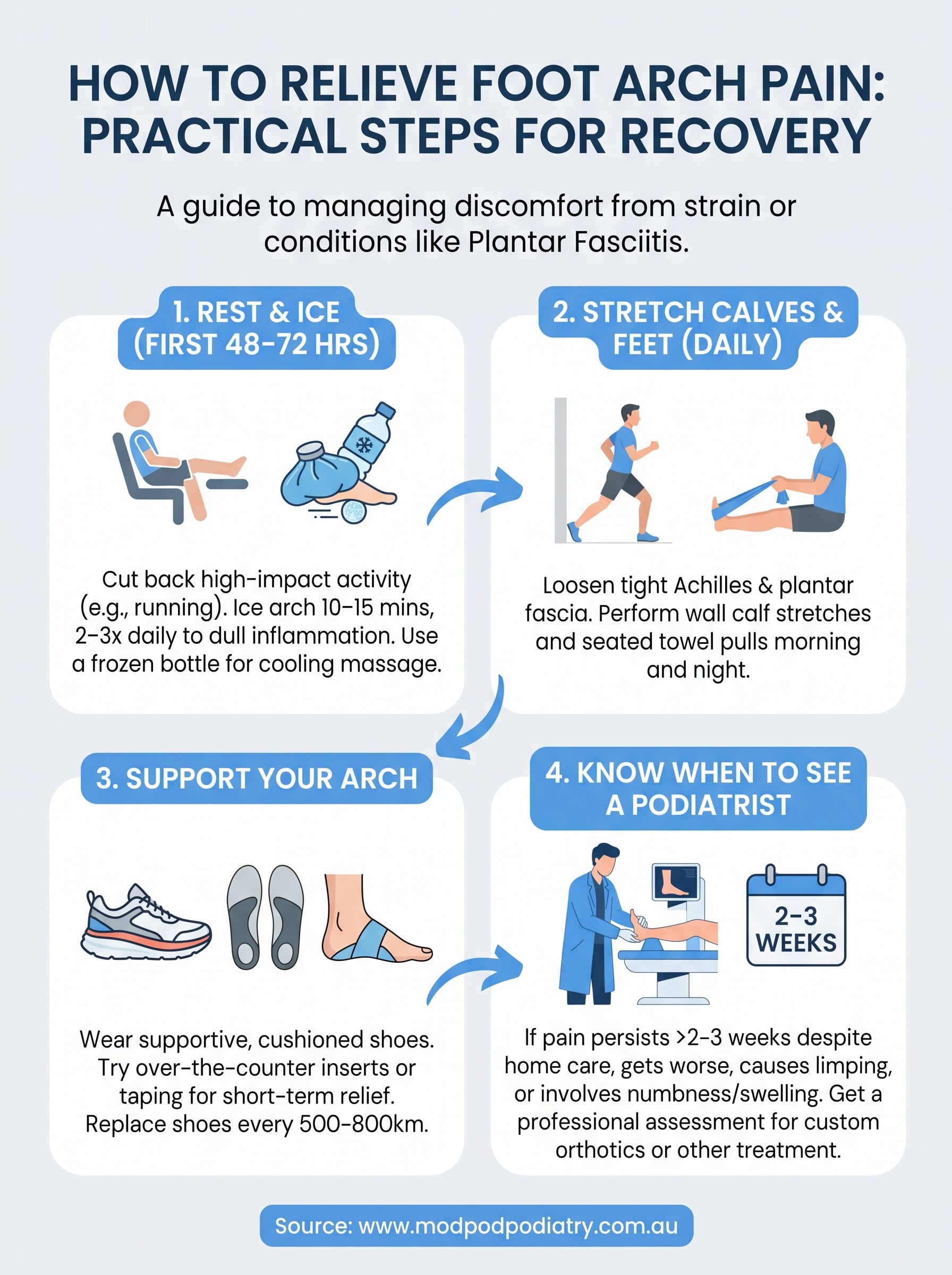
The first 48 to 72 hours matter most. Cutting back on high-impact activity like running, jumping or long walks on hard pavement gives the plantar fascia a chance to calm down before you add stretching or supportive gear into the mix. This doesn’t mean total bed rest, just swap high-impact sessions for swimming or cycling while the tissue settles.
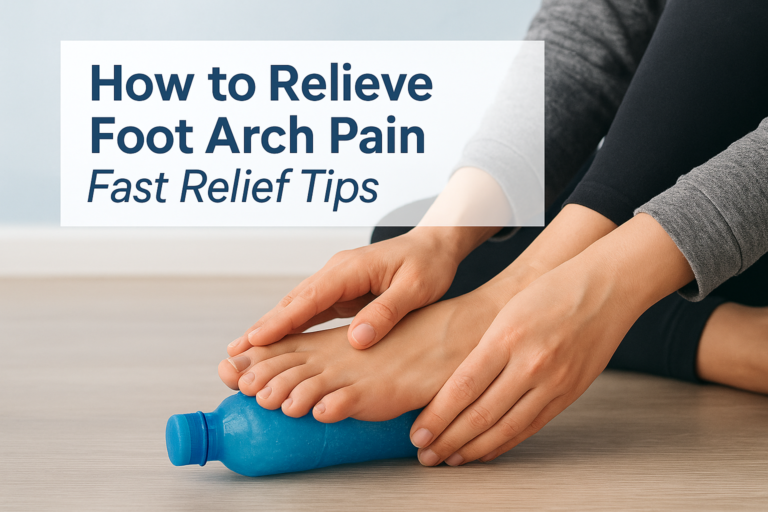
Icing the arch is one of the simplest ways to dull inflammation and take the edge off sharp pain, particularly after you’ve been on your feet all day. Rolling a frozen water bottle under your foot works two jobs at once: it cools the tissue and gently massages the fascia at the same time.
Rest doesn’t mean doing nothing. It means removing the load that’s aggravating the tissue while you fix the underlying cause.
A simple ice routine
- Freeze a small water bottle or use a frozen gel pack wrapped in a thin towel.
- Roll it under your arch for 10 to 15 minutes, two to three times a day.
- Do this straight after activity and again in the evening.
- Avoid direct ice contact with bare skin for more than a couple of minutes at a time.
- Pair with a short break from high-impact exercise for at least three to five days.
Over-the-counter anti-inflammatories can help manage pain during this early phase too, though they’re a short-term aid rather than a fix. If the ache hasn’t eased within a week of consistent rest and icing, it’s a sign the cause needs a closer look rather than more patience.
Step 2. Stretch your calves and feet
Once the sharpest pain has settled, stretching tight tissue is what actually fixes the mechanics behind your arch pain rather than just masking it. The plantar fascia and calf muscles work as one chain, so a stiff Achilles or gastrocnemius forces your arch to absorb more strain than it should with every step. Loosening both areas restores normal movement through the foot and takes pressure off the fascia itself.
You can’t stretch away the cause of arch pain if you only stretch the foot and ignore the calf above it.
Spend five to ten minutes on this routine of stretches for sore arches morning and night, especially before that first step out of bed, since the fascia tightens overnight and tears more easily when it’s cold and stiff.
Daily stretching routine
- Calf stretch against a wall: hands on the wall, back leg straight, heel flat, lean forward for 30 seconds, three times each side.
- Soleus stretch: same position but with the back knee bent, holding 30 seconds, three times each side.
- Plantar fascia stretch: sit down, cross the sore foot over your knee, pull your toes back towards your shin until you feel a stretch along the arch, hold 15 to 20 seconds, repeat ten times.
- Towel stretch: loop a towel around the ball of your foot and gently pull it towards you while keeping your knee straight.
- Rolling stretch: roll your bare foot slowly over a golf ball or massage ball for two minutes to loosen the fascia further.
Consistency matters more than intensity here. Skipping days and stretching hard once a week does far less than short, regular sessions.
Step 3. Support your arch
Good arch support takes pressure off the plantar fascia while it heals, and it’s the step most people skip because they assume a new pair of running shoes will fix everything. Shoes matter, but the right combination of footwear and support inside the shoe is what actually changes how load travels through your foot with each step.
Support isn’t about a stiffer shoe. It’s about matching the support to your specific arch shape and how you move.
Options worth trying
- Supportive, cushioned shoes with a firm heel counter and a slight heel-to-toe drop, replaced every 500 to 800km.
- Over-the-counter arch supports or gel inserts for mild, short-term relief.
- Taping the arch with rigid sports tape to limit movement during activity while you heal.
- Custom orthotics, prescribed after a proper biomechanical assessment, for people with flat or high arches, or pain that keeps returning.
- Avoiding flat, unsupportive shoes like thongs or worn-out sneakers, even around the house.
Off-the-shelf arch support shoe inserts help plenty of people manage mild arch pain, but they’re a generic shape pressed into a foot that isn’t generic. When pain is persistent, or you’ve got noticeably flat arches or high-arched feet causing problems, a podiatrist can map your foot with 3D scanning and pressure plate analysis and design orthotics built around your actual gait rather than an average. We build ours this way at ModPod, and you can read more about how orthotics made from a 3D scan of your feet are designed to correct the exact mechanics causing your pain, not just cushion the symptom.
Finally, don’t underestimate socks and surfaces. Standing on concrete all day in thin-soled shoes undoes a lot of good stretching work, so a supportive mat or shoe change at work can matter as much as anything in your evening routine.
Step 4. Know when to see a podiatrist
Most arch pain eases within two to three weeks if you stick with rest, stretching and proper support. That timeline is your benchmark. If you’re doing everything right and the pain hasn’t budged, or it’s getting worse rather than better, that’s your signal to stop guessing and get a proper diagnosis rather than trying yet another home remedy.
Sharp, localised pain that appears suddenly, numbness or tingling in your foot, or swelling that doesn’t settle overnight are all reasons to book in sooner rather than later. So is pain that stops you walking normally, or arch discomfort that’s spread to your heel, ankle or lower leg. These can point to a stress fracture in the foot, nerve irritation or arthritis, all of which mimic plantar fasciitis but need a different treatment path entirely.
If home care hasn’t shifted your arch pain within two weeks, you need an assessment, not more patience.
Signs it’s time to book an appointment
- Pain lasting more than two to three weeks despite consistent home treatment
- Sharp or worsening pain rather than gradual improvement
- Numbness, tingling or swelling in the foot or ankle
- Pain that changes how you walk or forces you to limp
- Recurring arch pain that keeps coming back after past episodes
Getting checked early is faster and cheaper than months of trial and error. A podiatrist can confirm the cause with a proper assessment, and it helps to know what happens at your first podiatry appointment, plus that Medicare’s EPC plan or your private health extras can cover part of the cost through on-site HICAPS claiming if you’re eligible.
Getting back on your feet
Most arch pain is fixable once you stop pushing through it and start treating the actual cause. Rest and ice settle the initial flare, stretching your calves and feet restores the mechanics behind the pain, and the right support keeps the fascia from being overloaded again while it heals. None of this requires special equipment, just consistency over a week or two.
Quietly ignoring pain that isn’t improving is the mistake we see most often in clinic, usually because someone hoped it would resolve on its own. If you’ve worked through these steps and you’re still limping through your mornings, or the pain keeps returning every few months, that pattern deserves a proper look rather than another round of guesswork.
Our podiatrists assess your gait, arch shape and footwear before recommending anything, so treatment actually matches your feet. Book an arch pain assessment at one of our five Sydney clinics and get a clear answer this week, not another month of wondering.