

If you’ve just been handed a pair of compression socks by your podiatrist or surgeon, the first question is usually the same: how long do you actually need to wear them? Get it wrong and you either miss out on the benefits or end up with skin irritation and discomfort for no reason. Working out how long to wear compression socks properly depends on why you’re wearing them in the first place.
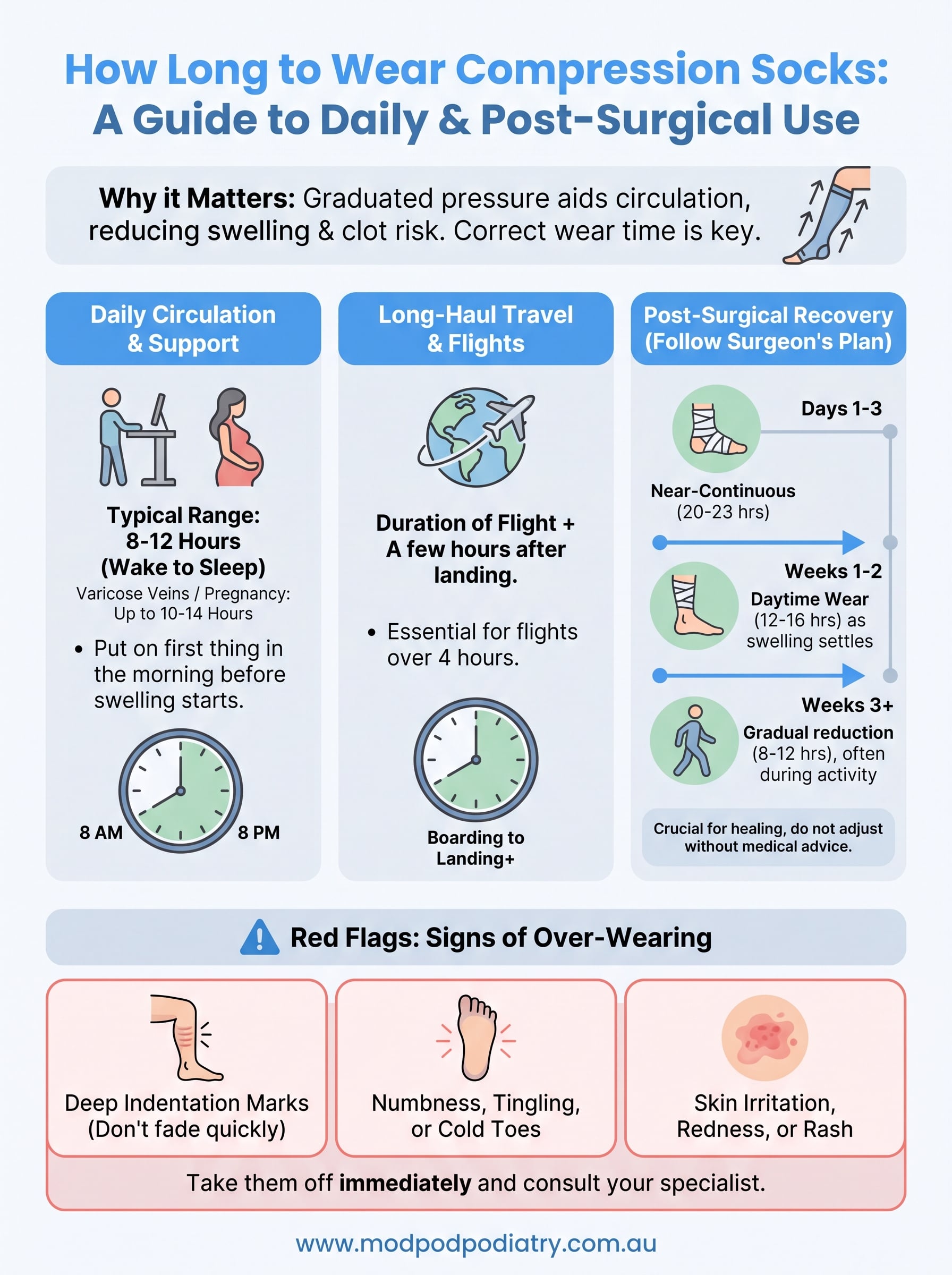
The short answer is that daily wear for circulation or swelling generally means 8 to 12 hours during waking hours, while post-surgery use often stretches to several weeks under medical guidance. There’s no single rule that fits everyone, but there are clear, evidence-based ranges depending on your situation, whether that’s long flights, standing all day at work, recovering from foot surgery, or managing varicose veins.
In this guide, we’ll break down daily wear recommendations for different needs, explain what changes after surgery, and cover the warning signs that mean it’s time to take them off. If you’re unsure what applies to your feet, our podiatrists across Sydney can check your fit and give you tailored advice.
Why compression sock wear time matters
Compression socks work by applying graduated pressure to your lower leg, tightest at the ankle and gradually easing off towards the knee or thigh, which is the science behind compression socks in a nutshell. This pressure gradient pushes blood and lymph fluid back up towards your heart, stopping it from pooling in your feet and ankles. Wear them for the right amount of time each day and you get the full health benefits of compression socks: better circulation, less swelling, and reduced risk of clots on long trips or after surgery. Wear them incorrectly, either too little or too much, and you either lose the benefit entirely or run into skin problems that undo the good the socks were meant to do. Getting how long to wear compression socks right isn’t a minor detail, it’s the difference between the garment doing its job and just being an uncomfortable accessory.
The risk of under-wearing
Underneath the surface, your circulatory system relies on muscle movement and external pressure to keep fluid moving efficiently, especially if you’re sitting, standing, or lying still for long stretches. If you only wear compression socks for an hour here and there, you won’t build up enough sustained pressure to stop fluid from settling in your ankles and lower legs. This matters most for people managing varicose veins, chronic swelling, or recovering from a procedure where consistent pressure over hours is what actually drives healing, so it helps to know who needs compression socks and what they actually do.
The risk of over-wearing
Overuse causes its own problems. Leaving socks on for 24 hours a day, every day, without giving your skin a break can lead to pressure marks, irritation, and in some cases restricted circulation if the fit isn’t quite right. Compression garments are meant to be part of a daily routine, not a permanent fixture, unless a surgeon has specifically told you otherwise for a defined recovery period.
The right wear time turns compression socks into a genuine treatment tool, not just something uncomfortable sitting in your drawer.
Situations differ enormously, and that’s exactly why there’s no single number that applies to everyone. A desk worker managing mild ankle swelling has very different needs to someone six days post-bunion surgery. The table below gives a quick sense of how wear time and purpose connect before we get into working out your own ideal range.
| Purpose | Typical daily wear |
|---|---|
| General circulation support | 8-12 hours |
| Long-haul flights | Duration of flight |
| Post-surgical recovery | Up to 23 hours (per surgeon’s plan) |
| Varicose vein management | 10-14 hours |
How to work out your ideal daily wear time
Working out your own ideal wear time starts with three questions: why you’re wearing compression, how your legs respond during the day, and what your podiatrist has actually recommended for your condition. Someone managing mild end-of-day ankle puffiness needs a different schedule to someone with diagnosed venous insufficiency or a healing surgical wound. Your medical history, activity level, and even the compression class of your socks (the amount of pressure measured in mmHg) all shift the answer, so don’t rely on generic advice you’ve read online without checking it against your own situation.
Questions to guide your schedule
Run through these before you settle on a routine:
- What’s the primary reason I’m wearing compression, swelling, vein health, injury recovery, or travel?
- Has a podiatrist or GP given me a specific hour range or compression class?
- Do my legs feel heavy or swollen by mid-afternoon, suggesting I need more daytime coverage?
- Do I notice indentation marks, numbness, or discolouration after wearing them, suggesting I need less?
- Am I combining compression with other treatment, such as orthotics or exercises, that affects timing?
Your ideal wear time isn’t a number you copy from a chart, it’s a routine built around your own legs and your own diagnosis.
Once you’ve answered these honestly, you’ll usually land somewhere between 8 and 12 hours for general daily use, adjusting upward if you’re on your feet constantly or downward if irritation shows up early. If you’re still unsure, book a proper fitting and assessment rather than guessing.
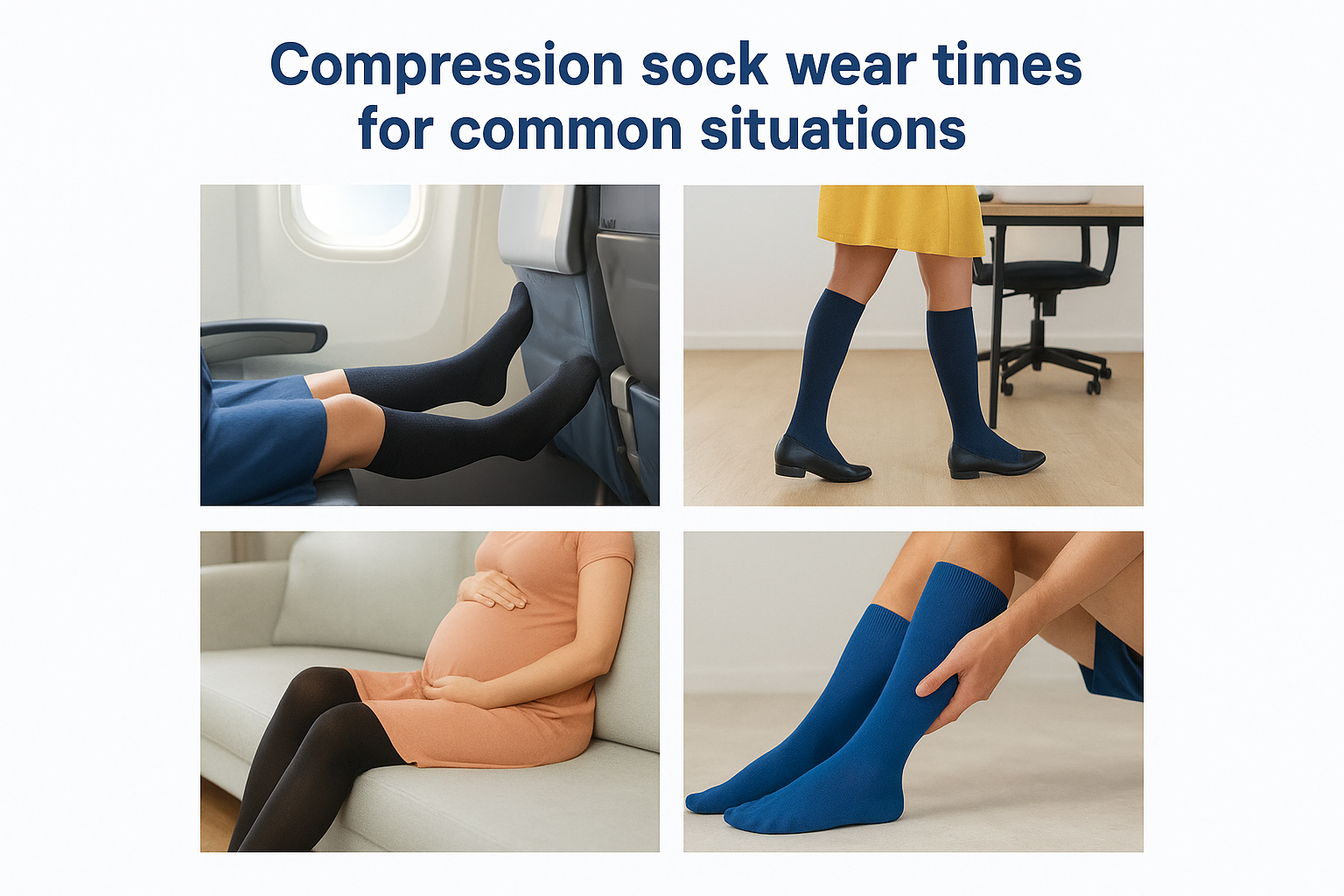
Compression sock wear times for common situations
Every situation calls for a slightly different approach, and knowing the typical range for your circumstance saves you from guessing. Below are the most common scenarios our podiatrists see across our Sydney clinics, along with sensible wear time ranges for each.
Long-haul flights and travel
Flying puts you at higher risk of blood pooling because you’re seated and immobile for hours, which is why ankles swell after flying. Wear compression socks from the moment you board until you land, and keep them on for a few hours afterwards if your ankles feel puffy. For flights over four hours, this single stretch of continuous wear does more good than any amount of occasional daytime use.
Standing or desk-based work
Jobs that keep you on your feet all day, retail, hospitality, nursing shift work socks, benefit from 8 to 12 hours of wear, put on first thing in the morning before swelling starts. Desk workers with mild circulation issues can often manage with a shorter afternoon block instead.
Match your wear time to when your legs actually struggle, not to an arbitrary clock.
Pregnancy and varicose veins
Pregnant women managing swelling or existing varicose veins usually need longer daily coverage, often 10 to 14 hours, since hormonal changes and extra weight put sustained pressure on leg veins and commonly bring on foot pain during pregnancy. Check with your GP or podiatrist before extending wear beyond this without guidance.
Sports and post-exercise recovery
Athletes often wear compression socks for training and recovery during sessions and for two to four hours afterwards, rather than all day, every day.
How long to wear compression socks after surgery
Surgery changes the rules entirely. Recovery from procedures like the different types of bunion surgery, ingrown toenail removal, or ankle reconstruction relies on managing swelling and clot risk far more aggressively than everyday circulation support does. Post-surgical compression is usually prescribed by your surgeon or podiatric surgeon as part of a structured recovery plan, and the hours involved are much longer than the 8 to 12 hours typical for daily use.
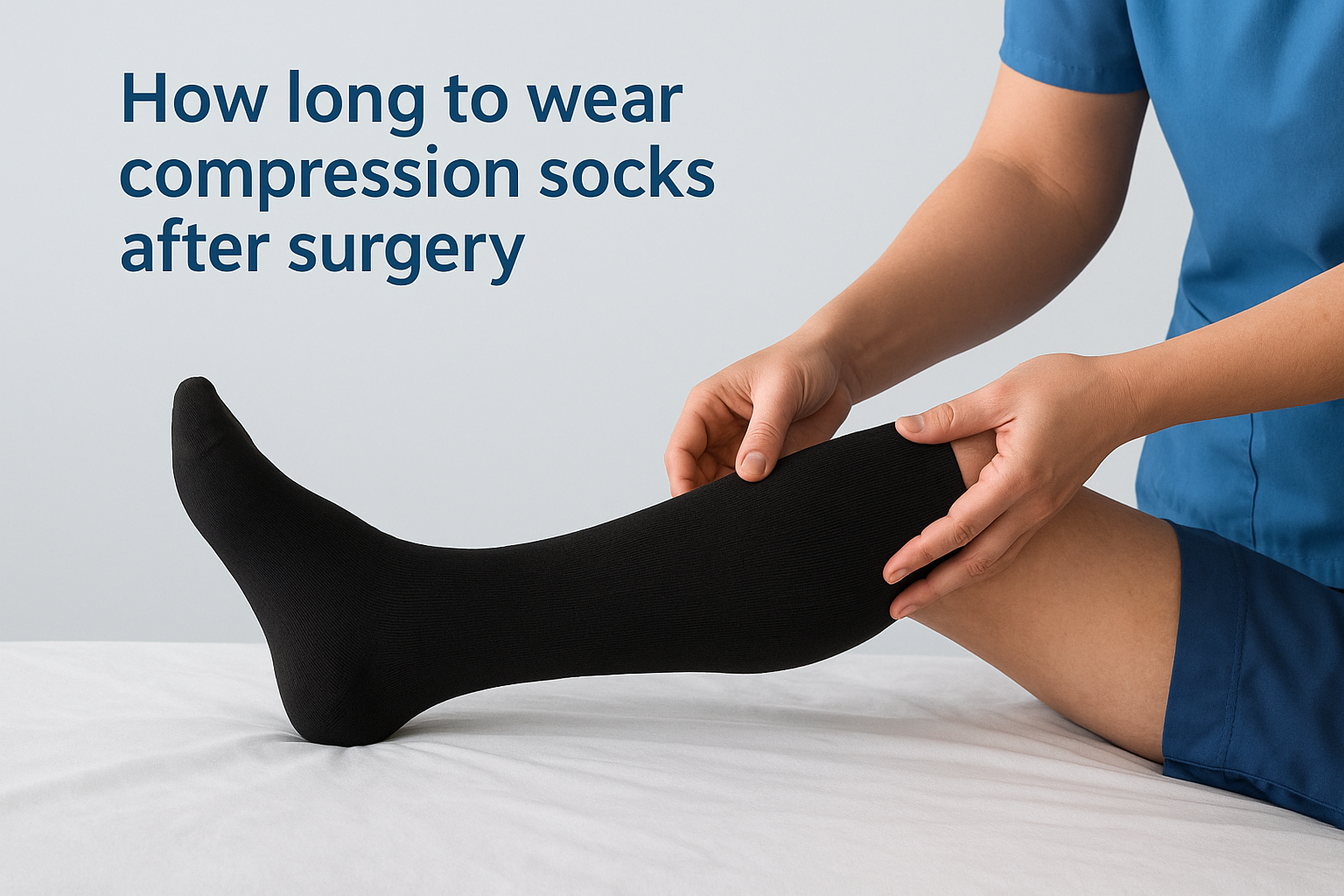
Post-surgery wear time is a medical prescription, not a guideline you adjust on your own.
Typical recovery timeline
While every procedure differs, a common pattern looks like this:
- First 48-72 hours: near-continuous wear, often 20-23 hours a day, removed only for wound checks or showering if approved
- Week 1-2: daytime wear of 12-16 hours as swelling starts settling
- Week 3-6: gradual reduction to 8-12 hours, often only during activity
- Beyond week 6: many patients stop unless ongoing swelling or vein issues persist
Exact timing depends on the procedure, your circulation, and how the wound is healing, so always follow your surgeon’s specific instructions rather than this general outline.
Removing socks earlier than instructed increases the risk of swelling rebound and, in some cases, deep vein thrombosis, so stick to the plan even when your leg feels fine. If you’ve had foot or ankle surgery through ModPod Podiatry, your podiatrist will give you a written schedule and check your progress at follow-up appointments, adjusting wear time as your healing progresses rather than leaving you guessing week to week.
Signs you’re wearing compression socks too long
Even with the right daily target, your skin and circulation will tell you if something’s off. Watch for indentation marks that don’t fade within 15 to 20 minutes of removal, since a light temporary line is normal but a deep groove suggests the socks are too tight or on for too long in one stretch. Numbness, tingling, or a cold sensation in your toes points to reduced blood flow, and that’s your cue to take them off straight away rather than push through the discomfort.
If your feet feel worse with the socks on than off, that’s not a compression sock working, that’s a fit or timing problem.
Beyond the obvious physical signs, a few other patterns mean it’s time to rethink your routine:
- Skin that looks red, shiny, or breaks down where the fabric sits, especially around the ankle band
- Increased swelling once you finally remove them, rather than the gradual easing you’d expect
- Itching or a rash that develops after several hours, which can signal a fabric sensitivity rather than a compression issue
- Socks that feel looser by the end of the day, meaning they’ve stretched and stopped delivering proper graduated pressure, and it’s time to look at podiatrist-reviewed compression socks in Australia
None of these signs mean compression therapy is wrong for you, they usually mean the wear schedule or the fit needs adjusting. Persistent irritation despite a correct routine is worth raising with your podiatrist, since it can sometimes point to an underlying circulation issue that needs a proper look rather than just a different pair of socks.
Finding the right wear time for you
Getting how long to wear compression socks right comes down to matching your routine to your actual situation, not copying a generic number from a chart. Daily circulation support usually sits between 8 and 12 hours, travel calls for continuous wear during the trip, and post-surgical recovery follows a structured schedule that tapers over several weeks. Watch how your legs respond, adjust when indentation marks or numbness show up, and treat a surgeon’s instructions as fixed rather than flexible.
If you’ve had foot surgery recently, or you’re simply unsure whether your current wear schedule suits your feet, don’t guess your way through it. Our podiatrists across Sydney can check your fit, review your recovery plan, and set a schedule that actually works for your legs. Book a compression sock fitting with our Sydney podiatrists and get advice tailored to your situation, not a one-size-fits-all rule.