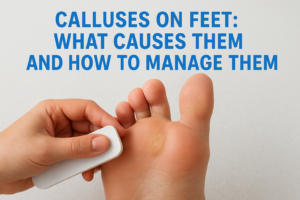

If you’ve been searching for corn removal treatment near me, there’s a good chance you’re dealing with a small but persistent patch of hard skin that’s making every step uncomfortable. Foot corns are one of the most common conditions we treat at ModPod Podiatry, and while they might seem minor, left untreated they can cause real pain and change the way you walk.
The good news is that professional corn removal is a straightforward procedure, but not all treatment options are equal. DIY remedies, chemist pads, and professional podiatry each come with different levels of effectiveness, and understanding what’s actually involved helps you make a confident decision. Costs, recovery time, and whether the corn is likely to come back all matter when you’re weighing up your options.
This guide breaks down everything you need to know about corn removal, from what causes corns in the first place, to what a podiatrist actually does during treatment, expected costs in Australia, and how to stop them returning. At ModPod Podiatry, we’ve treated thousands of patients with corns across our five Sydney clinics, so we’ll share what we see work (and what doesn’t) based on over 20 years of hands-on experience.
Why corns form and when to act
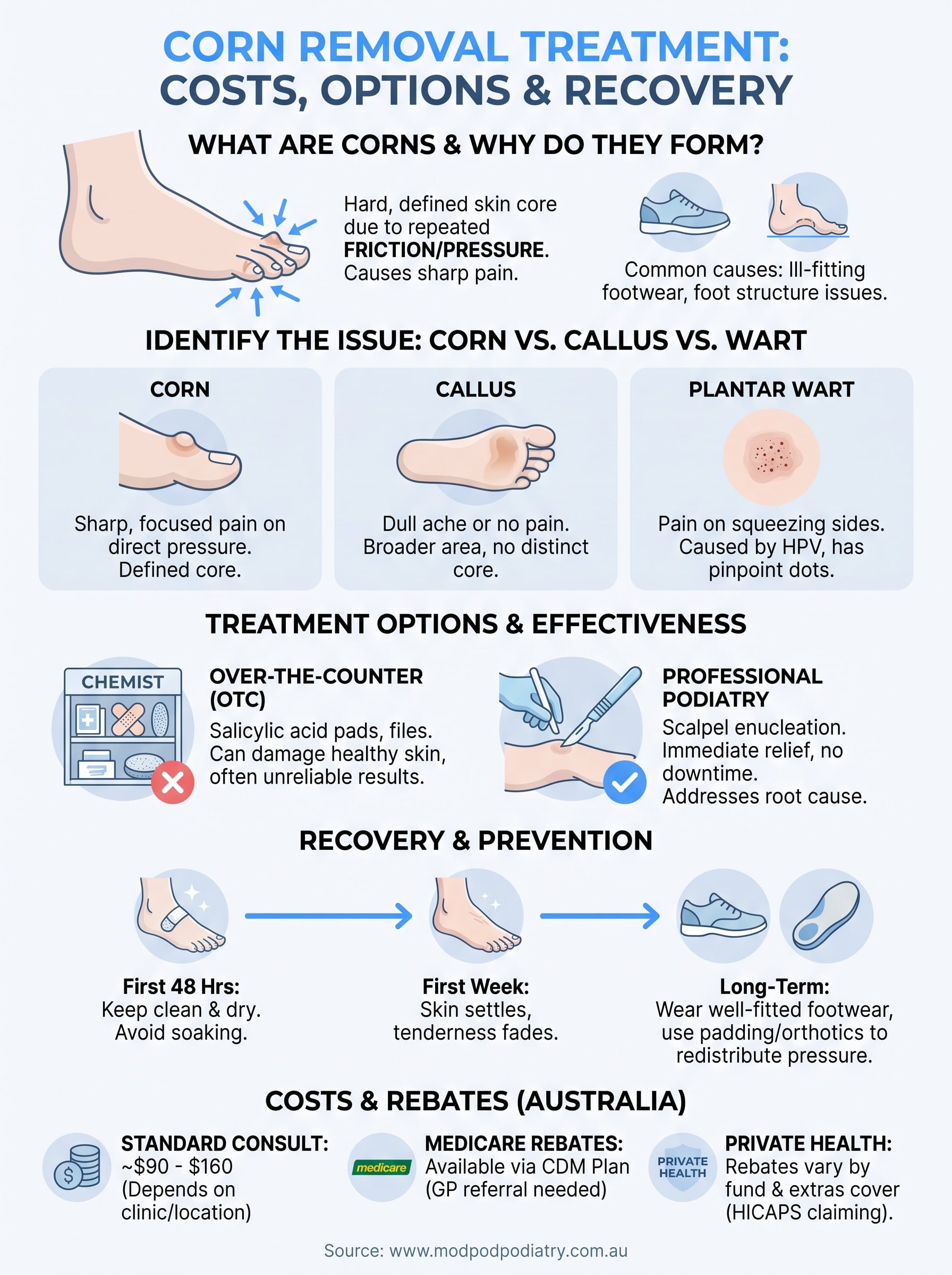
A corn is your skin’s defensive response to repeated friction or pressure. When the same spot on your foot endures consistent stress, the skin builds up a dense, hardened core of dead tissue to protect the area underneath. Unlike a general thickening of skin, that core presses inward rather than spreading outward, which is exactly why corns produce that sharp, concentrated pain when you put your weight through them.
What causes the pressure that leads to corns
The most common cause is ill-fitting footwear. Shoes that are too tight, too narrow, or have internal seams rubbing a specific point will generate enough ongoing friction to trigger corn formation within weeks. High heels are a significant contributor because they shift your body weight forward onto the ball of your foot, raising the pressure load on your metatarsal heads considerably with every step you take.
Your foot structure plays an equally important role. Hammertoes, bunions, and high arches all create bony prominences that sit closer to the shoe’s interior surface, making certain spots far more vulnerable to friction. Even your gait matters. If you walk with an uneven weight distribution, you can concentrate load on one area of the foot consistently enough to begin the process without any footwear issue at all.
If footwear is the only cause, the corn will often return shortly after removal unless you address the underlying pressure pattern.
When to stop waiting and get treatment
Many people tolerate corns longer than they should because the discomfort builds gradually rather than appearing suddenly. At an early stage, a corn might feel like minor roughness underfoot. By the time it produces a sharp, stabbing sensation with every step, it has developed a significant core that needs more involved treatment to resolve properly.
You should look for professional corn removal treatment near me sooner rather than later if the corn sits between your toes, if you have diabetes or any condition affecting circulation, if the skin around it appears red or inflamed, or if you notice any discharge. These are signs that the tissue is under enough sustained stress to risk breakdown, and the risk of infection rises quickly from that point.
Waiting also changes how you walk without you realising it. Your body naturally shifts weight away from a painful area, which adds pressure elsewhere and can create secondary problems in your ankle, knee, or hip over time. Acting early keeps the treatment simple and protects the rest of your lower limb from absorbing the load your foot is trying to avoid.
Corn vs callus vs wart: how to tell
Before you search for corn removal treatment near me, it’s worth confirming you’re actually dealing with a corn. Corns, calluses, and plantar warts all appear as thickened skin on the foot, and they’re frequently confused. Treating one condition with the wrong approach wastes time and can sometimes make the problem worse.
The difference in appearance and feel
A corn has a hard, defined centre surrounded by inflamed skin. When you press directly on it, you feel a sharp, focused pain. Corns typically develop on the tops or sides of toes and on bony pressure points across the sole. A callus, by contrast, is a broader, flatter patch of toughened skin with no distinct core. It covers a wider area, and pressing on it produces more of a dull ache or no pain at all rather than a stabbing sensation.
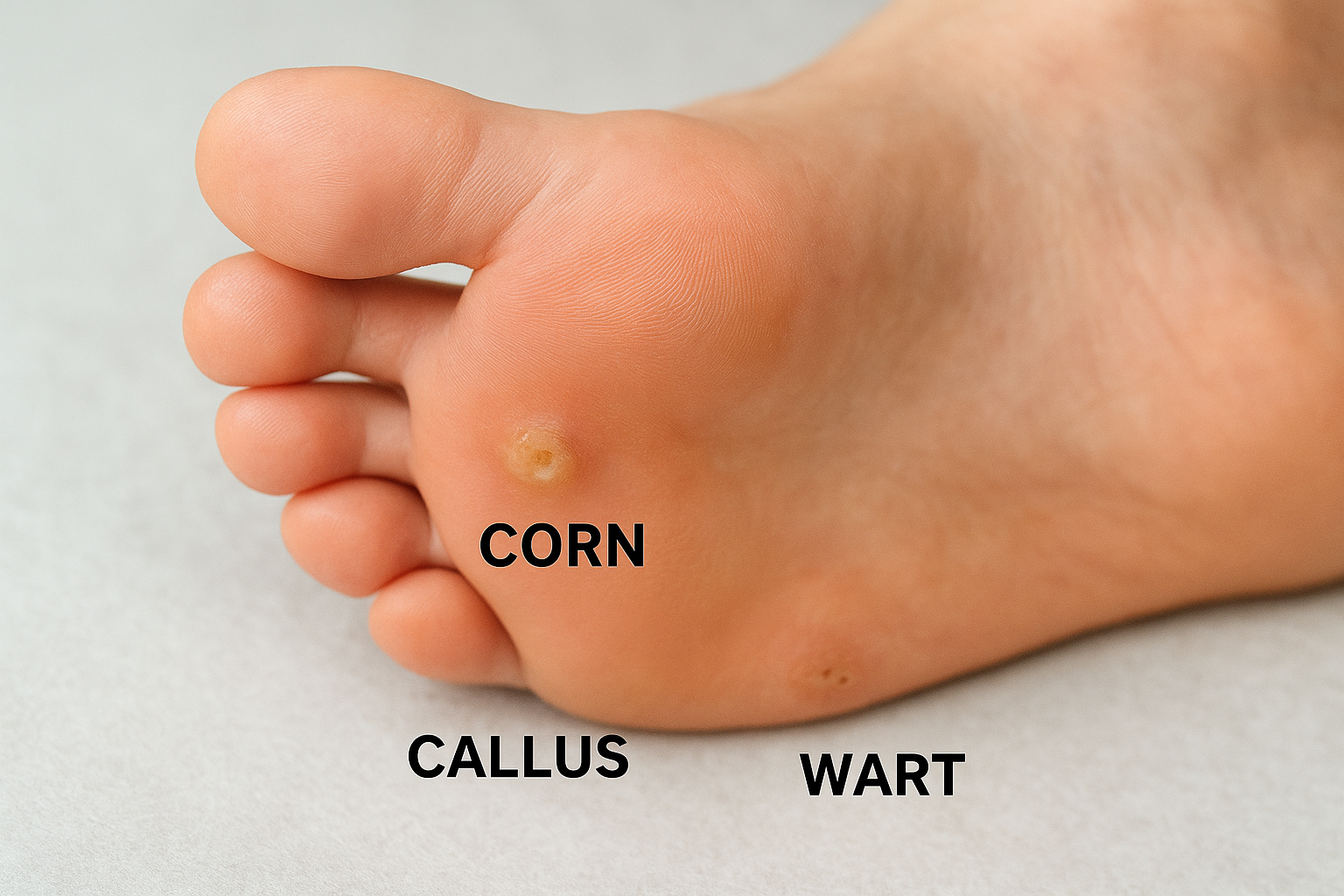
A plantar wart looks superficially similar but behaves differently. Warts are caused by the human papillomavirus (HPV) and contain tiny blood vessels visible as dark pinpoint dots if you look closely. Pressing a wart from the sides tends to hurt more than pressing directly on it, which is the opposite of how a corn responds. Warts can also spread to other parts of the foot, which corns and calluses never do.
Squeezing the lesion from either side rather than pressing straight down is the quickest way to distinguish a wart from a corn at home.
Why it matters before you treat
Chemist corn pads use salicylic acid, which dissolves thickened skin effectively on a true corn but can damage surrounding healthy tissue if you apply it to a wart. Getting a confirmed diagnosis from a podiatrist means your treatment targets the correct condition from the start, saving you weeks of ineffective self-treatment and potential skin damage.
Corn removal options near you
When you start looking for corn removal treatment near me, you’ll find a range of options sitting on a spectrum from chemist self-treatment through to professional podiatry care. Knowing what each approach actually involves helps you match the right treatment to how advanced your corn is and whether you have any health conditions that affect your decision.
Over-the-counter treatments
Chemist shelves carry corn pads and plasters containing salicylic acid, which works by softening and breaking down hardened skin over several days of repeated application. This approach can reduce a superficial corn with no underlying structural cause, but it requires careful application. Salicylic acid does not distinguish between dead corn tissue and healthy surrounding skin, so applying pads too broadly or for too long often damages the area around the corn and delays healing.
Pumice stones and foot files help manage surface skin build-up between treatments but do nothing to remove the concentrated core of a developed corn. For a minor corn with no complicating factors, a careful chemist approach may be enough, but most people find the results inconsistent.
Professional podiatry treatment
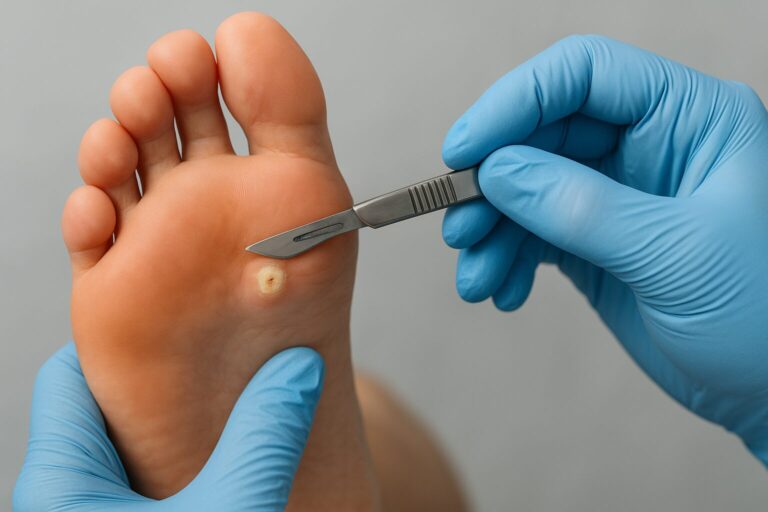
A podiatrist removes a corn using a sterile scalpel blade, a process called enucleation. The procedure takes only a few minutes, produces immediate pain relief for most patients, and carries no recovery period. You walk out of the clinic the same day.
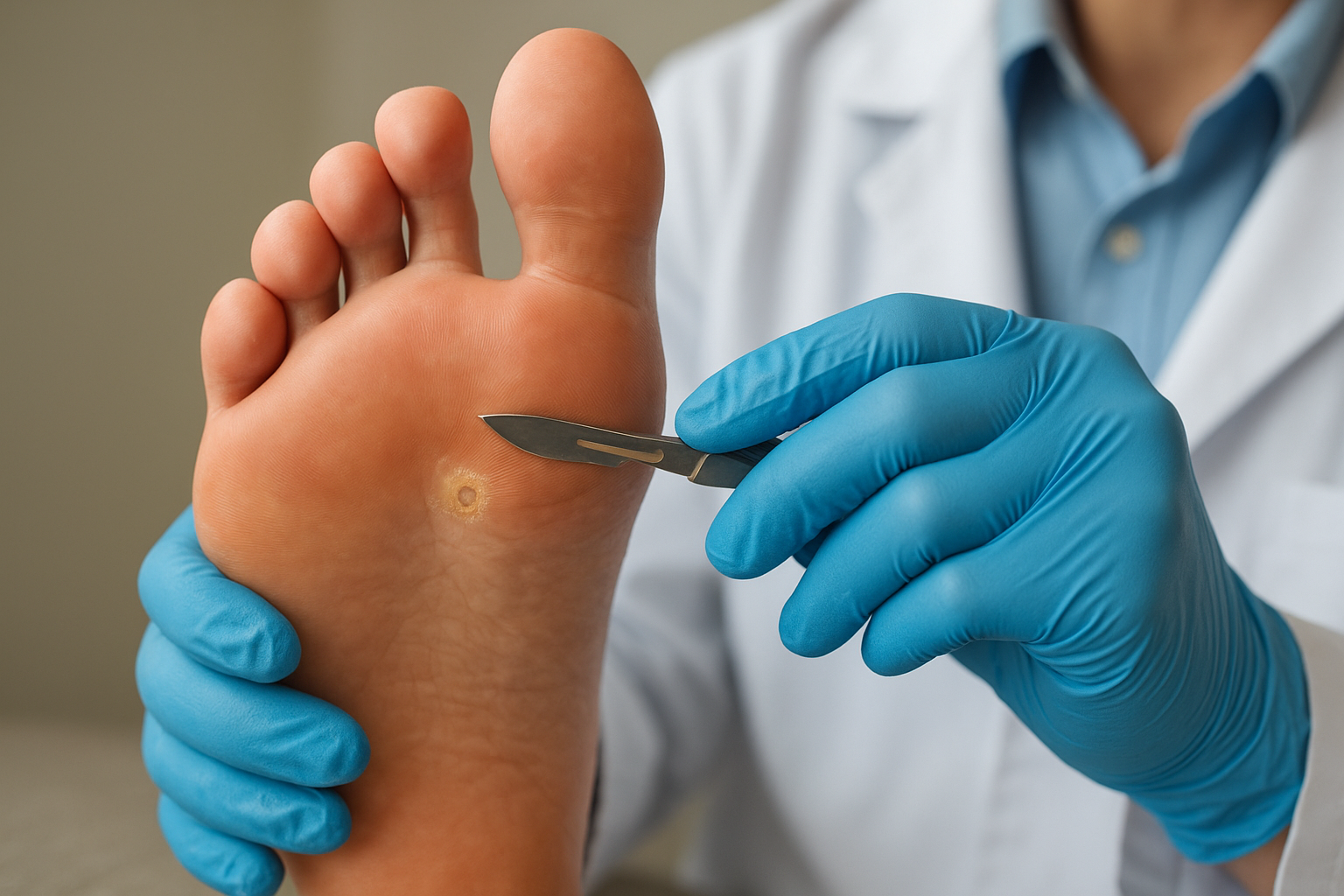
Professional removal is not just faster than self-treatment, it also addresses the corn’s core precisely, which over-the-counter products rarely achieve.
Beyond removal, a podiatrist can identify why the corn formed and prescribe custom orthotics, padding, or footwear advice to reduce the pressure that caused it. Without that step, the corn will typically return within weeks.
Recovery, aftercare and preventing recurrence
After professional corn removal treatment near me, most patients walk out of the clinic with immediate relief and no meaningful downtime. The treated area may feel slightly tender for a day or two, but this fades quickly. Keeping the site clean and dry for the first 48 hours is the main priority, and your podiatrist will cover it with a protective dressing before you leave.
What to expect in the first week
Your skin needs a short period to settle after enucleation, and a thin layer of new skin forms over the treated spot within a few days. Avoid soaking the foot in baths or pools during this time, as prolonged moisture softens the area and slows that process. If your podiatrist applied any padding or offloading material, keep it in place until your follow-up appointment rather than removing it early.
The tenderness you feel in the first 24 hours is normal and usually far less than the pain the corn was causing before treatment.
Reducing the chance of corns returning
A corn removed without addressing its cause will almost always come back. Pressure and friction are the root problem, so the steps you take after treatment matter as much as the removal itself. Switching to well-fitted footwear with a wider toe box and adequate depth removes the mechanical trigger in the majority of cases.
Your podiatrist may also recommend custom orthotics or prefabricated padding to redistribute load away from the vulnerable area. If a structural foot issue such as a hammertoe or bunion is contributing, your podiatrist can discuss longer-term management options. Returning for a review appointment every six to twelve months keeps any early skin changes managed before they develop into a painful corn again.
Costs and rebates in Australia
Understanding the cost of corn removal treatment near me before you book helps you plan without surprises. In Australia, a standard podiatry consultation ranges from roughly $90 to $160 depending on the clinic, your location, and the complexity of your foot condition. At ModPod Podiatry, consultations are priced between $110 and $140, which covers your full assessment, the removal procedure, and aftercare advice in a single appointment.
What the consultation fee includes
Your consultation fee covers more than just the removal itself. Your podiatrist will assess your foot biomechanics, identify what caused the corn, and provide clear recommendations to reduce the risk of it returning. If you need custom orthotics or padding prescribed on the same visit, those are typically quoted separately so you know the full cost before committing.
Paying for a single professional appointment is almost always more cost-effective than repeated rounds of chemist treatments that do not fully resolve the corn.
Medicare and private health insurance rebates
You may be able to reduce your out-of-pocket cost through private health insurance with extras cover. Most mid-tier and higher-tier extras policies include podiatry as an allied health benefit, with rebates varying by your fund and policy level. ModPod Podiatry offers HICAPS on-site claiming, so you claim your rebate at the desk immediately rather than submitting a form later.
If you have a chronic health condition managed by your GP, you may qualify for a Medicare Chronic Disease Management (CDM) plan, formerly called an Enhanced Primary Care (EPC) plan. This allows eligible patients to claim a Medicare rebate on up to five allied health visits per calendar year. Ask your GP whether your situation qualifies before your first podiatry appointment.
Next steps for pain-free walking
Foot corns are one of the most treatable conditions a podiatrist sees, and most patients leave their first appointment with immediate relief. If you’ve been putting up with sharp pain underfoot, searching for corn removal treatment near me is exactly the right starting point. The longer you wait, the more the corn develops, and the more likely you are to start compensating with your gait without realising it.
Your best next move is to book a consultation with an experienced podiatrist who will remove the corn properly, assess the underlying cause, and give you a clear plan to prevent recurrence. At ModPod Podiatry, our team across five Sydney locations does precisely that every day. Same-week appointments are available, and HICAPS on-site claiming makes the process straightforward if you hold private health insurance. Book your appointment online and get back to walking without pain.