

Fungal nail vs nail psoriasis — it is one of the most common diagnostic challenges we encounter in our Sydney clinics. Both conditions cause discolouration, thickening, and structural nail changes that look almost identical on the surface. The problem is that they require completely different treatments. Antifungal medication will not work on psoriasis, and psoriasis management will not clear a fungal infection. Getting the wrong diagnosis means months of ineffective treatment. This guide explains the key clinical differences between onychomycosis (fungal nail infection) and psoriatic onychodystrophy (nail psoriasis), how we diagnose them, and when to see a podiatrist versus a GP.
What Does a Fungal Nail Look Like?
Onychomycosis typically begins in one or two nails and spreads gradually. Dermatophytes — the fungi responsible for most infections — enter through small cracks in the nail or surrounding skin. The most common clinical signs are:
- Yellow, brown, or white discolouration, often starting at the tip or free edge
- Subungual debris — a chalky, crumbly build-up beneath the nail plate
- Nail thickening, which can make trimming difficult
- Onycholysis — the nail plate separating from the nail bed, creating a white or hollow appearance
- Brittle or ragged nail edges
Fungal nail often begins in the big toenail. You may also notice athlete’s foot — scaling, itching, or peeling between the toes — as the two conditions frequently occur together.
What Does Nail Psoriasis Look Like?
Nail psoriasis, or psoriatic onychodystrophy, is driven by the same inflammatory process as skin psoriasis. The immune system attacks healthy cells, including those responsible for nail growth. The distinguishing features are:
- Pitting — small, pinpoint depressions across the nail surface
- Oil drop sign — a salmon-coloured or yellow-brown translucent patch visible through the nail, caused by inflammatory changes beneath the nail plate
- Multiple nails affected simultaneously, rather than gradual spread from a single nail
- Severe nail crumbling in advanced cases
- Accompanying skin plaques — raised, scaly patches on elbows, knees, or the scalp
Nail psoriasis can occur without visible skin psoriasis. Approximately 5% of people with nail psoriasis have no skin involvement at diagnosis.
Fungal Nail vs Nail Psoriasis: Why Correct Diagnosis Matters
This is the critical clinical point. Antifungal treatments — whether topical lacquers, oral terbinafine, or fungal nail laser treatment — target dermatophytes and other fungi. They have no effect on an immune-mediated inflammatory condition like psoriasis.
If you have applied antifungal treatment for several months without improvement, nail psoriasis is worth considering. Equally, treating nail psoriasis while missing an underlying fungal infection will not resolve the nail changes.
The two conditions can also co-exist. Psoriatic nails are structurally compromised, which makes them more susceptible to fungal colonisation. Research indicates that people with nail psoriasis have higher rates of co-existing onychomycosis than the general population. If both are present, both need to be treated.
How Podiatrists Diagnose Fungal Nail vs Nail Psoriasis
At ModPod Podiatry, we assess nail conditions using clinical examination and nail sampling where indicated. A nail clipping — a small sample of the nail plate and subungual debris — is sent to a pathology lab for mycology (fungal culture and microscopy). Results typically return within two to four weeks.
A negative culture result in a clinically abnormal nail shifts the differential significantly toward nail psoriasis or another non-infectious cause. The fungal nail infection guide on our site covers the full diagnostic process in more detail.
You can also use our AI Nail Scanner as a first step — it takes under a minute and provides an initial indication of whether your nail changes are consistent with a fungal infection.
What the Assessment Involves
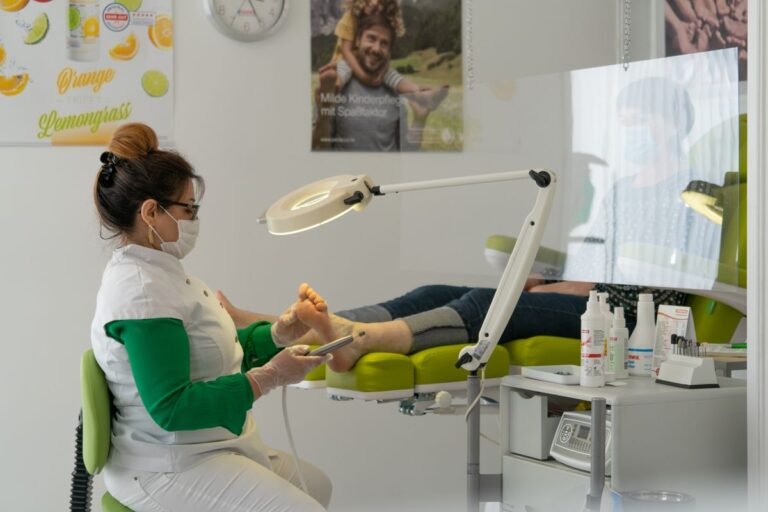
A nail assessment at ModPod typically takes 20–30 minutes. Your podiatrist examines the nail under magnification, assesses surrounding skin, and takes a history including previous skin conditions, any psoriasis diagnosis, and what treatments you have already tried. If a nail sample is taken, it is sent to an accredited lab and you are notified of results.
When to See a Podiatrist vs a GP
For most nail changes, a podiatrist is the right first contact. We can assess the nail clinically, take a mycology sample, rule out trauma or structural causes, and initiate treatment if a fungal infection is confirmed. For more detail on treatment timelines, see our post on how long fungal nail takes to clear.
A GP referral is more appropriate if you:
- Have a confirmed psoriasis diagnosis and need systemic treatment, such as biologics or oral agents
- Have nail changes accompanied by joint pain, which may indicate psoriatic arthritis
- Are eligible for a Medicare chronic disease management plan
Medicare and Private Health
Psoriasis affects approximately 2–3% of Australians, according to Psoriasis Australia. Many people with the condition are eligible for a Team Care Arrangement (TCA) through their GP, which provides up to five subsidised podiatry visits per calendar year under Medicare. Ask your GP whether your condition qualifies.
Most private health funds with Extras cover — including Medibank, BUPA, HCF, and NIB — include podiatry rebates that apply to nail assessments and treatment. Check your policy for applicable item numbers.
Frequently Asked Questions
Q: How can I tell if my nail is fungal or psoriasis at home?
A: There is no reliable way to distinguish the two conditions without a professional assessment. Pitting and an oil-drop sign point toward psoriasis. Subungual debris, gradual spread from one nail, and co-existing athlete’s foot suggest onychomycosis. The only definitive test is a nail clipping sent for mycology.
Q: Will antifungal cream or nail lacquer work on nail psoriasis?
A: No. Antifungal treatments target fungi. They have no effect on the inflammatory process that causes nail psoriasis. Applying them to a psoriatic nail will not improve it and delays correct treatment.
Q: Does nail psoriasis need a podiatrist or a GP?
A: Both may be involved. A podiatrist can assess the nail, take samples to rule out fungal infection, and manage nail changes conservatively. A GP or dermatologist is needed if systemic psoriasis treatment is required or if the diagnosis needs to be confirmed medically.
Q: Can you have both fungal nail and nail psoriasis at the same time?
A: Yes. Psoriatic nails are structurally compromised, which increases susceptibility to fungal infection. If both conditions are present, both need treatment. This is one reason professional assessment matters — self-diagnosis often misses co-existing conditions.
Q: How common is nail psoriasis in Australia?
A: Psoriasis affects approximately 2–3% of Australians. Nail involvement occurs in up to 80% of people with skin psoriasis at some point during their lifetime, and around 5% have nail psoriasis without visible skin plaques.
Get a Clear Diagnosis
If your nail has changed colour, thickened, or become crumbly, do not spend months applying treatments that may not be appropriate. Distinguishing fungal nail vs nail psoriasis correctly from the start means you get the right treatment sooner. A nail assessment takes one appointment. We examine the nail, take a sample if indicated, and recommend the right treatment path — whether that is fungal nail laser treatment, a referral, or conservative management.
Our podiatrists see nail conditions every day across our CBD, Mosman, Dee Why, Rose Bay, and North Ryde clinics. Book online for an assessment at the clinic most convenient to you.