

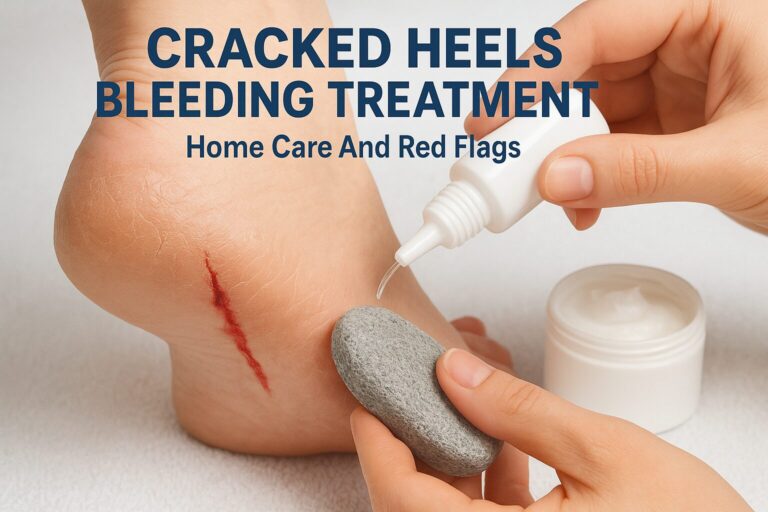
When the dry, rough skin on your heels splits deep enough to bleed, it’s moved beyond a cosmetic issue. You’re now dealing with open wounds that hurt with every step, and finding the right cracked heels bleeding treatment matters, not just for comfort, but to prevent infection and further damage to the skin.
The good news is that most bleeding heel fissures respond well to consistent home care when you know what to do. But some cases need professional attention, and knowing the difference can save you weeks of unnecessary pain. At ModPod Podiatry, our podiatrists regularly treat patients across our Sydney clinics who’ve been putting up with painful cracked heels far longer than they needed to.
This guide covers practical steps you can take at home right now, when to see a podiatrist, and the warning signs that suggest something more serious is going on.
What a bleeding heel crack means
Heel fissures begin as dry, thickened callus that builds up around the rim of your heel. As that skin loses elasticity, the pressure of walking causes it to split. Shallow cracks stay within the dead outer skin layer and are uncomfortable but manageable. When fissures deepen into the dermis, however, they reach live tissue containing blood vessels and nerve endings, which is why a bleeding crack hurts far more and heals more slowly than ordinary heel dryness.
Why heel skin splits so deeply
Dry skin lacks the flexibility to absorb the load your heel takes with every step you put down. Once a crack forms, walking repeatedly widens it rather than giving it any chance to close. Several factors push fissures deeper and faster:
- Walking barefoot on hard tiles or floorboards
- Open-backed footwear that allows the heel pad to splay outward under body weight
- Low-humidity environments or long hot showers that strip the skin’s natural oils
- Prolonged standing on hard surfaces throughout the day
- Medical conditions such as diabetes, hypothyroidism, or eczema that reduce skin moisture levels
What the bleeding tells you about the depth
Fissure depth is the most useful indicator of how serious your situation is. Surface cracks sit in the stratum corneum, the outermost layer of dead skin cells, and almost never bleed. When you see blood, the split has reached living tissue in the dermis, where nerve fibres, capillaries, and sweat glands are located.
A bleeding heel crack is an open wound. Bacteria can enter through it, which means wound care needs to come before any softening or moisturising treatment.
People with diabetes, poor peripheral circulation, or a compromised immune system carry a higher infection risk even from a small bleeding fissure. Reduced blood flow to the feet slows wound healing significantly and makes complications more likely, so if you fall into this group, a proper cracked heels bleeding treatment plan should involve a podiatrist from the start rather than home care alone.
Step 1. Clean, protect and stop further splitting
Before you apply any cream or try to remove callus, treat the bleeding fissure as an open wound. Skipping wound care and going straight to softening agents risks pushing bacteria deeper into the cracked tissue, which can turn a painful heel into a genuine infection.
How to clean the wound
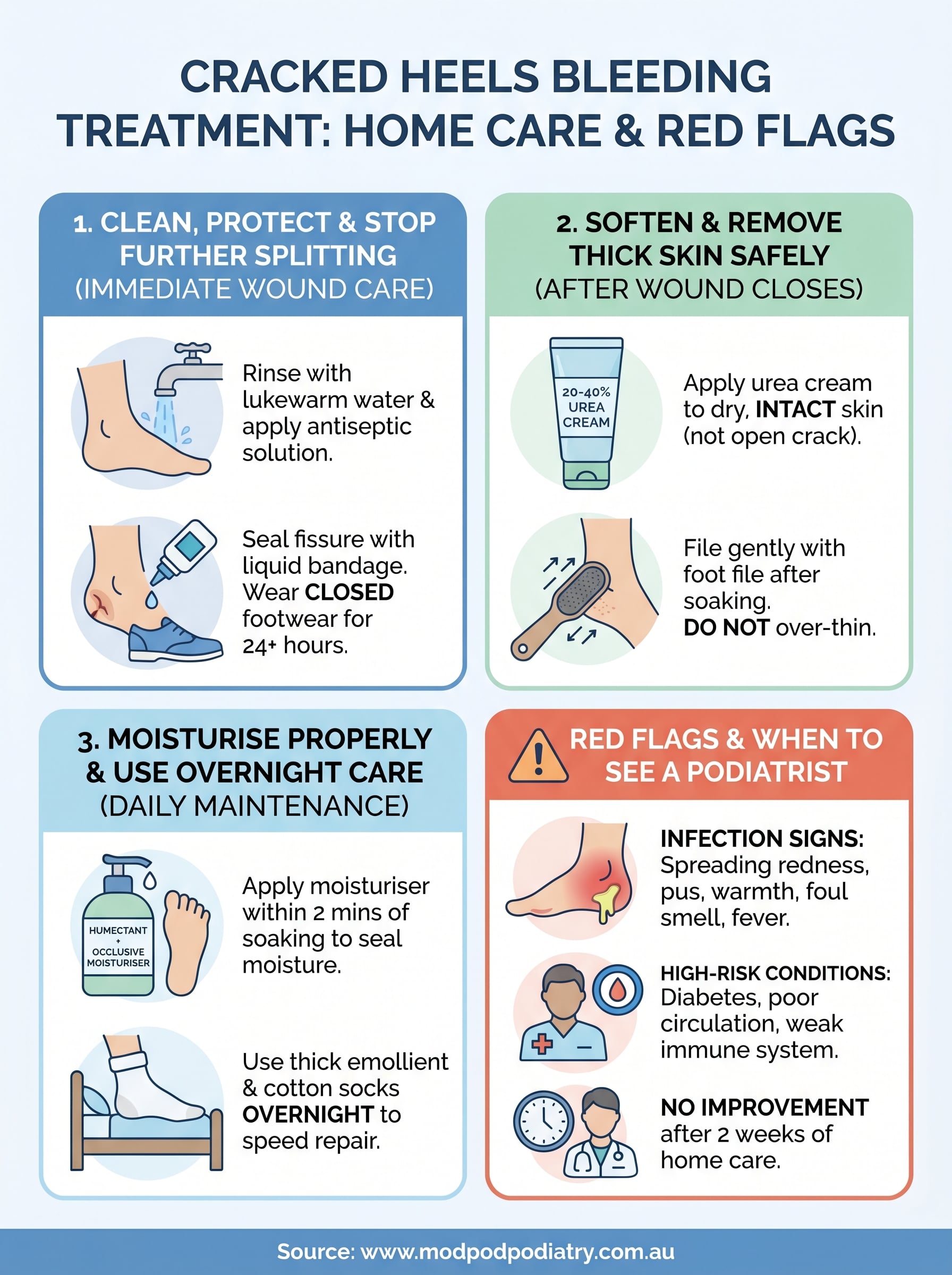
Rinse the affected heel under lukewarm running water for 30 to 60 seconds to flush out surface debris. Avoid hot water, which dries the skin further. Pat dry with a clean towel, then apply a small amount of antiseptic solution (such as povidone-iodine or chlorhexidine) directly to the open crack.
Do not pick at loose skin around the fissure edges, as this extends the wound and delays healing.
How to seal and protect the crack
Once the crack is clean and dry, apply a liquid bandage or skin glue directly into the fissure. These products seal the opening, reduce pain on contact with the ground, and physically prevent the crack from widening further as you walk. Cover the area with an adhesive dressing or heel pad before putting on socks and shoes.
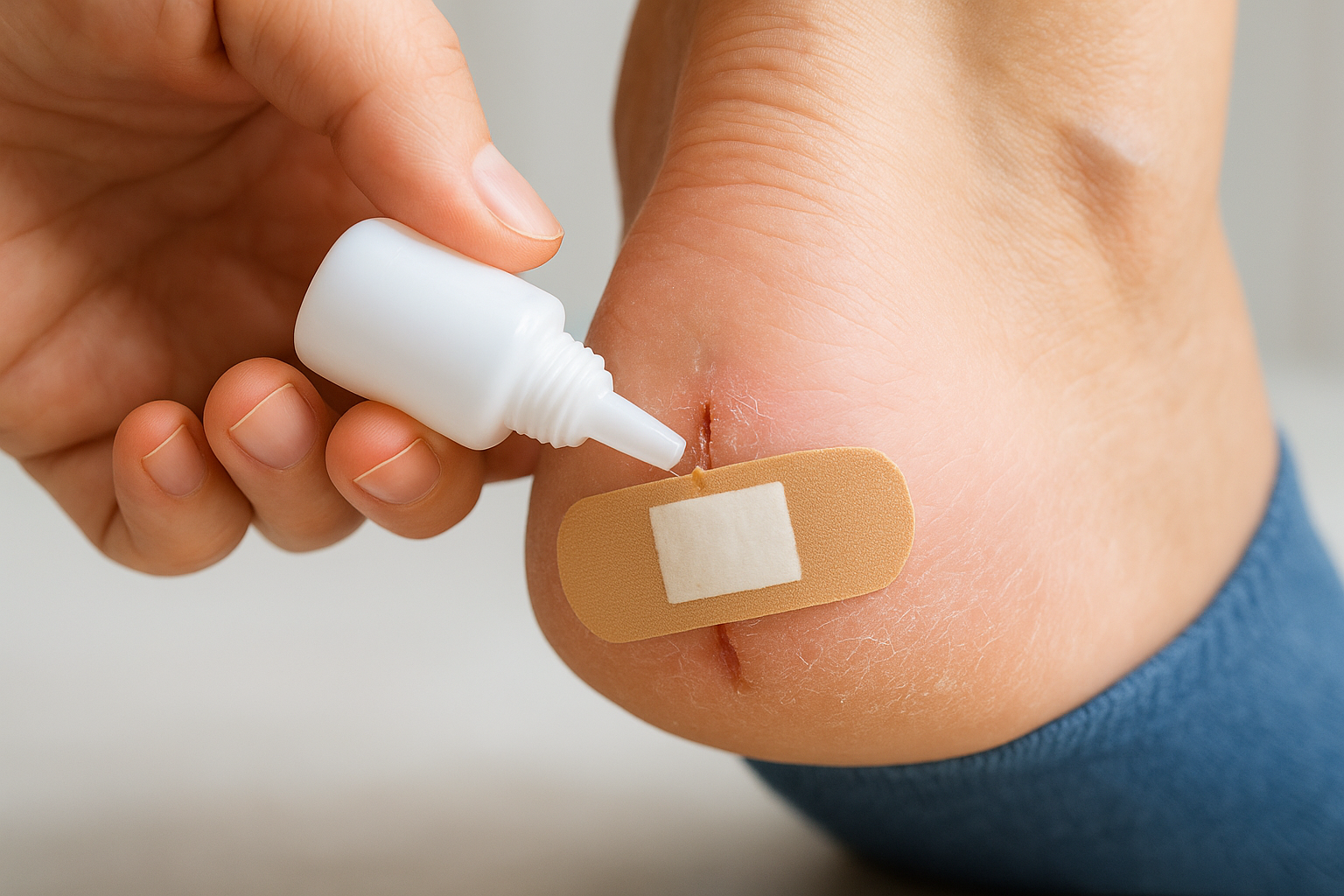
Wear closed-heel footwear for the next 24 hours minimum. This reduces the lateral splay of your heel pad and gives the wound a genuine chance to begin closing before you attempt any further treatment steps.
Step 2. Soften and remove thick skin safely
Once the bleeding fissure has closed and shows no signs of infection, you can begin treating the callus that caused the split in the first place. Attempting to remove thickened skin before the wound has started to heal risks reopening it, so give the crack at least 24 to 48 hours of protected wound care before moving to this step.
Use a urea-based cream to break down callus
Urea creams at concentrations of 20 to 40% are the most effective over-the-counter option for dissolving thickened heel skin without cutting or scraping. Apply the cream to your dry, intact heel skin after cleaning, allow it to sit for five to ten minutes, then cover with a sock. Never apply urea products directly into an open fissure, as they will irritate the wound bed.
Look for these concentration levels on the product label:
- 20% urea: suited to moderate callus and general heel thickening
- 40% urea: for very dense or hardened skin around the heel rim
- Urea and lactic acid combinations: accelerate softening by working on different skin layers simultaneously
File the skin correctly
A foot file or pumice stone works best on skin that has already been softened. Soak your feet in plain warm water for five to ten minutes first, then file using short, light strokes in one direction across the thickened heel rim. Never file aggressively or attempt to clear all the callus in a single session, as overthinning the skin increases the risk of reopening your cracked heels bleeding treatment area before it has properly healed.
File once every two to three days rather than daily, which gives the skin time to respond without thinning it too rapidly.
Consistent, gentle sessions over one to two weeks produce better results than a single aggressive attempt. After each filing, wipe the heel clean with a damp cloth before moving on to the moisturising step.
Step 3. Moisturise properly and use overnight care
After softening and filing, moisturising is the step that actively rebuilds the skin barrier and prevents fissures from reopening. Apply your moisturiser within two minutes of finishing your foot soak, while the skin still holds some absorbed water. This timing window allows the cream to seal in moisture rather than simply sitting on the surface of already-dry skin.
Choose the right moisturiser
Not every moisturiser works effectively on heel skin. You need a product that combines humectant and occlusive ingredients, such as urea, glycerin, or lactic acid paired with shea butter or petroleum jelly. A standard body lotion evaporates far too quickly to make a meaningful difference on dense callus tissue around the heel rim.
Look for at least one ingredient from each category on the product label:
- Humectants (draw moisture in): urea, glycerin, lactic acid
- Occlusives (seal moisture in): petroleum jelly, shea butter, dimethicone
Use overnight care to speed healing
Overnight application delivers the strongest results in any cracked heels bleeding treatment routine because your skin performs most of its repair work while you sleep. Apply a thick, generous layer of emollient cream or pure petroleum jelly across the entire heel, then slide on a pair of cotton socks before going to bed. The socks trap heat and moisture directly against the skin, driving absorption considerably deeper than any daytime application.
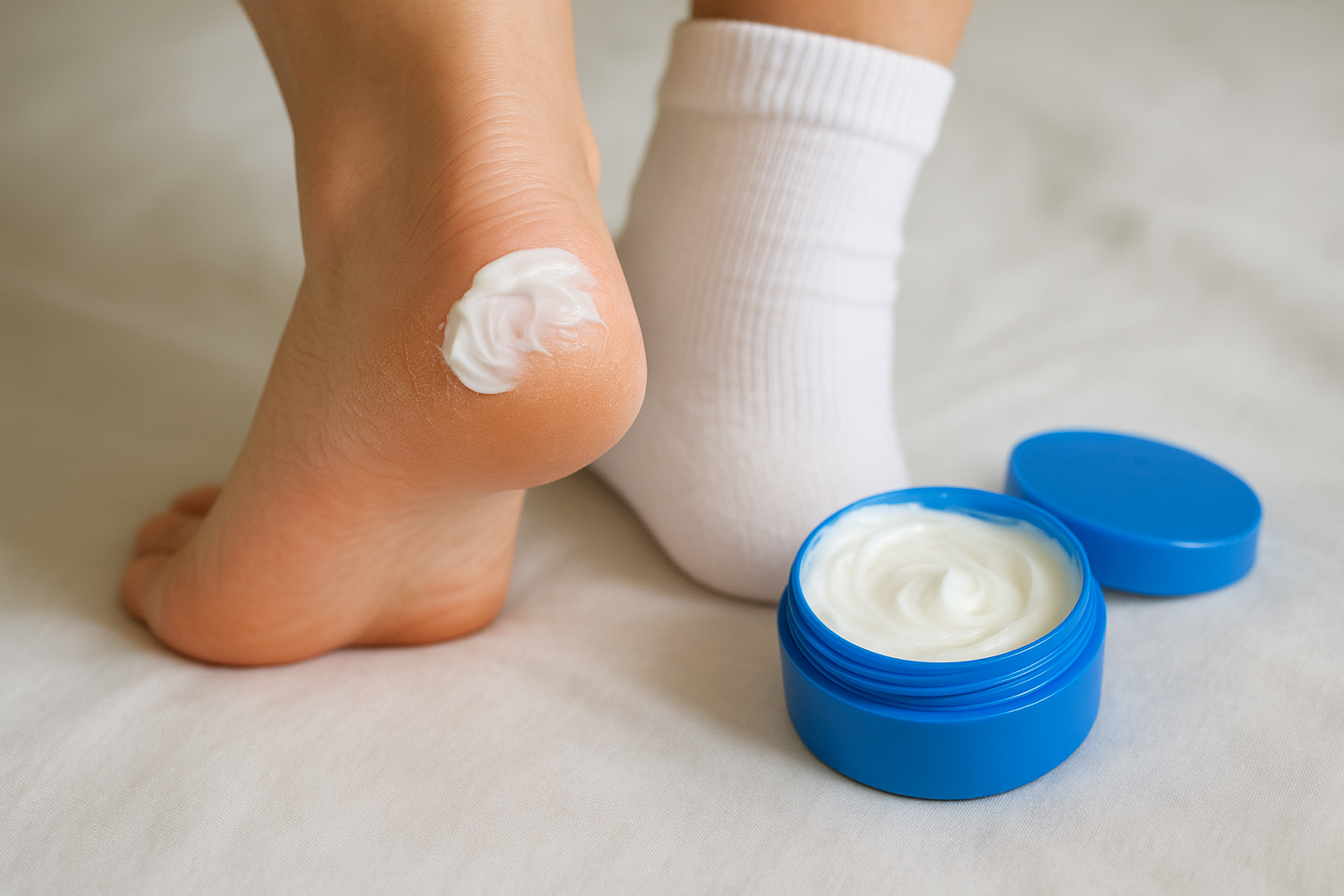
Repeat this overnight method every night for at least one week before assessing whether your heel skin is becoming more flexible and less prone to splitting.
Red flags and when to see a podiatrist
Home care handles most cases of cracked heels bleeding treatment, but certain signs tell you that self-treatment is no longer sufficient and that continuing without professional help could lead to a serious complication. If you notice any of the warning signs below, book an appointment with a podiatrist rather than waiting another week.
Signs the wound is infected
An infected heel fissure looks and feels distinctly different from a healing one. Redness spreading beyond the crack, warmth to the touch, swelling, pus, or a foul smell all indicate bacterial infection in the wound. You may also notice the pain intensifying rather than improving after two to three days of consistent wound care.
If you develop a fever alongside any of these symptoms, seek medical attention the same day, as infection can spread rapidly from the foot upward.
Watch for these specific warning signs:
- Redness or red streaking extending away from the crack
- Yellow or green discharge from the fissure
- Skin that feels hot or looks noticeably swollen
- No improvement after 72 hours of proper wound care
Conditions that need professional care
Diabetes, peripheral arterial disease, or a weakened immune system each dramatically slow the healing process and raise the risk of complications from even a small open wound on the foot. A podiatrist can debride thickened callus safely, apply professional-grade dressings, and monitor healing progress in a way that home care simply cannot replicate.
Next steps
Most people who follow a consistent cracked heels bleeding treatment routine see clear improvement within one to two weeks. Clean the wound first, seal the fissure, then work through softening, filing, and overnight moisturising in that order. Skipping steps or rushing the process is what causes fissures to reopen and sets you back to square one.
If your heel has not improved after two weeks of proper home care, or if you noticed any of the red flags covered in this guide, your next move is to see a podiatrist. A professional can safely remove deep callus build-up, apply clinical dressings, and identify whether an underlying health condition is slowing your recovery. Trying to push through a non-healing wound on your own adds weeks of unnecessary pain and raises your infection risk.
Book a same-week appointment with our team across our Sydney clinics at ModPod Podiatry online booking and get your heels properly assessed.