
Nobody wants to be the one taking their shoes off at a friend’s place and clearing the room. If you’re wondering why do feet smell, the short answer is sweat and bacteria working together, but the full picture involves your footwear, your daily habits and sometimes an underlying skin or nail condition that needs proper treatment.
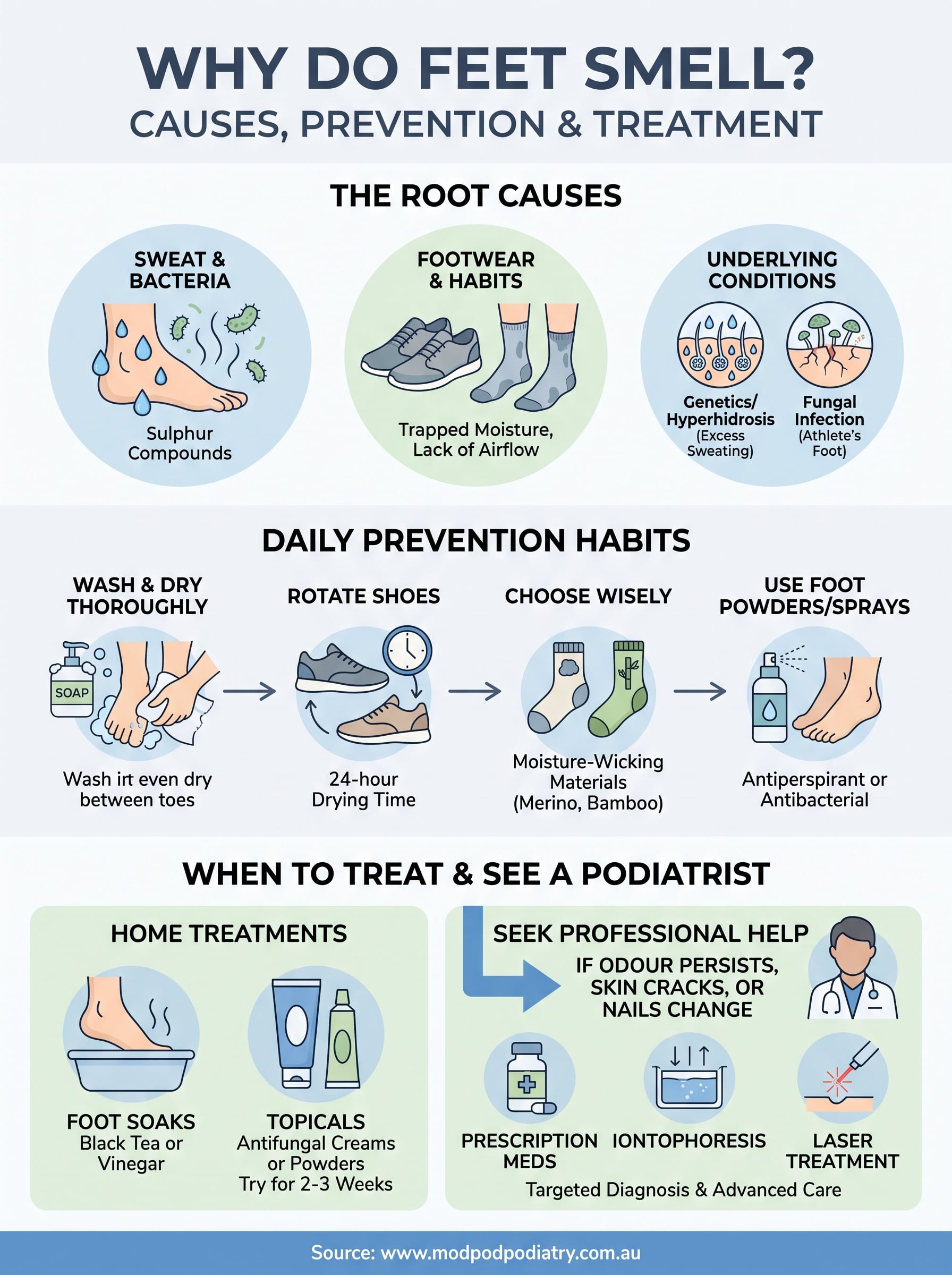
Your feet have more sweat glands than almost anywhere else on your body, and that moisture becomes a feast for bacteria that live on your skin. As they break down sweat, they release the sulphur compounds responsible for that unmistakable smell. Closed shoes and synthetic socks trap the moisture and heat, giving bacteria the perfect environment to multiply, which is why the problem often gets worse in gym shoes or work boots worn day after day.
In this guide, we’ll walk through exactly what causes smelly feet, the everyday changes that make a real difference, and when persistent odour points to something a podiatrist assessment should investigate, such as fungal infection or excessive sweating (hyperhidrosis). We’ll also cover practical prevention steps and treatment options, so you know when home remedies are enough and when it’s time to book in with a professional.
Why some feet smell more than others
Some people can wear the same shoes all week and never notice a whiff, while others battle odour no matter how often they shower. Genetics plays a real role here, because the number of sweat glands you’re born with varies from person to person, and feet with denser sweat gland concentration produce more moisture for bacteria to work with. Hormonal shifts during puberty, pregnancy or menopause can also ramp up sweat production temporarily, which explains why teenagers often deal with smellier feet than they did as children.
Hyperhidrosis and excess sweating
Approximately 2 to 3% of Australians live with hyperhidrosis, a condition where the sweat glands produce far more moisture than the body needs for temperature regulation. Feet affected by hyperhidrosis can stay damp for hours after exercise or even after a short walk, creating constant conditions for bacterial growth. This isn’t a hygiene failure, it’s a physiological one, and it usually needs a targeted treatment approach rather than just more frequent washing.
Smelly feet aren’t always about how clean you are, they’re about how much moisture and bacteria your feet are managing at once.
Bacteria, fungus and skin conditions
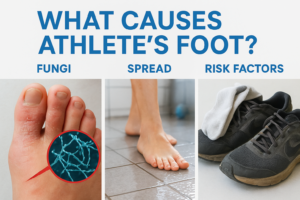
Brevibacteria are the main culprits behind foot odour, thriving on dead skin cells and sweat, then releasing the sulphur-based compounds that smell like rotten eggs. Fungal infections such as tinea pedis (athlete’s foot) add another layer entirely, producing a distinct musty smell alongside itching, peeling or cracked skin between the toes. Left untreated, fungal infections tend to spread and worsen over time rather than resolve on their own.
Everyday habits that make it worse
Daily choices compound whatever your biology is already dealing with:
- Wearing the same shoes two days in a row without letting them dry out fully
- Choosing synthetic socks over breathable cotton or wool blends
- Skipping foot washing between toes, where moisture and bacteria concentrate
- Wearing closed leather or rubber shoes for long shifts at work
- Ignoring early signs of fungal infection like flaking or discolouration
Understanding which of these factors applies to you is the first step toward fixing the problem rather than just masking it with spray.
How to prevent smelly feet before they start
Prevention beats treatment every time, and most of it comes down to breaking the moisture cycle before bacteria get a chance to settle in. Washing your feet daily with soap and water, then drying thoroughly between the toes, removes the sweat and dead skin that bacteria feed on. Alternating between two or three pairs of shoes gives each pair at least 24 hours to dry out fully, since damp shoes never fully dry overnight in a single wear cycle.
The single biggest prevention step is giving your shoes time to dry, not just your feet.
Sock and shoe choices that matter
Swapping synthetic socks for moisture-wicking materials like merino wool or bamboo blends keeps feet noticeably drier through the day. Leather and canvas shoes breathe far better than rubber or synthetic uppers, which trap heat and humidity against the skin.

| Sock material | Moisture handling |
|---|---|
| Cotton | Absorbs but stays damp |
| Synthetic | Traps moisture, poor airflow |
| Merino wool | Wicks moisture, dries fast |
| Bamboo blend | Wicks moisture, naturally antibacterial |
Small habits with a big payoff
A few extra minutes each day makes a real difference over weeks and months:
- Change socks midway through long, active days
- Use an antiperspirant foot spray or talc before closed shoes
- Air shoes near a window or fan rather than in a closed cupboard
- Trim nails regularly to reduce spots where bacteria and fungus hide
Consistency with these habits usually prevents odour from becoming a daily battle in the first place.
How to treat foot odour that won’t go away
Sometimes prevention alone isn’t enough, especially if bacteria or fungus have already established themselves. Foot soaks with black tea or diluted vinegar work well because the tannic and acetic acid lower the skin’s pH, making it harder for odour-causing bacteria to thrive. Soaking for 15 to 20 minutes, two or three times a week, often reduces smell within a fortnight when combined with the daily habits already covered.
Targeted topical treatments
Over-the-counter options can tackle the bacterial and fungal side of the problem directly:
- Antibacterial foot powders or sprays containing zinc or aluminium chloride
- Antifungal creams or sprays for confirmed athlete’s foot
- Medicated insoles designed to absorb moisture and control odour
- Antiperspirants applied to the soles overnight, not just in the morning
If home treatments haven’t shifted the smell after two to three weeks, it’s usually a sign of something more than simple sweat and bacteria.
Why persistence matters
Underlying tinea infections rarely clear up with washing and powder alone, since fungal spores live deep in the skin layers and nail bed. Similarly, hyperhidrosis doesn’t respond to topical treatment in the same way bacterial odour does, because the issue is glandular rather than surface-level. Recognising why do feet smell in your specific case, whether it’s fungal, bacterial or excess sweating, determines which treatment actually works rather than wasting weeks on the wrong approach.
When it’s time to see a podiatrist
Home remedies fix most cases of smelly feet within a few weeks, but persistent odour that won’t budge usually points to a condition that needs proper diagnosis rather than another spray. Ongoing fungal infection left untreated can spread to toenails, causing thickening and discolouration that’s far harder to clear once established. Excessive sweating that soaks through socks daily, regardless of the weather or activity level, is another clear signal that biology, not hygiene, is driving the problem.
If you’ve tried soaks, sprays and sock changes for three weeks with no improvement, book an assessment rather than another product.
Signs worth booking an appointment for
Watch for these warning signs, since they rarely resolve without targeted treatment:

- Cracking, peeling or itching skin between the toes that keeps coming back
- Nails turning yellow, thick or brittle
- Sweating so heavy it soaks through shoes within an hour
- Odour that persists despite consistent daily hygiene and sock changes
- Pain, redness or swelling alongside the smell
What a podiatry visit involves
A podiatrist can identify whether bacteria, fungus or hyperhidrosis is behind your symptoms, often confirming fungal infection with a simple skin or nail sample rather than guesswork. Treatment options extend well beyond what’s available over the counter, including prescription-strength antifungals, iontophoresis for hyperhidrosis, or laser treatment for stubborn nail infections. Getting a proper diagnosis early stops a manageable issue turning into a longer, more expensive problem.
Keeping foot odour under control
Most smelly feet come down to sweat, bacteria and shoe choices you can actually fix with daily habits like drying between the toes, rotating footwear and switching to moisture-wicking socks. When those changes don’t shift the smell after a few weeks, you’re likely dealing with a fungal infection or hyperhidrosis that needs more than a spray from the chemist to sort out properly.
Don’t wait months hoping it clears up on its own, especially if nails are changing colour or skin between your toes keeps cracking. A proper assessment gets you the right diagnosis and a treatment plan that actually works, rather than another round of guesswork. If home remedies haven’t worked after three weeks, book an appointment online with one of our podiatrists and get to the bottom of it this week, not next winter.