


You’ve pulled off your shoes after a long day and caught a whiff that made you wince. If you’re asking why do my feet smell so bad, you’re not alone, and it’s rarely a sign that something is seriously wrong. Foot odour comes down to sweat and bacteria doing what they naturally do, but the intensity and persistence vary a lot from person to person, which is why some people barely notice it while others feel embarrassed taking their shoes off at a mate’s place.
The short answer is that your feet have more sweat glands than almost anywhere else on your body, and when that moisture sits inside socks and shoes, bacteria feed on it and produce the sharp, cheesy smell you’re dealing with. Certain conditions, like fungal infections or hyperhidrosis, make it worse and harder to shift with soap and deodorant alone.
In this guide, we’ll walk through the common causes of smelly feet, explain when it points to something like athlete’s foot rather than just sweat, and give you practical, everyday fixes you can start using tonight. We’ll also cover when it’s worth seeing a podiatrist for a proper assessment.
Why do your feet smell so bad
Sweat is only half the story
Sweat itself doesn’t smell. Your feet have around 250,000 sweat glands packed into a small area, more than almost any other part of your body, and on a hot day or during exercise they can produce a cup of moisture between them. The real problem starts when that sweat has nowhere to go. Trapped inside socks and enclosed shoes, it becomes the perfect breeding ground for bacteria that live naturally on your skin, and these bacteria break down sweat into acidic compounds that produce the sharp, cheesy odour you notice.
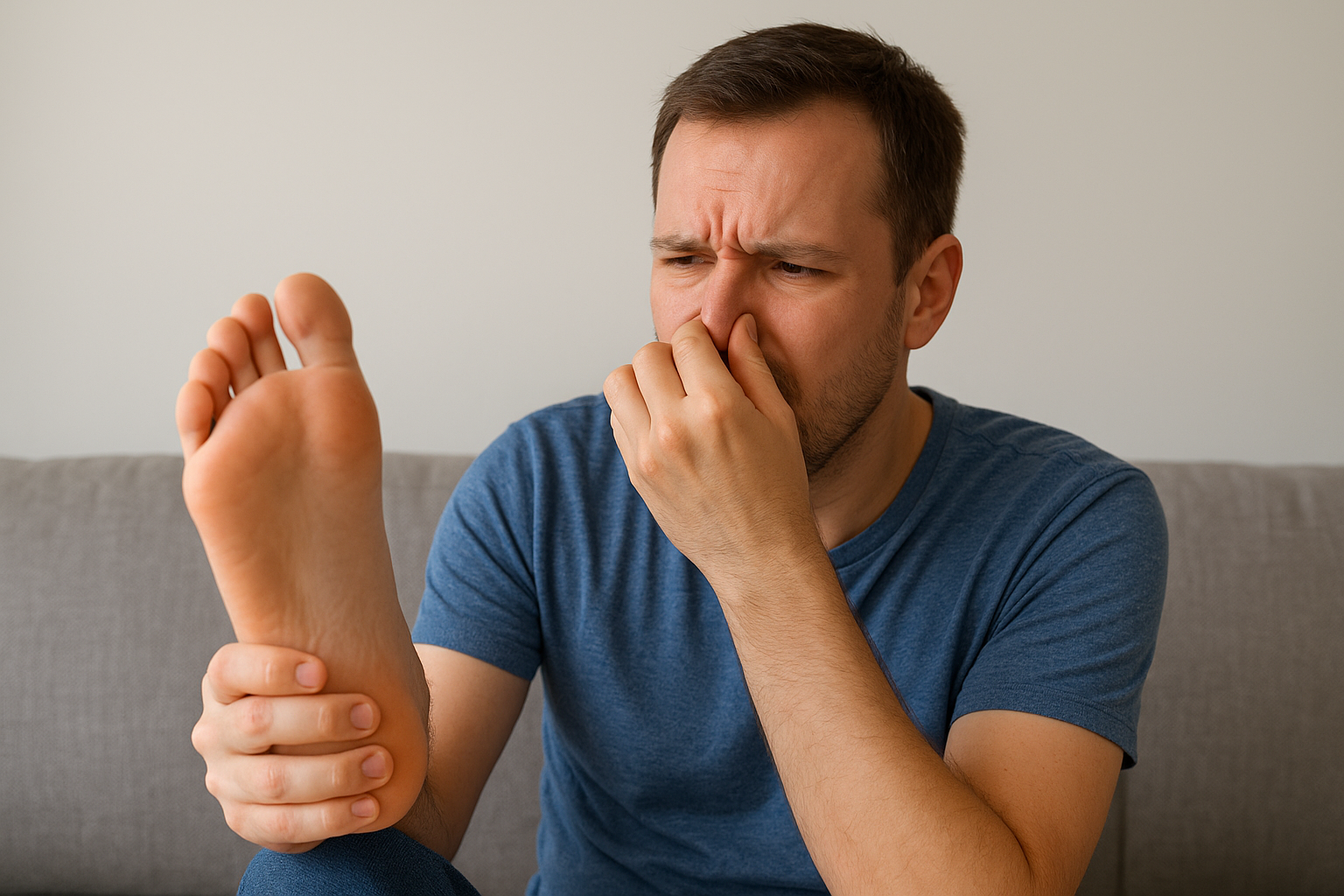
Smelly feet aren’t caused by sweat alone, they’re caused by bacteria feeding on trapped sweat.
Fungal infections make it worse
Athlete’s foot, medically known as tinea pedis, is one of the most common reasons foot odour becomes stubborn rather than occasional. Fungus thrives in the same warm, damp conditions bacteria love, and it often shows up alongside peeling skin, itching, or cracking between the toes. Genuine fungal infections rarely clear up with soap and deodorant, and if you’re already washing daily and changing socks without improvement, that’s usually the clue something else is going on.
Other factors that tip things over the edge
Hormonal changes, stress, certain medications, and a genuine medical condition called hyperhidrosis (excessive sweating) can all push ordinary foot sweat into overdrive. Teenagers and pregnant women often notice a sudden spike in odour for this reason, and it isn’t something poor hygiene alone caused.
| Cause | Why it smells |
|---|---|
| Bacterial breakdown of sweat | Produces acidic, cheesy-smelling compounds |
| Athlete’s foot (tinea) | Fungus thrives in moisture, worsens odour and skin condition |
| Hyperhidrosis | Excess sweat overwhelms socks and shoes |
| Synthetic, non-breathable footwear | Traps heat and moisture against skin |
| Hormonal changes | Increases sweat gland activity |
Understanding which of these applies to you matters, because a purely sweat-related smell responds well to hygiene changes, while a fungal or hyperhidrosis-driven odour usually needs targeted treatment to actually shift.
How to get rid of smelly feet
Getting on top of foot odour usually takes a combination of habits rather than one miracle fix. Daily hygiene changes paired with the right products can turn stubborn smell into an occasional, manageable issue within a couple of weeks.
Wash and dry thoroughly
Start with the basics done properly. Rinse your feet daily with soap, paying attention to between the toes where bacteria and fungus thrive, then dry them completely before putting on socks.
- Wash feet daily with soap, not just in the shower splash
- Dry thoroughly between each toe with a towel
- Rotate shoes so each pair gets a full day to air out
- Change socks at least once daily, twice if you sweat heavily
Use antibacterial or antifungal treatments
Over-the-counter antifungal sprays or powders help when peeling, itching, or cracking suggests athlete’s foot rather than plain sweat. Antibacterial foot sprays target the bacteria responsible for odour directly, and pharmacies stock several affordable options worth trying before assuming you need a prescription.
Treating the right cause, bacteria or fungus, matters more than trying every product on the shelf.
Try foot soaks and antiperspirants
Soaking feet in diluted black tea or a mild vinegar solution for fifteen minutes a few times a week can reduce bacterial activity naturally. Antiperspirant deodorant, applied directly to soles at night, works surprisingly well because it reduces sweat production rather than just masking smell, and it’s worth trying if odour persists despite good hygiene.
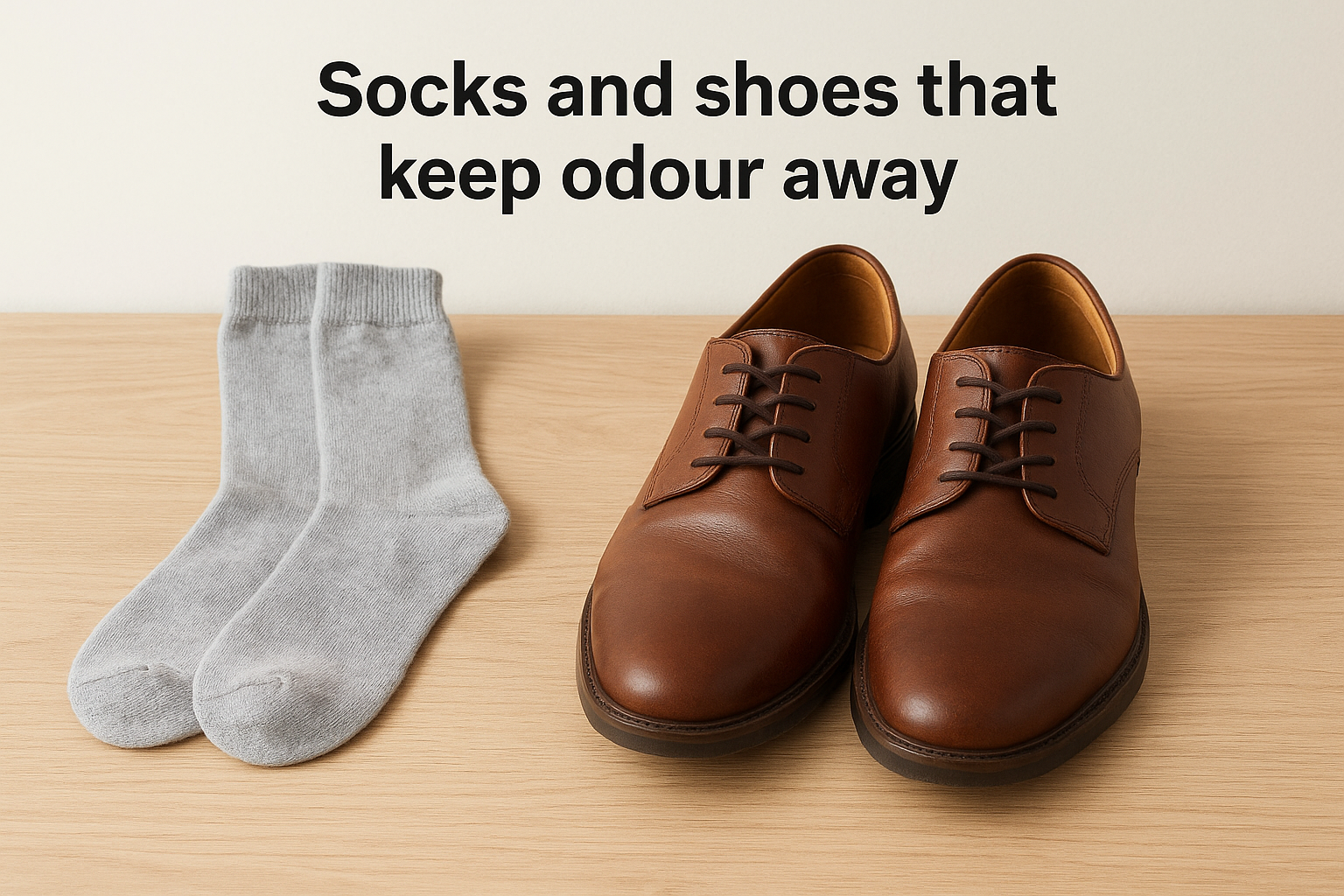
Socks and shoes that keep odour away
Gear matters just as much as habits. The right socks and shoes let sweat evaporate instead of pooling against your skin, which starves the bacteria and fungus that cause odour of the damp environment they need to thrive.
Choose breathable materials
Merino wool and bamboo socks pull moisture away from skin far better than cotton, which holds sweat against your foot all day. Leather and canvas shoes breathe better than synthetic materials like vinyl or rubber, so your feet stay drier from the moment you put them on.
| Material | Moisture handling |
|---|---|
| Cotton socks | Absorbs sweat, stays damp for hours |
| Merino wool socks | Wicks moisture, dries quickly |
| Synthetic shoes | Traps heat and moisture inside |
| Leather shoes | Breathes, allows evaporation |
Breathable socks and shoes starve odour-causing bacteria of the moisture they need to survive.
Rotate your shoes and treat them directly
Give every pair at least a day to dry out fully before wearing them again, since shoes worn two days running rarely lose all their trapped moisture overnight. Odour-eating insoles containing activated charcoal or cedar absorb smell between wears, and a light dusting of bicarbonate soda inside shoes overnight works as a cheap, effective deodoriser.
- Alternate between at least two pairs of everyday shoes
- Remove insoles overnight to speed up drying
- Use cedar shoe trees or charcoal inserts for stubborn odour
- Wash trainers regularly if the label allows machine washing
Small changes here add up quickly, and combined with the hygiene steps above, most people notice a real difference within a week or two.
When smelly feet need a podiatrist’s help
Persistent odour that doesn’t budge after weeks of proper hygiene, breathable socks, and antifungal treatment often points to something a podiatrist needs to assess directly. Chronic fungal infections, skin conditions, or hyperhidrosis severe enough to soak through shoes within hours usually need professional diagnosis rather than another product from the pharmacy shelf.
Signs it’s time to book an appointment
Watch for these signals that hygiene alone won’t fix:
- Odour persists despite daily washing, drying, and sock changes for two weeks or more
- Skin between the toes is cracking, peeling, or bleeding
- Nails are thickened, discoloured, or crumbling, suggesting a fungal nail infection
- Sweating is severe enough to soak through shoes within an hour
- Pain, swelling, or discomfort accompanies the smell
If odour survives good hygiene for two weeks straight, it’s time for a professional look rather than another home remedy.
What a podiatry assessment involves
Getting a proper diagnosis matters because a podiatrist can confirm whether you’re dealing with bacterial overgrowth, fungal infection, or genuine hyperhidrosis, then offer treatment strength you can’t buy over the counter, including prescription antifungals, iontophoresis for excessive sweating, or targeted care for nails already affected by fungus. At ModPod Podiatry, our podiatrists across Sydney regularly see patients whose stubborn foot odour turned out to be a treatable fungal or skin condition rather than simple sweat, and getting it properly diagnosed usually resolves the problem far faster than months of trial and error at home.
Holding off on treatment also risks letting minor fungal infections spread into toenails, where they become slower and harder to clear.
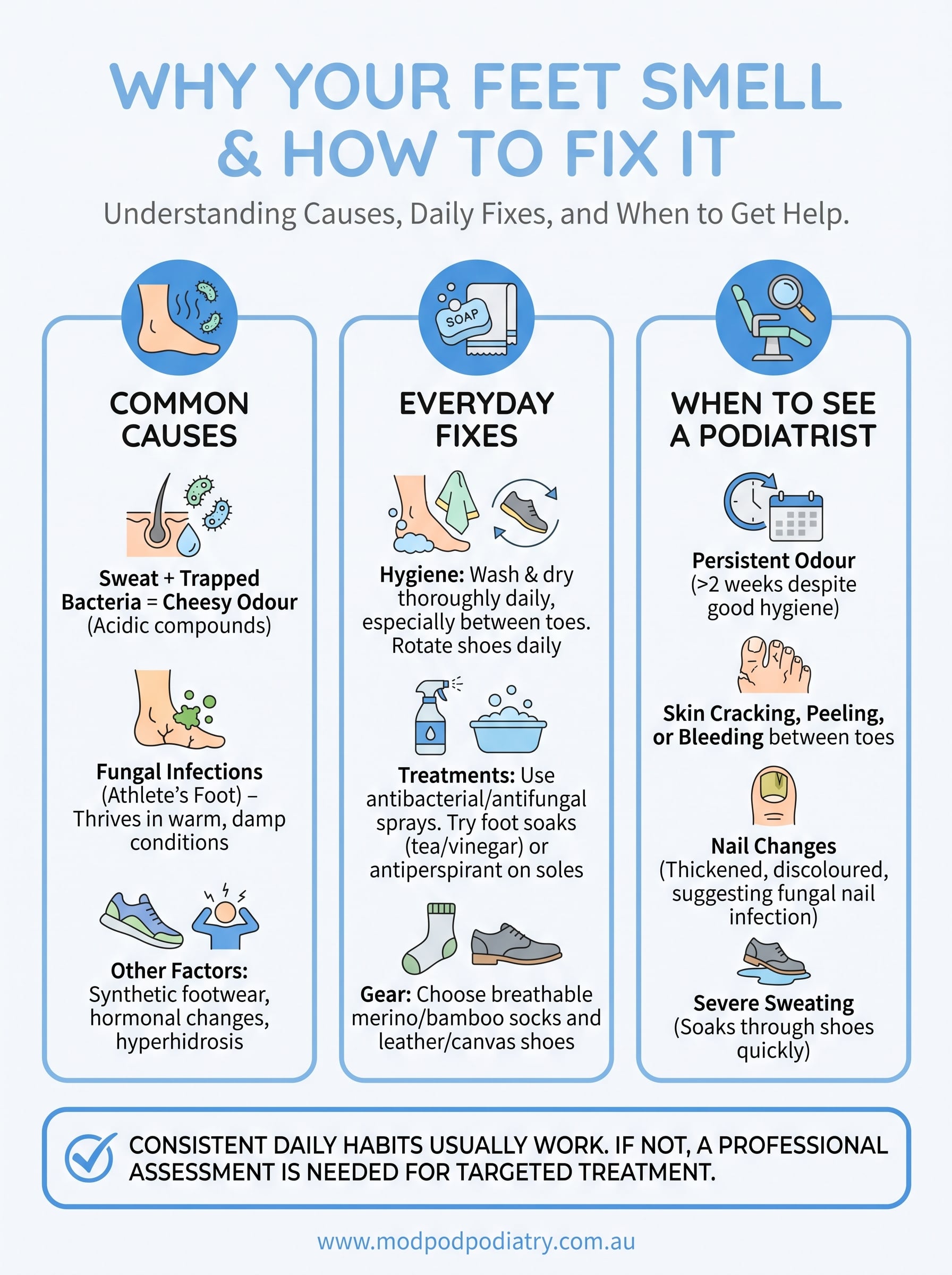
Fresh feet start with daily habits
Most smelly feet come down to sweat and bacteria doing what they naturally do, and that means most cases respond well to consistent daily habits: proper washing and drying, breathable socks and shoes, and giving footwear time to air out between wears. Stick with these for a couple of weeks and you’ll usually notice a real difference.
Occasionally, though, odour hangs around no matter what you try, and that’s your cue that something like a fungal infection or hyperhidrosis needs proper attention rather than another home remedy. Persistent odour deserves a proper look, not months of guesswork with products from the pharmacy shelf.
If you’ve tried the basics and your feet still smell, or you’ve noticed peeling skin, thickened nails, or sweating that soaks through your shoes, it’s worth getting it checked properly. Book an appointment online with ModPod Podiatry and get a clear answer, not another guess.